The Takeoff Bottleneck That’s Killing Your Margins
Ask any contractor where their time goes during preconstruction, and you’ll hear the same thing: takeoffs. Whether you’re flipping through BOQs, measuring plans, or manually inputting quantities, it’s a grind. For mid-sized contractors handling multiple bids a week, this can eat 20-40 hours per estimate. That’s not sustainable.
And let’s be honest—manual takeoffs aren’t just time-consuming; they’re error-prone. A missed quantity or incorrect rate can destroy your project margins before the first brick is laid. According to EstimateNext, manual takeoff errors cost contractors an average of 4% in lost profits per project. Multiply that across 10 projects a year, and the numbers get ugly fast.
So, what’s the fix? Enter NVIDIA Blueprints and AI-powered takeoff tools.
What Are NVIDIA Blueprints?
NVIDIA Blueprints use GPU-accelerated AI to analyze construction drawings, detect patterns, and automate key workflows. Think of them as the engine behind next-gen preconstruction tools. Their AI models are trained to process complex building data—CAD files, BIM models, even PDFs—with incredible speed and accuracy.
Why does this matter? Because takeoff is a classic data problem. Contractors need to extract quantities, dimensions, and specifications from plans and turn them into actionable BOQ items. NVIDIA’s GPUs process this kind of data 10-100x faster than traditional CPUs, making real-time AI takeoffs possible.
To understand this better, let’s break it down. A contractor handling a commercial office project will typically need to measure wall areas, calculate flooring quantities, and quantify structural steel. Doing this manually isn’t just tedious—it’s a breeding ground for errors. NVIDIA Blueprints eliminates these inefficiencies by leveraging AI to interpret design data and automate these calculations.
How AI Takeoffs Work (and Why They’re Better)
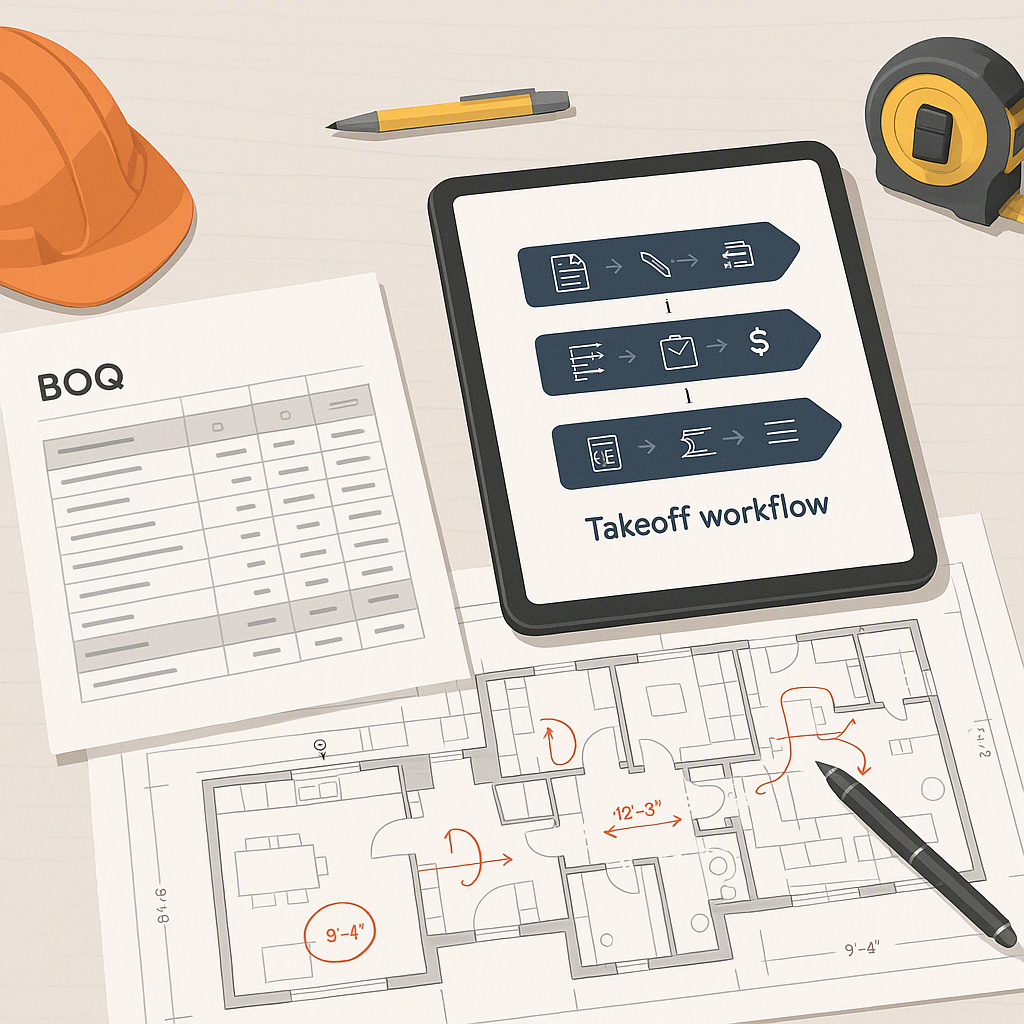
Here’s the workflow:
- Upload Plans: You feed your project drawings (PDFs, CAD, or BIM files) into an AI-powered platform like JobNext.
- Automatic Recognition: NVIDIA-powered AI scans the files, identifies key elements (walls, beams, finishes), and calculates quantities.
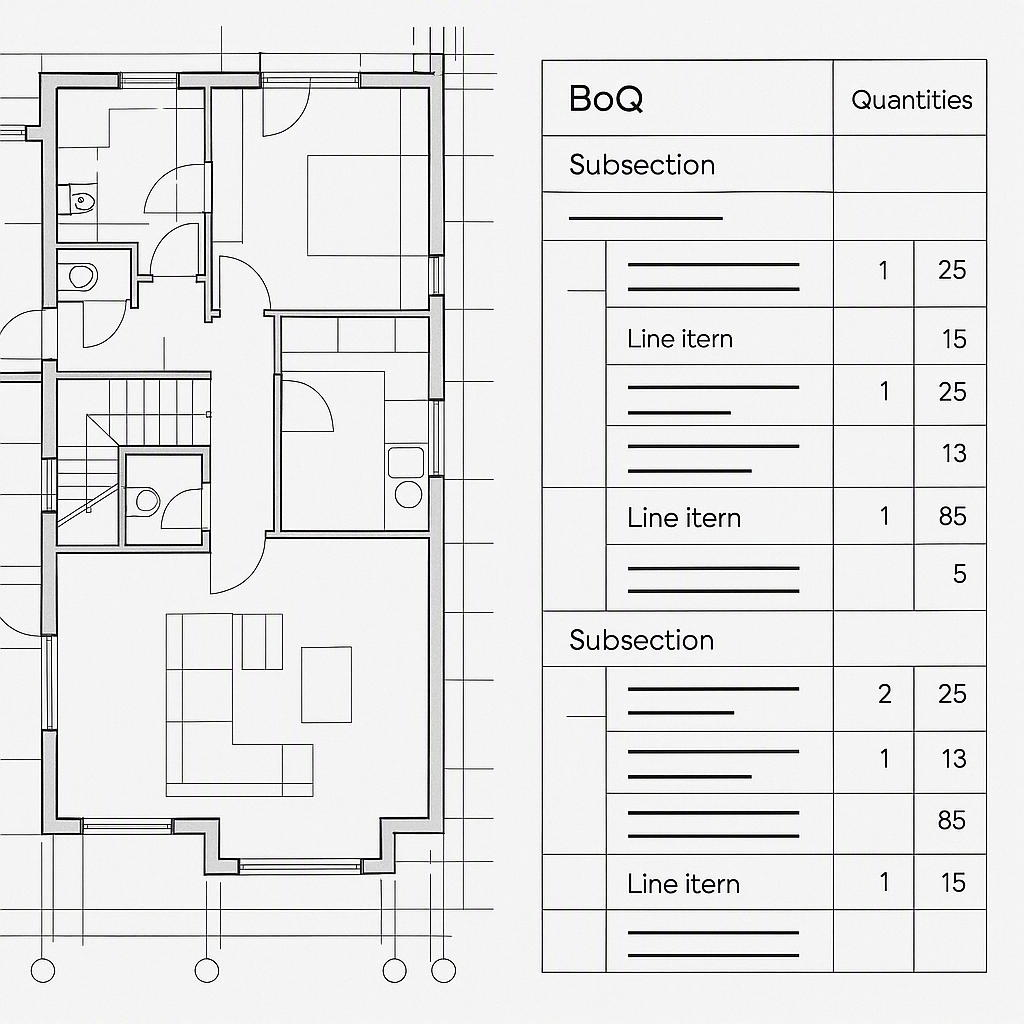
- BOQ Matching: The system matches quantities to predefined BOQ templates and applies standardized rates.
- Error Alerts: AI flags inconsistencies—missing dimensions, overlapping items, or overestimated quantities—before they make it into your bid.
Actionable Steps for Contractors
- Digitize Your Plans: Start by ensuring that all your plans are in a digital format—preferably high-resolution PDFs or CAD files. Low-quality scans can reduce the accuracy of AI takeoffs.
- Standardize Your BOQs: Create a template for your BOQs with consistent item descriptions and coding. This allows AI to easily map quantities to the correct line items.
- Validate Outputs: AI is highly accurate, but you should still cross-check key quantities and flagged items to avoid any surprises.
Real-Life Example
For example, JobNext uses a structured BOQ/WBS hierarchy to integrate AI takeoff data directly into your project budgets. Consider a contractor bidding on a 15,000 sq. ft. retail project. Traditionally, this would involve multiple estimators poring over drawings for hours. By switching to AI-powered takeoffs, they reduced their estimating time by 85% and identified a 5% material overestimation in their initial manual draft. This saved thousands before the project even started.
Real Numbers: Time and Cost Savings
Let’s break it down. A traditional takeoff for a mid-sized residential project (~20,000 sq. ft.) might take 30-40 hours. With NVIDIA AI Blueprints and a platform like JobNext, this can drop to under 2 hours. That’s a 90% time savings.
But the bigger win is accuracy. AI doesn’t get tired, distracted, or rush to meet a deadline. It identifies patterns and quantities with millimeter precision. This eliminates the “human error tax” that contractors have learned to live with.
Here’s a case study:
- Project Type: Multi-family residential building (50,000 sq. ft.)
- Manual Takeoff Time: 60 hours
- AI Takeoff Time: 5 hours
- Errors Detected: AI flagged 3 missing items in the original BOQ, preventing a $25,000 underestimation.
In another example from EstimateNext, a contractor reduced rework costs by 15% after switching to AI takeoffs. And rework, as we all know, is where profits go to die.
Why GPUs Are Essential for AI Takeoffs
You might be wondering: why is NVIDIA even in this conversation? Can’t any computer run AI takeoffs?
Short answer: no. AI takeoffs involve massive datasets and complex calculations. Traditional CPUs just can’t keep up. NVIDIA’s GPUs are designed for parallel processing, which means they can handle thousands of data points simultaneously. This is what makes real-time takeoff analysis possible.
GPU vs. CPU: A Quick Comparison
| Feature | CPU | GPU |
|---|---|---|
| Processing Speed | Slower for complex tasks | 10-100x faster for AI tasks |
| Parallel Processing | Limited | Thousands of simultaneous threads |
| Cost Efficiency | Cheaper upfront | Higher initial cost but greater ROI |
For contractors, this translates to faster bid cycles, more accurate estimates, and fewer sleepless nights worrying about blown budgets.
How JobNext Leverages AI for Takeoffs
JobNext integrates AI takeoff capabilities directly into its preconstruction module. Here’s how it works:
- BOQ Integration: AI-generated quantities are auto-mapped to your BOQ/WBS structure, so you start with a fully populated project scope.
- Rate Analysis: The system applies centrally managed rate schedules, ensuring consistent pricing across bids.
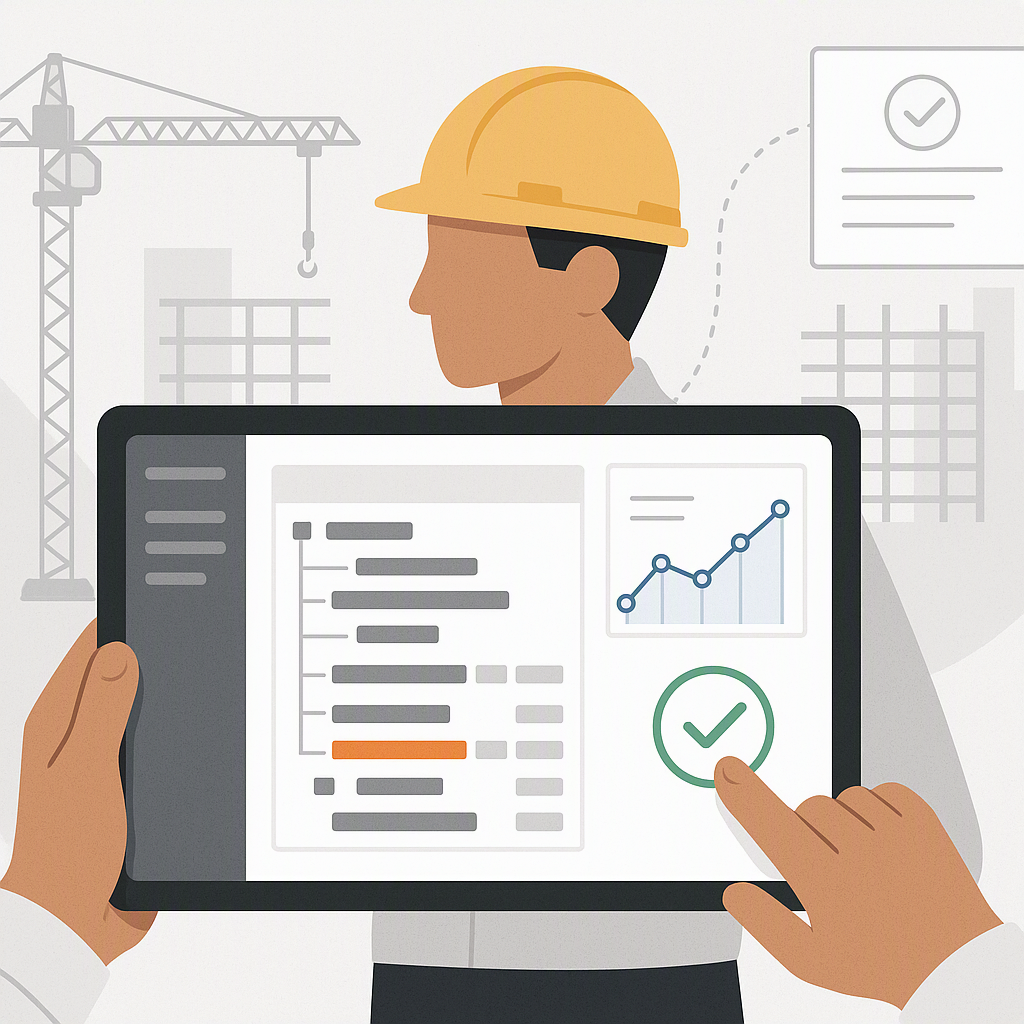
- Real-Time Validation: AI flags mismatches between quantities, scopes, and budgets, so you can fix issues before bidding.
Benefits Beyond Time Savings
- Cost Consistency: By standardizing rates across projects, you avoid discrepancies that can erode trust with clients.
- Improved Team Collaboration: With centralized data, project managers and estimators are always working from the same playbook.
- Scalability: Whether you’re bidding on one project or ten, AI ensures consistent quality and speed.
What’s the Catch? (Because There’s Always One)
AI takeoffs aren’t perfect. Here are a few limitations:
- Training Time: AI models need high-quality data to perform well. Poorly scanned PDFs or incomplete drawings can trip them up.
- Initial Setup: Implementing AI workflows requires some upfront effort—digitizing rate schedules, aligning BOQs, etc.
- Cost: GPU-accelerated tools can come with higher licensing fees compared to basic software. But the ROI usually offsets this.
That said, the learning curve is short. Most contractors see measurable benefits within their first few bids.
FAQ
Q: How accurate are AI takeoffs compared to manual methods? A: AI takeoffs are typically 95-99% accurate, depending on the quality of the input data. They significantly reduce human error.
Q: Can AI handle complex projects like hospitals or airports? A: Yes, but these projects require more advanced AI models and higher-quality input data, such as BIM files, to ensure accuracy.
Q: What happens if the AI makes a mistake? A: Most platforms, including JobNext, include validation checks to catch errors. You can also manually review flagged items before finalizing your estimate.
Q: Is NVIDIA the only company offering this technology? A: No, but NVIDIA is a leader in GPU acceleration, which is critical for real-time AI processing. Other companies also offer AI solutions, but their performance may vary.
Q: How much does this technology cost? A: Pricing varies by platform and project size. However, the time and cost savings typically outweigh the initial investment.
Ready to Stop Bleeding Margins?
If you’re still relying on manual takeoffs, it’s time to rethink your process. NVIDIA Blueprints and AI-powered platforms like JobNext aren’t just tools—they’re competitive advantages. Faster bids, better accuracy, fewer headaches.
Get started with JobNext today →
Learn more at EstimateNext