Why Manual Takeoffs Are Bleeding Contractors Dry
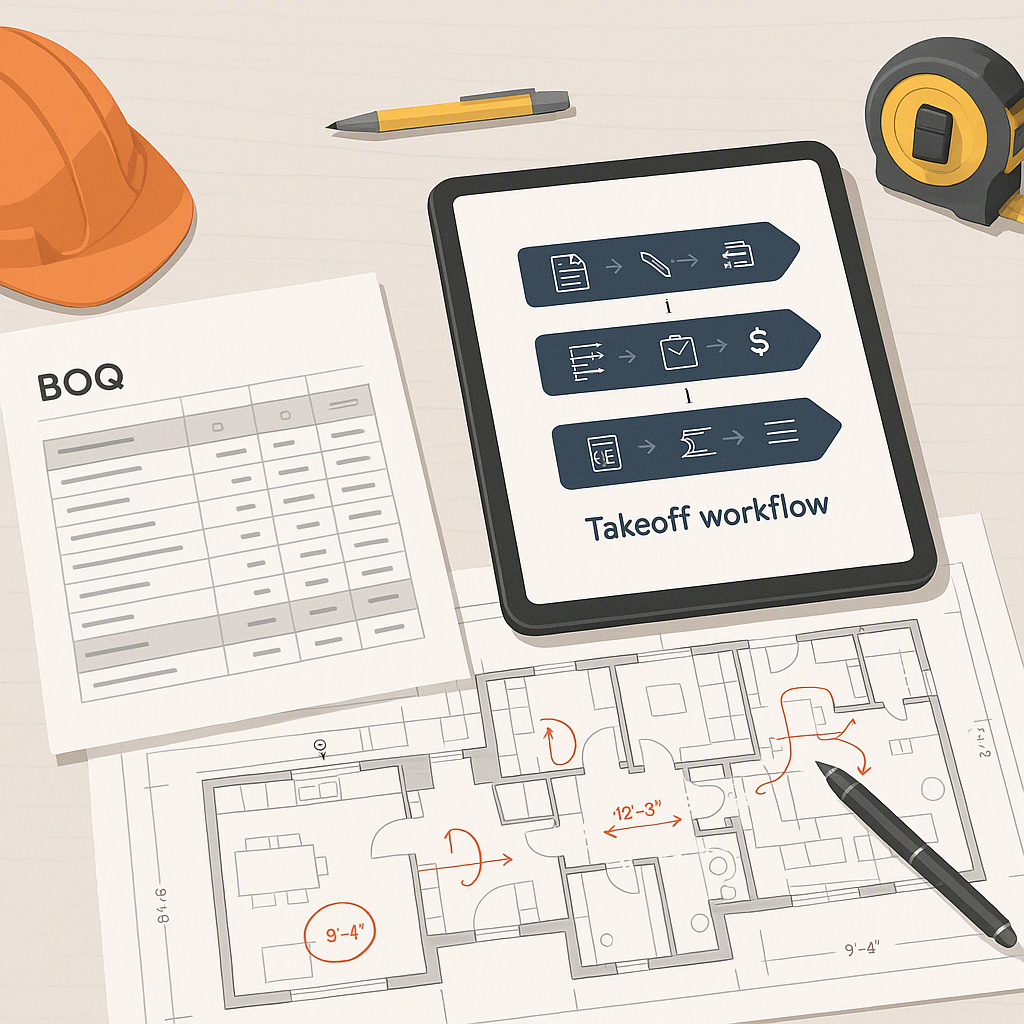
If you’ve worked on construction bids, you know how brutal manual takeoffs can be. Flipping through blueprints, measuring dimensions, and cross-checking BOQs (Bill of Quantities) isn’t just tedious—it’s expensive. One mistake, like a missed dimension or miscalculated quantity, can wipe out your project margins before you even break ground.
The worst part? It happens all the time. A 2023 McKinsey report found that 35% of construction projects run over budget due to estimation errors. For mid-sized contractors juggling multiple projects, even small errors add up fast.
So how do you fix it? That’s where NVIDIA AI Blueprints come in.
What Are NVIDIA AI Blueprints?
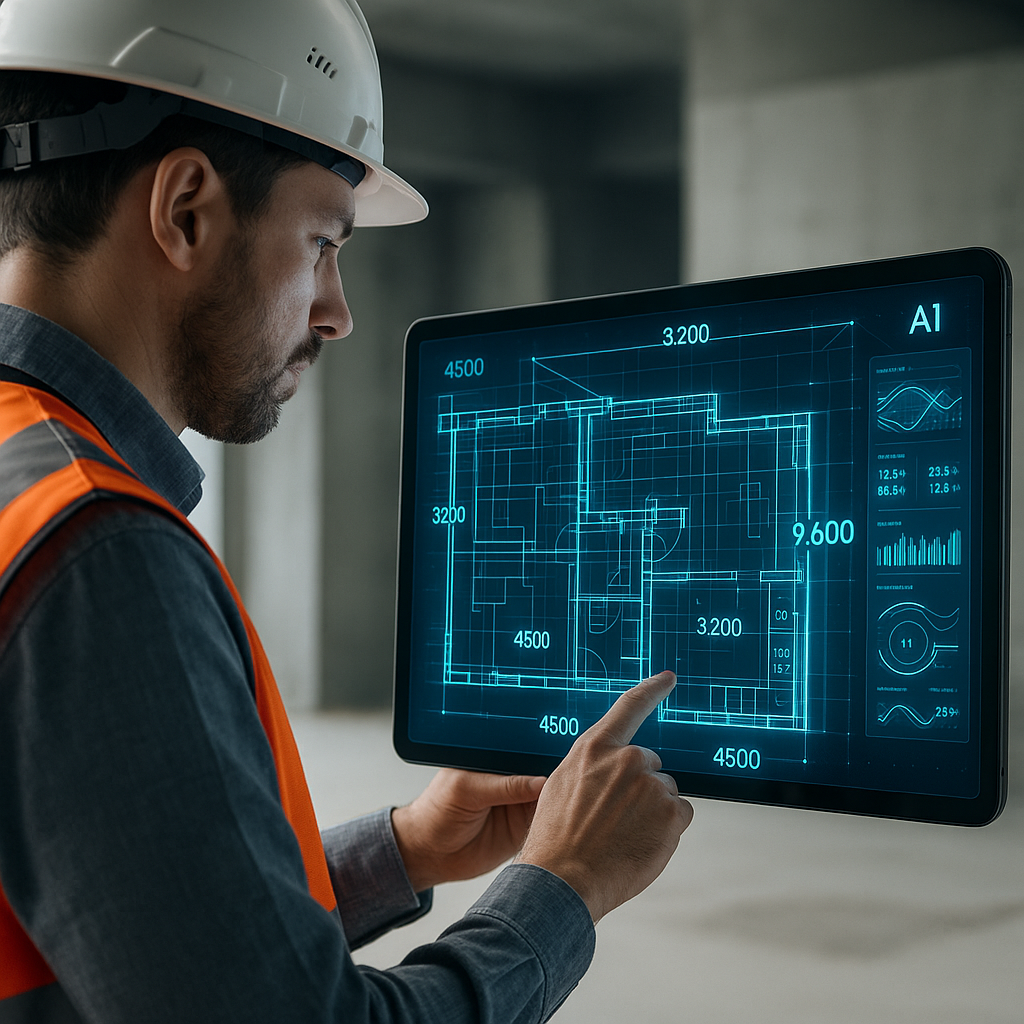
NVIDIA’s AI Blueprint technology is built on their Omniverse platform, a 3D design collaboration and simulation tool. But for contractors, the real magic lies in its ability to process complex blueprints using AI-powered vision. Think of it as having an expert estimator who never sleeps, never misses a detail, and works at lightning speed.
Here’s what it can do:
- Automated Dimension Extraction: AI reads and measures drawings faster than any human.
- Error Detection: It flags inconsistencies in blueprints, like mismatched scales or missing annotations.
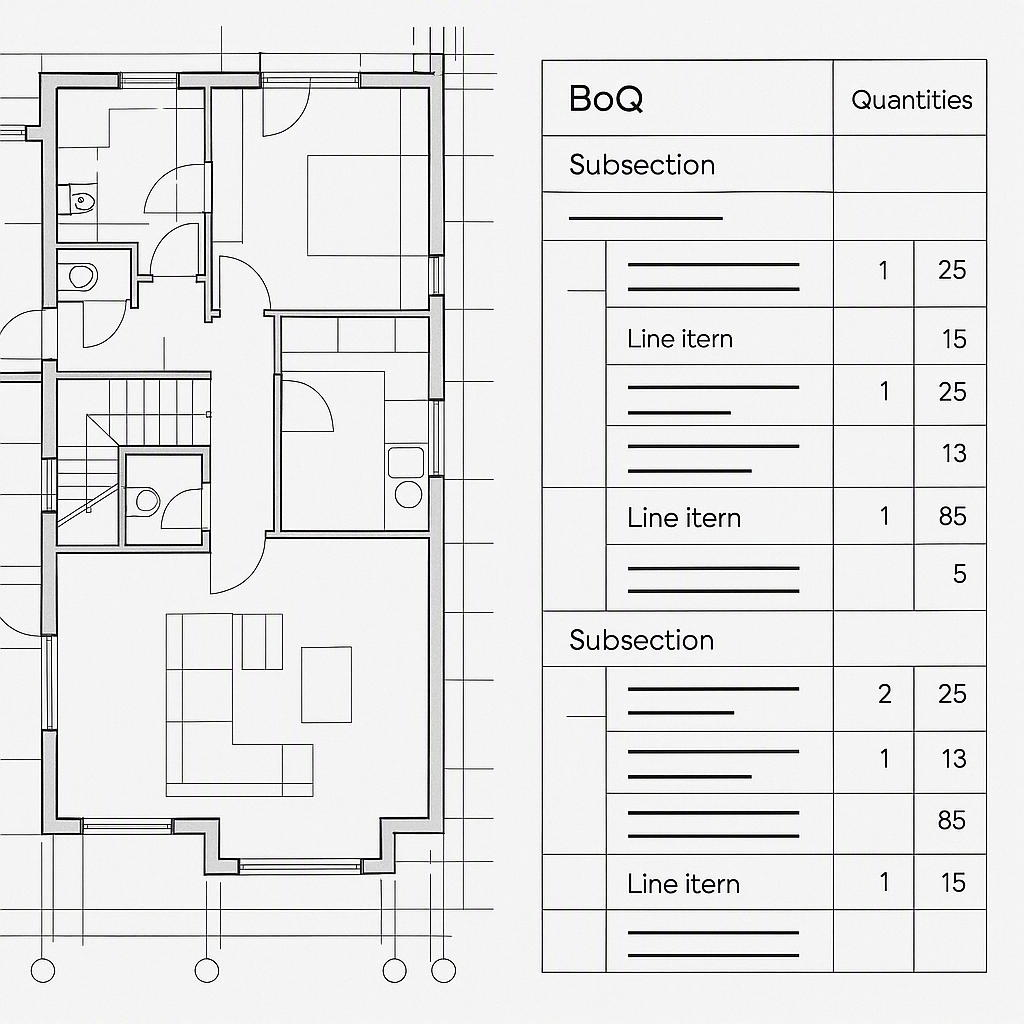
- BOQ Integration: Connects takeoff data directly to your project estimate, reducing manual entry errors.
Example in Action
Imagine you’re working on a commercial office project with 100,000 square feet of space. A manual takeoff might require you to measure and record every wall, window, and flooring area. This process could take your estimator 40-50 hours. With NVIDIA AI Blueprints, AI can process the entire set of blueprints in under 10 minutes, identifying dimensions, flagging potential issues, and generating a precise BOQ for your project.
But let’s not just talk tech. Let’s talk results.
Cutting 40 Hours to 10 Minutes: Real Gains for Contractors
According to this article on EstimateNext, AI tools like NVIDIA’s can reduce manual takeoff times from 40 hours to just 10 minutes. Imagine the savings on a large-scale EPC (Engineering, Procurement, Construction) project with dozens of drawings. Even for smaller jobs, shaving off 39+ hours per bid means your team can handle more projects with the same resources.
The Financial Math
Let’s break down the financial impact:
- Hourly Rate of Estimator: ₹1,500/hour
- Manual Takeoff Time: 40 hours = ₹60,000 per project
- AI-Powered Takeoff Time: 10 minutes (~₹250 in software costs)
That’s ₹59,750 saved on labor costs for every single project. Multiply that across 10 projects a month, and you’re looking at ₹5,97,500 in savings. For contractors working on 50-60 projects a year, the total savings could easily exceed ₹35 lakh annually.
Case Study: Residential Builders
One mid-sized residential builder in Bangalore adopted AI takeoff software and saw a 70% reduction in preconstruction costs within six months. Before AI, their team of three estimators could handle 4-5 projects per month, but with AI, they now process up to 12 bids monthly without adding headcount. More bids submitted means more chances to win profitable work.
How JobNext + NVIDIA AI Blueprints Can Work Together
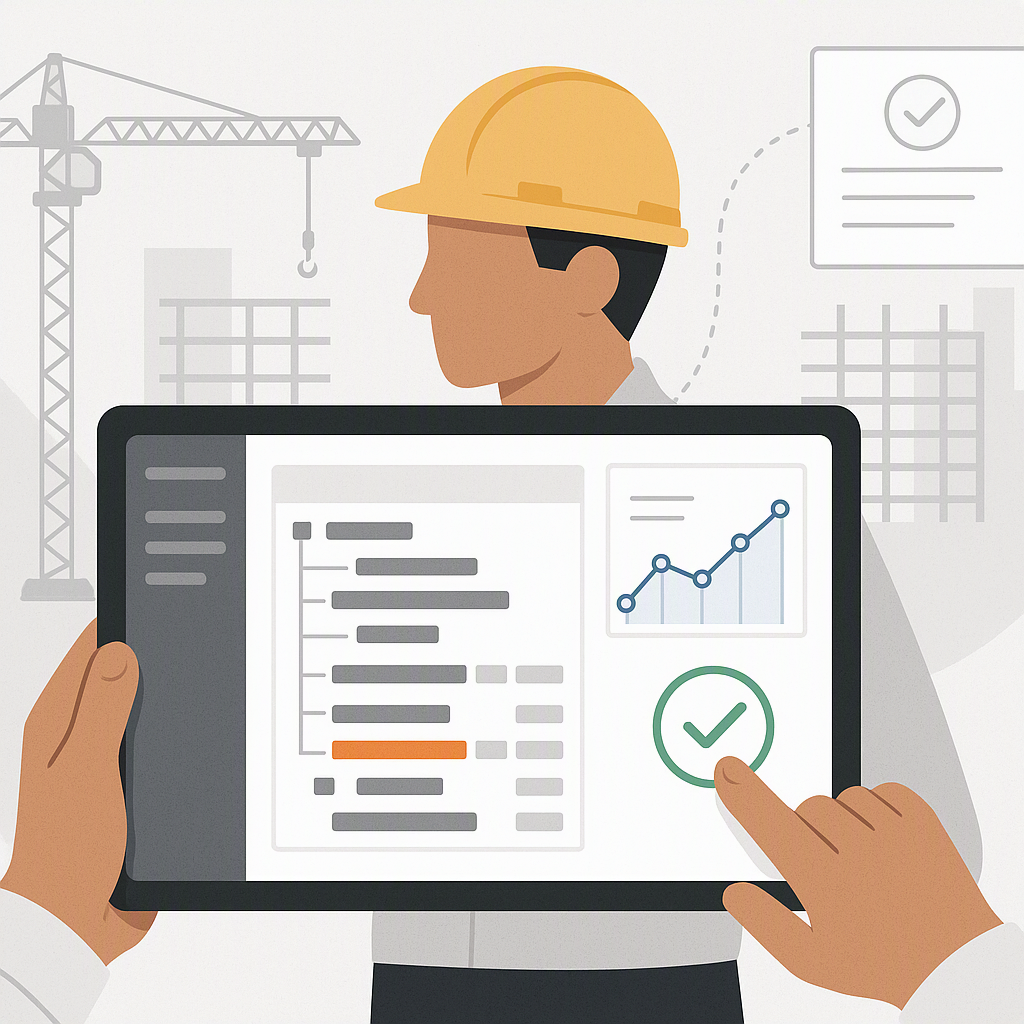
Here’s the kicker: integrating NVIDIA’s AI Blueprint tech into tools like JobNext makes the workflow seamless. JobNext already handles BOQs, resource planning, and cost tracking. When you add AI takeoffs to the mix, you’re not just saving time—you’re enforcing budget discipline.
Example Workflow
- Upload Blueprints to AI Tool: Drag and drop your project blueprints into the JobNext platform, which integrates NVIDIA AI Blueprint tech.
- Review AI-Generated Takeoff: In minutes, you’ll receive a complete takeoff report, including dimensions, quantities, and flagged inconsistencies.
- BOQ Integration: The takeoff data automatically populates the BOQ in JobNext, ensuring accurate estimates.
- Procurement Alignment: Use JobNext’s material procurement workflow (MR → RFQ → PO) to ensure every purchase aligns with the approved BOQ.
Benefits
- Eliminate Over-Ordering: Prevent costly material surplus.
- Avoid Under-Ordering: Reduce project delays caused by material shortages.
- Real-Time Cost Tracking: JobNext’s AI assistant generates reports comparing actual costs to estimates, giving you actionable insights mid-project.
Making the Transition: Challenges and Solutions
You might be thinking, “This sounds great, but what’s the downside?”
Common Challenges
- Data Quality: AI relies on accurate inputs. If your blueprints are messy or incomplete, the AI won’t deliver perfect results.
- Learning Curve: Your team will need training to effectively leverage the software.
- Upfront Costs: While AI tools save money in the long run, the initial investment can be significant for smaller firms.
How to Overcome These Challenges
- Invest in Training: Work with your software provider to train your team thoroughly. Many vendors offer onboarding programs and workshops.
- Clean Up Your Blueprints: Ensure your drawings are well-organized and properly annotated.
- Start Small: Begin with a pilot project to test the software’s capabilities before rolling it out across your organization.
Comparison: Manual vs AI-Powered Takeoffs
| Feature | Manual Takeoffs | AI-Powered Takeoffs |
|---|---|---|
| Time Required | 20-50 hours per project | 10 minutes |
| Accuracy | Prone to human error | 90-95% accurate |
| Cost per Project | ₹60,000+ (labor costs) | ₹250 (software costs) |
| Scalability | Limited by team size | Scalable across projects |
| Error Detection | Manual, time-consuming | Automated |
| Integration with BOQs | Manual entry | Seamless |
FAQs
1. How much does NVIDIA AI Blueprint technology cost? Costs vary depending on your usage and integration needs. Most contractors use it as part of a larger solution like JobNext, which bundles AI-driven features into one package. Pricing typically starts around ₹10,000-₹15,000 per month for small teams.
2. Is this tech only for large contractors? Not at all. Small and mid-sized contractors benefit just as much, especially if they’re managing multiple projects with lean teams. The scalability of AI solutions makes them ideal for companies of all sizes.
3. How accurate is AI in reading blueprints? In my experience, AI tools are 90-95% accurate. You’ll still need a human to verify critical details, but it’s a massive improvement over manual methods.
4. What happens if the AI makes a mistake? AI tools are designed to flag potential errors, but they’re not perfect. Always review critical dimensions and quantities manually. Over time, as the AI learns from your data, its accuracy will improve.
5. How long does it take to see ROI with AI-powered takeoffs? Most contractors report seeing a return on investment within 3-6 months, especially if they’re bidding on multiple projects per month.
Ready to Stop Losing Margins?
If manual takeoffs are eating into your project margins, it’s time to make a change. Tools like JobNext, paired with NVIDIA AI Blueprint technology, can save you time, money, and headaches. By automating tedious tasks, you can focus on what really matters—winning more bids and delivering successful projects.
Get started with JobNext today →
Learn more at EstimateNext