Why Estimation Error Rates Matter in Construction
Every contractor knows the pain of a bad estimate. A single error can snowball—underestimated material costs, incorrect labor rates, or overlooked overheads. These mistakes don’t just eat margins; they wreck entire projects. Yet, many professionals underestimate just how impactful these errors can be on their bottom line.
But here’s the kicker: estimation errors aren’t always human mistakes. Increasingly, contractors rely on machine learning tools to automate estimates. The tech is promising, but it’s not immune to error. Understanding the estimation error rate is critical if you’re using AI-based systems or manual processes.
What Is Estimation Error Rate?
Estimation error rate measures how far off your predicted costs are compared to actuals. This isn’t just about rounding mistakes—it’s about systemic inaccuracies that can add up.
In machine learning, estimation error rate is often calculated using statistical methods like Mean Absolute Error (MAE), Root Mean Square Error (RMSE), or Mean Percentage Error (MPE). Each method provides a slightly different angle for evaluating errors:
- Mean Absolute Error (MAE): This calculates the average magnitude of error, without considering whether the error was an overestimate or an underestimate. Lower MAE scores indicate better accuracy.
- Root Mean Square Error (RMSE): RMSE penalizes larger errors more heavily than smaller ones. It’s ideal for spotting outliers in your data.
- Mean Percentage Error (MPE): This method expresses errors as a percentage of actual costs, offering a normalized view that works well across projects with varying scales.
Calculating Estimation Error Rate
Here’s how you can calculate the error rate manually:
-
Collect Data: Gather estimated costs and actual expenses for completed projects.
-
Use MAE Formula: ( MAE = \frac{1}{n} \sum_{i=1}^{n} |\text{Actual}_i - \text{Estimated}_i| )
-
Calculate RMSE: ( RMSE = \sqrt{\frac{1}{n} \sum_{i=1}^{n} (\text{Actual}_i - \text{Estimated}_i)^2} )
-
Normalize Errors (Optional): If you want percentage error, divide the error values by actual costs and multiply by 100.
Why 10% Matters
In construction, error rates above 10% can suggest your bids are consistently off the mark. For example, a 10% underestimation on a ₹10 crore project means ₹1 crore in unexpected expenses—a margin killer for any contractor.
Why Machine Learning Errors Happen
AI tools are revolutionizing construction estimates, but they aren’t perfect. They rely heavily on historical data and contextual features. Here’s why machine learning estimation errors occur:
1. Data Quality Issues
The old saying "garbage in, garbage out" applies here. If your historical cost data is incomplete, inaccurate, or inconsistent, the predictions will reflect those flaws. For example:
- Missing labor rates for specific regions.
- Outdated material prices.
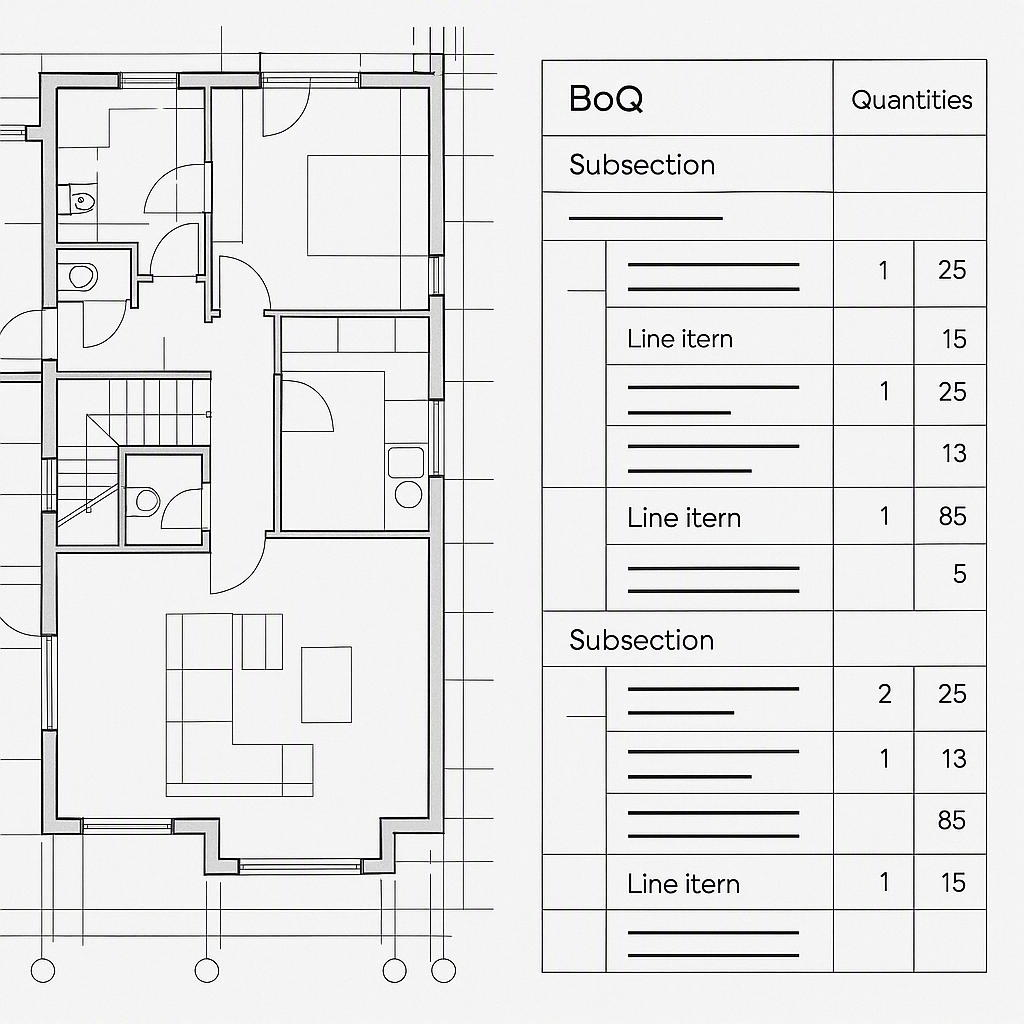
- Incorrect categorizations in your Bill of Quantities (BOQ).
2. Misaligned Features
AI models use features like labor costs, material rates, and project type to train their algorithms. However, many tools fail to account for:
- Regional Variations: Labor costs in Mumbai differ drastically from those in rural Maharashtra.
- Seasonal Fluctuations: The price of cement can spike during monsoon delays.
To address misaligned features, contractors should work with AI tools that allow for custom adjustments or localized inputs.
3. Overfitting
Some machine learning models become overly tailored to past projects. While this ensures precision for similar jobs, it makes the model less effective for new types of work or projects in unfamiliar regions. Regularly retraining the model with diverse datasets can help mitigate this.
Practical Methods to Reduce Estimation Errors
Reducing estimation errors requires a mix of technology and human oversight. Let’s explore actionable steps:
Step 1: Audit Your Data
Start by cleaning your historical data:
- Ensure all entries have accurate labor, material, and overhead rates.
- Remove duplicate or irrelevant entries.
- Standardize units (e.g., square meters vs. square feet).
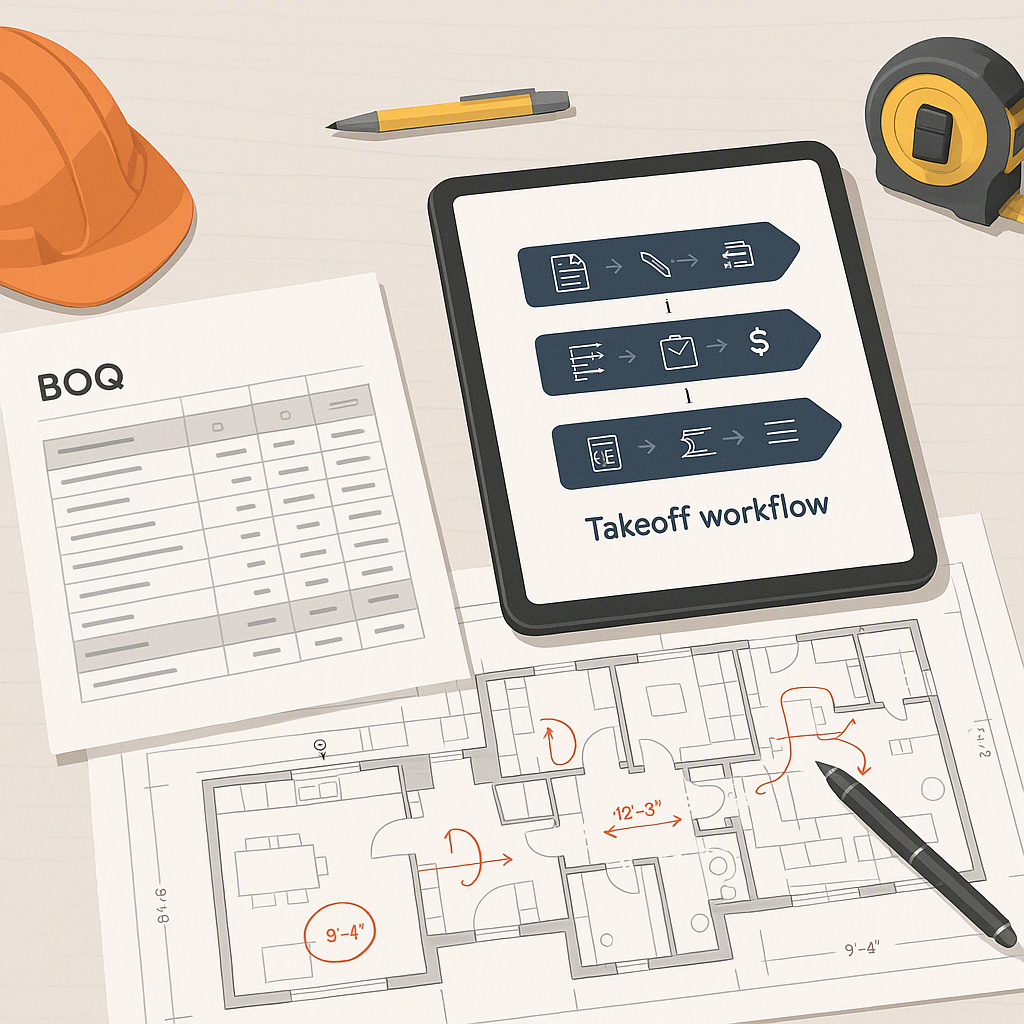
Step 2: Use Structured Estimation Workflows
Adopt workflows that include multiple checkpoints:
- Break down BOQ items (e.g., labor, materials, machinery, subcontractor costs).
- Allocate waste percentages (e.g., 5-10% for material losses).
- Review line items before submitting the final estimate.
Step 3: Leverage AI Tools
Tools like JobNext and EstimateNext can automate portions of your estimation process:
- Use predefined rate schedules updated for current market conditions.
- Flag anomalies automatically, such as unusually low labor rates.
- Normalize subcontractor bids to avoid inconsistencies.
Step 4: Combine AI With Human Oversight
Even the best AI tools need manual review. Assign a qualified estimator to:
- Validate flagged anomalies.
- Adjust rates for local conditions.
- Account for unique project constraints.
How AI Tools Handle Estimation Errors
AI-powered platforms are advancing rapidly. Here’s how they help reduce errors:
1. Automating Rate Lookup
Instead of manually searching for updated labor or material rates, AI tools pull current data and apply it to your estimates.
2. Bid Normalization
Subcontractor quotes often vary in format, making comparisons difficult. AI tools standardize these bids, ensuring you're comparing apples to apples.
3. Error Flagging
AI algorithms use statistical models to flag anomalies, such as labor rates that deviate significantly from regional averages.
Common Mistakes in Error Analysis
Many contractors make these mistakes when analyzing estimation errors:
Mistake 1: Ignoring Small Errors
A 2% error might seem minor, but on large-scale projects, it can become significant. For example, a ₹50 crore project with a 2% underestimation equals ₹1 crore in hidden costs.
Mistake 2: Over-relying on AI
AI tools are not infallible. Blind trust in technology can lead to missed discrepancies. Always double-check estimates manually.
Mistake 3: Neglecting Regional Variations
Labor and material costs vary widely across locations. Ensure your models account for these differences to avoid skewed estimates.
FAQ: Estimation Error Rates
Q: What’s an acceptable error rate for construction estimates?
A: Under 5% is considered ideal for most projects. Anything above 10% signals serious inaccuracies that need addressing.
Q: How do I calculate estimation error rate?
A: Use formulas like MAE or RMSE to compare estimated costs against final expenditures. For percentage errors, divide the error values by actual costs and multiply by 100.
Q: Can AI completely eliminate estimation errors?
A: No. AI reduces errors significantly but isn’t foolproof. It works best when combined with human oversight.
Q: How often should I retrain AI models used for estimation?
A: Retrain your models at least annually or whenever there’s a major market shift (e.g., material price hikes or new labor regulations).
Q: Are manual estimates better than AI estimates?
A: Not necessarily. Manual estimates are prone to human error while AI estimates are vulnerable to data quality issues. Combining both methods often yields the best results.
Decision Framework for Choosing Estimation Tools
| Criteria | Manual Processes | AI-Based Tools | Hybrid Approach |
|---|---|---|---|
| Accuracy | Moderate (5-10% errors) | High (2-5% errors) | Very High (<2% errors) |
| Scalability | Low | High | Moderate |
| Cost | Low upfront cost | Higher upfront cost | Moderate cost |
| Ease of Use | High (simple workflows) | Moderate (training needed) | Moderate |
| Data Quality Dependency | Low | High | Moderate |
Call to Action
If estimation errors are killing your margins, platforms like JobNext can help. Structured workflows and data-driven tools reduce errors and protect profitability. Start improving your estimates today with JobNext or explore AI-based solutions like EstimateNext.
Learn more at EstimateNext