The BOQ Problem Nobody Talks About
Most contractors think their BOQ is solid until the final bill comes in. Then the questions start. Why are there gaps between estimated and actual costs? How did we miss that scope variation? And why is the margin nowhere near what we planned? These problems aren’t rare—they’re the norm for contractors who don’t manage their BOQ effectively.
What Is BOQ BSB and Why It Matters
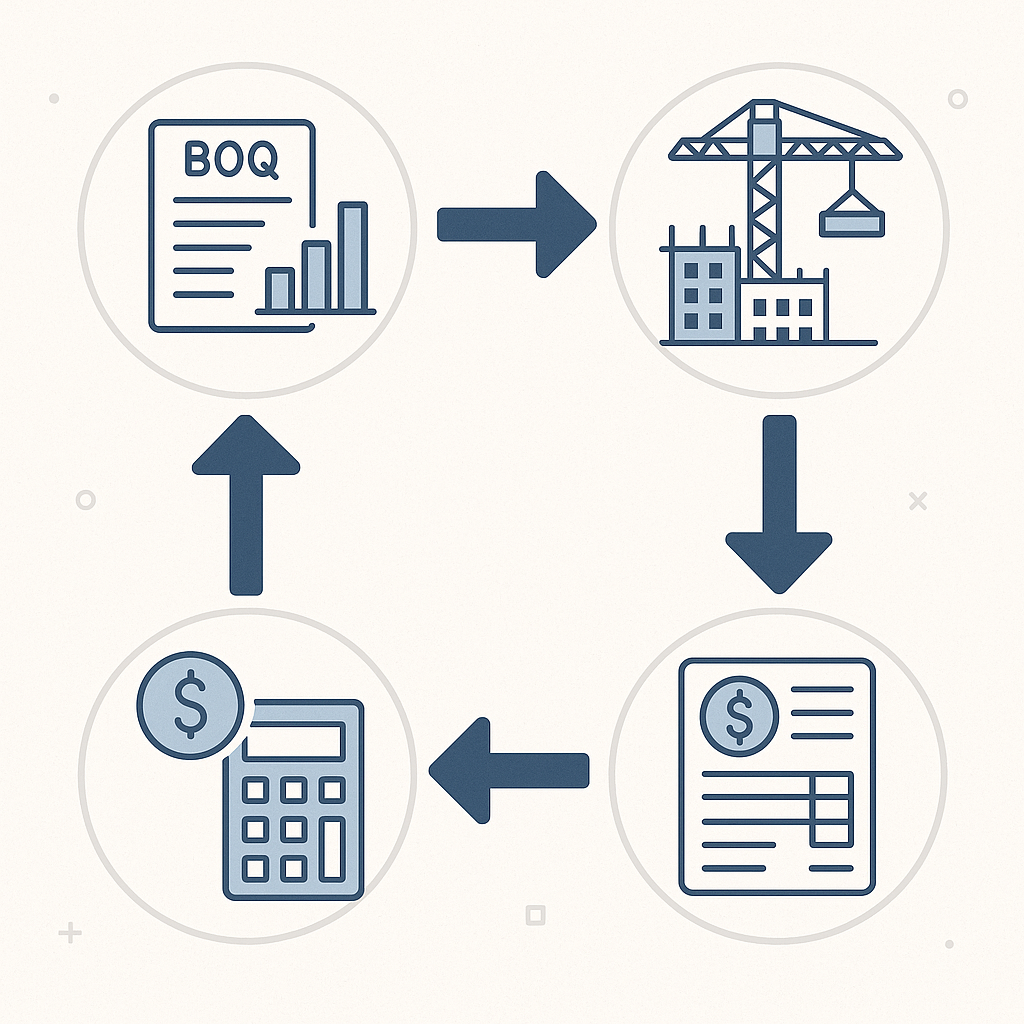
The BOQ (Bill of Quantities) is more than just a document listing quantities and rates. It’s the foundation of your cost tracking and billing process. BOQ BSB refers to the structured workflow that ensures your BOQ is actionable: from budgeting and scope linking to real-time progress tracking and billing. When done right, BOQ BSB saves you from revenue leakage and cost overruns. When done wrong? It’s a silent margin killer.
Real-World Example: Stage-Wise Billing
Illustrative example — Let’s say you’re working on a general contracting project. Your BOQ includes multiple items, ranging from excavation to finishing. For milestone-based payments, you use stage-wise billing. Here’s how it works:
- Each BOQ item is divided into stages (e.g., Foundation 30%, Structure 40%, Finishing 30%).
- Progress is tracked at the stage level, and billing is tied to percentages completed.
- The system validates that all stages sum to exactly 100% for each BOQ item.
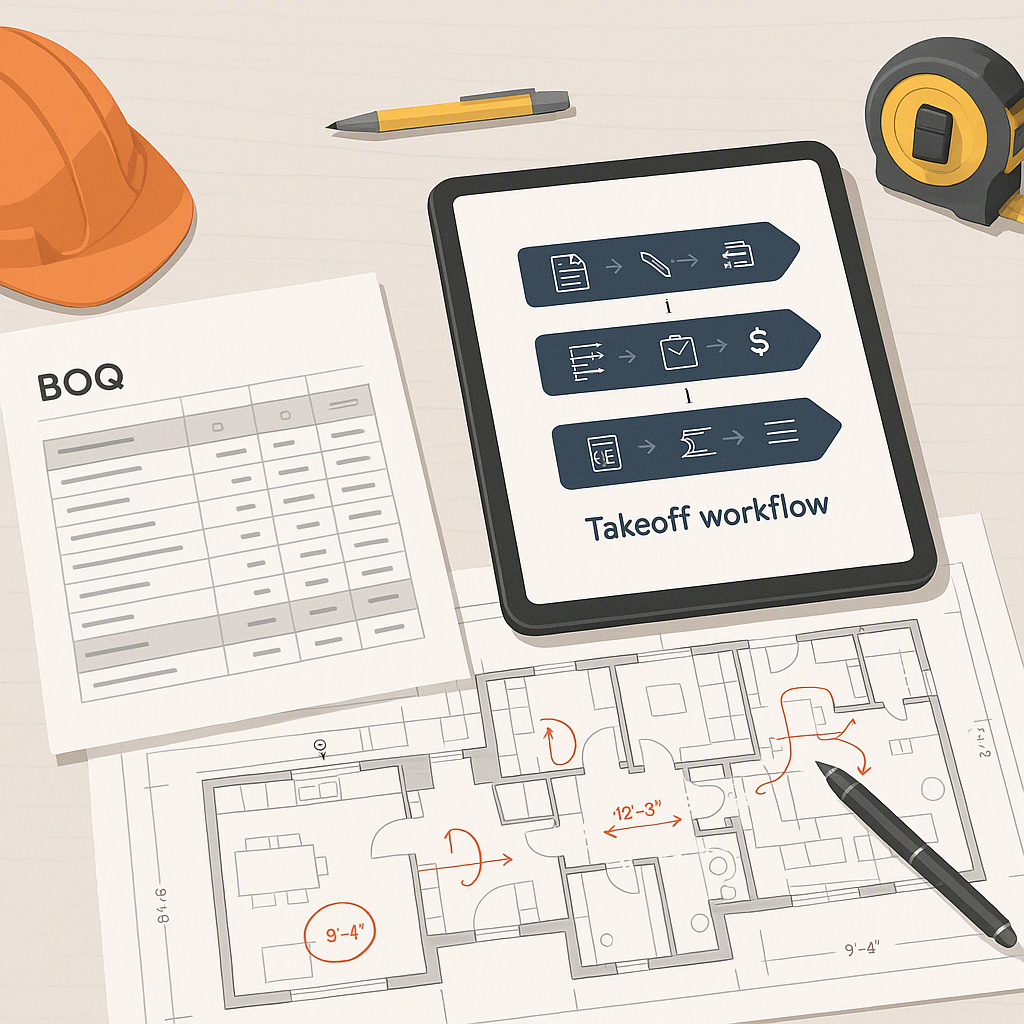
This method ensures transparency and prevents underbilling. But here’s the catch: if you don’t link the BOQ to actual progress measurements, you risk invoicing errors. This is where tools like digital project management platforms come in. They automate the transition from BOQ to contracted state, track progress at the scope level, and roll it up to the BOQ for billing. No manual spreadsheets. No missed stages.
Common Mistakes Contractors Make
- Skipping the BOQ-to-Scope Link: Every BOQ item should be linked to a scope of work. Without this, you can’t track progress effectively.
- Ignoring Variations: BOQs aren’t static. Scope changes, material price hikes, and design revisions happen. If your BOQ doesn’t reflect these, your billing will be off.
- Relying on Manual Measurements: Handwritten measurements are error-prone. Use a digital system to ensure accuracy and auditability.
- Not Using an Approval Workflow: Measurements should go through internal approval before billing. This prevents disputes with clients later on.
How to Fix It: A Step-by-Step Guide
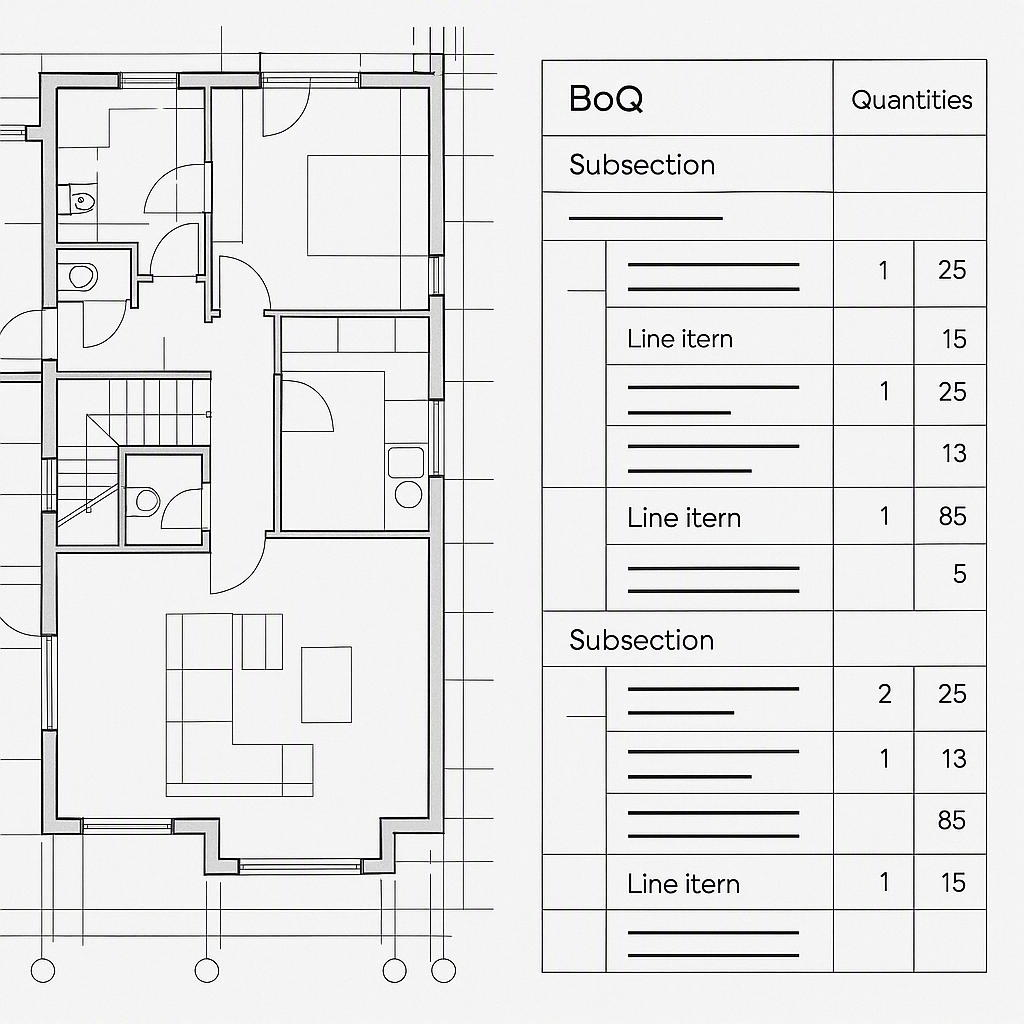
- Set Up the BOQ Correctly: Organize items into a clear hierarchy (e.g., Civil Works > Excavation > 500 CUM). Define quantities, units, and rates.
- Link BOQ to Scopes: Every BOQ item should map to a scope in your Work Breakdown Structure (WBS). This creates a bridge between client deliverables and execution activities.
- Track Progress Digitally: Record actual quantities completed using a software tool. Digital platforms let you create, approve, and roll up measurements for billing.
- Use Automated Billing: Choose a billing method that fits your contract. For milestone-based projects, stage-wise billing ensures accurate invoicing tied to progress.
- Monitor Variations: Update the BOQ whenever there’s a scope change. Digital tools help you track changes and avoid billing gaps.
Why BOQ Accuracy Drives Margins
A report by Construction Dive highlighted that a significant portion of construction costs often goes untracked or misallocated. That’s margin you’re leaving on the table. BOQ accuracy isn’t just about avoiding disputes; it’s about protecting your bottom line.
FAQ
1. What’s the biggest BOQ mistake contractors make?
Not linking the BOQ to actual job progress. Without this, you can’t track or bill accurately.
2. Can I automate BOQ tracking?
Yes. Digital tools automate the BOQ lifecycle—creation, progress tracking, and billing—saving time and reducing errors.
3. How do I handle scope variations?
Update the BOQ whenever there’s a change. Make sure your billing system tracks these variations to avoid underbilling.
The Bottom Line
If your BOQ isn’t structured and tracked properly, you’re bleeding margin. Digital tools can help you transition from manual chaos to automated accuracy.
Learn more at EstimateNext