Why Free Construction Takeoff Software Isn’t Always Free
When contractors hear “free takeoff software,” the first reaction is excitement. Who doesn’t want to cut costs? But here’s the reality: free tools often come with hidden costs. Whether it’s time wasted on manual data entry, limited features requiring constant workarounds, or the inability to integrate with your existing systems, the wrong choice can backfire. Let’s break down what truly matters when evaluating free takeoff software—and how to make it work for you.
The Core Features of Construction Takeoff Software
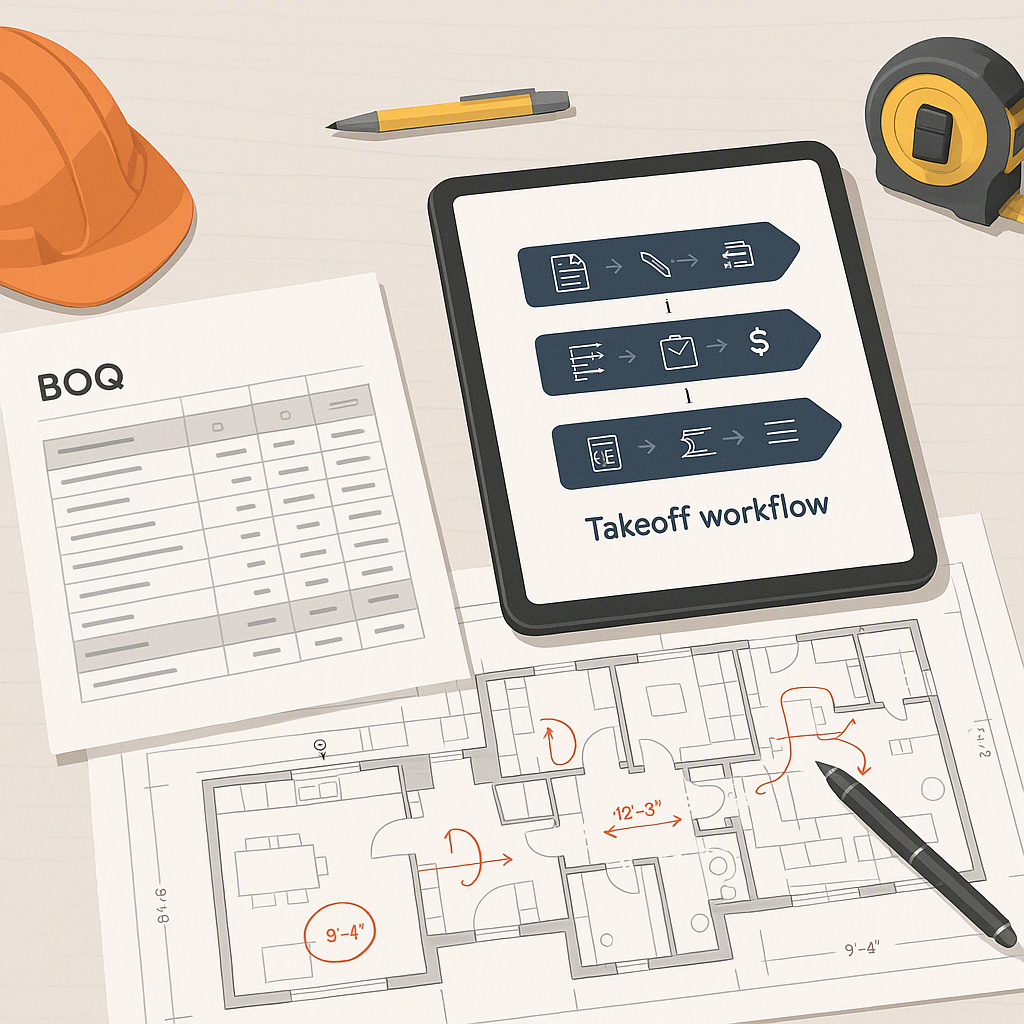
At its heart, takeoff software should make quantity takeoffs faster, more accurate, and easier to share. These are the essential features to look for:
1. PDF Blueprint Support
Most takeoff work starts with a PDF plan. A good free tool should allow you to upload, scale, and mark up blueprints without a headache. Here’s what to prioritize:
- Automatic Scaling: Scaling a blueprint is often tedious and prone to error. Software with automatic scaling (or tools that allow you to calibrate dimensions) saves time and ensures accuracy.
- Overlay Revisions: Managing blueprint revisions manually can lead to costly mistakes. Look for tools that allow you to overlay new blueprints onto old versions to quickly spot changes.
- Markup Tools: These should let you annotate directly on the blueprint, adding notes or clarifications for team members.
2. Measurement Tools
Measurements are the foundation of any takeoff process. The software you choose should include the following:
- Linear, Area, and Volumetric Measurements: Ensure the tool can handle all necessary dimensions, whether you’re marking pipe lengths, concrete areas, or volume for excavation.
- Custom Scales: Some projects require non-standard scales. A good tool should allow you to define custom scales for accurate measurements.
- Reusable Measurements: The ability to save frequently used measurements (e.g., for recurring components) can significantly speed up repetitive tasks.
3. BOQ (Bill of Quantities) Export Options
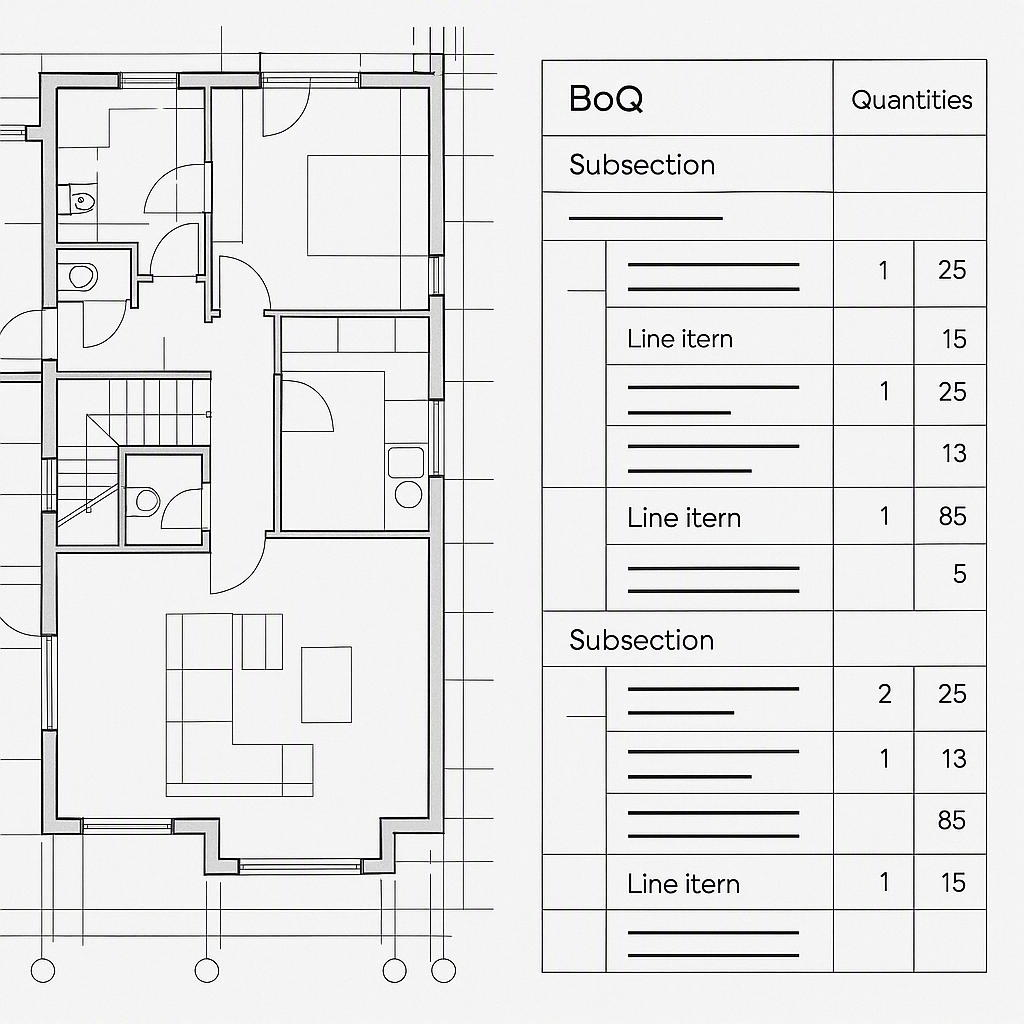
Takeoff doesn’t end with measurement. Contractors need to convert those numbers into a usable BOQ format. Here’s what to look for:
- Multiple Export Formats: The tool should support CSV, Excel, or PDF exports.
- Compatibility: Ensure the exports are compatible with your estimating software or project management tools to avoid manual re-entry.
- Customizable Templates: Some tools allow you to create BOQ templates tailored to your workflow.
4. Cloud Access
Modern construction projects require collaboration. Free software often limits this capability, but it’s critical for:
- Role-Based Access: Allow different team members (e.g., site engineers, project managers) to access data specific to their roles.
- Real-Time Updates: Ensure all collaborators are using the most up-to-date version of the takeoff.
- Cross-Device Compatibility: Field teams often use tablets or smartphones. Choose software that works seamlessly across devices.
The Hidden Problem: Disconnected Systems
Here’s where most free tools fall short. They’re great at one thing—takeoffs—but they don’t integrate with your estimating, procurement, or project management workflows. This creates a disjointed process that leads to inefficiencies. Let’s explore this issue in more depth.
Why Integration Matters
-
Eliminating Redundant Steps: Without integration, contractors must export data from takeoff tools and manually input it into estimating or project management software. This is time-consuming and error-prone.
-
Data Consistency: Disconnected tools increase the risk of inconsistencies. For example, if you update a quantity in your takeoff, you’ll need to manually update it elsewhere—a recipe for errors.
-
Real-Time Collaboration: Integrated systems ensure everyone is working with the same data, reducing miscommunication.
A Real Solution: JobNext’s Preconstruction Module
Unlike standalone takeoff tools, JobNext’s Preconstruction Module allows you to seamlessly convert takeoffs into BOQs, quotes, and eventually, execution jobs. Here’s how:
- Estimate-Based Quote: Build the entire cost structure—materials, labor, and equipment—directly against BOQ lines. Once approved, it’s ready for quoting, eliminating redundant steps.
- Integrated Workflow: JobNext connects your takeoff data to other preconstruction activities, such as procurement planning and budget tracking.
For more information, check out JobNext’s Preconstruction Workflow.
Recommended Free Tools and Their Limitations
Let’s look at some popular free takeoff options and where they shine—or fall short:
| Tool | Best For | Limitations |
|---|---|---|
| PlanSwift Free Trial | Beginners testing features | Limited trial period; no long-term free plan. |
| Bluebeam Revu | Digital markups | Free version lacks advanced measurement tools; steep learning curve. |
| MeasureSquare Lite | Small residential jobs | Restricted to basic linear and area measurements; no BOQ export options. |
| Cubit Go | Cloud-based collaboration | Free tier only supports 1 project at a time; limited storage capacity. |
| On-Screen Takeoff | Commercial projects (trial) | Free trial only; full version is expensive for small contractors. |
How to Choose the Right Tool
When evaluating these tools, consider:
- Project Size: Smaller jobs may work fine with limited tools, but larger projects require more robust solutions.
- Usage Frequency: If you only need takeoff software occasionally, a free trial may suffice. For regular use, a paid solution offers better value.
- Integration Needs: If your workflow involves multiple systems, prioritize tools that integrate seamlessly.
What Contractors Get Wrong About Takeoffs
1. Ignoring Integration
Takeoffs are just one step in the preconstruction process. If your software doesn’t feed directly into your estimating and project management tools, you’re doubling your workload. Always consider how the tool fits into the bigger picture of your operations.
2. Underestimating Training Time
Free software often comes with minimal support. If your team spends weeks learning the tool, you’re losing money—even if the software didn’t cost you anything upfront. Opt for tools with robust documentation, tutorials, or customer support.
3. Not Accounting for Scale
A free tool might work for small residential jobs but struggle with complex projects requiring multiple collaborators and detailed resource breakdowns. Consider your long-term needs before committing.
FAQ: Common Questions About Free Takeoff Software
1. Can I rely on free takeoff software for large projects?
Probably not. Free tools are often limited in scope and scalability. For large, multi-scope projects, you’ll need features like resource linking, detailed BOQ exports, and multi-user functionality.
2. What’s the biggest drawback of free tools?
The biggest drawback is often the lack of integration. Most free tools work in isolation, creating data silos that slow down your workflow and increase the risk of errors.
3. How can I test if a tool is right for me?
Start with a pilot project. Evaluate its accuracy, ease of use, and compatibility with your existing systems. Focus on how well it integrates with your estimating and project management workflows.
4. Are there any fully free tools with no limitations?
No. Most “free” tools are either limited versions of paid software or come with restrictions like time limits or feature caps. Be wary of tools that claim to be completely free but lack essential features.
5. How does JobNext handle takeoffs differently?
JobNext integrates takeoffs into a unified preconstruction workflow, converting them seamlessly into BOQs, quotes, and project plans without manual data transfers. This reduces errors and speeds up the overall process.
Conclusion
Free construction takeoff software can be a good starting point, but it’s not a long-term solution for serious contractors. The hidden costs—manual work, disconnected systems, and scalability limits—often outweigh the savings. If you’re tired of juggling tools and want a smoother, more integrated process, JobNext can help.
Decision Framework: Free vs. Paid Takeoff Software
| Criteria | Free Tools | Paid Tools (e.g., JobNext) |
|---|---|---|
| Cost | Free, but with hidden time costs | Monthly/annual fee, but with ROI on efficiency |
| Features | Basic measurement tools | Advanced features like BOQ exports, quoting |
| Scalability | Limited to small projects | Suitable for large/multi-scope projects |
| Integration | Rare | Seamless integration with other systems |
| Training & Support | Minimal | Comprehensive resources and customer support |
If you’re ready to eliminate margin-killing inefficiencies and scale your business with confidence, try JobNext today.
Learn more at EstimateNext