CESMM3: The Civil Engineer’s BOQ Playbook
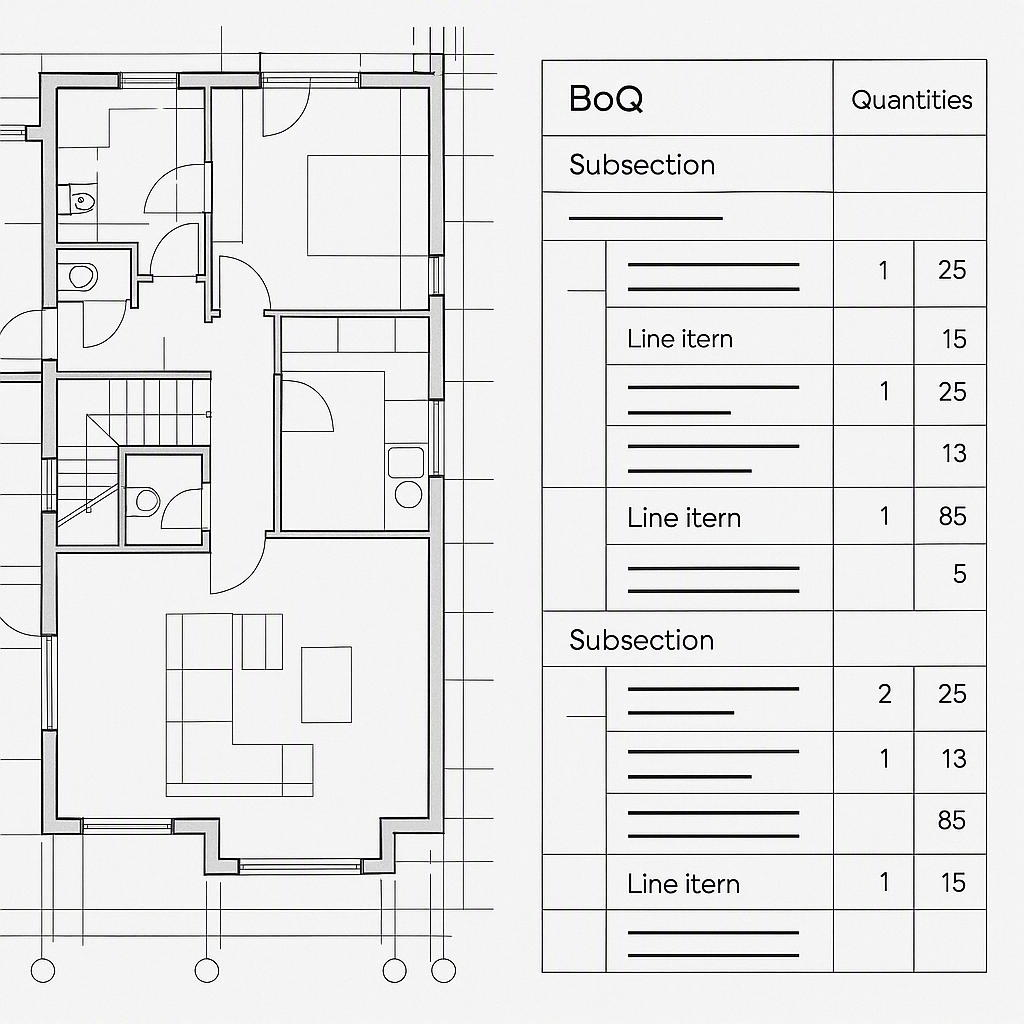
If you’ve ever built a Bill of Quantities (BOQ) for a civil engineering project, you know the headache. Different formats, inconsistent measurement units, and vague descriptions can throw your cost estimation off by miles. CESMM3—the Civil Engineering Standard Method of Measurement—fixes that.
Why CESMM3 Matters
Think of CESMM3 as the dictionary for BOQ preparation. It standardizes how work items are described, measured, and quantified. This is crucial in civil engineering, where even small errors in measurement can balloon into major cost overruns.
Key Benefits of CESMM3:
-
Uniform Units of Measurement CESMM3 specifies consistent units for all BOQ items. For example, concrete is measured in cubic meters, while reinforcement steel is measured in kilograms. Without these standards, contractors might price the same item differently based on inconsistent measurement units (e.g., tons vs kilograms).
-
Global Consistency Whether your project is in India, the UAE, or the UK, CESMM3 ensures all stakeholders use the same BOQ language. This is vital for projects spanning multiple regions or involving subcontractors from different countries.
-
Error Reduction By adhering to CESMM3, you minimize ambiguities, reduce the likelihood of duplicate descriptions, and ensure accurate cost estimation.
-
Improved Collaboration A standardized BOQ facilitates smoother communication between contractors, clients, and project managers. Everyone works from the same blueprint, reducing disputes and delays.
Common BOQ Creation Problems CESMM3 Solves
Creating a BOQ isn’t just about listing work items; it’s about precision, consistency, and alignment. Here’s how CESMM3 addresses common BOQ headaches:
1. Unit Conversion Nightmares
It’s not uncommon for a BOQ to use cubic meters for concrete while the scope uses kilograms for steel reinforcement. Reconciling these discrepancies manually is a tedious process that invites errors.
How CESMM3 Helps: CESMM3 provides clear conversion factors, linking measurement units to scopes. For example, it might define that 1 cubic meter of RCC work corresponds to 80 kilograms of steel reinforcement. By standardizing these relationships, CESMM3 ensures seamless alignment between BOQs and scopes.
Actionable Steps:
- Always check CESMM3’s measurement standards before drafting your BOQ.
- Automate unit conversions using tools like JobNext to avoid manual errors.
- Include conversion factors in your BOQ notes for transparency.
2. Duplicate Descriptions
Without a standard like CESMM3, teams might describe the same work item differently. For example:
- Team A: “Excavation for Foundation”
- Team B: “Digging Earth for Base”
Duplicate descriptions clutter your BOQ, complicate reporting, and lead to pricing inconsistencies.
How CESMM3 Helps: CESMM3 enforces standardized descriptions, reducing duplication. Each work item has a predefined name and scope, ensuring clarity.
Actionable Steps:
- Use CESMM3’s standardized terminology for all BOQ items.
- Regularly review your BOQ for duplicate descriptions.
- If using software, enable duplicate detection features.
3. Misaligned Scope and BOQ
One of the biggest risks in BOQ preparation is failing to link scopes to BOQ items. This leads to cost inaccuracies, overbilling, and scope creep.
How CESMM3 Helps: CESMM3 mandates scope-to-BOQ linking during estimation. This ensures all costs are tracked correctly and aligns budgets with project deliverables.
Actionable Steps:
- During estimation, map each scope item to its corresponding BOQ item.
- Use software like JobNext to automate scope linking.
- Regularly audit your BOQ for unlinked items.
How JobNext Enhances CESMM3 BOQ Creation
JobNext is a BOQ automation tool that builds on CESMM3 principles, streamlining the preparation process. Here’s what it offers:
1. Scope-to-BOQ Linking
JobNext uses CESMM3’s conversion factors to link BOQ items to project scopes. This eliminates manual errors and ensures measurement units align.
2. Standardized Hierarchies
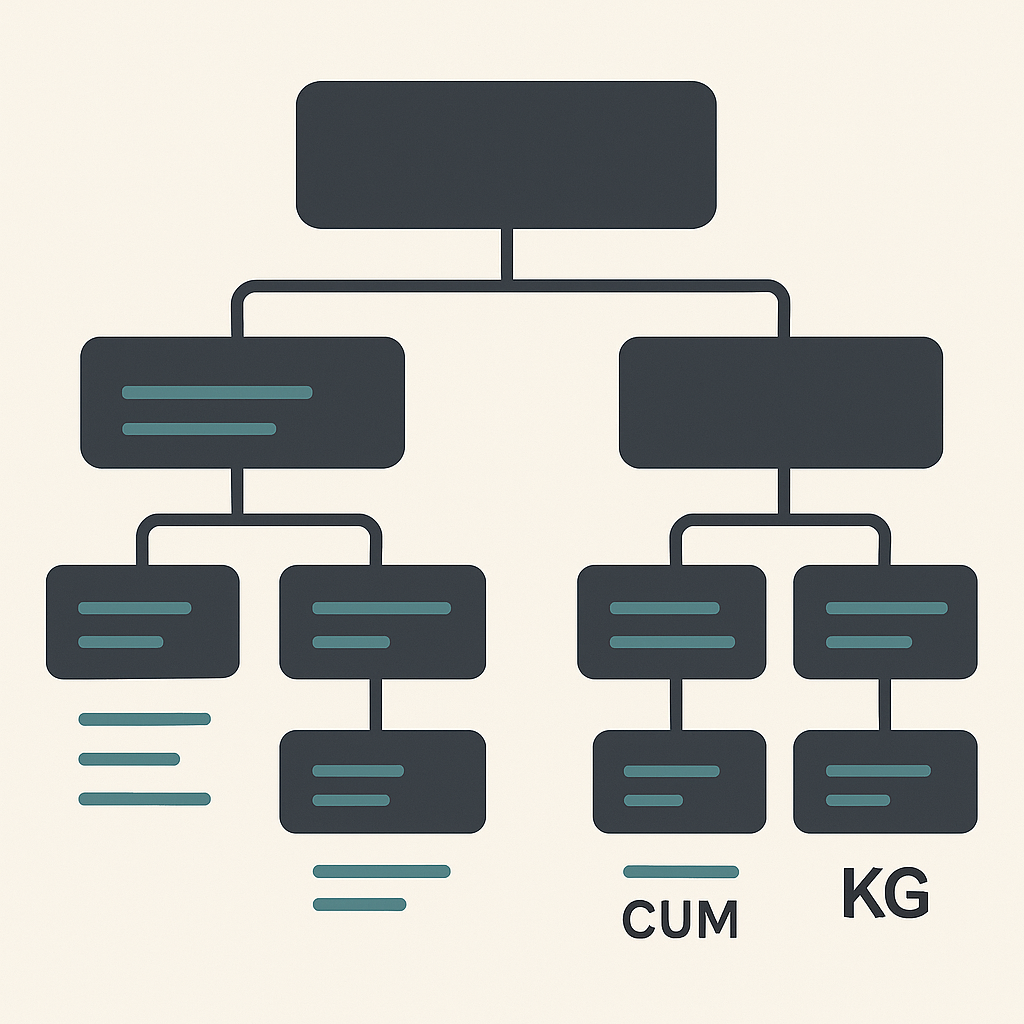
BOQs created in JobNext follow CESMM3’s hierarchical structure. Items are grouped into sections (e.g., Civil Works) and sub-sections (e.g., Foundation), making it easier to organize and track costs.
3. Automated Unit Conversion
JobNext automatically applies CESMM3 conversion rules, translating between units like cubic meters (BOQ) and kilograms (scope).
4. Error Detection
JobNext flags discrepancies, such as unlinked scope items or duplicate descriptions, ensuring your BOQ stays clean and compliant.
Actionable Steps:
- Integrate JobNext into your BOQ workflow to save time and reduce errors.
- Train your team on JobNext’s CESMM3 compliance features.
- Use JobNext’s reporting tools to flag potential issues early.
CESMM3 vs CESMM4: What’s the Difference?
CESMM4 is the updated version of CESMM3, designed to address modern construction challenges. Here’s how they compare:
| Feature | CESMM3 | CESMM4 |
|---|---|---|
| Core Principles | Standardizes measurement units | Same as CESMM3 |
| Environmental Tracking | Not included | Includes environmental factors |
| Clarity for New Methods | Limited | Expanded for new techniques |
| Popularity | Widely used | Growing adoption |
Key Takeaways:
- CESMM3 remains the go-to standard for most civil engineering projects.
- CESMM4 is ideal for projects requiring environmental tracking or modern construction methods.
FAQs
Q: What’s the biggest advantage of CESMM3?
A: Its standardization reduces ambiguities in measurement and description, ensuring accurate cost estimation and smoother collaboration.
Q: Do I need CESMM4 if I already use CESMM3?
A: Not necessarily. CESMM4 introduces minor updates, but CESMM3 is sufficient for most projects. Upgrade only if your project requires environmental tracking or modern methodologies.
Q: How does JobNext automate CESMM3 workflows?
A: JobNext links scopes to BOQ items, applies conversion factors, and organizes BOQs hierarchically. It simplifies compliance and reduces manual errors.
Q: Are CESMM3 and CESMM4 compatible?
A: Yes. CESMM4 builds on CESMM3, so transitioning is relatively straightforward. However, ensure all stakeholders are aligned on the chosen standard.
Q: Can CESMM3 prevent cost overruns?
A: While CESMM3 reduces estimation errors, cost overruns can still occur due to scope changes or external factors. Pair CESMM3 with rigorous project management for best results.
Common Mistakes in CESMM3 BOQ Creation
-
Skipping the Scope Link Always link scopes to BOQ items early. Otherwise, your cost tracking will suffer.
-
Ignoring Conversion Factors If your BOQ and scope use different units, set conversion factors upfront.
-
Overcomplicating Descriptions Stick to CESMM3’s standardized terms. Avoid creative naming that deviates from the standard.
-
Neglecting Regular Audits Periodically review your BOQ for compliance with CESMM3 standards.
Actionable Steps:
- Conduct a CESMM3 compliance audit every quarter.
- Train your team on common pitfalls.
- Use software to flag errors automatically.
Closing Thoughts
CESMM3 simplifies BOQ creation for civil engineering projects, cutting through ambiguity and error. Tools like JobNext take it a step further, automating tedious processes and ensuring compliance. CESMM4 offers additional features but is not always necessary.
If you’re struggling with BOQ accuracy or margin erosion, CESMM3 combined with automation tools like JobNext can help your project stay on track.
EstimateNext.ai has covered how AI-powered tools enhance BOQ workflows—worth a read if you want to stay ahead.
Get started with JobNext free →
Learn more at EstimateNext