Why Contractors Are Struggling with Cost Intelligence
Let’s start with the obvious: contractors are drowning in inefficiencies. Between manual paperwork, disconnected systems, and inconsistent cost tracking, margins bleed out before you even notice. In fact, a 2023 McKinsey report highlighted that construction firms lose an average of 28% of project costs to poor management and operational waste.
One key issue? Decision-makers can’t get real-time answers from their systems. Want to know why equipment isn’t being utilized or how subcontractor costs are creeping past budget? You’d probably need to dig through three different Excel sheets, email someone, and hope for the best.
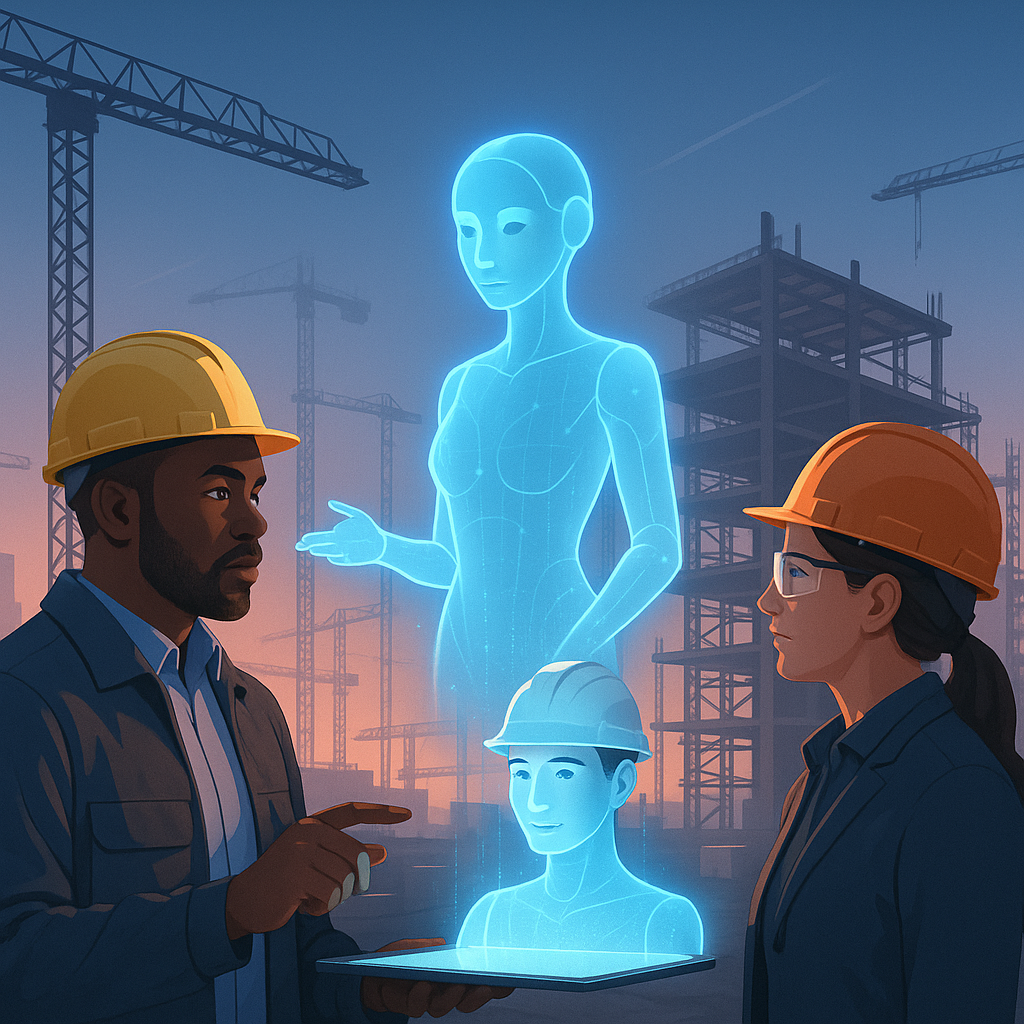
This is where AI—specifically NVIDIA’s Digital Human Blueprint—comes into play. And no, we’re not talking about sci-fi robots on your job site. NVIDIA’s tech powers conversational AI that can integrate directly into contractor tools, giving you immediate answers and actionable insights.
What Is NVIDIA's Digital Human Blueprint?
NVIDIA’s Digital Human Blueprint is a framework for creating lifelike AI assistants capable of natural conversations. Think of it as the brain behind virtual agents like NVIDIA Tokkio. It’s not just about voice recognition—it’s about context, tone, and understanding complex queries.
For contractors, this matters because it turns clunky, hard-to-use systems into something accessible. Imagine asking your ERP’s AI assistant, “What’s the utilization rate of our excavators on Site A this month?” and getting a direct, actionable answer.
But let’s break it down further. What sets NVIDIA’s framework apart is its ability to:
- Understand Construction-Specific Queries: Unlike generic AI, it’s trained to handle niche terminology, like BOQs (Bill of Quantities) or RFI (Request for Information). This makes it highly relevant for contractors.
- Provide Contextual Insights: It doesn’t just pull up data—it interprets and presents it in a way that helps you act on it.
- Integrate Seamlessly: It works within existing systems like ERPs or project management tools, meaning you don’t need an overhaul to use it.
This combination of deep learning and real-world applicability makes it a game-changer for contractors.
How JobNext Integrates NVIDIA-Level AI Assistance
Take JobNext, a contractor ERP platform, as an example. Their built-in "Ask AI" assistant uses natural language processing powered by NVIDIA-like conversational tech to query project data in seconds. This means you can ask:
- “Which subcontractor invoices are pending approval this week?”
- “Show me equipment underutilized by more than 50% last quarter.”
- “What’s our project margin on Site B vs. planned BOQs?”
No more digging through reports or waiting for emails. The AI pulls data from modules like HR, procurement, and equipment tracking, cross-references it, and spits out answers that make sense.
Here’s why this is transformational:
- Time-Saving: Contractors, on average, spend 30-40% of their time gathering and analyzing data manually. AI assistants eliminate this bottleneck.
- Accuracy: By pulling directly from integrated systems, errors due to manual data entry or outdated spreadsheets are reduced.
- Actionable Insights: Instead of just providing raw data, the AI highlights trends, inefficiencies, and areas for improvement.
Real-World Example: Equipment Utilization
Let’s make this concrete. Equipment sitting idle is a silent margin killer. Most contractors don’t realize when their assets are underutilized—until it’s too late.
With JobNext’s AI assistant (powered by NVIDIA-like conversational tech), you can:
- Ask, “Which equipment has been idle for more than 30 days?”
- Get a list of machines, their last job site, and associated costs.
- Drill down into why they’re idle—mismanagement, lack of demand, or job delays.
Case Study: Contractor in Oman
A contractor in Oman used JobNext’s AI assistant to uncover that 40% of their rented equipment was sitting idle due to delayed material approvals. By reallocating the assets or pausing rentals, they saved ₹12 lakhs (approximately $14,400) in just two months. Without AI, they wouldn’t have spotted this issue until much later—or possibly not at all.
Actionable Tips for Contractors:
- Track Utilization Monthly: Use AI-driven tools to monitor idle equipment regularly.
- Set Alerts: Configure your system to notify you when assets haven’t been used for a certain period.
- Analyze Trends: Look at underutilization patterns across projects to identify systemic issues, like poor scheduling.
Why This Matters for Contractors
You might be thinking, “This sounds great, but AI assistants already exist.” True, but most are generic. They don’t understand construction data or workflows. NVIDIA’s Digital Human tech changes that by training AI systems to handle highly specific, domain-driven queries.
Example Queries That Generic AI Can’t Handle:
- “How many hours of overtime were logged across projects last week?”
- “What’s the projected cash flow for Site C next month?”
- “Who are our top-performing subcontractors by cost efficiency?”
These aren’t just numbers—they’re actionable insights that let you course-correct before margins slip further.
Additional Benefits:
- Faster Decision-Making: Real-time insights mean you can act immediately, rather than waiting for end-of-month reports.
- Improved Collaboration: Everyone—from site managers to finance teams—has access to the same, up-to-date information.
- Enhanced Profit Margins: By identifying inefficiencies, contractors can save thousands (or even millions) annually.
How Does This Compare to Traditional Reporting?
Here’s a quick comparison:
| Traditional Reporting | AI-Powered Insights |
|---|---|
| Requires manual report setup | Instant answers via natural queries |
| Limited to predefined templates | Context-aware, customizable outputs |
| Takes hours (or days) to compile | Delivered in seconds |
| Hard to drill down into details | Drillable insights with one click |
Actionable Steps to Transition:
- Audit Your Current Tools: Identify which systems (ERP, project management, etc.) could benefit from AI integration.
- Choose Domain-Specific AI: Avoid generic solutions—pick tools designed for construction workflows.
- Train Your Team: Ensure key stakeholders know how to interact with AI assistants effectively.
What’s Next?
AI in construction is still evolving, but NVIDIA’s contributions are setting a new standard. From conversational assistants to predictive analytics, we’re moving toward a world where contractors don’t just react to problems—they anticipate them.
Emerging Trends to Watch:
- Predictive Maintenance: AI will soon identify when equipment is likely to fail, reducing downtime.
- Cash Flow Forecasting: Advanced algorithms will provide highly accurate financial projections.
- Resource Allocation Optimization: AI will automate scheduling to maximize asset and labor efficiency.
If you’re drowning in disconnected systems and manual workflows, it’s time to rethink your tech stack. Tools like JobNext, built with AI assistance at the core, are making it easier than ever to run lean, profitable operations.
FAQ
Q: Isn’t this just chatbots rebranded?
A: Not even close. NVIDIA’s tech enables deeper understanding, context-awareness, and domain-specific insights that generic chatbots simply can’t deliver. Think of it as the difference between a basic calculator and a full-fledged accountant.
Q: Can this work with other contractor software?
A: Systems like JobNext are specifically designed for contractors, but integrating NVIDIA's framework with other platforms is possible—if they support AI integration. Many leading ERPs already offer APIs for this purpose.
Q: What’s the ROI on these tools?
A: It varies, but a contractor using AI-powered insights typically saves 15-25% on operational costs by reducing inefficiencies and uncovering hidden margin killers.
Q: How difficult is the implementation process?
A: Most modern AI tools are designed for easy onboarding. With platforms like JobNext, the setup usually takes a few weeks, and training is minimal due to the intuitive interface.
Q: Will AI replace human decision-making?
A: No. AI is a tool to enhance decision-making, not replace it. It provides data-driven insights that empower contractors to make smarter, faster decisions.
Final Thoughts
NVIDIA’s Digital Human Blueprint isn’t just tech hype—it’s a practical tool for solving real contractor pain points. Whether it’s automating complex queries or delivering insights in seconds, these AI-driven innovations are reshaping how contractors think about cost intelligence.
Want to see how intelligent tools can transform your margins? Get started with JobNext today →.
Learn more at EstimateNext