Why BOQs Are the Backbone of Project Profitability
If your Bill of Quantities (BOQ) is wrong, everything else is flawed — estimates, contracts, progress tracking, and billing. A poorly designed BOQ doesn’t just cause headaches; it directly hits your margins. In my experience, 80% of cost overruns can be traced back to BOQ mistakes. Think about it: if your quantities are underestimated, you’ll bleed money on procurement and subcontractor payouts. If your unit rates are wrong, you might win the bid but lose your shirt executing it.
But here’s the kicker: most contractors don’t even realize they’re making these mistakes until it’s too late. Why? Because they’re stuck managing BOQs manually or relying on outdated Excel templates that don’t integrate with project execution tools.
What Is a BOQ, and Why Does It Matter?
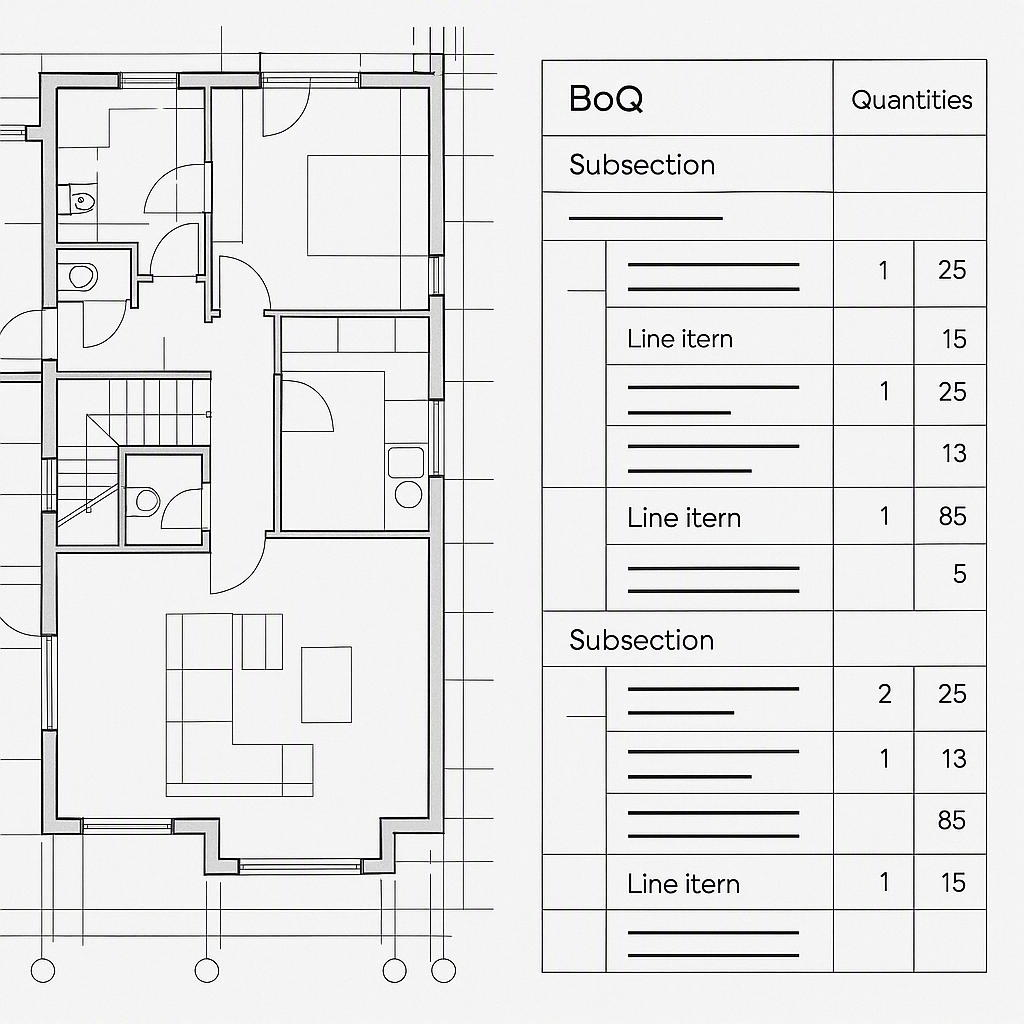
A BOQ is a detailed document that itemizes the materials, labor, and quantities required for a construction project, along with their associated costs. It acts as the financial blueprint for your project. Without a solid BOQ, your estimates are guesswork, your contracts are riddled with errors, and your billing system struggles to stay accurate.
Take this example: A contractor underestimated the concrete quantities for a commercial building project by 15%. As the project progressed, they had to source additional concrete at higher rates due to market fluctuations. This single oversight led to a 10% decrease in their overall profit margin. On a ₹5 crore project, that’s ₹50 lakh gone.
How to Create a BOQ That Actually Works
Let’s get practical. Here’s the step-by-step process we use at KhaasDiscount to help contractors create BOQs that don’t kill their margins:
1. Start with a Standardized Template
- Use a BOQ template that aligns with industry standards like CPWD (Central Public Works Department) or NRM2 (New Rules of Measurement). This ensures your unit descriptions, measurement units (UOM), and rate structures are consistent.
- For instance, CPWD templates include standardized descriptions for tasks like excavation, concrete works, and finishing, reducing ambiguity.
- Don’t have a standard? Download a free template from reliable sources online or use a system like JobNext that comes with pre-configured templates designed for Indian contractors.
Actionable Tip:
Before diving into a BOQ, check if your client has a preferred format. Aligning your BOQ with their expectations reduces approval delays.
2. Break Down the Scope into WBS Levels
- A good BOQ isn’t just a list of items; it’s a hierarchy. Organize your scope into logical groups (e.g., Civil Works → Excavation → Concrete → Reinforcement). This Work Breakdown Structure (WBS) helps ensure nothing is overlooked.
- Tools like JobNext let you import pre-defined WBS directly into your BOQ, saving hours of manual sorting.
Case Study:
A residential developer used WBS levels to break down a ₹20 crore project into manageable sections (foundation, superstructure, finishing). This allowed better cost tracking and reduced budget overruns by 12%.
3. Get Quantities Right
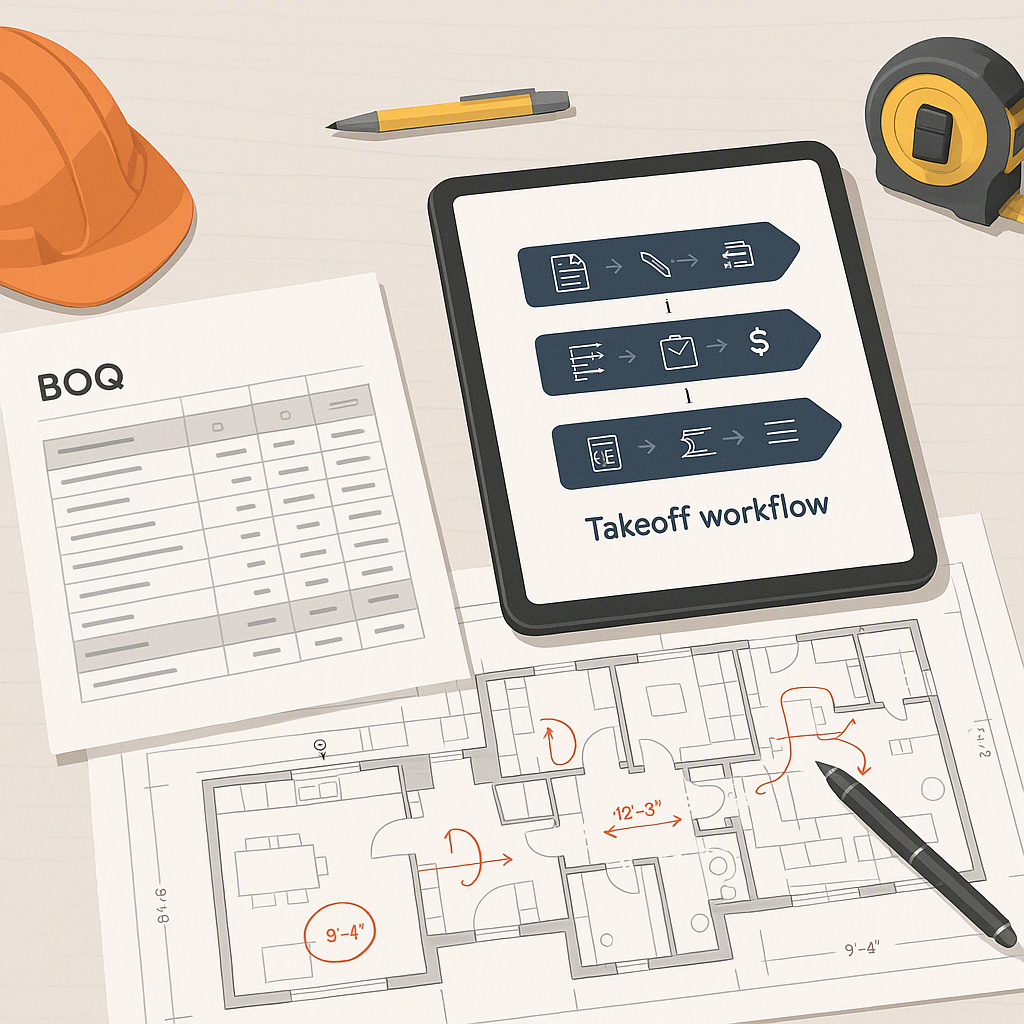
- Quantity takeoffs are where most errors happen. Manually measuring quantities from drawings can lead to 5-10% errors. Digital tools offer accuracy and speed.
- For example, EstimateNext automates takeoffs using AI, cutting manual work from 40 hours to 10 minutes.
Actionable Tip:
Use software that integrates with your CAD drawings. This ensures quantities are directly extracted without manual intervention. Double-check critical items like concrete volumes, reinforcement steel, and excavation depths since these often drive costs.
4. Validate Unit Rates
- Use current market rates validated against regional benchmarks. If you’re flipping through outdated rate books, you’re wasting time and risking inaccuracies.
- AI-powered tools can match 78,000 rates in seconds (Source).
- Pro Tip: Always include a contingency percentage (usually 5-10%) for fluctuating material costs.
Real-World Example:
A contractor working on a metro rail project saved ₹2 crore by using up-to-date steel rates instead of relying on last year’s data. The cost of steel had dropped by 4%, and their BOQ reflected this.
5. Plan for Stage-Wise Execution
- Split large BOQ items into stages or milestones. For example, instead of a single line item for “Superstructure Concrete – 1,000 CUM,” allocate it across phases like “Foundation, Columns, Slabs.”
- JobNext supports stage-wise BOQs by allowing you to assign percentages to each phase, ensuring better progress tracking and cash flow management.
Actionable Tip:
Use milestone-based BOQs to align with your project schedule. This ensures your team knows exactly what to prioritize during each phase.
6. Link BOQ to Contracts and Billing
- Your BOQ should directly feed into your contracts, scope of work, and billing methods. If these systems aren’t synced, you’re leaving money on the table.
- In JobNext, once a BOQ transitions to the “CONTRACTED” state, it automatically integrates with RA Bills, stage-wise invoicing, and material tracking.
Comparison: Manual vs. Automated BOQ Systems
| Feature | Manual BOQ (Excel) | Automated BOQ (JobNext) |
|---|---|---|
| Error Rate | High (5-10% errors) | Low (<1% errors with validation tools) |
| Time to Completion | Days or weeks | Hours |
| Integration with Billing | Manual effort required | Seamless, automatic |
| Variation Tracking | Complex, prone to errors | Built-in, easy |
| Cost Tracking | Limited | Detailed, real-time |
Common Pitfalls to Avoid
Even with the right steps, mistakes happen. Here’s what to watch out for:
- Overlooking Variations: Projects change. If your BOQ doesn’t allow for variation tracking, you’ll eat the cost of extras.
- Ignoring Idle Equipment Costs: BOQs often miss the cost of equipment sitting idle. Use lifecycle management tools to factor these into your estimates.
- Manual Excel Errors: One misplaced zero in a formula can cost you crores. Digital systems eliminate this risk.
- Unlinked Systems: If your BOQ doesn’t sync with your procurement or finance tools, expect chaos. Disconnected systems are margin killers.
The JobNext Advantage
JobNext simplifies BOQ creation by integrating it with every stage of your project lifecycle. From importing client BOQs directly from Excel to linking items with progress billing, it’s built to eliminate revenue leakage. The system also supports stage-wise BOQs, ensuring you can track milestones and manage cash flows seamlessly.
Want to see how it works? Get started here →
FAQ
Q: Can I use my existing WBS in JobNext?
A: Yes, JobNext allows you to import your pre-defined WBS and link it directly to BOQ items.
Q: What’s the best way to handle variations?
A: Use a system that supports variation orders directly within the BOQ. This ensures all changes are tracked and billed appropriately.
Q: How do I ensure my BOQ matches client requirements?
A: Think of the BOQ as the client’s language. Always use their unit definitions and structure but link it to your internal scopes for execution.
Q: Can I import BOQs from Excel?
A: Yes, JobNext supports BOQ imports via Excel templates. Just ensure you use the provided template to avoid formatting errors.
Q: How does JobNext help with procurement?
A: JobNext’s BOQ integrates with material procurement workflows, ensuring quantities flow directly into RFQs and POs without manual entry.
Final Thoughts
Creating a BOQ isn’t just about filling rows in a spreadsheet. It’s about building a foundation for project success. Get it right, and you’ll save time, reduce errors, and protect your margins.
If you’re still struggling with manual BOQs, it’s time to upgrade your tools. Try JobNext today →
Learn more at EstimateNext