AI Takeoff Download: How Contractors Can Avoid Hidden Costs
Every contractor has been there—tender submissions running late, estimators scrambling to fix BOQ errors, and somehow, margins disappearing into thin air once the project starts. You know the drill. But what if I told you that the problem doesn't start with execution? It starts with your takeoff.
Manual takeoffs are a silent margin killer. A 2023 McKinsey report found that 80% of construction companies struggle with hidden costs tied to inaccurate takeoffs, from material overruns to missed labor estimates. And fixing these errors after the fact? Painfully expensive.
So what's the alternative? AI-powered takeoff tools.
The Cost of Doing It Wrong: Manual vs AI Takeoffs
Let’s break it down. A typical manual takeoff process takes 30–40 hours per estimate. You’re flipping through rate books, typing line-by-line into Excel, and hoping you didn’t miss a decimal. But errors are almost inevitable. A missed quantity here, a wrong rate there—it all adds up.
Manual Takeoff Challenges
- Time-Consuming: Estimators often spend days manually measuring and inputting data.
- Error-Prone: Mistakes in manual takeoffs can lead to major financial losses.
- Scalability Issues: Handling multiple projects simultaneously becomes unmanageable.
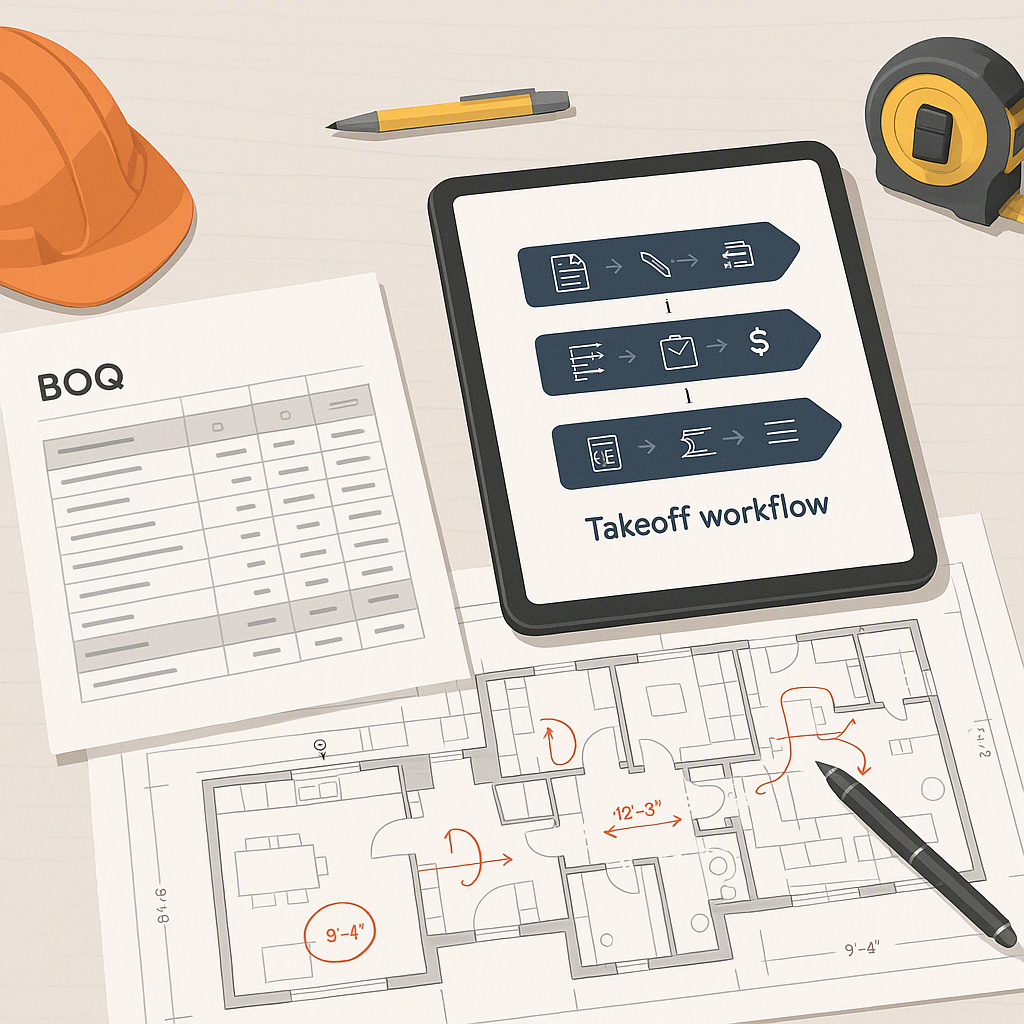
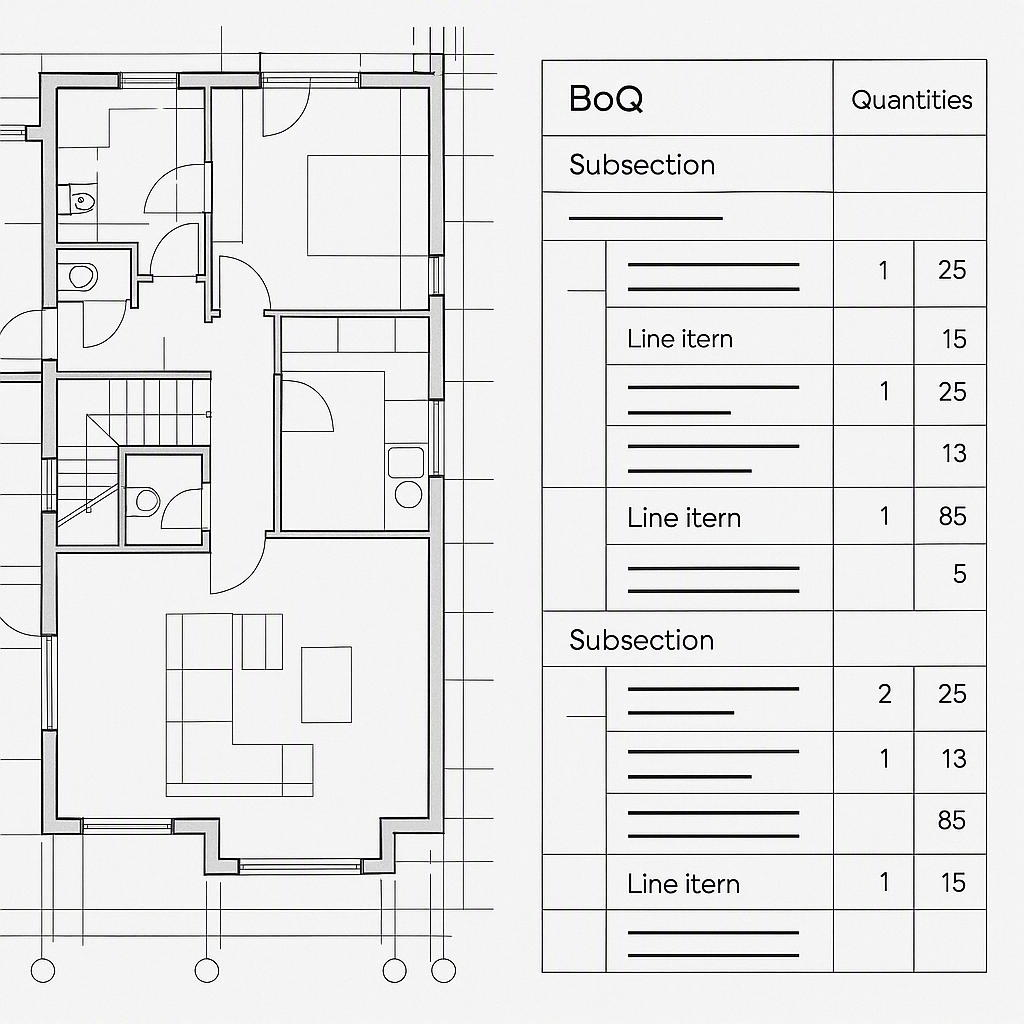
Compare this to AI-powered takeoff tools, like those featured in EstimateNext. These tools slash the process down to 10 minutes. How? By leveraging computer vision and natural language processing to read blueprints, match rates, and auto-populate BOQ lines. It’s fast, accurate, and brutally efficient.
Case Study: ₹2.5 Crore Interior Fit-Out Project
On a ₹2.5 crore interior fit-out project, the manual takeoff missed a critical HVAC duct quantity, leading to a ₹7 lakh margin hit. An AI tool would have flagged the discrepancy during the takeoff itself, saving both time and money.
Actionable Steps for Comparison
| Criteria | Manual Takeoff | AI Takeoff Tools |
|---|---|---|
| Time per estimate | 30–40 hours | ~10 minutes |
| Error rate | High (human error is common) | Low (automated precision) |
| Scalability | Limited | Highly scalable |
Where Hidden Costs Hide in BOQs
Hidden costs often sneak into BOQs in ways you wouldn’t expect:
Common BOQ Errors
- Duplicate Quantities: Two subcontractors quoting the same work item.
- Incomplete Scope Descriptions: Missing secondary costs like scaffolding or consumables.
- Incorrect Rate Mapping: Using outdated MES rates for CPWD projects.
How AI Solves These Issues
AI takeoff solutions fix these by:
- Enforcing Scope Validation: Ensuring that every line item is complete and accurate.
- Rate Matching: Auto-updating rates based on the latest MES or CPWD guidelines.
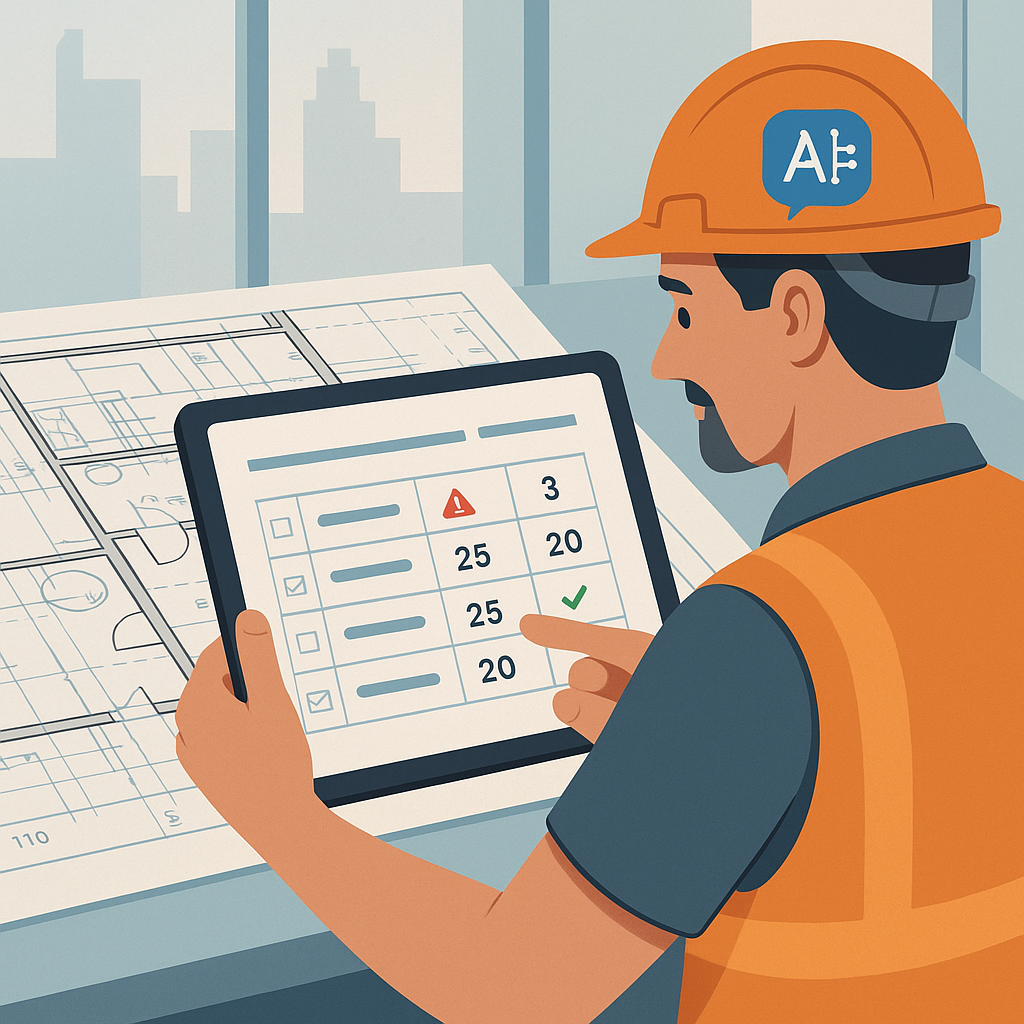
- Quantity Cross-Checks: Flagging duplicate or inconsistent entries in real time.
For example, JobNext’s BOQ progress section tracks measured quantities and completion percentages per item. Every discrepancy gets flagged before it snowballs into lost margins.
Why Contractors Resist AI (And Why That’s a Mistake)
You might be thinking, "AI sounds good, but implementing it sounds like a headache." Fair. Transitioning from manual workflows to AI-powered systems can feel daunting. But consider this: sticking to manual processes costs you far more in the long run.
Common Concerns
- Cost of Implementation: Contractors worry about the upfront investment.
- Team Training: Adopting new tech requires time and effort.
- Change Resistance: Teams accustomed to manual processes may push back.
Why It’s Worth It
Take the approval workflow in JobNext’s Projects Module. It’s designed to enforce budget discipline—every material purchase, equipment hire, and subcontractor payment gets validated against approved budgets. This kind of automation not only saves time but prevents margin erosion from uncontrolled spending.
Real-World Example
A mid-sized contractor in Bangalore implemented AI takeoff tools and reduced estimation errors by 70%, saving over ₹15 lakhs in hidden costs on their first three projects.
Practical Steps to Get Started
Want to avoid hidden costs? Start here:
Step-by-Step Guide
- Audit Your Current Process: Identify where errors typically occur—rate mismatches, quantity duplication, missed scope items.
- Example: Review past BOQs and flag recurring discrepancies.
- Choose the Right Tool: Look for AI-powered platforms that integrate takeoff with procurement, billing, and project tracking. JobNext is one example.
- Comparison: Evaluate tools based on accuracy, ease of use, and scalability.
- Train Your Team: Familiarize your estimators with the software. Most tools have built-in tutorials and support.
- Action: Schedule live training sessions with the software provider.
- Run Parallel Tests: Use AI tools alongside manual processes on smaller projects first. Compare results, then scale up.
- Case Study: A contractor in Delhi tested AI tools on a ₹50 lakh project and saw a 40% reduction in estimation time.
FAQ
Q: How can AI takeoff software reduce errors in BOQs?
A: By automating scope validation, rate mapping, and quantity checks. Tools like JobNext ensure every BOQ line matches approved budgets. For example, JobNext flagged duplicate subcontractor quotes on a recent ₹1 crore residential project, saving ₹2 lakhs.
Q: Is AI takeoff software worth the upfront cost?
A: Absolutely. The time saved (30+ hours per estimate) and margin protection far outweigh implementation costs. A ₹5 crore project could see ₹10 lakhs in savings just by eliminating errors.
Q: What’s the biggest challenge in switching to AI takeoff tools?
A: Team training. But most platforms, like JobNext, include built-in tutorials and AI assistants for quick onboarding. Contractors report that teams become proficient within 2–3 projects.
Q: Can AI tools handle complex trades like MEP or HVAC?
A: Yes. AI tools are designed for multi-trade environments and can auto-classify detailed scopes like ductwork or electrical wiring. EstimateNext’s computer vision module, for instance, excels at identifying HVAC layouts.
Q: How accurate are AI tools compared to manual takeoffs?
A: AI tools are significantly more accurate, catching errors humans often miss. For example, EstimateNext uses computer vision to read blueprints with near-perfect precision, reducing errors by over 80%.
The Bottom Line
Manual takeoffs are bleeding your margins dry, and most contractors don’t even realize it. AI-powered tools fix these gaps with precision—cutting takeoff time, reducing errors, and flagging hidden costs before they hit your budget.
Want to stop missing hidden costs? JobNext can help. Get started today.
Learn more at EstimateNext