Why Markup Isn’t the Same as Margin
Let’s start with a brutal reality: many contractors confuse markup and profit margin, and it’s killing their bids. Markup is the percentage you add to your costs to set a selling price. Profit margin, on the other hand, is the percentage of your revenue that turns into profit. They’re connected, but they’re not the same—and failing to understand this distinction can lead to serious financial consequences.
The Formula You’re Probably Using
Here’s the common formula contractors often default to:
Selling Price = Cost + (Cost × Markup %)
At first glance, this seems logical. But here’s the problem: if you want a 20% profit margin, simply adding a 20% markup won’t get you there. Why? Because profit margin is calculated on the selling price—not the cost. Let’s break this down with an example:
Imagine your selling price is ₹1,200 and your costs are ₹1,000. Using the formula for calculating profit margin:
Profit Margin = (Selling Price - Cost) ÷ Selling Price
Profit Margin = (₹1,200 - ₹1,000) ÷ ₹1,200
Profit Margin = 16.67%
That’s not 20%! This discrepancy happens because markup and margin are fundamentally different calculations. To hit your target margin, you need the correct markup formula.
The Correct Formula
Here’s how to fix the issue:
Markup % = Target Profit Margin ÷ (1 - Target Profit Margin)
For a 20% profit margin, the calculation would look like this:
Markup % = 0.20 ÷ (1 - 0.20)
Markup % = 0.20 ÷ 0.80
Markup % = 25%
So, if you want to achieve a 20% profit margin, you actually need to apply a 25% markup to your costs. This formula ensures your selling price aligns with your desired profitability.
Real-World Example
Let’s say you’re bidding on an ₹8,00,000 project, and your estimated direct costs are ₹6,00,000. You aim for a 20% profit margin. Using the correct formula:
Markup % = 20 ÷ (1 - 0.20) = 25%
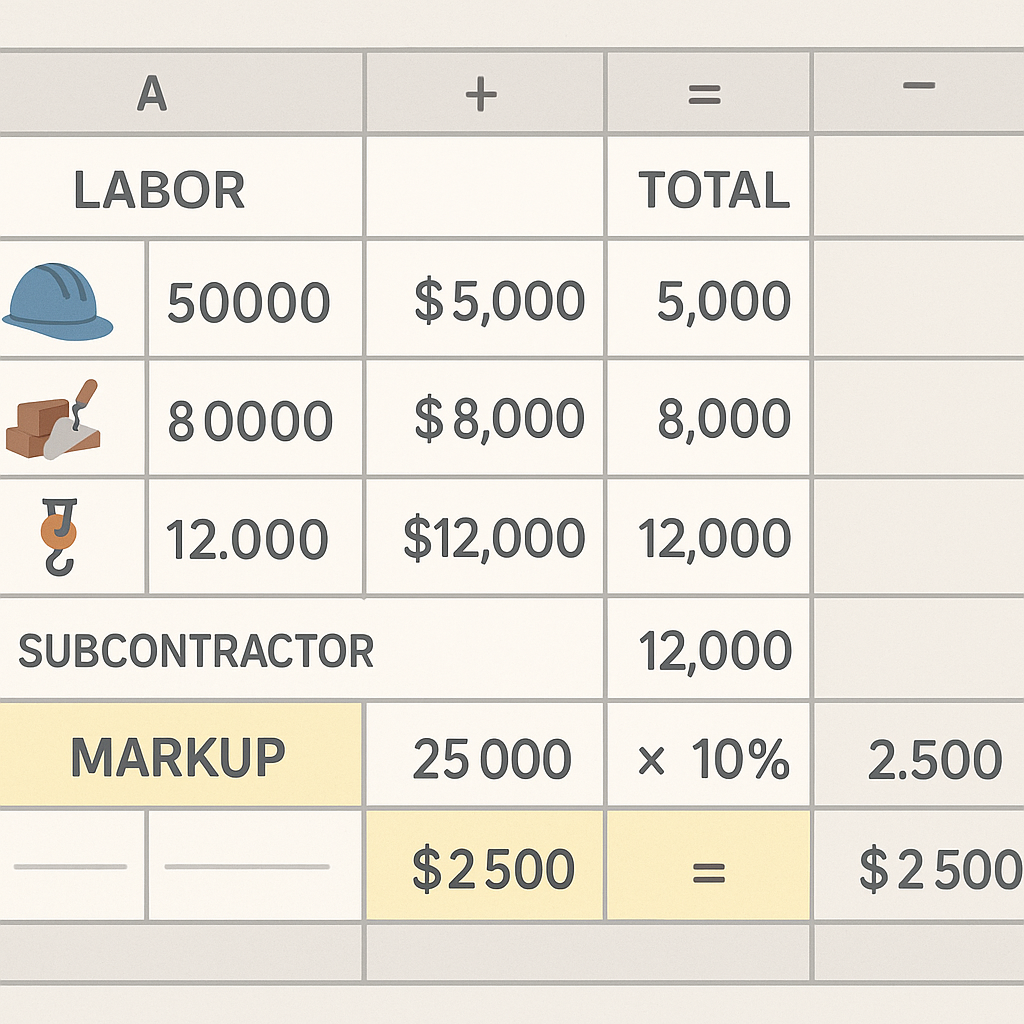
Selling Price = ₹6,00,000 + (₹6,00,000 × 0.25) = ₹7,50,000
But wait—₹7,50,000 is less than ₹8,00,000. That’s where competitive bidding comes in. If your competitors bid higher, great! You’re in a strong position. If they bid lower, you have a tough decision to make: reduce your margin or risk losing the job.
Case Study: Competitive Bidding Scenario
Imagine two contractors bidding on a government project. Contractor A uses a flat 20% markup on costs totaling ₹1,000,000. Their bid price is ₹1,200,000, but their actual profit margin turns out to be just 16.67%. Contractor B uses the correct formula to achieve a 20% margin, applying a 25% markup to the ₹1,000,000 costs and bidding ₹1,250,000.
Contractor B’s bid may appear higher, but they accurately account for their expenses and desired profit margin. If Contractor A wins the bid but encounters unexpected costs, their margin could shrink further, leading to a net loss. This illustrates how precision in pricing can mean the difference between profitability and financial disaster.
Actionable Steps to Avoid Mistakes
Here’s how you can ensure your markup and margin calculations are on point:
-
Understand the distinction: Markup is based on costs, while margin is based on revenue. Never use them interchangeably.
-
Use the correct formula: Always calculate your markup based on the target profit margin using the formula:
Markup % = Target Profit Margin ÷ (1 - Target Profit Margin) -
Review historical data: Analyze previous projects to understand how accurate your cost estimates were and adjust your markup accordingly.
-
Account for contingencies: Include a contingency buffer for unexpected costs, especially for projects where scope changes are likely.
-
Factor in competition: Research the market and competitor bids to determine if you can afford to lower your markup without sacrificing your margin.
Why Precision Matters in Subcontractor Costs
Think your direct costs are airtight? Think again. Subcontractor overruns are one of the biggest margin killers. According to EstimateNext, missed deadlines and poor cost tracking can cost contractors millions annually. This is where tools like JobNext can make a difference.
How JobNext Simplifies This Math
Competitive bidding isn’t just about markup; it’s also about precision. JobNext’s Estimate-based Quote method breaks down costs into labor, material, plant, subcontract, and overhead. This granular approach ensures accuracy and consistency across all your bids.
For example, JobNext allows you to create detailed estimates and mark them “Ready for Quote.” This workflow ensures your selling price is grounded in real costs rather than guesswork.
Additionally, JobNext’s subcontractor management tools help mitigate cost overruns. Every work order is backed by competitive evaluation, with RFPs linked to measurement sheets and approved bills. No more surprises halfway through the project.
FAQ
1. Why can’t I use flat percentages for all bids?
Using flat percentages assumes indirect costs are consistent across all projects, which is rarely the case. A small interior design project might have minimal overhead, while an EPC (Engineering, Procurement, and Construction) project could involve massive administrative expenses. Detailed breakdowns are essential for accuracy.
2. What if competitors underbid me?
It’s a risk, but underbidding often leads to margin erosion. Instead of lowering your price, emphasize value—such as your technical capability, quality of work, and ability to meet timelines. Educate clients on the long-term risks of choosing the cheapest option.
3. Can markup percentages change mid-project?
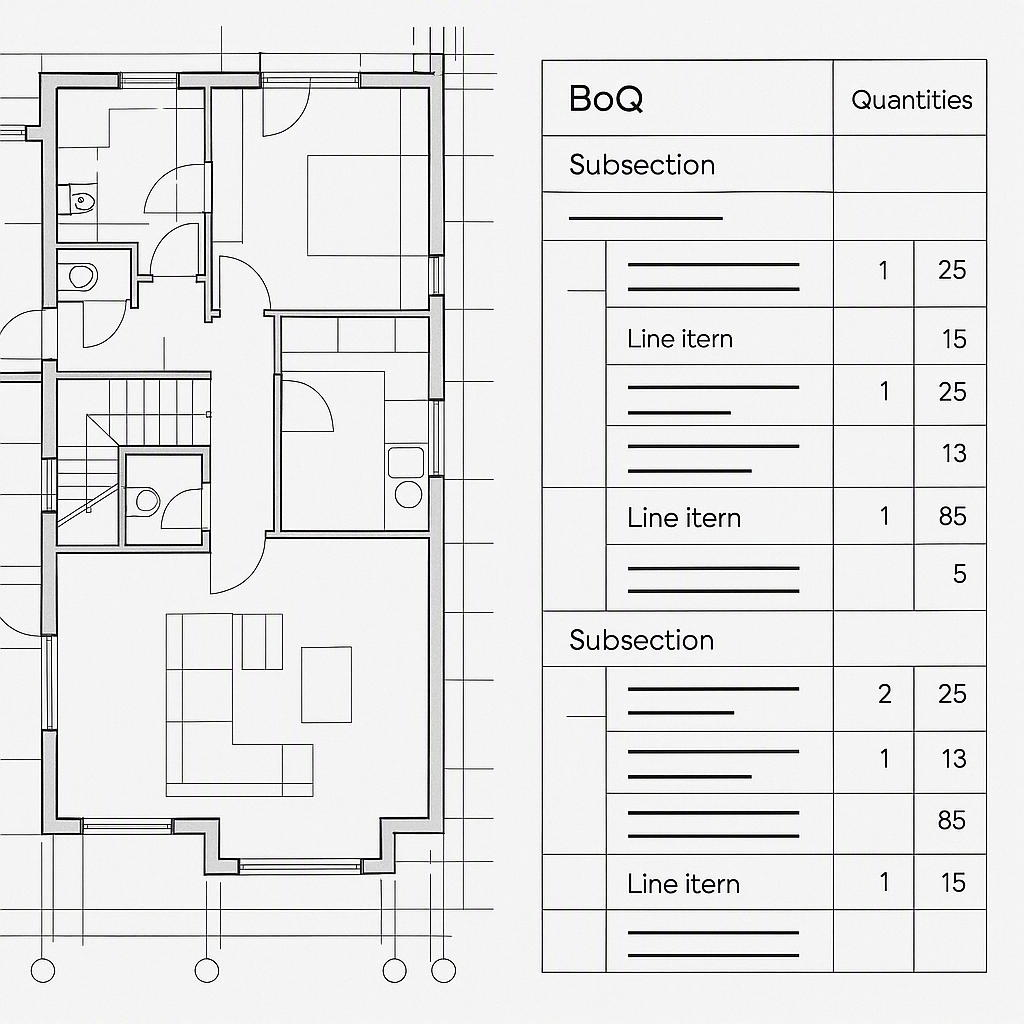
Yes, markup percentages can change if there are scope changes or significant increases in procurement costs. Tools like JobNext flag negative BOQ (Bill of Quantities) margins in real-time, allowing you to adjust pricing before profits are compromised.
4. How do I calculate markup for multi-phase projects?
For multi-phase projects, break costs into distinct categories—labor, materials, overhead, etc.—and apply markup separately to each. Alternatively, use software like JobNext to automate these calculations and track profitability across phases.
5. Should I include a contingency buffer in my markup?
Absolutely. Contingency buffers protect your margins against unforeseen expenses like procurement delays or scope changes. Typically, a buffer of 5–10% works well, depending on project complexity.
Comparison Table: Markup vs. Margin
| Aspect | Markup | Profit Margin |
|---|---|---|
| Definition | Percentage added to costs to set selling price | Percentage of revenue that turns into profit |
| Calculation Basis | Based on costs | Based on selling price |
| Formula Example | Markup % = Target Margin ÷ (1 - Target Margin) | Profit Margin = (Selling Price - Cost) ÷ Selling Price |
| Common Mistake | Assuming markup % = profit margin % | Misjudging actual profitability |
| Best Use Case | For setting prices | For evaluating profitability |
Call to Action
If you’re tired of losing margins to sloppy markup calculations, tools like JobNext can help. With features like Estimate-based Quotes and real-time BOQ margin tracking, JobNext ensures precision at every step of the bidding process. Get started free →
Learn more at EstimateNext