The Brutal Reality of Bid Markup
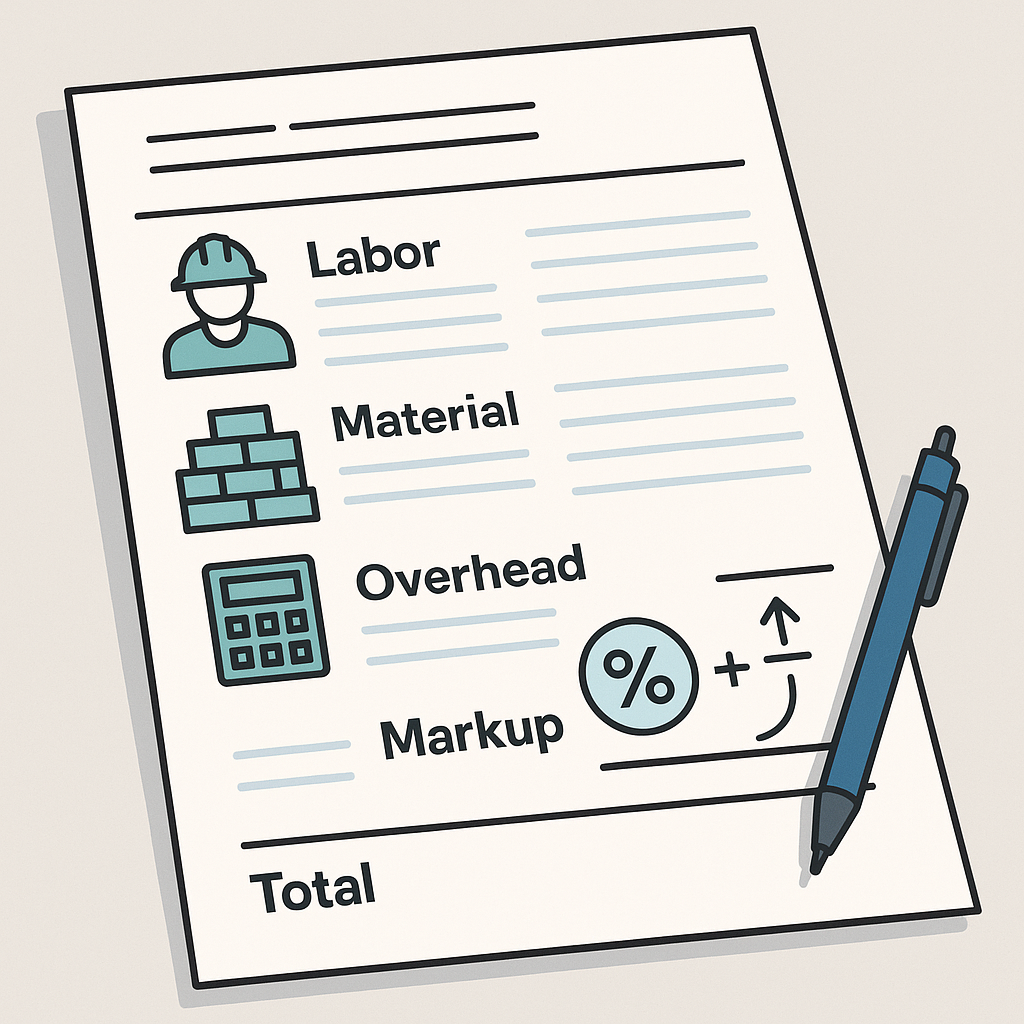
Markup isn’t profit. It's a buffer—but most contractors get it wrong. They either undercalculate and lose money or overcalculate and lose bids. Here’s the problem: markup must cover indirect costs (overheads), expected contingencies, and still leave room for a profit margin. Miss any of these, and you're bleeding.
What’s Killing Margins?
Let’s start with the usual suspects:
1. Guesswork in Overhead Allocation
If you’re splitting overhead equally across all jobs, you’re probably overcharging small projects and undercharging big ones. That’s not precision—it’s laziness.
Example: Imagine you’re running two projects simultaneously. Project A involves ₹1,00,000 in direct costs, while Project B involves ₹10,00,000 in direct costs. If you apply a flat 20% overhead to both, you’re allocating ₹20,000 to Project A and ₹2,00,000 to Project B. But what if Project A is office-staff heavy while Project B mostly involves material purchases? You’re misaligning resource costs, which could cost you both bids and profitability.
Actionable Tip: Start tracking indirect costs individually for small and large projects. Use software to map time, office resources, and indirect expenses to specific projects.
2. Ignoring Scope Creep
Projects always evolve. If your markup doesn’t anticipate scope creep, you’re already losing.
Case Study: A contractor quoted ₹50,00,000 for a residential building project. The initial scope included foundation, plumbing, and roofing. Midway through, the client requested additional landscaping and interior design. The contractor failed to renegotiate markup, absorbing ₹5,00,000 in extra costs. Ultimately, the project resulted in a net loss.
Actionable Tip: Include a contingency buffer in your markup calculation. For example, add 5–10% above your base markup to account for scope creep.
3. Sloppy Subcontractor Quotes
Ever taken the lowest bid without checking scope alignment? Congratulations, you just inherited their mistakes.
Data Point: A 2023 McKinsey report found that subcontractor overruns account for 18% of margin erosion. Common issues include missing items in the scope or underestimating labor hours.
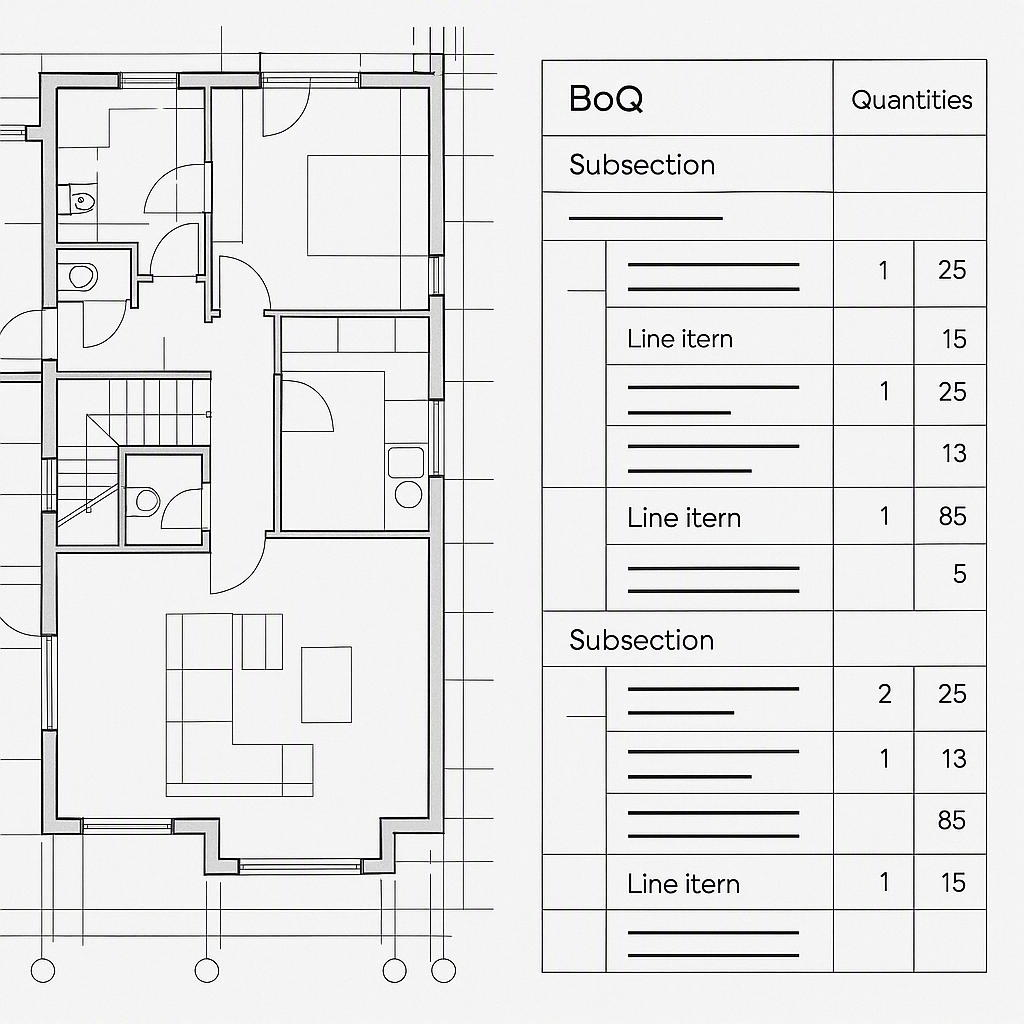
Actionable Tip: Validate subcontractor bids against your Bill of Quantities (BOQ). Use tools like JobNext to ensure all line items match the scope requirements.
Formula: Calculate Markup Without Losing Margins
Here’s a simple formula you can use:
Markup (%) = [(Indirect Costs + Desired Profit) ÷ Direct Costs] × 100
Breakdown:
- Direct Costs: Labor, material, equipment, subcontractors.
- Indirect Costs: Office staff, software subscriptions, insurance, rent.
- Desired Profit: Your target margin—purely subjective, but realistic.
Example:
Let’s say you’re quoting a civil works project:
- Direct Costs: ₹10,00,000
- Indirect Costs: ₹2,00,000
- Desired Profit: ₹1,00,000
Markup = [(₹2,00,000 + ₹1,00,000) ÷ ₹10,00,000] × 100 = 30%
Selling price = ₹10,00,000 × (1 + 0.30) = ₹13,00,000
Got it? Now let’s make it practical.
Where Most Contractors Fail
1. Unrealistic Overhead Estimates
We’ve seen contractors add flat overhead percentages—10%, 20%, whatever they feel like. That’s dangerous. If your project is labor-heavy but office staff costs dominate your overhead, you’ll lose accuracy.
Concrete Example: A contractor running a ₹1,00,000 project applied a 20% overhead. However, the project required extensive equipment rentals, which weren’t part of the overhead estimate. By the time the project was complete, indirect costs had ballooned to 40%, eroding the profit entirely.
Actionable Tip: Categorize overheads into fixed (e.g., rent) and variable (e.g., equipment rentals). Use historical data to refine percentages for different project types.
2. Poor Subcontractor Management
Subcontractor costs are often underestimated or poorly tracked.
Case Study: A contractor accepted a ₹5,00,000 bid for plumbing. The subcontractor later billed an additional ₹50,000 for "unforeseen challenges." The contractor hadn’t aligned the scope of work clearly in the initial agreement, resulting in margin loss.
Actionable Tip: Standardize subcontractor agreements with detailed scope definitions and penalty clauses for overruns. Tools like JobNext can help track real-time subcontractor costs.
3. No Visibility Into Variance
Let’s say your project BOQ margin report shows negative margins on excavation—why? Either your estimate was wrong, or your procurement costs blew up. If you’re not reviewing this weekly, it’s too late.
Data Point: Research by Deloitte found that contractors who monitor variances weekly improved margins by 12% annually compared to those who reviewed variances monthly.
Actionable Tip: Set up a weekly variance review process. Use dashboards that track individual cost centers (e.g., labor, material, subcontractor).
How JobNext Fixes This
JobNext’s Estimate-Based Quote method cuts through the noise. It calculates bottom-up costs for labor, material, plant, and subcontractors—down to the last rupee. Then, it lets you apply markup transparently without impacting your project budget.
Real Example: BOQ Margin Report
JobNext’s BOQ Margin Report helps contractors spot negative margins as they happen. If an excavation item shows a loss, the system pinpoints whether it’s from labor, material, or subcontractor overruns. You can act before the damage spreads.
Comparison Table:
| Feature | Manual Estimation | JobNext Estimation |
|---|---|---|
| Time Required | 40+ hours | 10 minutes |
| Scope Alignment | Often inconsistent | Fully aligned with BOQ |
| Margin Visibility | Limited | Real-time |
| Contingency Planning | Manual guesswork | Automated buffers |
Why AI is the Future
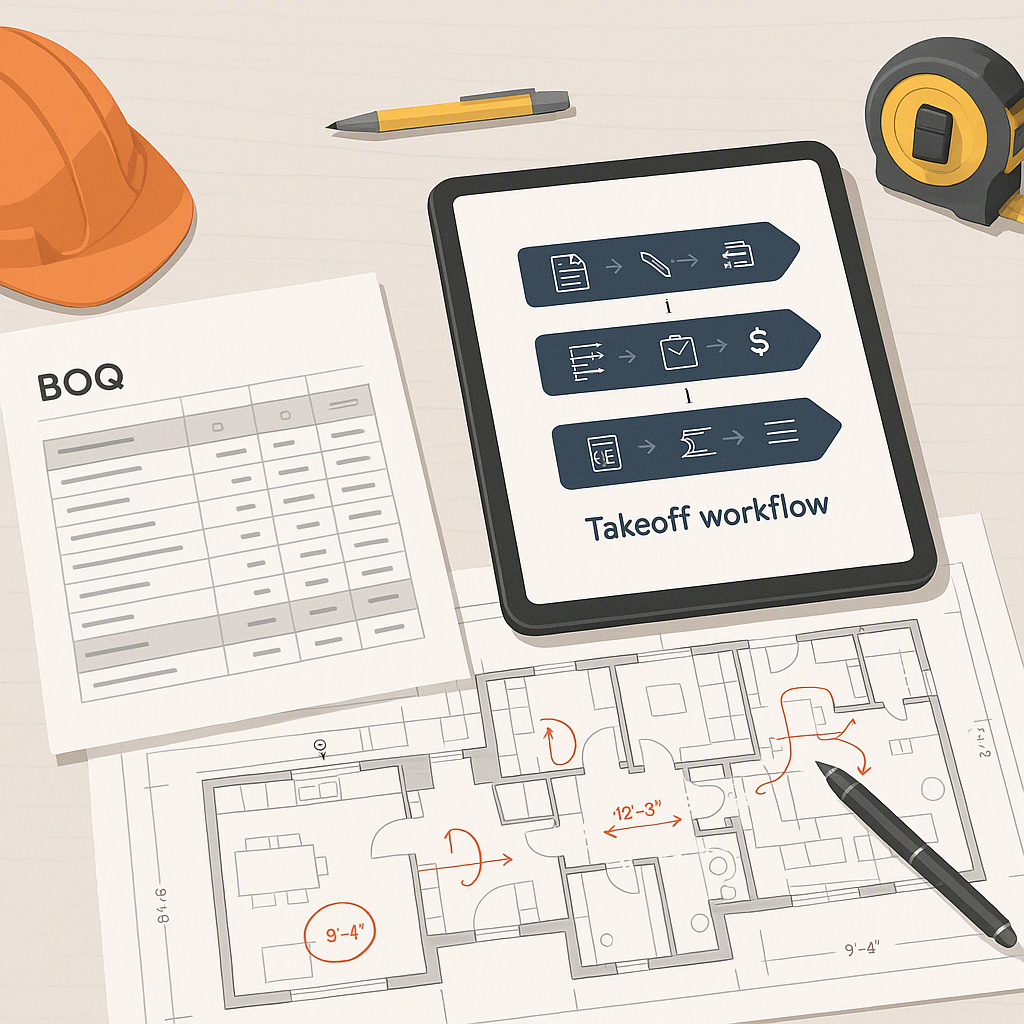
Manual estimation is dead. Tools like EstimateNext automate rate matching and BOQ preparation. For example, a single AI-powered takeoff can save 40 hours—time better spent analyzing margins.
Case Study: AI Takeoff vs. Manual Process
A contractor using AI takeoff tools completed a ₹20,00,000 bid preparation in under a day, compared to the industry average of 4–5 days. The AI tool flagged discrepancies in material rates, allowing the contractor to renegotiate supplier costs before submitting the bid.
FAQs
1. What’s the difference between markup and margin?
Markup is what you add to your direct costs to cover overhead and profit. Margin is what’s left after all costs are deducted from your selling price.
Example: If your project sells for ₹10,00,000 and costs ₹8,00,000, your margin is ₹2,00,000 (20%). If your markup was 25%, it means you added 25% to your direct costs to arrive at the selling price.
2. Should markup vary by project type?
Yes. Labor-heavy projects need higher markup to cover indirect costs. Material-heavy projects might need less, especially if material prices are locked.
Example: A residential project may require 35% markup due to labor-intensive work, while a road construction project might only need 20% markup due to predictable material costs.
3. How do I calculate overhead accurately?
Track indirect costs for at least six months. Divide by total direct costs across all projects. Use that percentage as your baseline.
Actionable Tip: Use software like QuickBooks or JobNext to categorize overheads into fixed and variable expenses.
4. How do I handle scope creep in fixed-price contracts?
Scope creep should be addressed with a contingency buffer in your markup or through change orders.
Actionable Tip: Include a clause in your contracts that clearly outlines the process for handling scope changes, including additional costs.
5. What’s the best tool for estimating markup?
Tools like JobNext and EstimateNext are designed to simplify markup calculations. They allow contractors to input direct and indirect costs, set profit margins, and automatically generate quotes.
Call-to-Action
If you’re tired of guessing markup and losing margins, JobNext’s tools can help. Get started free →
Learn more at EstimateNext