Why Rate Analysis Matters
Civil contractors lose margins every day because of bad rate analysis. It’s not about the big mistakes—it’s the small ones that add up. Missing a material cost here, underestimating labor there, and suddenly your budget is bleeding. Accurate rate analysis isn’t optional; it’s the cornerstone of any profitable project.
Rate analysis is the foundation for bidding, budgeting, and executing projects. Without it, you’re essentially building a house on quicksand—every hidden cost eats away at your profits. Let’s dive deeper into why rate analysis matters, how to improve it, and tools that make the entire process easier and more reliable.
The Core Problem: Blind Spots in Cost Breakdown
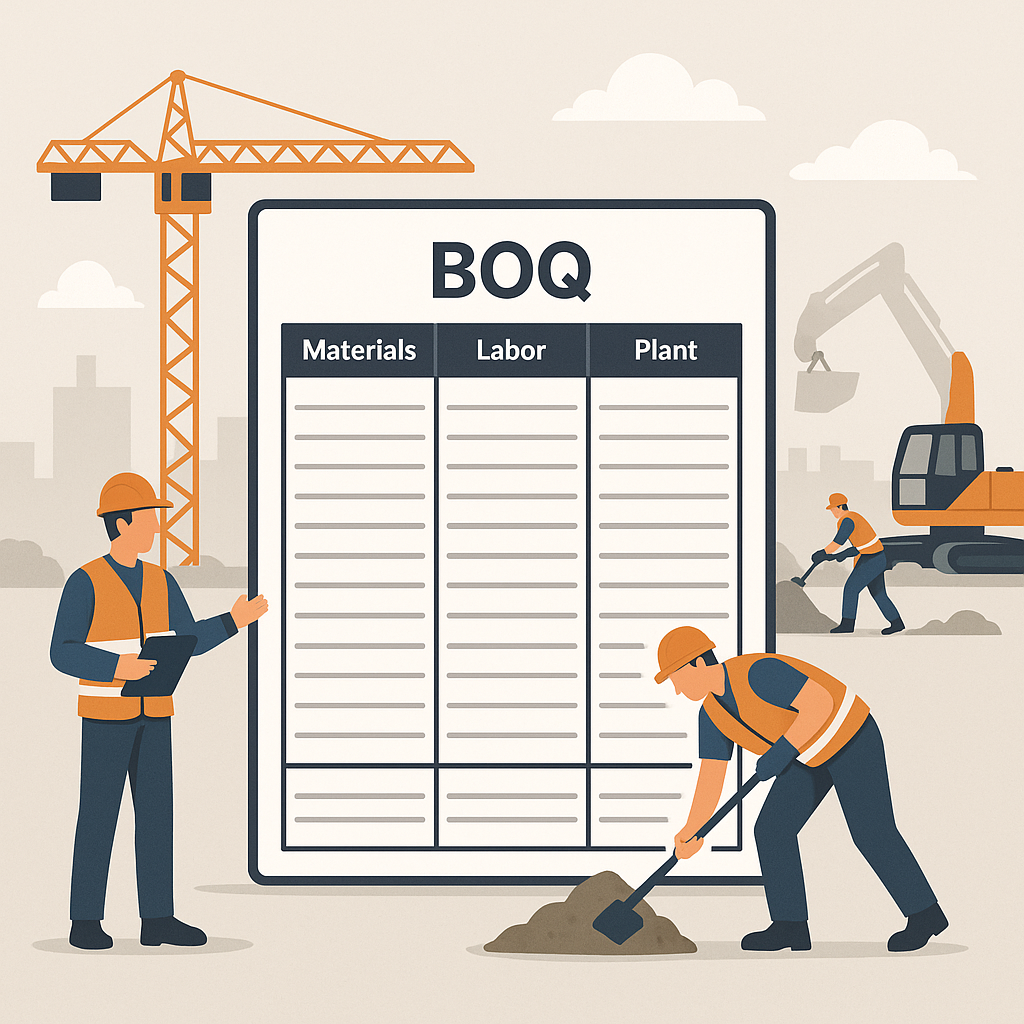
Every BOQ (Bill of Quantities) item has three main components: materials, labor, and plant/machinery. If you’re not breaking each rate down into these categories and checking them against market conditions, you’re guessing—and guesses don’t win bids.
Example #1: Excavation Costs
Take this example: A road-construction BOQ lists excavation at ₹250 per cubic meter. But has anyone checked the diesel price this month? Or accounted for the overtime labor needed during monsoons? If the scheduled rate isn’t updated regularly, you’re setting yourself up for cost overruns.
According to industry data, diesel prices in India can fluctuate by as much as 15% within six months. A contractor who ignores this variability risks eroding margins significantly. For instance, during the monsoon season, labor costs for overtime can spike by up to 20% due to extended work hours and weather-related delays.
Example #2: Concrete Mix Costs
Another common blind spot is concrete mix analysis. A contractor may estimate concrete costs at ₹6,000 per cubic meter based on outdated prices for cement, sand, and aggregate. In reality, cement prices may have risen by ₹50 per bag, and you could face an unexpected ₹3 lakh increase on a mid-sized project.
Fixing the Process: A Practical Framework
Here’s a simple framework for accurate rate analysis:
1. Start with Scheduled Rates
Use pre-built rate schedules for common civil activities. Tools like JobNext’s Preconstruction module let you pull these rates directly from a centrally managed database. No flipping through outdated Excel sheets.
Scheduled rates can be a lifesaver, but they’re not foolproof. For example, scheduled rates for excavation might assume diesel costs at ₹75 per liter, but if diesel prices spike to ₹85 per liter, your scheduled rate becomes obsolete.
2. Break Down Each Rate
Expand the rate analysis for every BOQ item:
- Materials: Include quantity, specification, rate per unit, and total material cost. For example, calculating the cost for 10 tons of steel at ₹60,000 per ton.
- Labor: Account for time required, designation (e.g., Mason, Helper), and labor rates. Factor in overtime or special allowances for high-risk work.
- Plant/Machinery: Capture equipment usage costs per unit. For example, an excavator may cost ₹1,500 per hour, with a fuel cost of ₹500 per hour.
3. Factor in Waste Percentages
Add a buffer for wastage—typically 3-10% for materials. For example, rebar wastage might average 5%, while concrete wastage could go as high as 8%, especially in challenging terrain.
4. Regularly Update Rates
Scheduled rates need a periodic review. Diesel prices change. Labor market rates fluctuate. If your rates are outdated, you’ll either lose the bid or lose money.
Set a quarterly schedule to update your rate database. For example, JobNext’s analytics flag sudden market shifts, such as steel prices rising by 10% within a month.
Tools That Make It Easier
This process can be manual and time-consuming—or it can be streamlined. JobNext’s Rate Schedules feature automates much of this. It takes your BOQ, matches items to pre-verified rates, and even lets you drill down into material, labor, and plant components. Their docs note that missing rates can lead to zero-cost BOQ items, which is a recipe for under-pricing. Read more about how AI simplifies rate analysis here.
Alternative Tools Comparison
Here’s a quick table comparing JobNext with similar tools:
| Feature | JobNext | Tool B | Tool C |
|---|---|---|---|
| Automated Rate Updates | ✅ | ❌ | ✅ |
| Waste Percentage Analysis | ✅ | ✅ | ❌ |
| BOQ Integration | ✅ | ✅ | ✅ |
| AI-Powered Analytics | ✅ | ❌ | ✅ |
Real-World Example: Excavation Costs Gone Wrong
A contractor I worked with underestimated excavation costs on a mid-sized highway project. They used a scheduled rate of ₹220 per cubic meter without updating diesel costs, which had spiked by 12% in the last quarter. Their margin took a ₹4 lakh hit. If they’d used a tool to regularly update rates, this could’ve been avoided.
Case Study: Residential Construction
In another case, a residential builder underestimated labor costs due to a lack of breakdown analysis. Labor shortages in the region led to rates increasing by 15%, and the project went 2 months over schedule. Using JobNext’s rate variance tracking could have flagged this issue early on and saved the contractor ₹10 lakh.
Rate Variance Tracking: Stop Issues Before They Escalate
Even if your initial rate analysis is perfect, that doesn’t mean you’re safe. Variance tracking is critical. JobNext’s analytics compare quoted rates, billing rates, scheduled rates, and actual costs. This lets you see where the gaps are—before they eat into your profits.
Actionable Step: How to Implement Rate Variance Tracking
- Identify key BOQ items that frequently experience cost overruns.
- Use a tool like JobNext to monitor variance between scheduled and actual costs.
- Flag any discrepancies of more than 5% for immediate review.
Key Takeaways
- Break down every rate into materials, labor, and plant costs.
- Factor in waste percentages and update rates regularly.
- Use tools like JobNext to automate rate analysis and variance tracking.
- Never let outdated rates dictate your bids or budgets.
Frequently Asked Questions
Why do contractors struggle with rate analysis?
Many rely on outdated data or manual processes. Tools like JobNext solve this by automating rate analysis and providing real-time updates.
How often should scheduled rates be updated?
At least quarterly—or whenever there’s a significant market shift (e.g., fuel price hikes).
What’s the risk of skipping rate breakdowns?
Without a breakdown, you can’t spot hidden costs. This leads to under-pricing and margin erosion.
Can small projects skip rate analysis?
No project is too small to benefit from accurate rate analysis. Even small residential projects can face cost overruns without proper analysis.
Are automated tools worth the investment?
Yes. The time and cost savings from tools like JobNext far outweigh the subscription or licensing fees. Contractors often recover the investment within one project.
Call to Action
If you’re tired of losing margins due to inaccurate rate analysis, JobNext can help. Get started here →
Learn more at EstimateNext