The Hidden Cost of Free Takeoff Errors
Contractors love free takeoff services. Who wouldn’t? It feels like you’re saving money upfront. But are you?
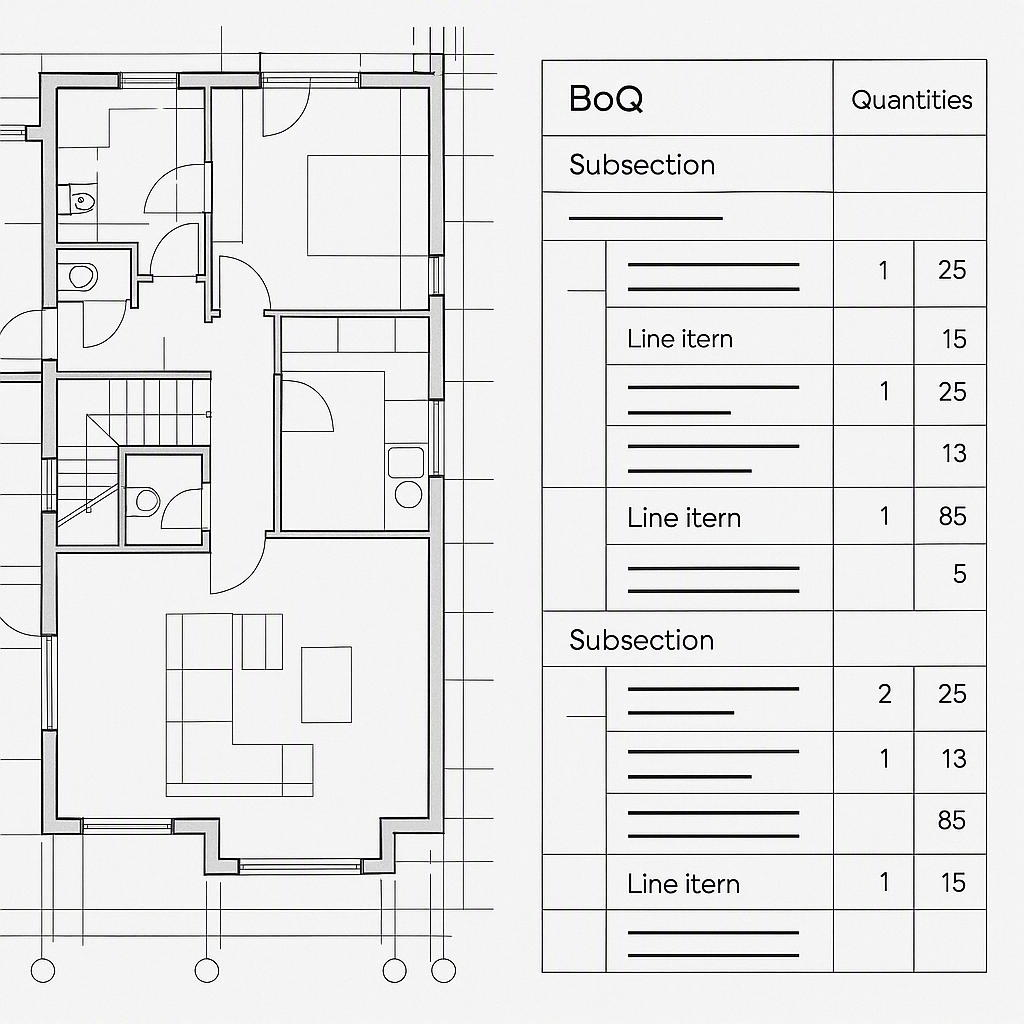
The truth is, these free services often miss critical details in your blueprints—details that directly impact your BOQ (Bill of Quantities). A miscalculation here, an omitted item there, and suddenly, your project margins are bleeding.
A 2023 McKinsey report found that inaccurate preconstruction estimates contribute to 45% of project overruns globally. In my experience, free takeoff tools are often a big part of the problem. They rely on semi-automated processes that leave room for human error—and that’s a risk you can’t afford.
Why Free Takeoffs Fail
Here’s where they typically go wrong:
-
Missed Objects in Blueprints: A free tool might miss a small but crucial object, like a secondary duct in an HVAC layout or a hidden beam in an architectural drawing. These are not “nice-to-haves”—these are critical components.
Example: A contractor working on a mid-sized office building project in Dubai relied on a free takeoff service. The tool failed to include a secondary reinforcement beam required under the region’s seismic compliance codes. This oversight cost the project an additional ₹5 lakh in retrofitting expenses.
-
Generic Quantity Calculations: Many services use outdated templates for their calculations. If your project needs specific materials or localized adjustments (like GCC-compliant specs), these tools won’t catch it.
Example: A residential project in Kerala required TMT steel bars that met IS 1786 standards. The free takeoff tool calculated quantities based on generic steel grades, resulting in a significant underestimation of material costs by nearly ₹2 lakh.
-
No Real-Time Error Checks: Free tools rarely integrate live error-flagging. You only find out about missing line items when it’s too late—after the bid is submitted or the project is underway.
Case Study: An Australian contractor discovered post-bid that their free takeoff service had failed to account for specialized fire-resistant drywall. The result? A loss of $40,000 to cover unplanned material and labor costs.
You might think, “Okay, but what’s the alternative? Paid tools?” Yes, but not just any tool. AI-powered blueprint analysis tools, like those using computer vision, offer a transformative solution.
How Computer Vision Fixes Blueprint Errors
Computer vision is a game-changer. These systems use AI to scan, analyze, and interpret blueprints with near-perfect accuracy. Here's how they solve the exact problems we just outlined:
1. Automated Object Detection
Advanced AI tools identify every object—pipes, HVAC components, beams, you name it. They don’t rely on human input to spot details; they “see” everything.
Example Tool: JobNext integrates BOQ items directly with scope deliverables, ensuring nothing is missed during the preconstruction phase. Their system flags any inconsistencies between blueprints and BOQ data before they escalate into costly errors.
Real-World Impact: A contractor in Oman used JobNext to analyze a complex industrial blueprint. The AI flagged missing HVAC ducts and mislabeled piping, saving the firm ₹8 lakh in potential rework costs.
2. Localized Quantity Adjustments
AI tools are trained to account for regional variations. In GCC projects, for instance, they’ll consider specific compliance requirements such as TDS and GST integration. This ensures your BOQ aligns with both technical and statutory demands.
Data Point: According to EstimateNext, vision AI slashes blueprint takeoff time from 40 hours to just 10 minutes. And it doesn’t just save time—it ensures that your estimate is accurate to the last rupee.
3. Live Error Flagging
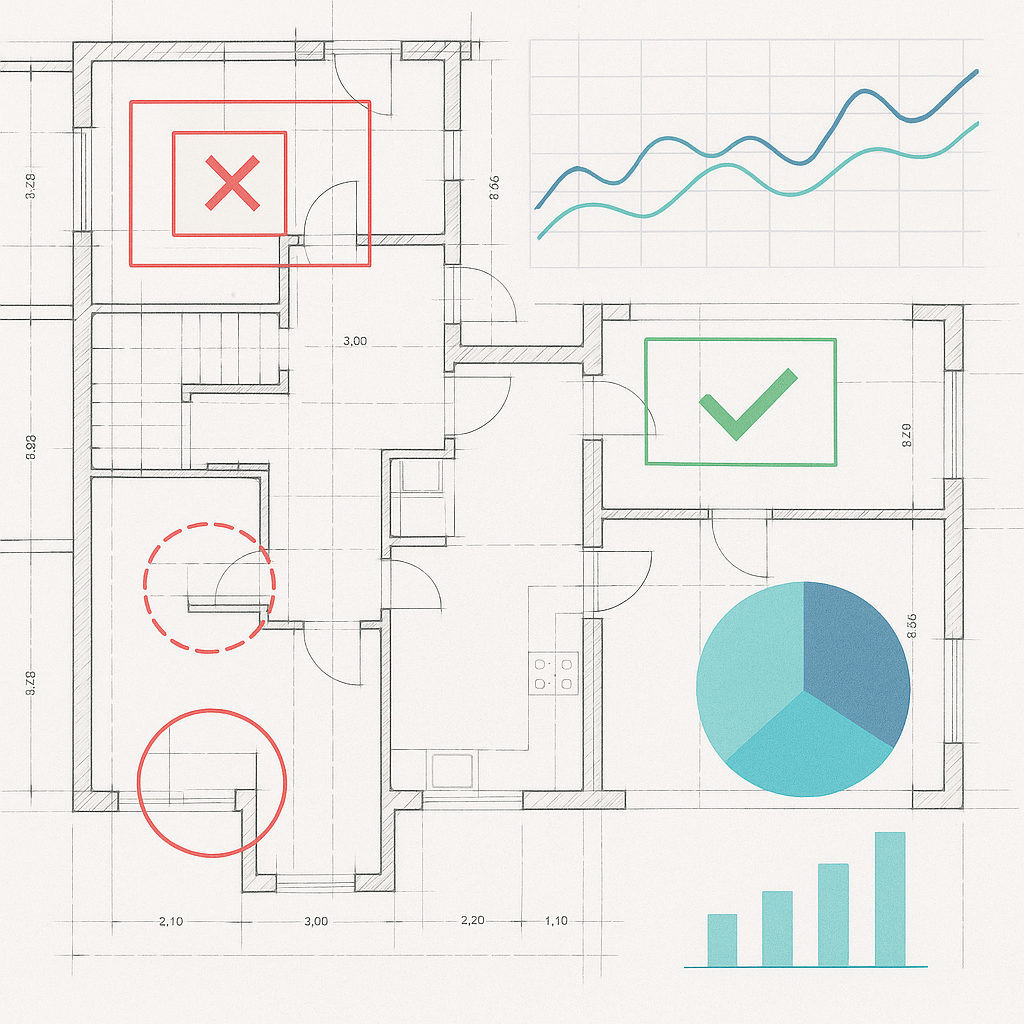
The best tools don’t just automate—they actively correct. If a quantity is off or a line item is missing, the system flags it immediately. This kind of proactive error-checking is impossible with manual processes or free tools.
Example: An AI tool flagged a discrepancy in a high-rise construction project where the blueprint dimensions didn’t match the BOQ quantities. Resolving it pre-bid saved the contractor ₹12 lakh in potential penalties.
Real-World Example: The ₹15 Lakh Error That Never Happened
A medium-sized contractor in Oman recently shared their experience with us. They’d relied on free takeoffs for years but always struggled with margin erosion. On one project, they caught a mistake just in time—an HVAC duct system had been completely omitted from the BOQ. Fixing it cost them ₹15 lakh in rework and delayed the project by two weeks.
After switching to an AI-powered tool with computer vision capabilities, this contractor saw immediate improvements. The system flagged similar blueprint omissions in their next project before the bid was finalized. That saved them lakhs—and their reputation with the client.
Why AI Takeoff Tools Are Worth It
Yes, AI-powered tools come with a price tag. But let’s break it down:
| Benefit | Free Tools | AI Takeoff Tools |
|---|---|---|
| Initial Cost | ₹0 | ₹50,000–₹2,00,000/year |
| Time Savings | Minimal | Up to 75% |
| Error Reduction | High risk of omissions | Low risk, proactive checks |
| Regulatory Compliance | Manual adjustments | Automated, localized |
| Long-Term ROI | Negative (due to errors) | Positive (error-free BOQs) |
Actionable Steps to Transition
- Audit Your Current Process: Identify recurring errors in your free takeoff workflows.
- Pilot an AI Tool: Many providers offer trial periods. Use this to test accuracy and usability.
- Train Your Team: Ensure your estimators understand how to leverage the AI tool effectively.
- Measure ROI: Track error rates, time savings, and cost reductions post-implementation.
FAQ: What Contractors Want to Know
1. Isn’t AI too expensive for small contractors?
While AI tools have upfront costs, their ROI is substantial. Even small contractors can save lakhs by avoiding errors, improving bid accuracy, and saving time. Many providers offer affordable pricing tiers or pay-per-project models.
2. How accurate are AI-powered takeoff tools?
Industry-leading AI tools boast accuracy rates of 95% or higher. They significantly outperform manual methods or free tools by eliminating human error and automating complex calculations.
3. What happens if the AI misses something?
Modern AI tools include live error-flagging systems that constantly cross-check blueprint data against BOQs. In rare cases of oversight, most platforms allow manual overrides and re-analysis.
4. Can AI handle local compliance requirements?
Yes. Advanced tools like JobNext are trained to account for regional standards, whether it’s GCC compliance, IS codes in India, or OSHA requirements in the U.S.
5. How long does it take to implement AI in my workflow?
Most tools are plug-and-play and can be integrated within days. Training your team on the system typically takes a week or two, depending on the software’s complexity.
Call to Action
If you’re tired of bleeding margins due to takeoff errors, it’s time to upgrade your tools. JobNext offers real-time blueprint analysis, error flagging, and compliance integration to ensure your BOQs are airtight.
Get started with JobNext today →
Learn more at EstimateNext