Why Manual Estimation is Still Bleeding Margins
Contractors across India and the GCC understand the pain of manual quantity takeoffs all too well. A single miscalculated BOQ (Bill of Quantities) line can ripple through a project, eroding margins and triggering disputes. According to a 2023 McKinsey report, manual estimation errors contribute to 35% of project overruns globally. This statistic paints a grim picture of how traditional methods are failing in the construction and infrastructure sectors.
Why does this happen? Because humans miss details. Overlooked blueprint dimensions, incorrect rate schedules, and guesswork on quantities are all margin killers. Even the most seasoned estimators can make mistakes under pressure. The result? Costs spiral, timelines extend, and profits take a hit.
Auto takeoff AI is changing the game. Tools like EstimateNext use computer vision to scan blueprints, auto-calculate quantities, and cross-check rates. It’s not just faster—it’s brutally accurate. According to EstimateNext, their AI matches 78,000 rates in seconds, saving contractors hours of rework and reducing disputes.
How Auto Takeoff AI Works
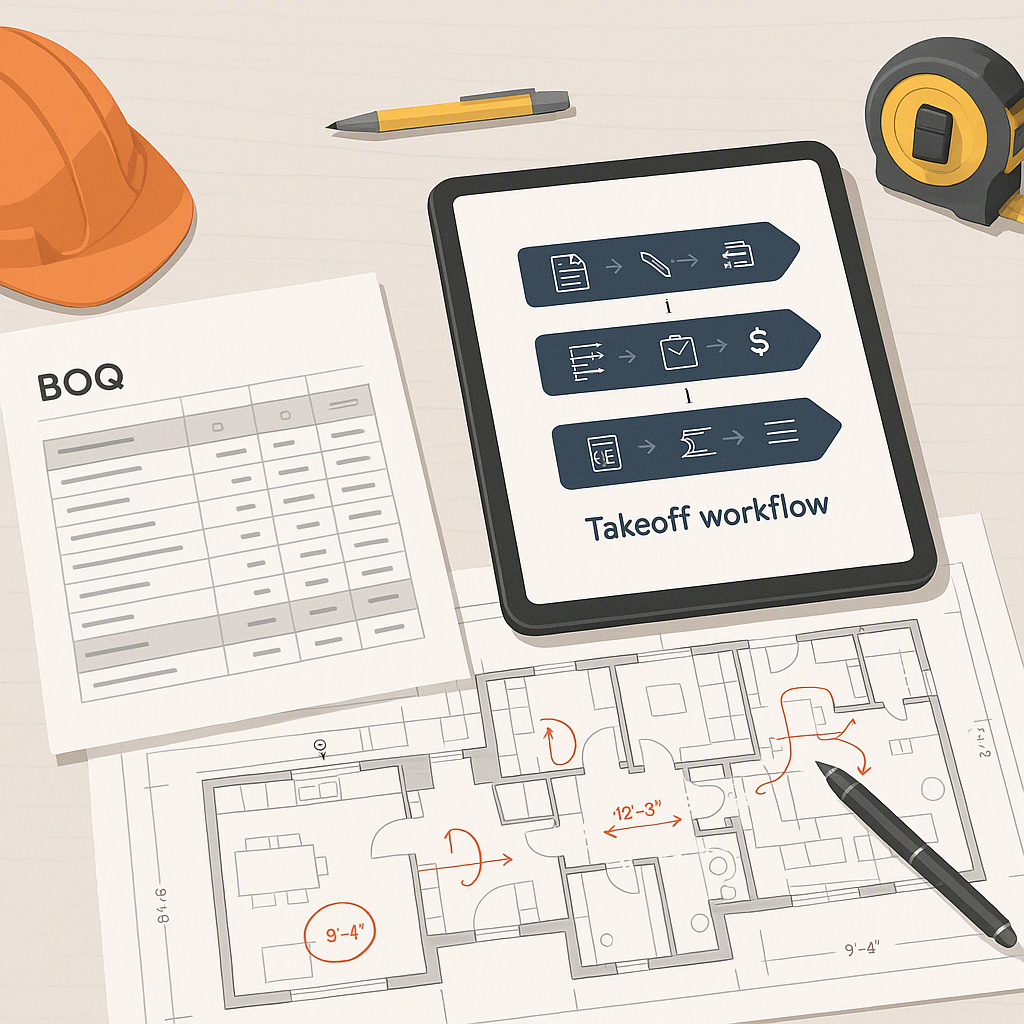
Auto takeoff AI integrates blueprint scanning with real-time BOQ generation. Here’s a step-by-step breakdown of how it works:
- Upload blueprints into the software: Contractors simply drag and drop the digital blueprint files into the platform.
- AI scans dimensions and extracts quantities: Using computer vision technology, the AI measures dimensions, identifies materials, and calculates quantities with precision.
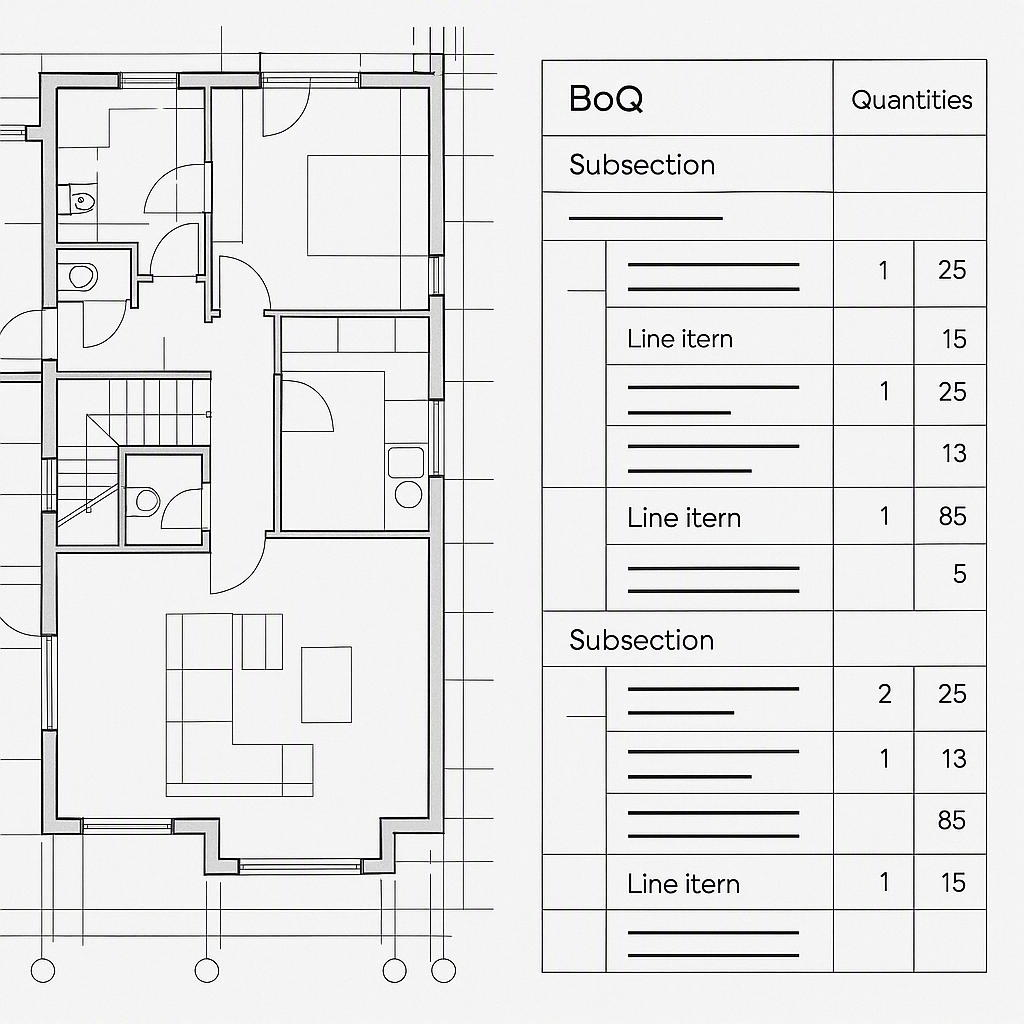
- BOQ lines auto-populate with rates from a centralized database: The AI references a preloaded database of rates to fill in the BOQ automatically.
- Final takeoff is verified against predefined project scopes: Before finalizing the BOQ, the tool checks quantities and rates against the project scope to ensure accuracy.
Take JobNext as an example. Its Estimate-based Quote feature goes a step further by breaking down costs into labor, material, plant, and subcontractor components. This level of granularity ensures no hidden expenses, giving contractors full transparency. For large-scale infrastructure projects, this transparency is essential to avoid disputes and maintain trust.
The Brutal Math of AI Accuracy
Let’s break it down with numbers to illustrate just how much manual estimation is costing contractors:
| Metric | Manual Takeoff | AI Takeoff |
|---|---|---|
| Time per job | 40 hours/job | 10 minutes/job |
| Error rate | ~8% | <1% |
| Estimated cost/job | ₹50,000 | ₹5,000 |
The difference isn’t just speed; it’s cost savings and confidence. Lower error rates mean fewer disputes, penalties, and rework. For instance, EstimateNext shared a case study on 10 Minutes vs. 40 Hours that highlights the transformation AI brings to preconstruction workflows.
Consider this: if your firm handles 50 projects annually and saves ₹45,000 per project by switching to AI takeoff, that’s ₹22,50,000 saved every year—just by minimizing errors and speeding up the estimation process.
Why Contractors Hesitate
Despite the undeniable benefits of auto takeoff AI, many contractors still cling to manual methods. Why? Two common reasons:
-
Fear of upfront costs: AI tools aren’t cheap, and the subscription fees can seem daunting. But here’s the reality: manual errors cost far more in the long run. If your projects are consistently losing ₹4 lakhs due to overruns, does a ₹2 lakh tool still seem expensive? The ROI is clear.
-
Resistance to change: Teams accustomed to Excel spreadsheets and manual workflows often resist adopting new technologies. This hesitation is understandable but shortsighted. Excel, while useful for basic calculations, simply isn’t built to handle the complexity of modern construction projects. Auto takeoff AI is designed specifically for this purpose.
For example, a mid-sized contracting firm in Kerala hesitated to adopt AI due to costs. After a trial run with EstimateNext, they discovered their average project error rate dropped from 10% to under 1%. The tool paid for itself within the first two projects.
Practical Example: JobNext’s BOQ Automation
One of the standout features of JobNext is its auto BOQ population functionality. After uploading a blueprint, the software instantly populates BOQ lines with accurate quantities and rates pulled from a centralized database. This ensures consistency across projects and eliminates manual entry errors.
Additionally, JobNext’s budgeting workflow flags mismatches between estimated and actual costs before final approval. This proactive approach enforces discipline and prevents cost overruns.
Case Study: Oman Highway Project
An Oman-based contracting firm used JobNext’s AI-powered takeoff for a ₹16 crore highway project. The results were remarkable:
- Error rate dropped from 9% to under 1%.
- Margins improved by ₹1.2 crores.
- Time savings: The firm reduced its estimation process from 50 hours to 1 hour per blueprint.
This case underscores how AI tools not only improve accuracy but also free up valuable time for project managers and estimators.
FAQ Section
Q: Can AI handle complex infrastructure projects with layered BOQs?
A: Absolutely. Tools like JobNext and EstimateNext are built to manage multi-layered BOQs, rate variations, and intricate project scopes. Whether it’s a metro station, highway, or airport, AI tools can handle the complexity with ease.
Q: What’s the learning curve for AI takeoff tools?
A: Most tools offer intuitive interfaces and detailed training modules. Teams typically adapt within a few weeks. For example, JobNext includes video tutorials and on-demand support to guide users through the setup and workflow.
Q: How do I justify the cost to my finance team?
A: Start by calculating your current margin losses due to estimation errors. Compare this to the tool’s subscription cost. For many firms, the savings from avoiding a single project overrun outweigh the annual cost of the software.
Q: Are these tools compatible with existing workflows?
A: Yes, most AI takeoff tools integrate seamlessly with popular project management platforms like Primavera or MS Project. They can also export data in Excel format for teams that prefer manual adjustments.
Q: What happens if the AI makes a mistake?
A: AI tools typically include verification steps. For example, JobNext flags inconsistencies between quantities and predefined project scopes, allowing human estimators to double-check before finalizing the BOQ.
Decision Framework: Should You Adopt AI Takeoff?
Use the table below to decide whether AI-powered takeoff tools are right for your firm:
| Question | Yes | No |
|---|---|---|
| Are you experiencing frequent cost overruns? | AI tools can reduce errors and disputes. | Manual methods may suffice for small projects. |
| Do your estimators spend over 20 hours/job? | AI tools cut estimation time drastically. | For smaller projects, manual workflows may work. |
| Is your average error rate above 5%? | AI ensures <1% error rates. | Manual workflows may be acceptable if errors are rare. |
| Are upfront costs a concern? | ROI from error reduction offsets costs. | Consider free trials or smaller-scale adoption first. |
Call to Action
If manual estimation is bleeding your margins, it’s time for a change. Tools like JobNext and EstimateNext offer AI-powered solutions designed to protect your profitability. Stop wasting time and money on outdated methods—start your trial today!
Learn more at EstimateNext