Stop Losing Margins to Bad Rate Analysis
Rate analysis in civil works isn’t just about crunching numbers. It’s about ensuring every material, labor hour, and equipment use is accounted for. Miss even one detail, and your profitability takes a hit. I've seen contractors underquote jobs by 15-20% because they relied on outdated rate schedules. The consequences? Razor-thin margins, delayed payments, and constant firefighting to stay afloat.
The Hidden Problem: Outdated Rate Schedules
Imagine you’re pricing a job and your scheduled rates haven’t been updated in six months. Steel prices have climbed 12% during that period — but your BOQ (Bill of Quantities) is still using last year’s numbers. That’s a recipe for disaster. According to Reuters, commodity prices can fluctuate by as much as 18% annually, depending on global demand. If your rates don’t reflect those changes, your estimates will be wildly off.
Take cement, for example. In 2022, global cement prices rose by nearly 11% due to surging energy costs. If you were using old rates for a project requiring 1,000 metric tons of cement, you’d potentially underprice by $15,000-$20,000. Multiply that across multiple projects, and the financial impact is devastating.
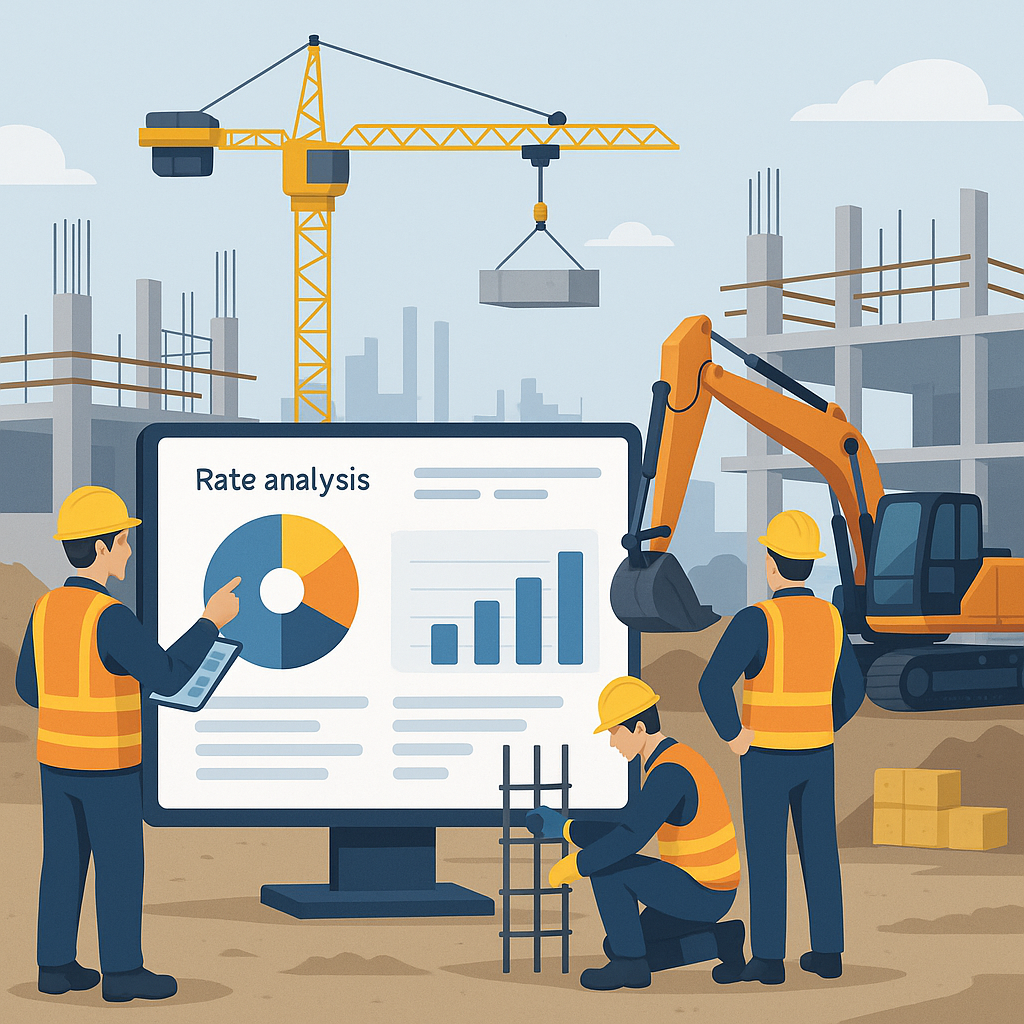
JobNext’s preconstruction module tackles this head-on. It uses centrally managed rate schedules tied to a work breakdown structure (WBS). You can break down each rate into materials, labor, and plant components, ensuring every detail is captured. Their docs highlight how contractors save hours by automating this process while staying accurate.
Actionable Steps:
- Set a Schedule for Rate Updates: Review and update your rate schedules monthly, especially for volatile materials like steel, cement, and fuel. Use reliable market trackers or indices to stay current.
- Centralize Access to Rates: A centralized digital system ensures everyone on your team works off the same, updated data. This eliminates discrepancies between departments.
- Use Historical Data: Analyze past projects to identify pricing trends and create more accurate forecasts. For instance, if steel prices trend upwards every Q3 due to global demand, factor that into your future bids.
Why Manual Rate Analysis Falls Apart
Most contractors still rely on spreadsheets or outdated rate books. Flipping through hundreds of pages to find the right unit price for concrete or excavation wastes precious time. Worse, manual entry increases the risk of errors — and errors cost money.
Example: The Spreadsheet Nightmare
A contractor I worked with spent 12 hours pricing a single BOQ with 1,500 line items. That’s a full workday wasted. Worse, two months later, they realized they’d missed factoring waste percentages for concrete. That oversight wiped out half their expected profit on the project.
AI-powered tools like those mentioned in EstimateNext eliminate inefficiencies. With 78,000 rates available in seconds, you don’t just save time — you save your bottom line. Automation also reduces human error, which is critical when every decimal point matters.
Actionable Steps:
- Audit Your Current Process: Review your manual workflows and identify bottlenecks. Do you spend hours flipping through rate books or verifying calculations?
- Invest in Automation: Tools like JobNext automate repetitive tasks like waste calculations and rate updates. While there’s an upfront investment, the ROI is quickly realized through saved time and improved accuracy.
- Train Your Team: Even the best tools are ineffective if your team isn’t trained to use them. Dedicate time to onboarding and regular training.
The Math of Margin Erosion
Let’s break it down:
| Scenario | Impact |
|---|---|
| Outdated rates | 12% underpricing on steel |
| Missed waste percentages | 5% extra concrete usage |
| Labor cost inflation | 8% overshoot on wages |
| Equipment idle time | 40% lifecycle waste |
Together, these factors can erode 20-30% of your expected margins. The math is brutal, but it’s fixable. For example, a contractor pricing a $10M project could lose up to $2.5M in potential profit due to these issues. This is why precision in rate analysis is non-negotiable.
How to Fix It: Practical Steps
Here’s what works:
- Centralize Rate Schedules: Use a system where scheduled rates are regularly updated based on market trends. JobNext’s preconstruction module automates this.
- Break Down Costs: Every rate should include materials, labor, plant, and overhead. If a WBS item lacks a rate, your BOQ cost will read zero — a red flag.
- Automate Waste Calculations: Factor in realistic waste percentages for every material. For concrete, a 5% waste factor is industry standard. JobNext handles these calculations automatically during estimation.
- Monitor Variance Weekly: Use tools like JobNext’s BOQ Margin report to catch margin erosion early. Negative margins usually mean estimation errors or procurement overruns.
- Benchmark Against Industry Averages: Regularly compare your rates and margins to industry benchmarks to identify gaps or areas for improvement.
Real-World Example: Mid-Sized Contractor Success
A mid-sized contractor in Oman used JobNext’s BOQ rate analysis to price an $18M highway project. By breaking down rates into materials, labor, and plant, they discovered their initial estimate was off by $650,000 due to outdated steel prices. After updating the rates, they not only avoided losses but improved their bid competitiveness. The job conversion rate? 22% higher than the industry average.
Another case study involves a US-based contractor who switched to JobNext after struggling with manual rate analysis. Over a year, they reported a 15% improvement in profit margins and reduced their average bid preparation time by 40 hours per project. These are real, tangible results that highlight the importance of adopting modern tools.
FAQ: Addressing Common Doubts
Q: How often should I update scheduled rates?
A: Monthly is ideal, especially for volatile materials like steel and cement. Some contractors do it quarterly, but that increases risk. If you’re in a fast-moving market, weekly updates might be necessary.
Q: What’s the best tool for rate analysis?
A: Systems like JobNext automate rate breakdowns, waste calculations, and cost tracking. Manual methods just aren’t competitive anymore. Look for tools that integrate with your existing systems for seamless adoption.
Q: Can I trust AI for this?
A: Yes, but pick tools with proven track records. EstimateNext has case studies showing how AI saves up to 40 hours per bid. Start with smaller projects to build confidence in the technology.
Q: What’s the biggest mistake contractors make in rate analysis?
A: Over-reliance on outdated data. Many contractors assume their old rates are “close enough,” but even small discrepancies can snowball into significant losses. Regular updates and reviews are critical.
Q: How do I handle fluctuating material costs mid-project?
A: Use escalation clauses in your contracts to account for major price changes. Also, negotiate bulk purchasing agreements with suppliers to lock in prices where possible.
Decision Framework: Manual vs. Automated Rate Analysis
| Criteria | Manual Process | Automated Tools (e.g., JobNext) |
|---|---|---|
| Accuracy | Prone to human error | High accuracy with real-time updates |
| Time Investment | 8-12 hours per BOQ | 1-2 hours per BOQ |
| Scalability | Limited | Easily scalable to larger projects |
| Cost Upfront | Low | Moderate |
| Cost Over Time | High (time and errors) | Low (savings from efficiency) |
Call to Action
If outdated rate schedules and manual errors are eroding your margins, JobNext can help. Get started free →
Learn more at EstimateNext