Why Small Errors in Estimation Add Up
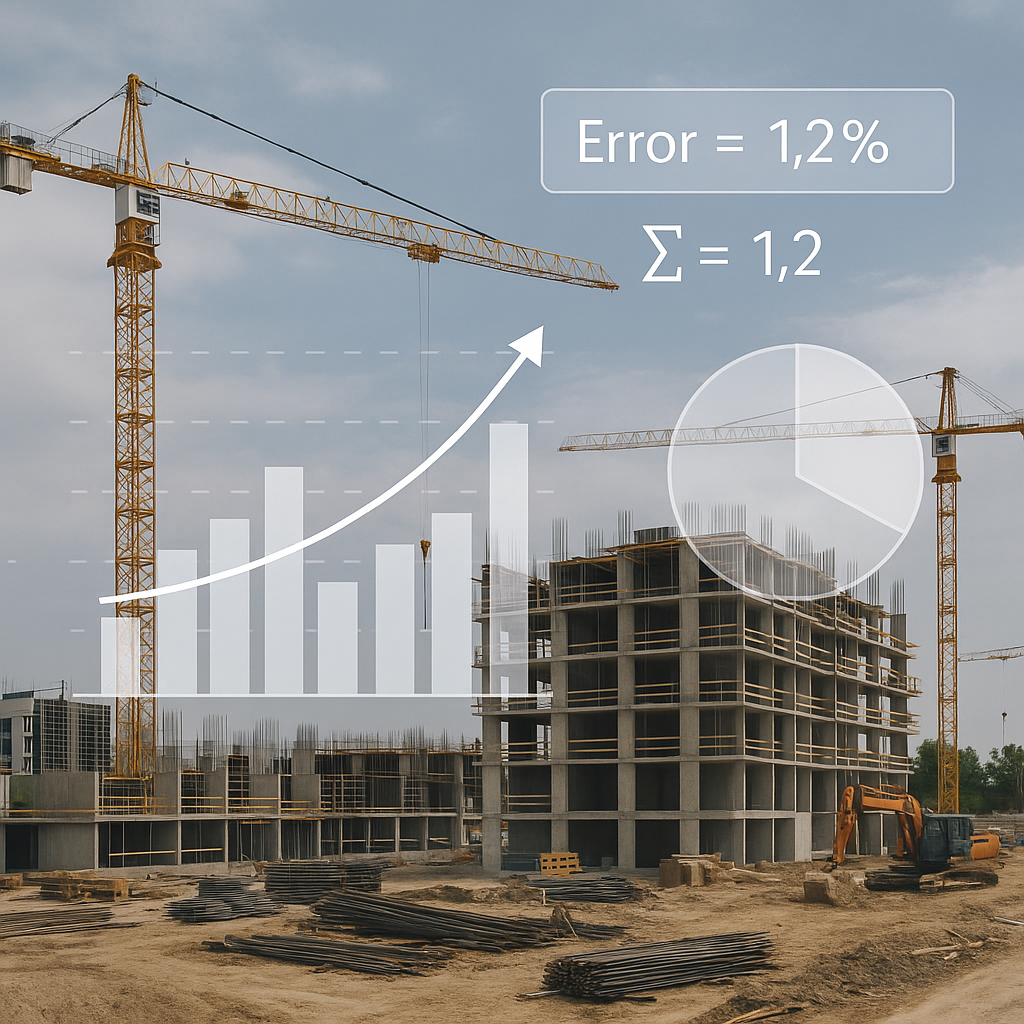
Even small errors in cost estimation can significantly impact the profitability of construction projects. These errors often stem from factors like outdated labor rates, underestimated material wastage, or poorly planned equipment utilization. Over time, these inaccuracies can accumulate and lead to substantial financial losses.
This is where the error rate formula becomes valuable. It provides a straightforward way to measure how far off your estimates are from actual costs and helps identify areas for improvement.
The Error Rate Formula Explained
The error rate formula is straightforward:
Error Rate (%) = [(Actual Cost - Estimated Cost) / Actual Cost] × 100
Let’s break it down:
- Actual Cost: What you actually spent to complete the job or scope.
- Estimated Cost: The budget you initially approved.
- Error Rate: The percentage difference between the two.
Illustrative example —
- Estimated concrete cost: ₹12,00,000
- Actual concrete cost: ₹12,60,000
Error Rate = [(₹12,60,000 - ₹12,00,000) / ₹12,60,000] × 100 = 4.76%
A 4.76% error rate might not seem huge, but on projects with thin margins, it can significantly impact profitability. When similar errors occur across multiple cost categories—labor, material, equipment—the cumulative effect can be detrimental.
Common Causes of Estimation Errors
1. Outdated Rate Schedules
Rates change constantly due to market conditions. If your rate library isn’t updated regularly, your estimates may not reflect current costs.
Fix: Use tools or systems that allow you to maintain a dynamic rate library. Regular updates ensure your estimates align with market realities.
2. Ignoring Waste Percentages
Material wastage is inevitable in construction. Factors like concrete spillages, cutting losses on steel, or rework due to design errors contribute to this.
Fix: Factor in typical waste percentages directly into your estimates. This reduces the likelihood of underestimating material requirements.
3. Poor Scope-BOQ Alignment
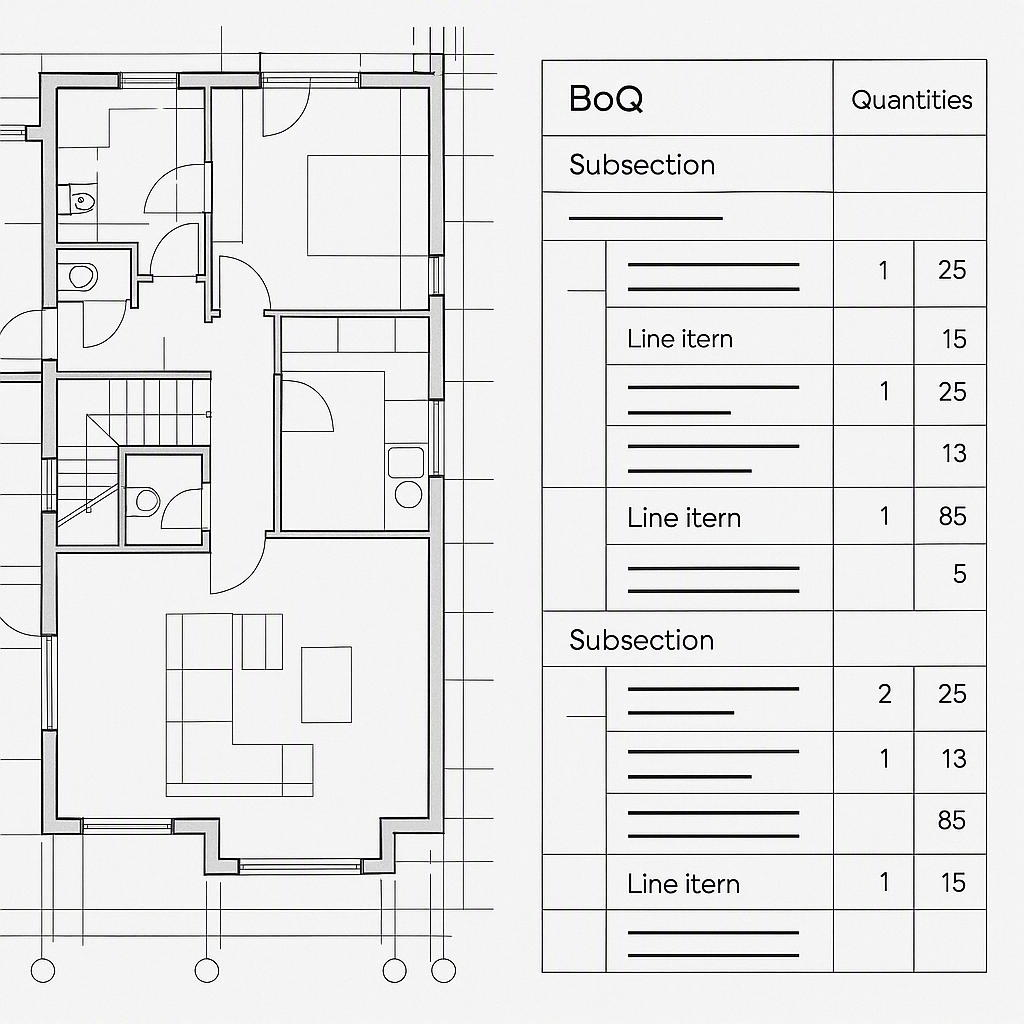
Misalignment between the scope of work and the Bill of Quantities (BOQ) can lead to underbudgeting. For example, if the BOQ specifies an area but not the required thickness, estimators may overlook additional costs.
Fix: Link each BOQ line to a detailed scope breakdown to ensure estimates and execution stay aligned.
4. Manual Estimation Errors
Manual data entry is prone to errors, such as misplaced decimals or incorrect calculations. These mistakes can inflate costs or lead to underestimation.
Fix: Automate repetitive tasks using estimation software to reduce human error and improve accuracy.
Using Error Rate to Improve Estimation Accuracy
Step 1: Track Past Projects
Calculate the error rate for completed projects to identify patterns in estimation inaccuracies. Break down the analysis by cost categories such as labor, material, and equipment.
Illustrative example —
| Project | Labor Error Rate | Material Error Rate | Equipment Error Rate |
|---|---|---|---|
| Project A | 3% | 8% | 1% |
| Project B | 5% | 9% | 4% |
| Project C | 2% | 6% | 3% |
This analysis helps pinpoint areas where errors are most frequent, allowing you to focus on improving those aspects.
Step 2: Update Rate Libraries
Once you identify error-prone areas, update your rate schedules to reflect current market conditions. Regular updates ensure your estimates remain accurate.
Step 3: Set Validation Rules
Before approving an estimate, validate it against historical error rates. For example, if material costs typically run higher than estimates, add a buffer to account for this discrepancy.
Step 4: Monitor During Execution
Track actual costs against estimates throughout the project lifecycle. Real-time monitoring helps identify deviations early, allowing corrective actions to minimize overruns.
Common Mistakes to Avoid
- Relying Solely on Historical Data: Market conditions change frequently, so past rates may not always be reliable.
- Skipping Scope Reviews: Misaligned scopes lead to mismatches between estimates and actuals.
- Ignoring Small Variations: Even minor errors can accumulate and significantly impact project profitability.
- Failing to Involve Site Teams: Site engineers often have valuable insights into actual resource requirements.
- Not Reviewing Estimates Post-Completion: Conduct post-mortem analyses to learn from past estimation mistakes.
FAQ
1. How often should I update rate schedules?
At least quarterly, or more frequently during periods of high market volatility.
2. What’s an acceptable error rate for construction estimates?
The acceptable error rate varies by project size and type. Smaller projects may tolerate higher error rates, while larger projects benefit from tighter accuracy.
3. How do I track actual costs accurately?
Use integrated project management software that links estimates to procurement, work orders, and bills for a unified view.
4. Can AI tools improve estimation accuracy?
Yes, AI-powered tools can automate rate matching and identify inconsistencies, reducing human error and enhancing precision.
Accurate estimation is critical for maintaining construction margins. By using the error rate formula and adopting best practices, contractors can minimize costly mistakes and improve profitability.
Learn more at EstimateNext