The Real Cost of Guesswork in Construction Estimation
Every contractor has faced the challenge of unexpected budget overruns. These errors don’t just hurt margins; they can also impact your ability to compete on future bids.
That’s where a rate analysis calculator becomes essential. It’s not just a tool; it’s your defense against bad math and outdated assumptions. Let’s break down how to use one effectively.
Why Rate Analysis Matters
At its core, rate analysis is about precision. Instead of applying a blanket cost to activities, you break each task into components: materials, labor, equipment, and overhead. For example:
| Activity | Material Cost (₹) | Labor Cost (₹) | Equipment Cost (₹) | Total Rate (₹/Unit) |
|---|---|---|---|---|
| Concrete (1 CUM) | 3,000 | 1,200 | 500 | 4,700 |
What happens if you skip this step? You risk underestimating high-cost items or overestimating low-cost ones, either way eroding your competitiveness. Worse, when market rates fluctuate, you’ll have no clear way to adjust your budgets.
Using a Rate Analysis Calculator Effectively
A rate analysis calculator simplifies what could otherwise be a messy, manual process. Here’s how it typically works:
- Centralized Rate Schedules: Access pre-defined rates for each Work Breakdown Structure (WBS) activity.
- Component Breakdown: Break down costs for materials, labor, and equipment. Modify these as needed to reflect current market conditions.
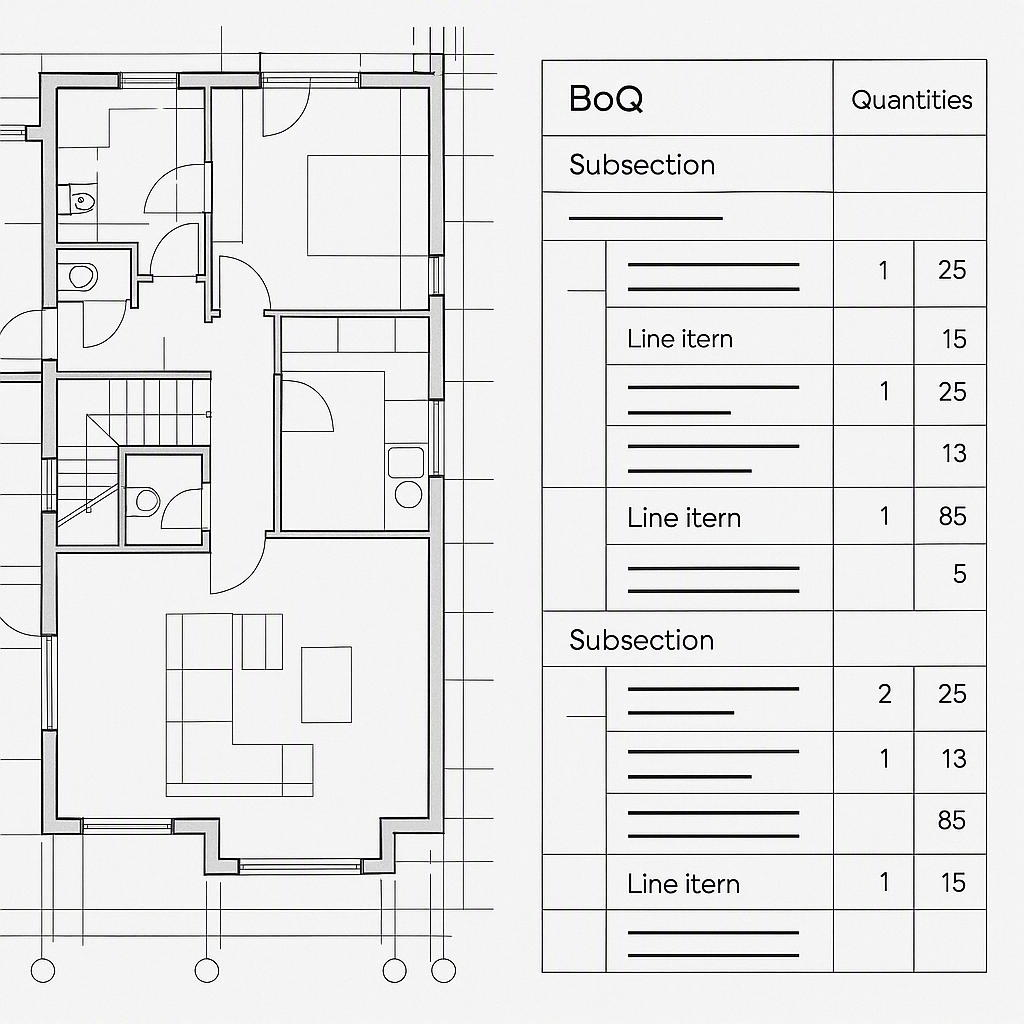
- Automated BOQ Population: When creating a Bill of Quantities (BOQ), the system can automatically apply scheduled rates to your scope quantities, reducing manual calculations and errors.
For contractors juggling multiple projects, this structured approach saves time and eliminates errors caused by outdated spreadsheets.
Common Mistakes When Using a Rate Analysis Calculator
Even with the best tools, errors can creep in. Here are the top mistakes to avoid:
-
Not Updating Rates Regularly: Prices for materials, fuel, and labor fluctuate constantly. If your rate schedules are outdated, your BOQs will mislead you.
- Pro Tip: Review rates quarterly and tie them to reliable indices (e.g., Delhi Schedule of Rates).
-
Ignoring Waste Factors: Forgetting to account for material wastage leads to budget overruns.
- Illustrative example: If you estimate 100 CUM of concrete without adding a 5% wastage factor, you could fall short on materials.
-
Overlooking Subcontractor Costs: Subcontractors often bill differently — by progress milestones or lump sum. If your rate analysis doesn’t account for this, you’ll underprice bids.
A Practical Example: Civil Rate Analysis for a Road Project
Let’s say you’re pricing a road project. One BOQ item is “PCC (Plain Cement Concrete) - 1 CUM.” Here’s how you’d approach it:
- Define Scope: Add “PCC” as a WBS activity.
- Break Down Rates:
- Material: Cement, sand, aggregate (₹3,000)
- Labor: Mixing and pouring (₹1,200)
- Equipment: Transit mixer and vibrators (₹500)
- Total: ₹4,700/CUM
- Apply Scope Quantities: Multiply ₹4,700 by the required volume (e.g., 50 CUM = ₹2,35,000).
This level of granularity ensures no cost surprises later.
Benefits of Using a Rate Analysis Calculator
A rate analysis calculator offers several advantages:
- Real-Time Adjustments: Update rate schedules as market conditions change, and all linked BOQs adjust automatically.
- Variance Analysis: Compare your budgeted rates with actual costs during execution to spot overruns early.
FAQ
Q: What’s the biggest benefit of using a rate analysis calculator?
A: Accuracy. It prevents underpricing bids or overspending on execution.
Q: Can rate analysis calculators handle custom rates for unique projects?
A: Yes, you can modify scheduled rates or create new ones specific to your project.
Q: How often should I update my rate schedules?
A: Quarterly is a good baseline, but for volatile markets, monthly updates might be necessary.
Final Thoughts
Rate analysis isn’t just a nice-to-have; it’s the backbone of profitable construction projects. By breaking down costs into detailed components, you can create more accurate estimates and protect your margins.
If you’re ready to stop guessing and start building accurate estimates, consider using a rate analysis calculator to streamline your process.
Learn more at EstimateNext