Why Most Quantity Takeoff Sheets Fail
Let’s be honest—most quantity takeoff sheets are a mess. They’re either overly complicated or too vague. You’ve got fields you don’t need, numbers pulled out of thin air, and formulas that don’t check out. What’s the result? Cost overruns, unhappy clients, and razor-thin margins that make you question the project’s viability.
A well-structured quantity takeoff sheet is essential for accurate cost estimation and project planning. Here’s how you can build one that works effectively.
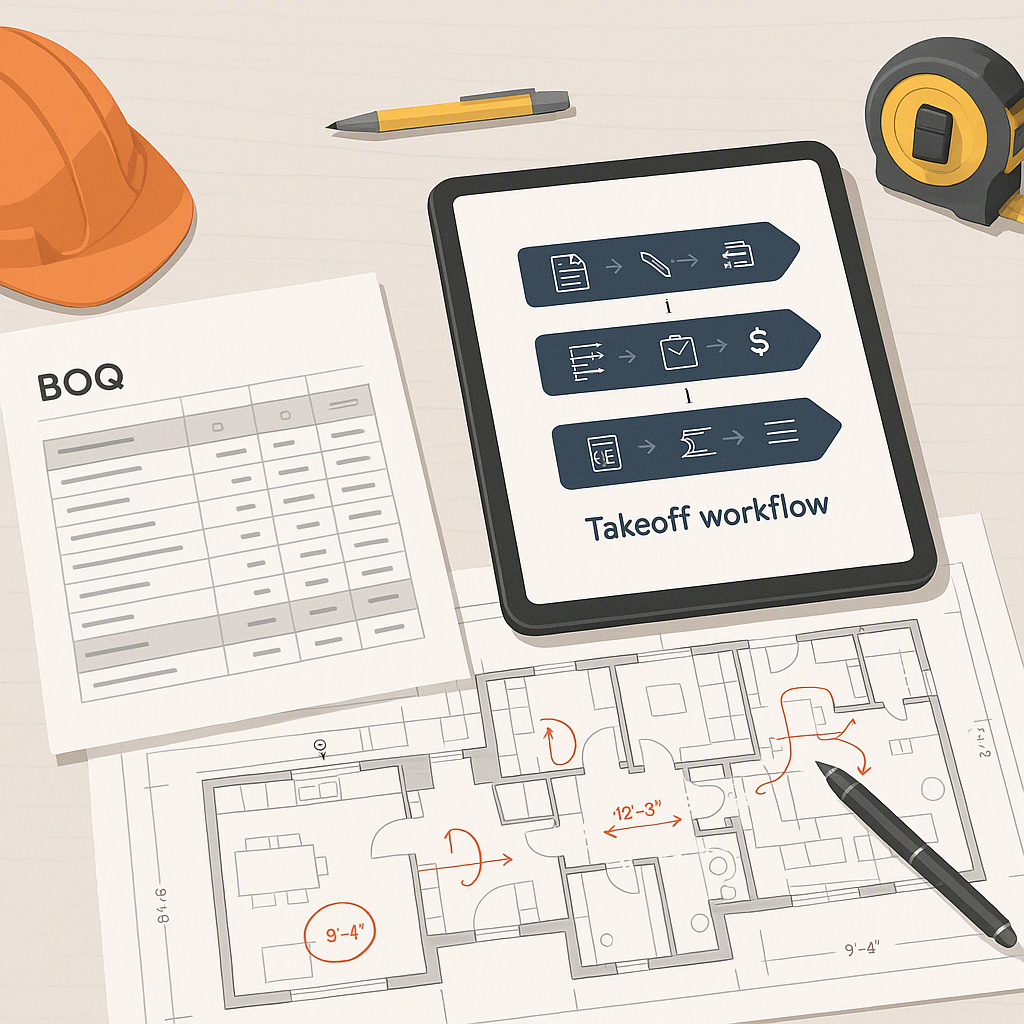
Step 1: Start With a Clear BOQ Structure
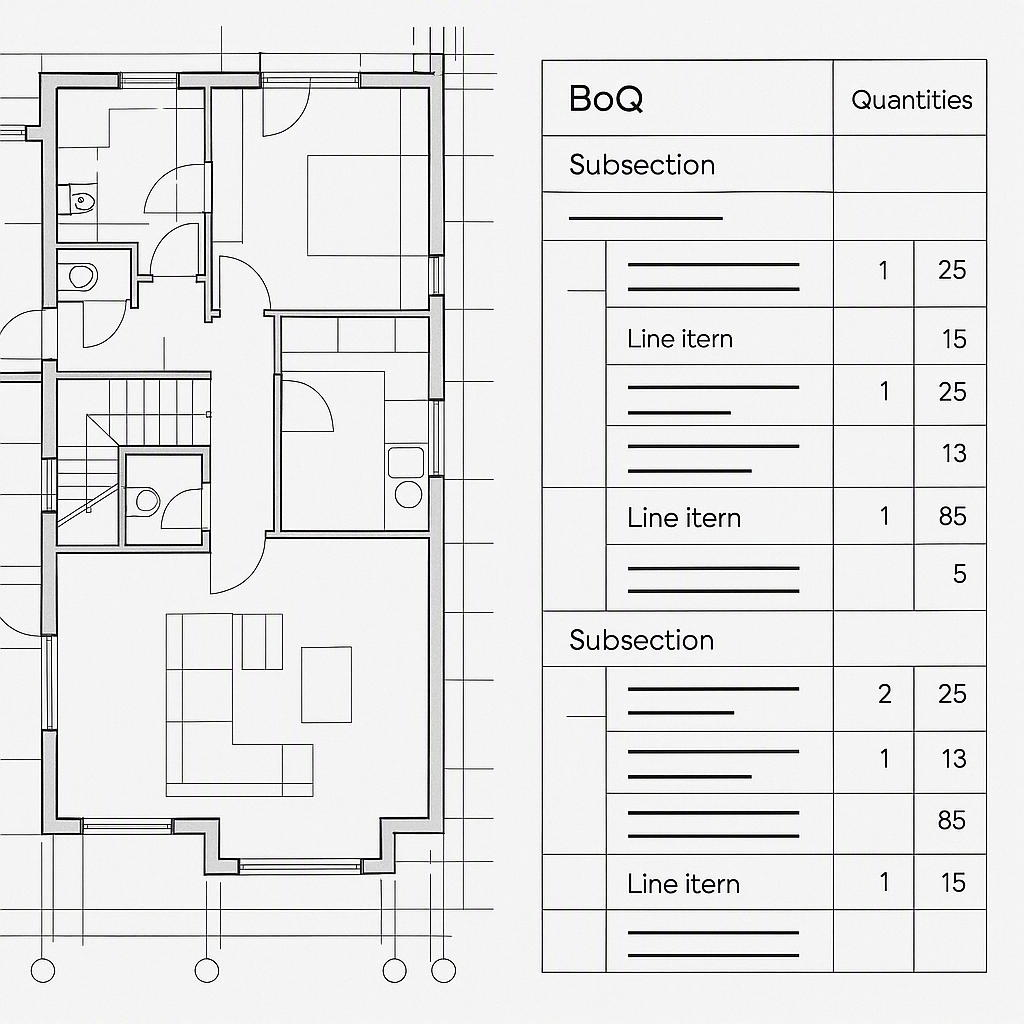
Your Bill of Quantities (BOQ) is the foundation for your takeoff sheet. If your BOQ is cluttered or inconsistent, your takeoff sheet will be, too. Use a standardized BOQ format based on your trade. For example, CPWD’s DSR is a popular standard in India for civil projects. In the GCC, many contractors lean on CESMM3 for civil engineering works.
Make sure your BOQ is broken down into:
- Work Breakdown Structure (WBS): Categorize your work systematically (e.g., excavation, foundation, superstructure).
- Items: List specific tasks (e.g., M20 concrete for slab, plastering with cement mortar).
- Units of Measurement (UOM): Use consistent units (e.g., cubic meters, square meters, kilograms).
- Rates and Quantities: Clearly state both the unit rate and estimated quantity.
Inconsistent BOQ formats are a common cause of errors in quantity takeoffs. If your team spends significant time manually cleaning up client BOQs, it’s time to rethink your process. Using tools that allow you to upload and standardize BOQs directly from Excel templates can ensure your starting point is clean and consistent.
Step 2: Leverage Rate Analysis for Accuracy
You might think you know your rates, but guessing isn’t good enough. Rate analysis—breaking down costs into material, labor, and equipment components—is the only way to ensure accuracy. And it’s not just about being precise; it’s about being competitive.
Illustrative example — Let’s say you’re pricing a concrete slab. Here’s how rate analysis might break down:
| Component | Quantity | Unit Rate (₹) | Total (₹) |
|---|---|---|---|
| Cement | 100 bags | 350 | 35,000 |
| Sand | 5 m³ | 1,200 | 6,000 |
| Labor (shuttering) | 2,000 hrs | 180 | 3,60,000 |
| Machinery | 10 hrs | 5,000 | 50,000 |
| Total | 4,51,000 |
If you skip this step and just estimate rates without detailed analysis, you risk inaccuracies that could impact your project’s profitability. Breaking down costs into components ensures you account for all variables and can adjust for market fluctuations.
Step 3: Visualize Quantities for Cross-Verification
One of the most common mistakes in takeoff sheets is miscalculating quantities. This is especially true when you’re dealing with complex geometries or custom designs. The solution? Visualize your measurements.
For instance:
- Attach sketches or drawings to your takeoff sheet.
- Include location references (e.g., “Column C1, 3rd Floor”).
- Use software that lets you upload and annotate supporting documents.
By visualizing your measurements and attaching relevant documentation, you can ensure your takeoff is not only accurate but also audit-ready.
Step 4: Automate Redundant Tasks
Manually creating a takeoff sheet from scratch every time? That’s a time sink you can’t afford. Today’s tools can automate repetitive tasks like:
- Importing client-provided BOQs.
- Populating default rates and UOMs.
- Cross-referencing quantities with approved work orders.
Automation can significantly reduce errors and save time, allowing you to focus on more critical aspects of project planning and execution.
Step 5: Always Include Contingencies
No takeoff sheet is perfect. There will always be surprises—site conditions, design changes, or even price fluctuations. That’s why contingencies are critical.
A good rule of thumb is to add a contingency to your cost estimates. The key is to document this clearly in your takeoff sheet so stakeholders know what’s included.
Common Mistakes to Avoid
- Using inconsistent units: Always verify that your UOMs match across your BOQ, takeoff sheet, and procurement system.
- Skipping site visits: No matter how detailed the drawings, a site visit can reveal hidden complexities.
- Overlooking waste factors: Not accounting for material wastage can throw off your estimates significantly.
- Ignoring approval workflows: If your takeoff isn’t reviewed and approved, you’re flying blind.
FAQ
1. What’s the difference between a BOQ and a takeoff sheet?
A BOQ defines the scope and quantities of work, while a takeoff sheet calculates the detailed quantities and costs needed to complete that scope.
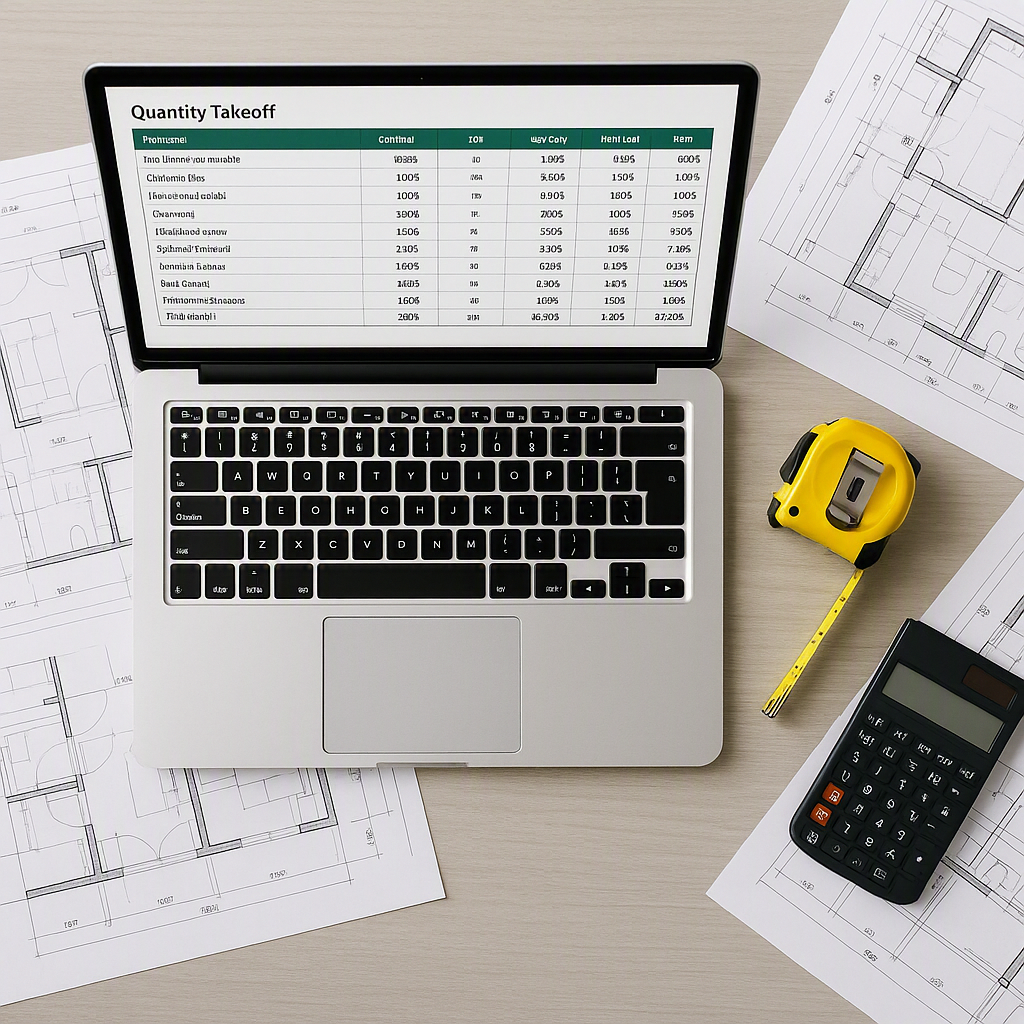
2. Can I use Excel for takeoff sheets?
Yes, but it’s prone to errors. Dedicated tools can save time and reduce mistakes.
3. How do I handle changes to the BOQ after the takeoff is done?
Use a system that integrates preconstruction and execution data. This allows for seamless updates from BOQ to job execution.
4. What’s the best way to standardize BOQ formats?
Use a template or software that supports predefined WBS and scope libraries to simplify the process.
Creating a well-structured quantity takeoff sheet is essential for improving cost accuracy and ensuring project success. By following these steps and avoiding common pitfalls, you can streamline your process and minimize costly errors.
Learn more at EstimateNext