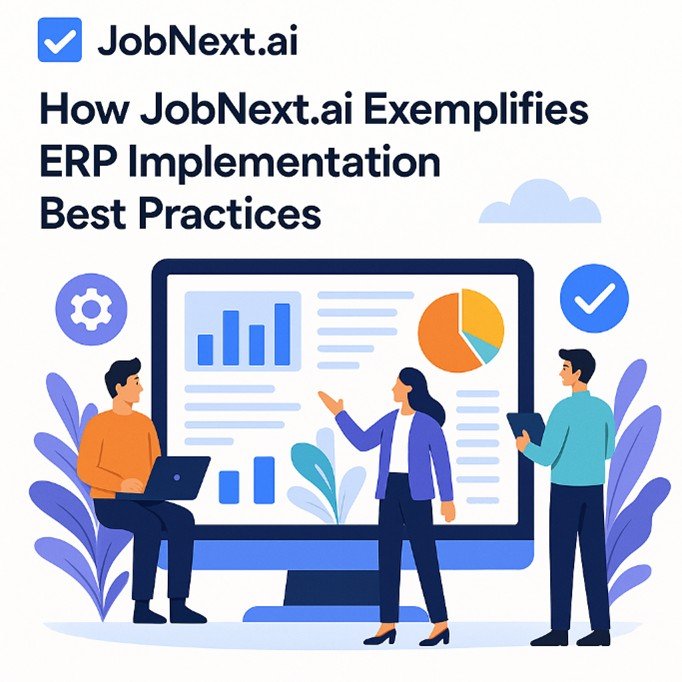
How JobNext.ai Exemplifies ERP Implementation Best Practices?
- Tailored, Modular Design JobNext.ai offers a modular architecture with over a dozen modules and 170+ functionalities—from tendering and project management to finance, HR, procurement, equipment, analytics, and documents. This flexibility enables businesses across construction, HVAC, interior design, facilities management, and trading to adopt only what they need—and scale as they grow.
- Flexible, Industry-Aligned Workflows Rather than forcing businesses into rigid processes, JobNext.ai emphasizes configurable, flexible workflow design, including multiple approval layers and billing or procurement arrangements optimized for contracting or infrastructure projects. This eliminates the need for excessive customization while still matching unique operational needs.
- Phased Implementation with Best-Practice Defaults Best practices kick in right from the start: JobNext.ai recommends beginning with industry-standard defaults, followed by tailored tweaks, role-based training, and process fine-tuning during later phases. This phased approach reduces disruption and ensures steady progress.
- Strong Implementation Support & Training Implementation isn’t just about software—it’s about people. JobNext.ai provides a structured onboarding process using Agile principles, including discovery, design, testing, deployment, and ongoing support. Training is comprehensive, covering user onboarding, troubleshooting, documentation, and even post-launch audits and updates.
- Integration Capabilities & Cloud Security JobNext.ai facilitates secure integration with existing tools—CRM, accounting systems, and third party platforms—for seamless workflows and improved data accuracy. Its cloud-based infrastructure ensures data is encrypted, backed up regularly, and accessible to authorized users only.
- Role-Based Custom Reporting and Analytics Every stakeholder can customize how they consume data. JobNext.ai includes role-based dashboards, scheduled reporting, custom fields, drill-down analytics, and exports in multiple formats—so executives, project managers, and teams each get information tailored to their needs.
- Industry-Friendly Solutions with Scalability JobNext.ai addresses sector-specific needs through vertical-focused modules, offering tailored versions for trading, facilities management, civil infrastructure, HVAC, and interior design. Its ability to scale—both in terms of users and project complexity—ensures long-term adaptability and growth.
Why This Implementation Strategy Works? JobNext.ai’s ERP strategy aligns with proven best practices: Best Practice Element How JobNext.ai Implements It Modular Adoption Enables phased, scalable business growth Flexible Workflows Configurable to align with unique business rules Phased Rollout Minimizes disruption and accelerates adoption Comprehensive Training Pre-launch and post-launch support embedded Secure Integrations Safe, accurate connectivity across tools Custom Analytics Tailored reporting for various roles Industry-Specific Focus Solutions fine-tuned for sectors like construction and HVAC
In summary, JobNext.ai stands out by combining industry-aligned flexibility, modular depth, user-centric transparency, and strong implementation practices. For contractors and project-based enterprises looking to adopt or upgrade ERP systems, it demonstrates a blueprint worth considering.
Ready to see JobNext in action?
Multi-tenant SaaS ERP for construction, facilities management, and contracting — covering preconstruction, project execution, procurement, HR & payroll, equipment, finance, and 150+ analytics reports.
Get Started Free →Learn more at EstimateNext