Addressing Budget Errors in Construction Estimation
Construction margins are razor-thin. A single miscalculation in your project estimate can wipe out weeks of profit. Missed quantities, outdated rates, or unchecked resource assumptions snowball into budget overruns. These issues are frustrating—and preventable.
The Problem: Why Estimation Errors Are Costly
Here’s a common scenario: An estimator builds a project budget based on assumptions about material costs, labor rates, and equipment hire. But the rates used are outdated, or the quantities don’t account for wastage. Worse, the budget approval process is so manual that key checks—like resource validation—get skipped.
Once the project kicks off, actual spending starts to exceed the budget. Procurement requests pour in, subcontractor invoices pile up, and equipment costs spiral out of control. By the time the finance team flags the issue, the damage is done.
A 2023 McKinsey report noted that a significant percentage of construction projects globally suffer from budget overruns due to poor cost tracking—most of it tied to bad estimates. See the full report here.
The Solution: AI-Powered Estimation Tools
AI estimation tools, like the ones integrated into JobNext, help reduce these errors by enforcing budget discipline from the start. How? By validating every resource line—materials, labor, equipment, subcontractor packages—against pre-approved rates and quantities.
Specific Features That Solve the Problem
-
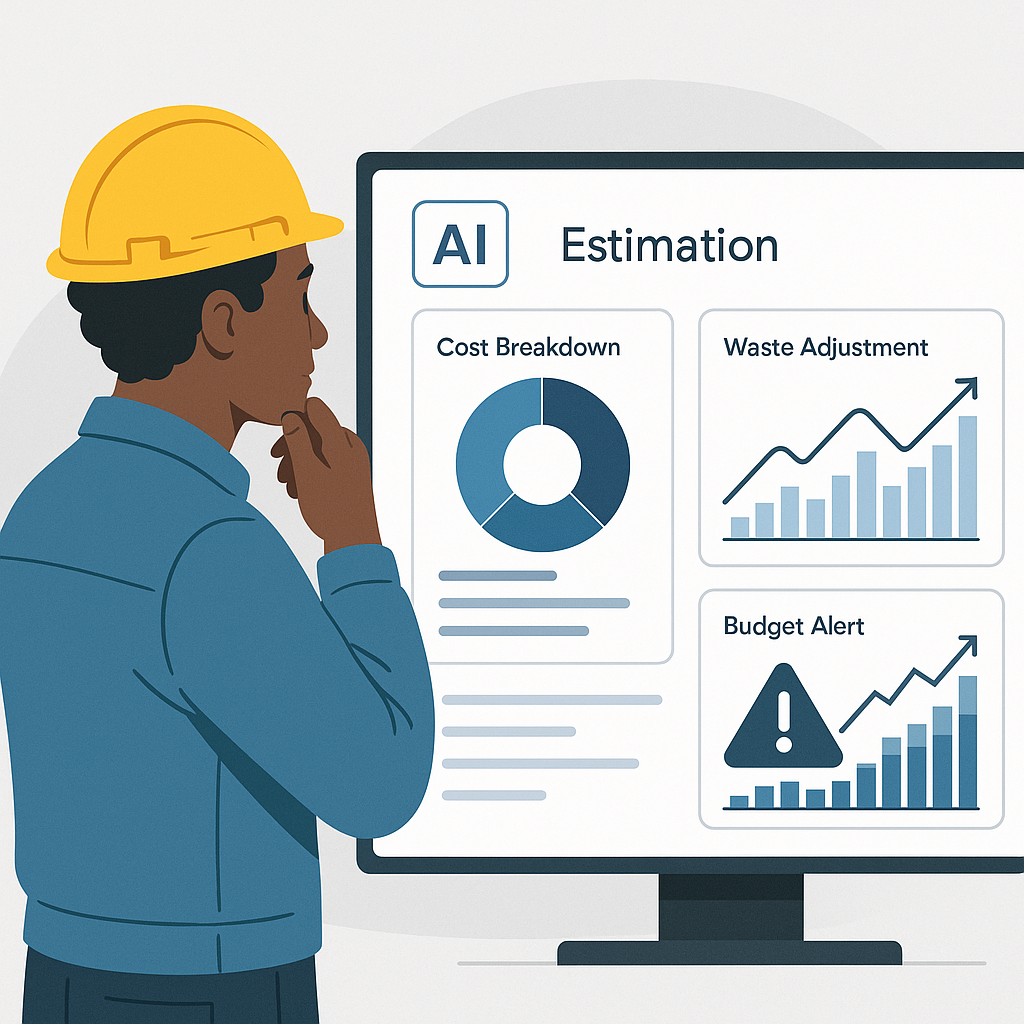
Resource Validation: AI tools automatically flag errors in estimates. For example, if you enter a material rate that doesn’t match the central rate schedule, the system blocks approval until it’s corrected. This ensures consistency across projects.
-
Waste Percentage Adjustments: AI tools let you add realistic waste percentages directly into estimates. This prevents underbudgeting due to overlooked wastage.
-
Budget Alerts: Once an estimate is approved, it sets hard spending limits. Procurement requests, subcontractor payments, and equipment hires are tracked against this budget. If a cost exceeds the approved amount, managers get instant alerts.
Illustrative Example: Preventing Margin Erosion
Illustrative example — Suppose you’re estimating an interior fit-out project. Without AI, you might miss a wastage adjustment for a key material. This could lead to unaccounted costs that erode your margin. With AI-driven estimation, these gaps are flagged before approval. Waste percentages are applied automatically, and rate mismatches trigger alerts. The approved budget reflects real costs—not optimistic assumptions.
The Impact: Protecting Margins
By enforcing budget discipline, AI tools don’t just improve accuracy—they protect your margins. The difference between a profitable project and a loss-making one often comes down to these small corrections.
Common Misconceptions About AI Estimation
-
“AI will replace estimators.”
Not true. AI enhances estimators’ efficiency by automating repetitive checks—not making judgment calls. You still need human expertise to interpret scope and negotiate rates. -
“It’s too complicated to implement.”
Most modern tools, including JobNext, are user-friendly. They integrate seamlessly with existing workflows, from BOQ creation to procurement. -
“Only large contractors benefit.”
Small and mid-size contractors stand to gain the most. With tighter margins, error-free estimates can make or break profitability.
Practical Advice for Contractors
- Start Small: Test AI estimation on one project. Compare the approved budget to actual costs.
- Build Rate Libraries: Centralize your rate schedules to ensure consistency across estimates.
- Monitor Alerts: Pay attention to budget alerts during execution—they’re your safety net.
FAQ
Q: How accurate are AI-generated estimates compared to manual ones?
A: AI estimates are significantly more accurate because they enforce validations, apply waste adjustments, and eliminate human calculation errors.
Q: Can AI handle complex project scopes?
A: Yes. Tools like JobNext support multi-scope estimates with detailed breakdowns for materials, labor, equipment, and subcontractors.
Q: What’s the ROI of AI estimation tools?
A: The ROI depends on the scale of your projects and the frequency of estimation errors. Many contractors report significant improvements in budget accuracy and reduced overruns.
Final Thoughts
Estimation errors are a common challenge—but they don’t have to be. AI-powered tools like JobNext enforce budget discipline, flag errors, and improve accuracy. If accurate estimates matter to your business, it’s worth exploring these solutions.
Learn more at EstimateNext