AI Estimation Use Cases Reddit Users Swear By (And How Contractors Can Benefit)
The Reddit Buzz: AI Estimation Tools
Reddit is full of threads where contractors debate the pros and cons of AI estimation tools. Some users rave about the time saved during preconstruction, citing significant reductions in manual effort for takeoffs and rate validation. Others, however, caution against potential pitfalls, pointing out inaccuracies such as outdated rates or misaligned project scopes.
So, what’s the consensus? AI tools are undeniably promising, but success depends on how well you understand their capabilities—and how you avoid common missteps. When used properly, these tools can revolutionize the estimation process by automating repetitive tasks, improving accuracy, and streamlining workflows. But neglecting the foundational inputs, like accurate rate schedules or clearly defined scopes, can lead to costly mistakes.
What Makes AI Estimation Worth It?
AI estimation tools excel in areas where repetitive, detail-heavy tasks are involved. Contractors often spend hours—or even days—manually matching rates, performing takeoffs, and validating scopes. AI can cut this time down to a fraction by automating these processes. Here are the primary strengths of AI estimation tools:
-
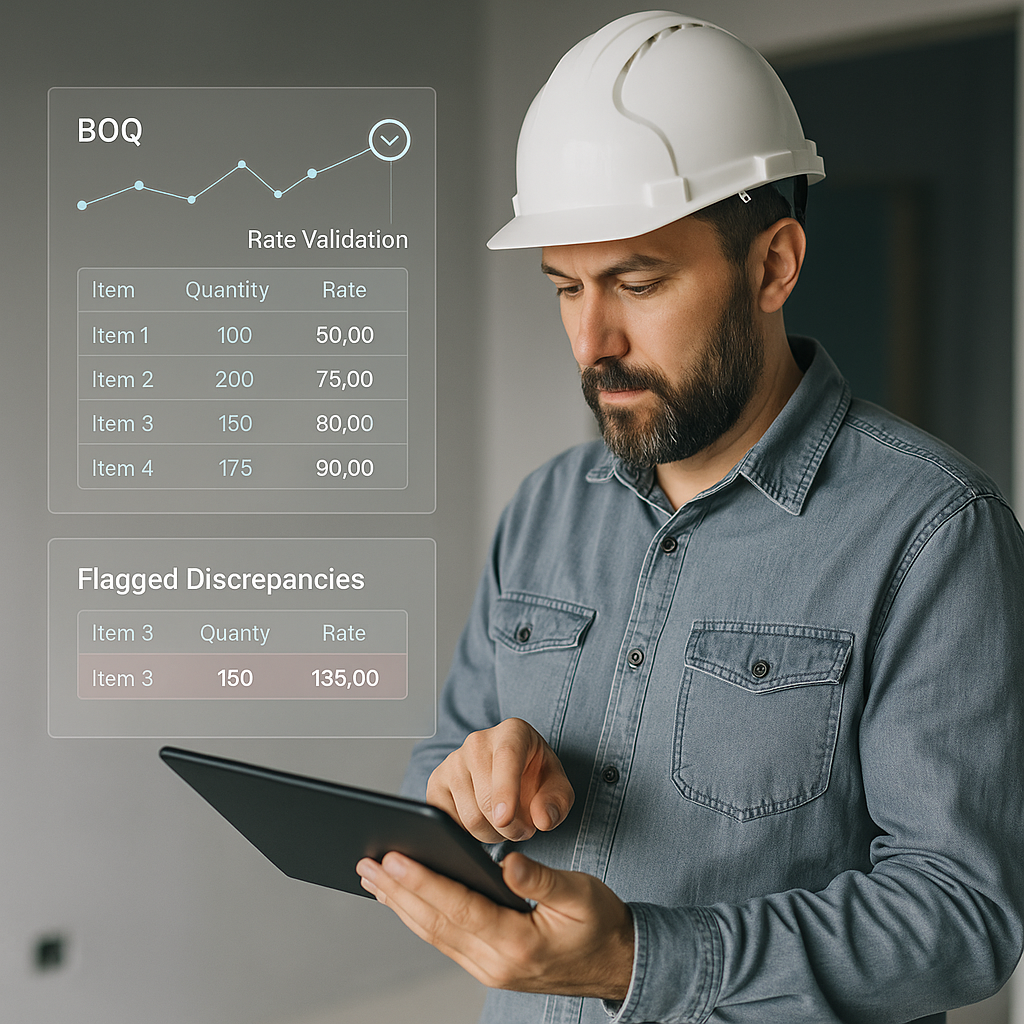
Rate Matching: AI can automate the tedious process of matching labor, material, and subcontractor rates to specific items in the Bill of Quantities (BOQ). For example, these tools can instantly flag discrepancies between the proposed rates and your centrally managed rate schedules.
-
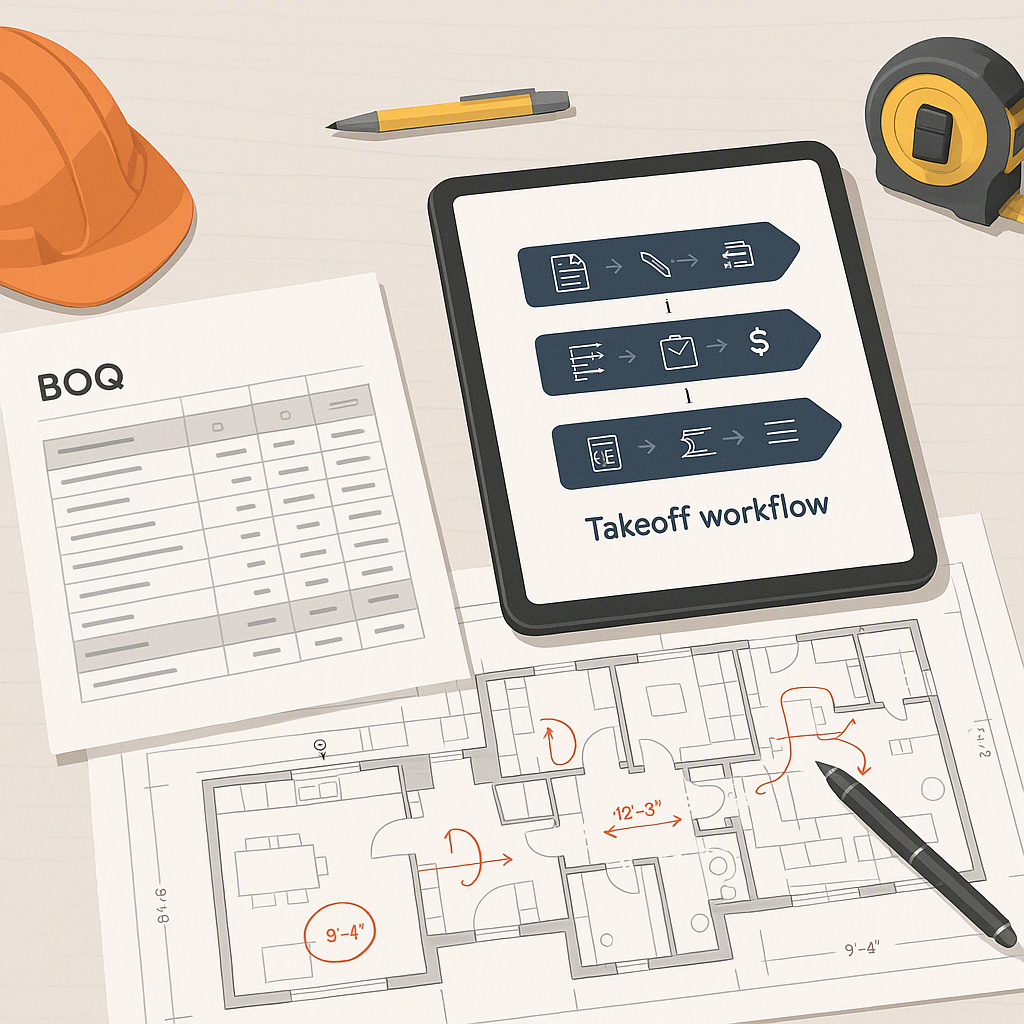
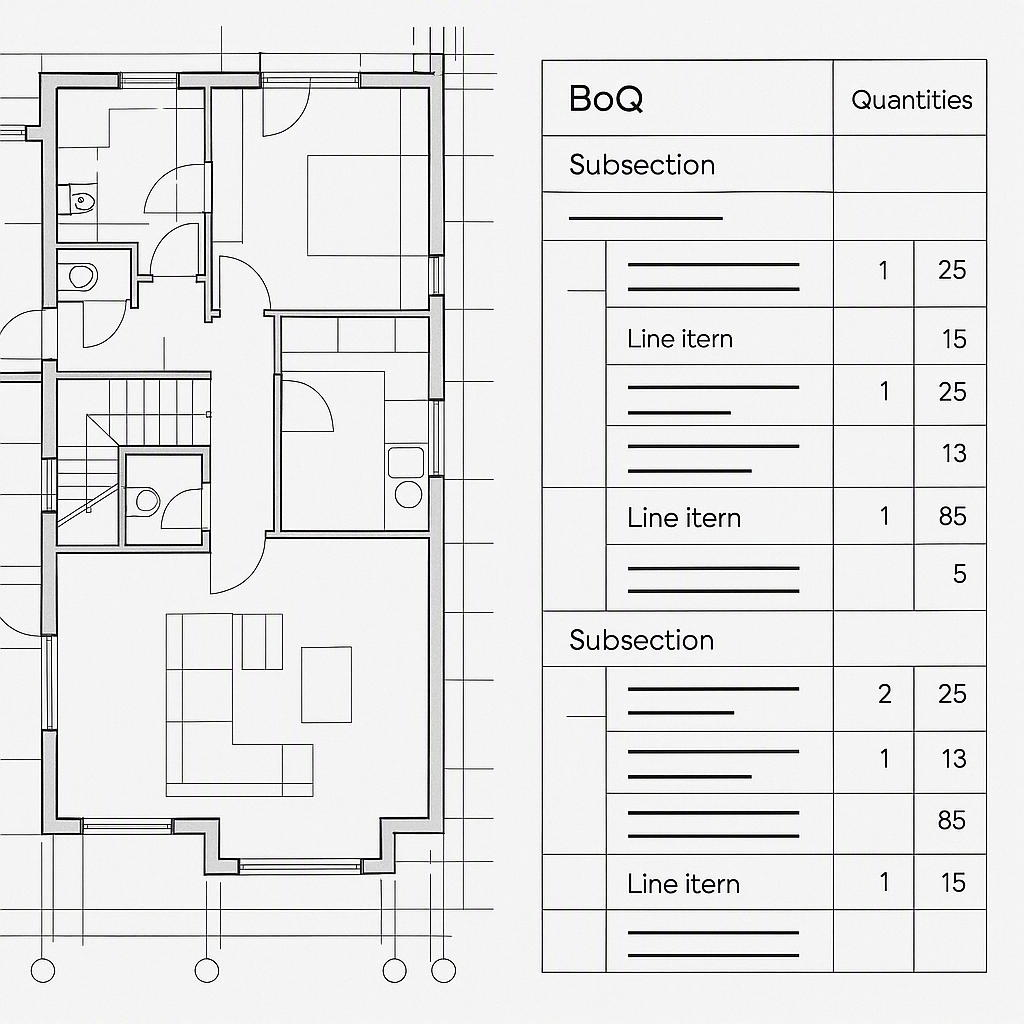
Takeoff Automation: By scanning drawings and specifications, AI-powered takeoff tools can generate material quantities with astonishing speed and accuracy, freeing up estimators for higher-value tasks.
-
Scope Validation: AI tools can cross-reference your scope of work against historical projects or industry standards to identify potential omissions or inconsistencies. This can prevent costly bid errors or missed line items.
-
Time Savings: Automating repetitive tasks like rate updates and takeoffs can save estimators hours of work, allowing them to focus on strategic decision-making and risk assessment.
However, it’s important to note that AI tools are not a silver bullet. The quality of their outputs depends on the quality of their inputs. If your rate schedules are outdated or your scope of work lacks detail, AI won’t fix those issues—it will simply replicate and amplify those problems. Garbage in, garbage out.
Problem: Rate Matching Errors in Preconstruction
One of the most common frustrations shared by contractors on Reddit is rate mismatches during the estimation phase. For instance, imagine you’re creating an estimate based on last year’s labor and material rates. You submit the bid, win the project, and then realize midway through execution that material costs have risen by 15%. Suddenly, your margins are evaporating.
AI tools like JobNext tackle this issue by enforcing real-time rate validation. These tools pull rates from centrally managed schedules, ensuring consistency across projects. According to JobNext's documentation, their rate analysis features break down each rate into its individual components—materials, labor, plant, and overhead—allowing for granular validation and updates. This ensures that your estimates reflect current market conditions, reducing the risk of margin erosion.
Solution: Accurate Estimates Drive Budget Discipline
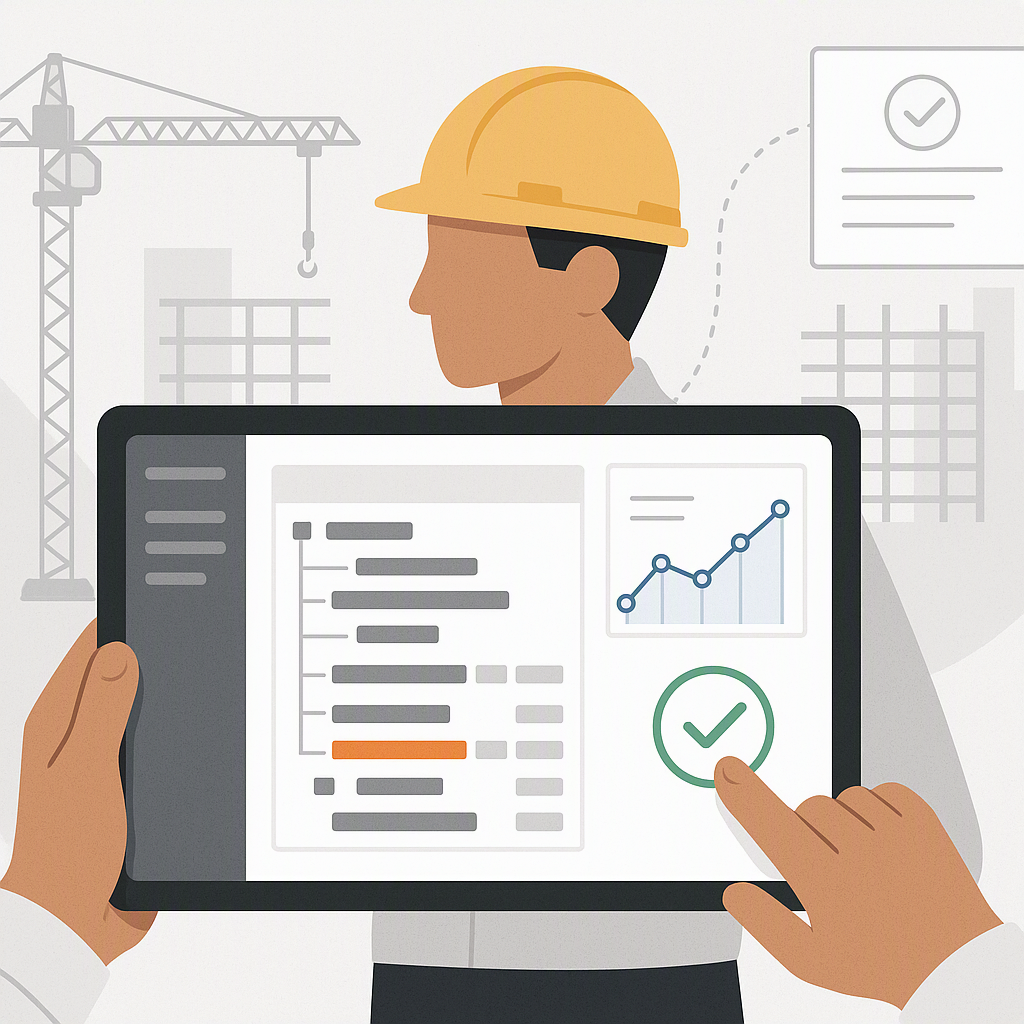
Accurate estimates have benefits far beyond just winning bids. They serve as the foundation for maintaining budget discipline during project execution. AI tools like JobNext integrate estimation workflows with procurement budgets and subcontractor work orders, creating a seamless process from preconstruction to project completion. Here’s how this workflow typically looks:
-
Create Estimates: Begin by generating a detailed estimate for each BOQ line item. Include components such as labor, materials, plant, and subcontractor costs.
-
Validate Rates: Use AI tools to validate each rate against centrally managed schedules and live market data. This ensures that your estimates are both current and consistent.
-
Integrate with Procurement: Once the estimate is approved, it feeds directly into your procurement system, creating budgets and purchase orders based on the estimated quantities and rates.
-
Monitor Spend: During execution, track actual spend against the estimate. AI tools can flag deviations in real-time, allowing you to address overruns before they spiral out of control.
By automating these steps, you reduce the risk of human error, eliminate guesswork, and maintain tighter control over project costs.
Real Reddit Use Case: AI for Scope Validation
A Reddit user shared a story about nearly losing a bid because their BOQ missed key line items. The omission wasn’t intentional—it was simply an oversight caused by the complexity of the project. They turned to an AI-powered scope validation tool, which cross-referenced their BOQ against historical projects and flagged the missing items. This allowed them to revise their bid and ultimately win the project.
However, it’s crucial to understand the limitations of AI in this context. While AI tools can identify patterns and flag potential omissions, they are not a substitute for human oversight. Always manually review flagged suggestions to ensure accuracy and relevance. AI is best used as a second set of eyes—not as the final decision-maker.
Common Mistakes with AI Estimation Tools
While AI estimation tools can be incredibly powerful, they are not foolproof. Here are some common mistakes contractors make when using these tools:
-
Blind Trust in AI Outputs: Remember, AI is only as good as the data it’s fed. If your inputs are flawed, the outputs will be too. Always verify AI-generated estimates manually.
-
Ignoring Scope Gaps: AI tools can flag missing items, but they won’t fix a poorly defined scope of work. It’s your responsibility to ensure that the scope is comprehensive and detailed.
-
Outdated Rate Schedules: AI tools need accurate, up-to-date rate data to function effectively. If your rate schedules are outdated, the resulting estimates will be inaccurate. Consider integrating live market data into your AI tools.
-
Overlooking Training and Integration: Many contractors dive into AI without adequately training their teams or integrating the tools into their existing workflows. This can lead to frustration and underutilization.
Practical Takeaway
If you’re considering adopting AI estimation tools, start small. Use them to validate BOQs or rate schedules before committing to full-scale implementation. Pair AI outputs with human review to catch any errors or inconsistencies. And most importantly, invest in training and ensure your rate schedules are up-to-date before introducing AI into your workflow.
FAQ
Q: Can AI replace human estimators? A: No, AI cannot replace human estimators. While AI excels at automating repetitive tasks like rate matching and takeoffs, human judgment is irreplaceable when it comes to scope definition, risk assessment, and decision-making.
Q: How do I choose the right AI estimation tool? A: Look for tools that integrate seamlessly with your existing systems and workflows. Prioritize features like rate validation, scope cross-referencing, and reporting capabilities. Avoid tools that require a complete overhaul of your processes.
Q: What if my rates are outdated? A: Outdated rates are a common issue. Use AI tools like JobNext to manage centrally updated rate schedules. These tools can pull live market data to ensure your estimates reflect current pricing.
Q: Are AI tools difficult to implement? A: Implementation depends on the tool and your existing systems. Many AI estimation platforms offer user-friendly interfaces and integration options. However, proper training and a phased adoption approach are critical for success.
Q: What’s the biggest risk with AI estimation tools? A: The biggest risk is relying too heavily on AI without understanding its limitations. Blindly trusting AI outputs can lead to costly errors. Always pair AI-generated estimates with human review.
Comparison Table: Manual Estimation vs AI Estimation
| Factor | Manual Estimation | AI Estimation |
|---|---|---|
| Time Required | High (days or weeks) | Low (hours or less) |
| Accuracy | Depends on estimator's skill | High, but only with good inputs |
| Rate Updates | Manual and time-consuming | Automated with live data |
| Scope Validation | Prone to human error | Automated cross-referencing |
| Cost | Labor-intensive, higher costs | Initial investment, long-term savings |
| Learning Curve | Minimal | Moderate, requires training |
Call to Action
If you’re tired of losing margins due to inaccurate estimates or outdated rates, it’s time to explore what AI estimation tools can do for you. Tools like JobNext can streamline your workflows, improve accuracy, and save you time. Get started free →
Learn more at EstimateNext