General Contractor Markup: Practical Insights for Smarter Bids
Markup decisions can make or break your contracting business, especially in competitive markets like India and the GCC. Set it too low, and you’re left eating costs. Set it too high, and your bid doesn’t stand a chance.
But here’s the kicker: most contractors don’t even know their real costs. Your markup is only as good as the numbers you’re building it on. If those numbers are wrong, you’re essentially gambling with your profit margins.
Let’s break this down.
The Anatomy of Contractor Markup
Markup isn’t just a random percentage you slap on top of your costs. It’s a calculated number that helps you cover overheads, ensure profitability, and stay competitive. It’s not the same as profit, though — markup accounts for your operating expenses, unforeseen risks, and actual profit margin.
Here’s a simple formula:
Markup (%) = [(Overheads + Desired Profit) ÷ Direct Costs] × 100
Illustrative example —
- Direct costs (materials, labor, equipment): ₹10,00,000
- Overheads: ₹2,00,000
- Desired profit: ₹1,00,000
Your markup would be:
Markup (%) = [(₹2,00,000 + ₹1,00,000) ÷ ₹10,00,000] × 100 = 30%
Sounds simple enough, right? But here’s the problem: if your direct costs are inaccurate, that 30% markup might not protect your margins. And in construction, there are a lot of ways for costs to slip through the cracks.
Hidden Costs That Destroy Margins
Here are some common margin killers:
- Scope Gaps: Missing or vague descriptions in your BOQ can lead to wide price variations in subcontractor bids — or worse, disputes later.
- Procurement Chaos: Without structured workflows (MR → RFQ → PO), materials often get purchased at inflated rates or double-booked.
- Idle Equipment: Machinery that isn’t utilized efficiently can lead to unnecessary costs. Are you factoring this into your estimates?
- Subcontractor Overruns: Payment disputes and unmeasured progress are common when subcontractors aren’t properly managed.
- Inaccurate Labor Estimation: Estimating labor costs based on outdated rate schedules or assumptions leads to constant budget blowouts.
If any of this sounds familiar, you’re not alone. But here’s the good news: there are tools and strategies to help you tighten up your numbers.
The Role of BOQs in Markup Accuracy
Let’s talk about the Bill of Quantities (BOQ). It’s the backbone of any construction project, yet many contractors treat it as a checkbox item. Big mistake.
A well-structured BOQ does more than just list quantities. It ensures consistency across your estimates, bids, and project execution. If your BOQ is off, your markup will be too — guaranteed.
Practical Example: Using BOQs to Avoid Scope Gaps
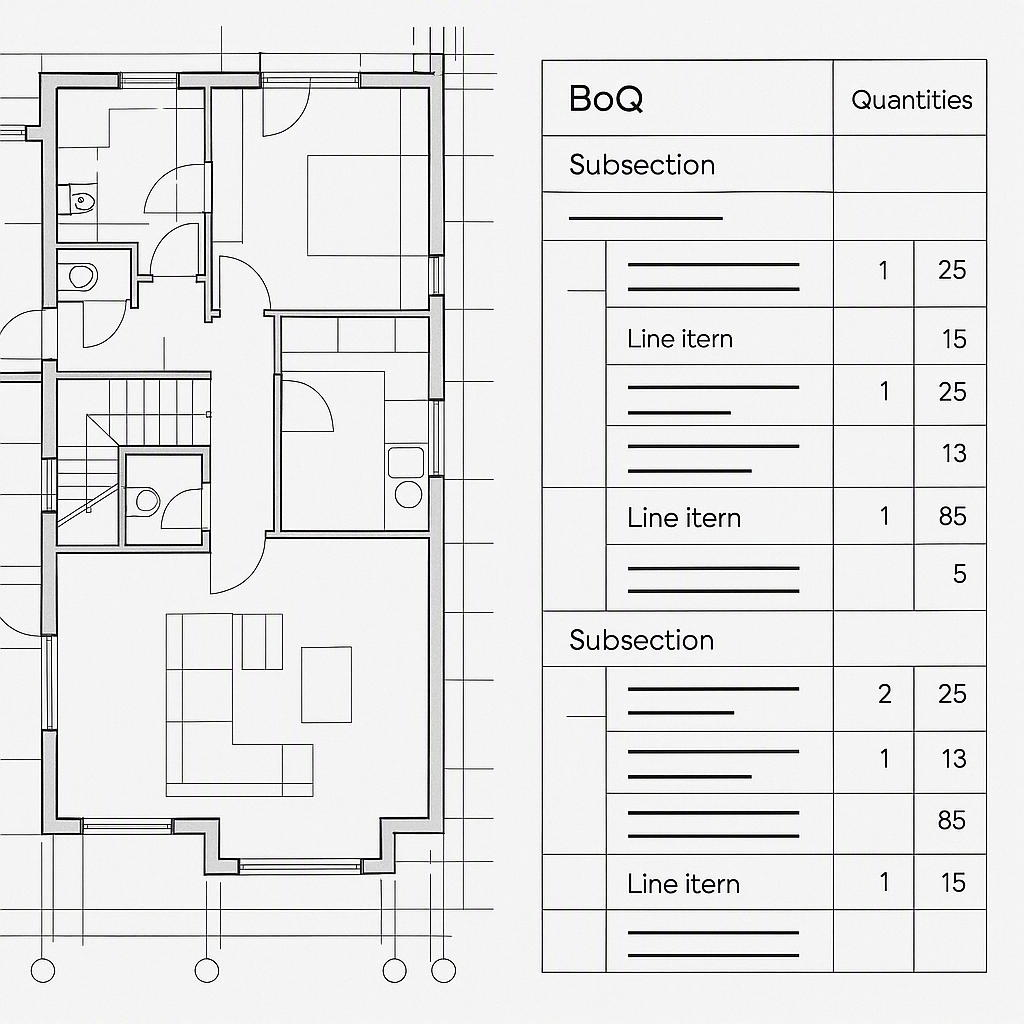
One of the most common issues with contractor markups is bidding with incomplete or vague BOQs. For example, imagine bidding for an MEP project where the BOQ only lists “HVAC installation” without detailing ductwork, insulation, or controls. What happens? Subcontractors provide vastly different bids because they’re interpreting the scope differently. You end up comparing apples and oranges — or worse, awarding the job to the lowest bid, only to find massive scope gaps later.
Tools can help here. By allowing you to attach detailed scope documents, technical specifications, and BOQ breakdowns to your RFPs, you ensure subcontractors are bidding on the same scope. This results in transparent bidding and realistic markups that actually cover your costs.
Calculating the Right Markup for Your Market
Markup isn’t one-size-fits-all. Here’s what you need to consider:
- Market Rates: Research typical markup ranges in your region and industry. Use these as benchmarks, not rules.
- Project Type: Complex projects require higher markups to account for risk and technical expertise.
- Client Expectations: Some clients prioritize cost; others prioritize quality. Tailor your markup accordingly.
- Competitor Analysis: If you’re consistently losing bids, it’s worth reviewing how your markup compares to competitors’. But don’t race to the bottom — that’s a fast track to going broke.
Use Tools to Stay Competitive
Let’s face it: manual calculations and Excel sheets aren’t cutting it anymore. Modern tools offer features like real-time project profitability tracking, structured procurement workflows, and analytics reports. These aren’t just bells and whistles — they’re lifelines for contractors operating on razor-thin margins.
For example, margin reports allow you to monitor margin erosion on a regular basis. If an item shows a negative margin, you can address the issue immediately — whether it’s an estimation error, a scope change, or a procurement overrun.
Common Mistakes to Avoid
- Ignoring Indirect Costs: Overheads like insurance, utilities, and office rent can erode your profits if not included in your markup.
- Underestimating Risk: Always include a contingency in your markup for unexpected delays or cost increases.
- Not Reviewing Margins: A bid isn’t set-and-forget. Regularly review your project margins to ensure you’re on track.
- Blindly Trusting Subcontractor Bids: Always evaluate subcontractor bids beyond price. Look at their technical capability, past performance, and safety record.
FAQ
Q: How do I determine the right contingency percentage to include in my markup?
A: Base it on project complexity and past experience. For example, high-risk projects might require a higher contingency, while low-risk jobs could get by with less.
Q: How often should I review my project margins?
A: Regularly, such as weekly or bi-weekly, depending on project size and complexity.
Q: What’s the difference between markup and profit?
A: Markup includes both your profit margin and overhead costs. Profit is what’s left after covering all costs, including overhead.
The Bottom Line
Getting your markup right isn’t just about running the numbers. It’s about understanding your costs, managing your risks, and using the right tools to stay competitive. If you’re relying on guesswork or outdated methods, you’re leaving money on the table.
Modern tools can help you tighten up your estimates, track your costs, and protect your margins.
Learn more at EstimateNext