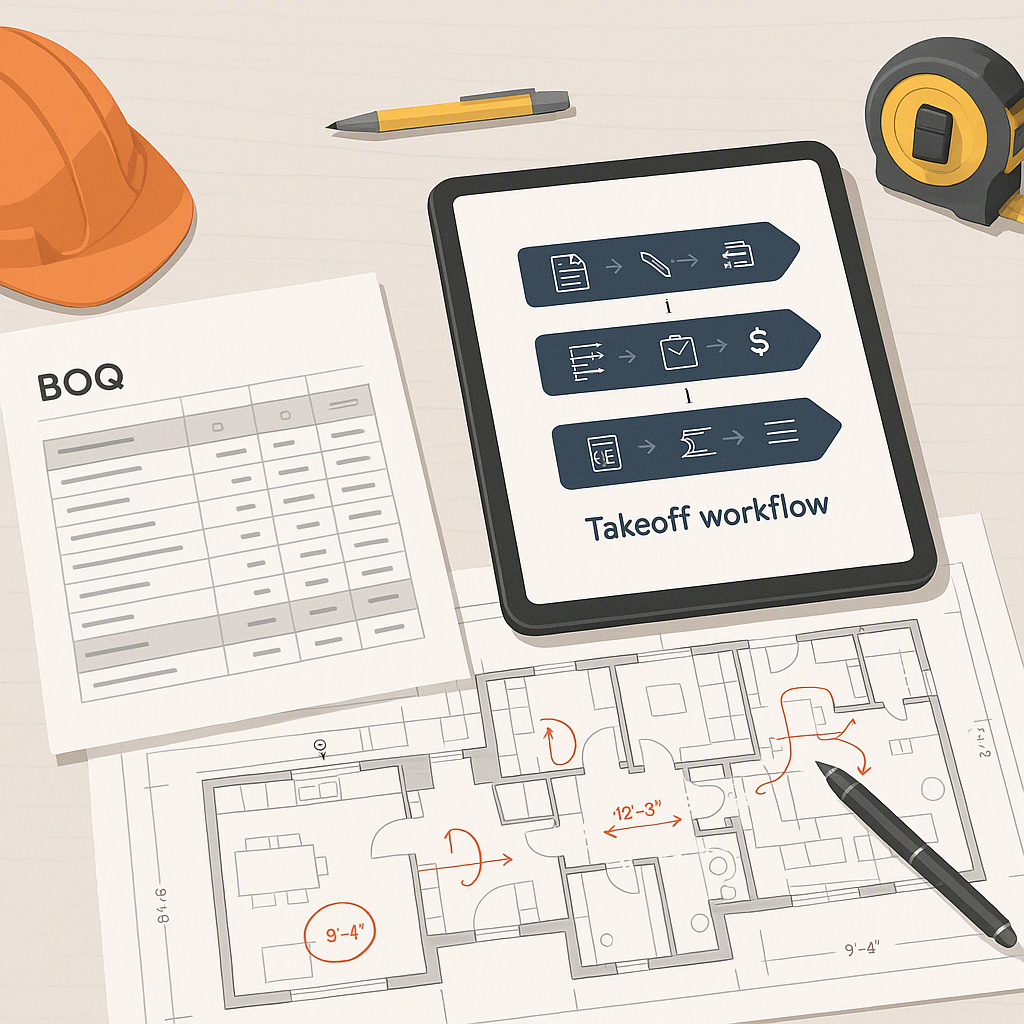
BOQ Template Excel Download: Practical Tips for Contractors in India & GCC
If you've ever struggled with a Bill of Quantities (BOQ) upload failing or spent hours cleaning up mismatched data, you're not alone. For contractors in India and the GCC, managing BOQs efficiently can mean the difference between hitting your project margins or watching them erode. A well-prepared BOQ template can save you hours—and headaches. Let’s dive deep into how to get it right.
Why BOQ Templates Matter
The BOQ is your project's backbone. It outlines every deliverable, from excavation to finishing, with quantities, units, and rates. A properly structured BOQ ensures seamless communication between contractors, architects, and project managers. But here’s the catch: even a small formatting error in your Excel file can unravel your entire workflow.
Key Benefits of Using a Standardized BOQ Template
- Error Reduction: Standard templates minimize the risk of mismatched data or misplaced columns during uploads.
- Time Efficiency: By using a preformatted BOQ template, you eliminate the need for manual reorganization.
- Cost Control: A well-prepared BOQ allows for accurate cost estimation and prevents margin erosion.
- Collaboration: Templates ensure uniformity, making it easier for multiple stakeholders to understand and use the data.
Why Format Matters
According to JobNext’s documentation, importing BOQs from Excel can save time for projects with hundreds (or even thousands) of line items. However, the key is to use the correct BOQ template format. One misplaced column header or invalid data type, and the upload fails. This can lead to delays in approvals, inaccurate cost projections, and frustration for your team.
How to Use a BOQ Template Effectively
Step 1: Download the Correct Template
Before you start filling in your BOQ data, always download the latest Excel template from your ERP or project management tool. For example, JobNext provides its own BOQ template (BOQFormat.xlsx) to ensure all columns and data types align perfectly with their system’s requirements.
Actionable Tips:
- Check for updates regularly. ERP providers often refine templates to improve compatibility.
- Avoid using third-party templates unless explicitly recommended by your system.
- Verify template compatibility with your ERP version.
Step 2: Understand the Template Structure
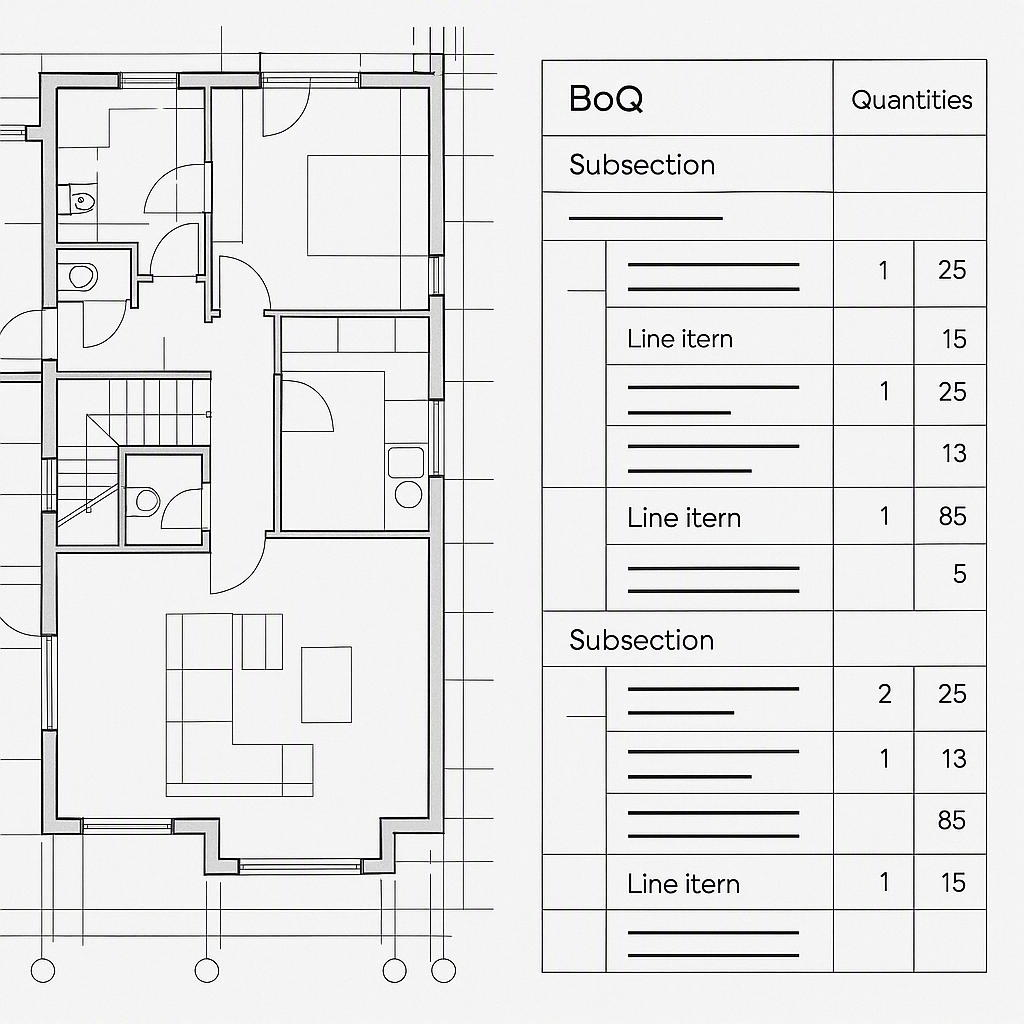
Most BOQ templates follow a simple structure:
| Column Header | Meaning |
|---|---|
| Item Code | Unique identifier for each item |
| Description | Detailed scope of the work |
| Unit of Measure | e.g., CUM, SQM, NOS |
| Quantity | Total quantity required |
| Rate | Cost per unit |
| Amount | Auto-calculated (Rate × Qty) |
Best Practices for Filling Out BOQ Templates:
- Item Code: Use consistent naming conventions (e.g., "EXC-001" for excavation).
- Description: Be concise yet detailed enough for clarity. Avoid excessive jargon.
- Unit of Measure: Stick to standard units like "CUM" for cubic meters or "SQM" for square meters.
- Quantity and Rate: Double-check calculations to prevent over- or underestimations.
- Amount: Most templates auto-calculate this field, so ensure your formulas are intact.
Step 3: Validate Your Data Before Upload
Errors during uploads are often due to minor mistakes that are easy to overlook. Validate your file before uploading:
Common Errors to Watch For:
- Empty Fields: Missing quantities or rates can cause the import to fail.
- Incorrect Formats: Numeric fields must contain numbers only. Avoid text or symbols like ₹ or %.
- Duplicate Item Codes: Ensure each item has a unique identifier to avoid confusion.
- Inconsistent Units: Mixing units for similar items creates execution challenges.
Validation Methods:
- Use Excel’s built-in "Data Validation" feature to restrict input types.
- Run a spell check to catch typos in descriptions.
- Use a template validator if your ERP provides one.
Step 4: Upload and Verify
Once your Excel file is ready, upload it into your system. Tools like JobNext display a success message if everything matches. If there’s an error, most systems provide an import summary showing exactly what went wrong.
Pro Tip: To avoid rework, break your BOQ into smaller chunks and test the upload for one section before processing the full file.
Stage-Wise BOQs: A Game-Changer for Phased Projects
For contractors handling phased projects, stage-wise BOQs can simplify billing and progress tracking. Instead of treating the BOQ as a single block, you can split items into delivery phases or milestones.
Example Structure for Stage-Wise BOQs:
| Stage Name | Percentage | Notes |
|---|---|---|
| Foundation | 40% | Includes excavation |
| Superstructure | 35% | RCC and columns |
| Finishing | 25% | Plastering and painting |
Benefits of Stage-Wise BOQs:
- Granular Control: Track progress more accurately.
- Billing Flexibility: Align payments with completed milestones.
- Improved Cash Flow Management: Prevent contractors from financing the project upfront.
How to Implement Stage-Wise BOQs:
- Divide your project into logical phases based on work scope.
- Assign percentages to each phase based on cost estimates.
- Use your ERP’s stage-wise allocation feature (if available).
- Monitor progress and update percentages as needed.
Common Mistakes to Avoid
- Using the Wrong Template: Always download the latest template from your ERP.
- Ignoring Data Types: Numeric fields should be numbers, not text.
- Skipping Validation: Manually review your file before upload.
- Mixing Units: Stick to a consistent unit of measure for similar items.
- Overcomplicating Notes: Keep stage-specific notes concise and actionable.
Tools That Simplify BOQ Management
If manual Excel management is eating into your time, consider an integrated system like JobNext. It allows direct BOQ uploads, stage-wise allocation, and real-time tracking—all from a single dashboard.
Comparison Table: Manual Excel vs. ERP BOQ Management
| Feature | Manual Excel | ERP System (e.g., JobNext) |
|---|---|---|
| BOQ Uploads | Time-consuming, error-prone | Automated, efficient |
| Stage-Wise BOQs | Requires manual setup | Built-in functionality |
| Data Validation | Manual cross-checking | Auto-validation |
| Progress Tracking | Limited insights | Real-time analytics |
| Collaboration | Static files | Shared dashboards |
FAQ: BOQ Templates and Uploads
Q1: What if my BOQ has hundreds of items?
Use the bulk import feature in your ERP. Ensure your Excel file is formatted correctly to avoid upload errors.
Q2: Can I add custom fields to the template?
Most systems don’t allow additional columns. Stick to the template structure or consult your ERP provider for customization options.
Q3: What happens if I upload the wrong file?
Systems like JobNext usually flag errors and list problematic rows during import. Review the error summary and correct your file.
Q4: How do I track changes after upload?
Use version control or track changes manually in your ERP. Some tools log updates automatically for audit purposes.
Q5: Is stage-wise BOQ mandatory?
No, but it’s highly recommended for phased projects or milestone-based billing. It simplifies tracking and payments.
Final Thoughts
A well-structured BOQ template isn’t just a file—it’s a tool that ensures your project starts and stays on track. By following these tips and leveraging systems like JobNext, you can reduce errors, save time, and protect your margins.
If you're struggling with BOQ uploads or margin monitoring, JobNext can help. Get started today →
Learn more at EstimateNext