The Importance of the BOQ in Construction Projects
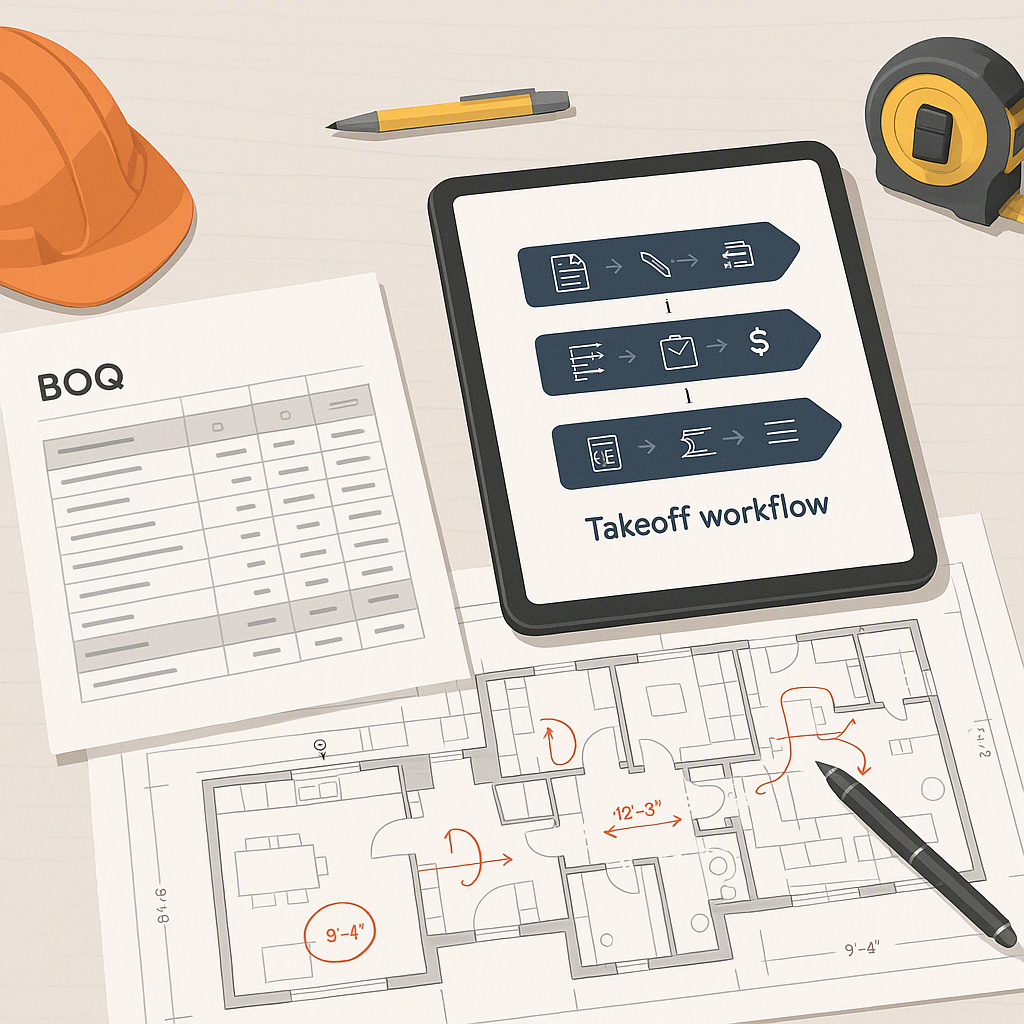
The Bill of Quantities (BOQ) isn’t just a list of items and prices — it’s the cornerstone of any construction project. It defines what needs to be built, how much of it, and at what cost. While it may seem straightforward, an incomplete or poorly managed BOQ can lead to significant challenges during project execution.
Many contractors treat the BOQ as a “set-and-forget” document, finalizing it during tendering and then filing it away. However, without ongoing BOQ management, project margins can erode due to unforeseen changes and mismanagement.
This guide explores what a BOQ really means, how it’s structured, and why active management is crucial for project success.
What Is a BOQ? (Without the Fluff)
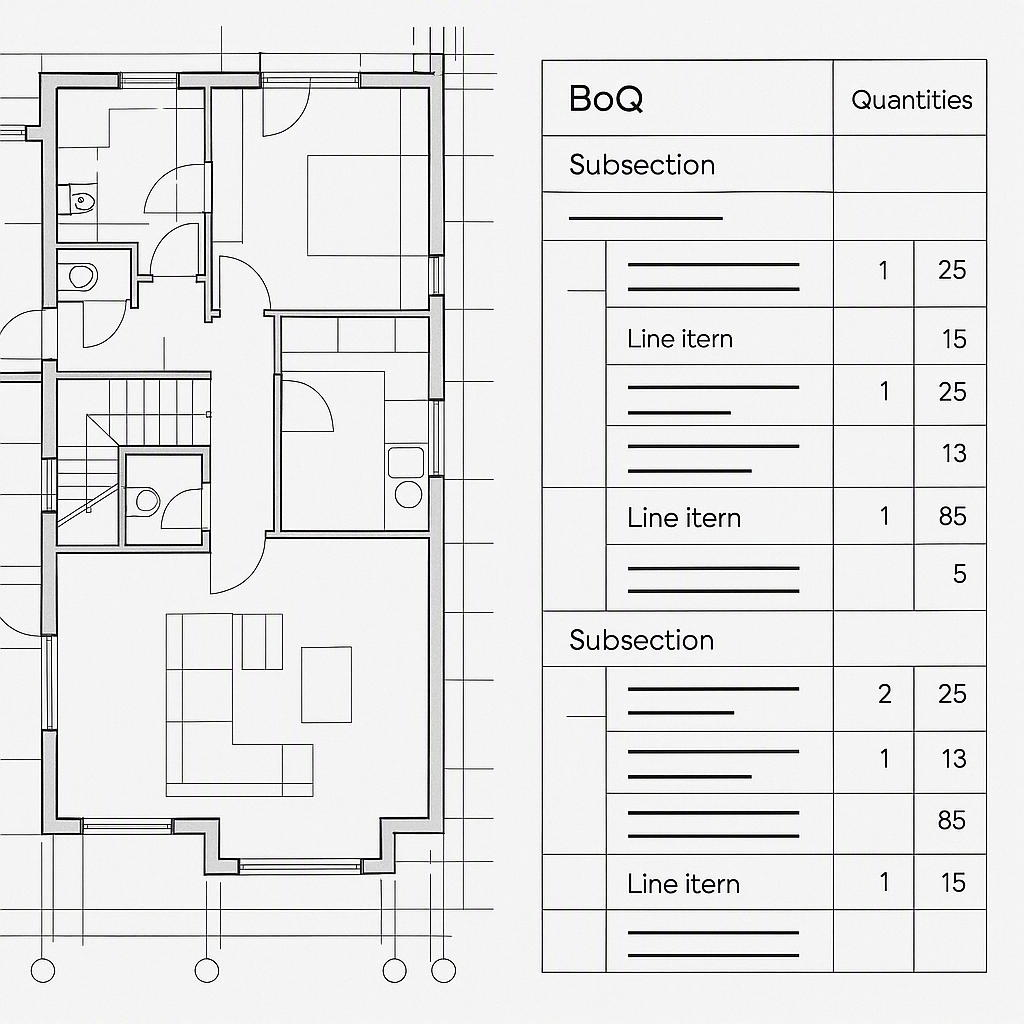
The BOQ, or Bill of Quantities, is essentially the client’s shopping list. It’s a detailed, itemized document that specifies every deliverable in a project, breaking it down into:
- Groups: Broad categories like “Civil Works” or “MEP.” Think of them as folders.
- Items: Specific deliverables under each group, with fields for quantity, unit of measurement, rate, and total amount.
For example:
| Group | Item Description | Unit | Quantity | Rate (₹) | Total (₹) |
|---|---|---|---|---|---|
| Civil Works | Excavation for foundation | CUM | 500 | 120 | 60,000 |
| Civil Works | RCC M25 grade concrete for foundation | CUM | 250 | 4,500 | 11,25,000 |
Why Does This Matter?
The BOQ isn’t just about getting the bid right. It’s the foundation for:
- Progress tracking
- Billing (RA Bills, stage-wise, or lump sum)
- Cost estimation
- Variation management
Without a clean, manageable BOQ, you’re flying blind. Most contractors don’t revisit their BOQ until something goes wrong, which can lead to financial losses and project delays.
The Real Problem: “Set-and-Forget” BOQs
Here’s how it usually plays out:
- The BOQ is prepared during the tendering phase.
- The project is awarded, and the team moves on to execution.
- The BOQ is ignored until billing or a dispute arises.
This approach is risky because real-world projects are dynamic. Quantities change, designs evolve, and variation orders pile up. If you’re not actively managing your BOQ, you risk underbilling or failing to account for additional work.
Common BOQ Mistakes
- Inconsistent Units: Mixing cubic meters (CUM) and square meters (SQM) for similar items.
- Missing Items: Forgetting provisional items or contingencies.
- Unverified Rates: Accepting rates without checking material and labor cost breakdowns.
- No Progress Tracking: Failing to link work completion to the BOQ.
A Better Way: Real-Time BOQ Management
If “set-and-forget” is the problem, what’s the solution? Active, real-time BOQ management. Leveraging digital tools can help streamline this process.
Key Features of Effective BOQ Management Tools
- Centralized BOQ Management: Create or upload BOQs directly into a system. Organize items into a clear group → item hierarchy to match your client’s structure.
- Progress Tracking: Link BOQ items to project scopes and track their completion. For example, if your BOQ includes “RCC M25 for foundation – 250 CUM,” you can track how much of that quantity has been completed and billed.
- Billing Integration: Ensure every completed deliverable gets invoiced correctly by integrating BOQ items with billing methods like RA Bills or stage-wise billing.
- Variation Management: Add or adjust BOQ items as project requirements change. Maintain a clear audit trail to ensure transparency and accountability.
FAQ: Common BOQ Questions
1. What’s the difference between a BOQ and a BOM?
- A BOQ lists what needs to be delivered (client’s view). A BOM (Bill of Materials) lists what’s required to build it (contractor’s view). Think of the BOQ as the “what” and the BOM as the “how.”
2. Can I update a BOQ mid-project?
- Yes, but it should be done carefully. Using tools that allow you to track changes and maintain an audit trail ensures transparency.
3. What’s the best way to ensure accurate BOQ preparation?
- Use software that supports rate analysis. Breaking down rates into materials, labor, and plant ensures accuracy.
4. How does the BOQ affect RA Bills?
- RA Bills are generated based on completed quantities against BOQ items. Without accurate BOQ tracking, your RA Bills will always be incomplete.
5. What if the client’s BOQ format is unclear?
- Standardize it using tools that support hierarchical BOQs. Structure items into sections, sub-sections, and leaf-level items for clarity.
Final Thoughts
The BOQ is more than just a legal document. It’s your project’s financial backbone. Managing it properly can mean the difference between hitting your margin targets or losing money. Leveraging digital tools can provide the structure and visibility you need to stay on top of your BOQ, from preconstruction to billing.
If you’re struggling with BOQ management, it’s time to rethink your approach and adopt better practices for success.
Learn more at EstimateNext