BOQ Format Failures in the Middle East Are Killing Margins
If you're bidding on contracts in the Middle East, you already know the BOQ (Bill of Quantities) is not just a document—it’s a dealbreaker. But here's the problem: too many contractors don’t get it right. Mistakes in BOQ formatting, structure, or cost breakdowns can lead to outright disqualification or worse—winning a project that bleeds cash. This article dives deep into the unique challenges of BOQs in the region, offers practical solutions, and addresses common questions contractors ask.
What’s Unique About BOQs in the Middle East?
Middle Eastern projects often follow highly specific tendering standards. These are not just suggestions—they’re rules of engagement. Failing to align with these requirements often means losing bids or, worse, facing penalties and financial losses after winning contracts. Let’s break down what makes BOQs in this region distinct:
1. Hierarchical Structure
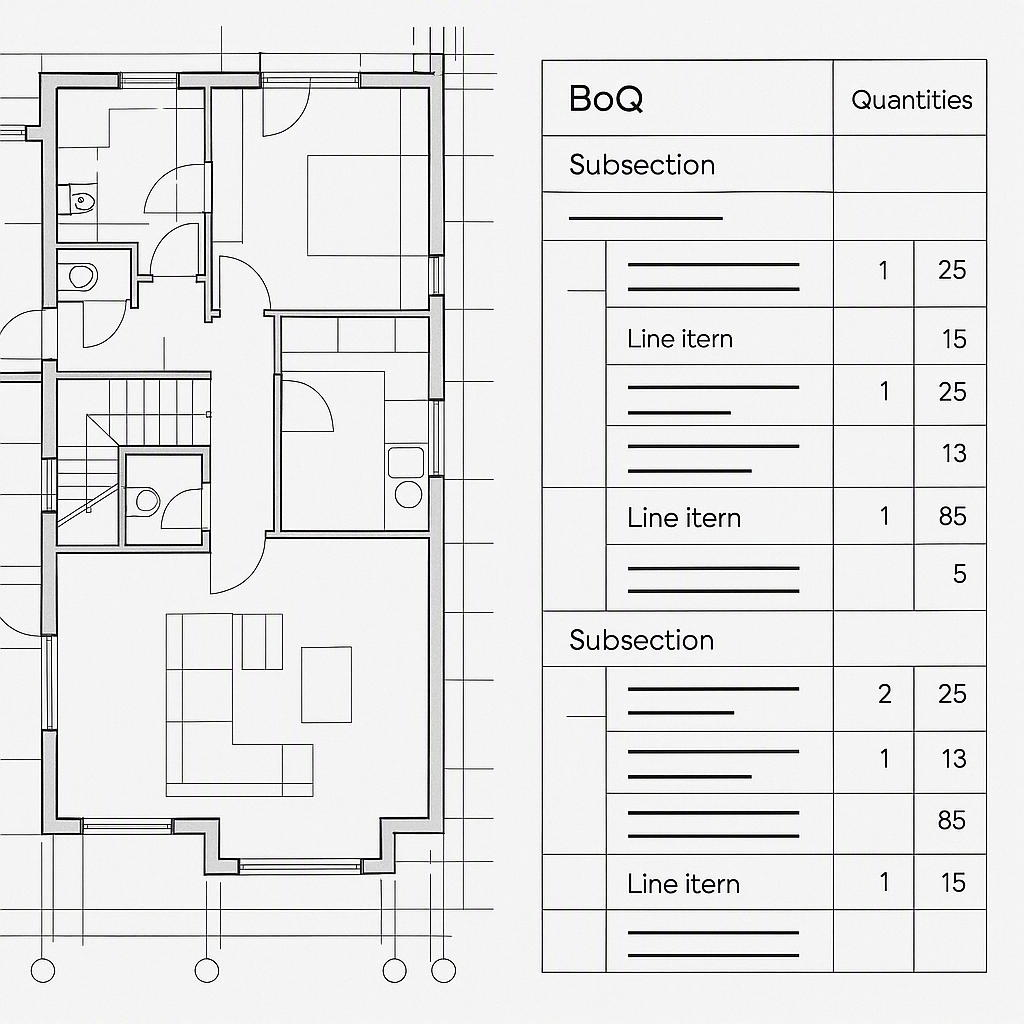
BOQs in the Middle East are often organized into a strict hierarchy. For example:
- Group Level: Civil Works
- Subgroup Level: Earthworks
- Item Level: Excavation
- Subgroup Level: Earthworks
Each level typically requires detailed descriptions, unit measurements, and rates. This hierarchy ensures clarity during execution but can be a nightmare for contractors unfamiliar with such depth. For example, a contractor bidding on a public works project in Saudi Arabia misaligned their excavation subgroup with the client’s BOQ structure, leading to disqualification despite competitive pricing.
2. Stage-Wise Billing
Many projects in the Middle East are milestone-driven, with payments tied to specific stages of completion. For example:
| Stage | Percentage Allocation |
|---|---|
| Foundation | 30% |
| Structure | 40% |
| Finishing | 30% |
If your BOQ doesn’t align stage-wise, two things can happen:
- Payments get delayed due to disputes.
- Cash flow suffers, impacting your ability to buy materials or pay workers.
3. Multi-Currency Support
With many projects requiring pricing in USD but payments in local currencies like AED or SAR, contractors must account for potential currency fluctuations. Failure to do so can lead to profit erosion. For instance, a construction company in Dubai lost $200,000 in exchange rate differences because they didn’t hedge their currency risks while submitting a USD-denominated BOQ.
Real Example: How JobNext Simplifies BOQ Structuring
Let’s look at how technology is solving these challenges. Contractors often upload BOQs provided by clients via Excel. Without proper validation, this can lead to huge discrepancies. Enter JobNext—a software solution designed to streamline BOQ management.
Key Features of JobNext:
- Pre-Validated Templates: JobNext enforces the required column structure from the start. This eliminates manual rework and reduces errors.
- Automated Stage Splits: Need to split items into stages for milestone billing? JobNext automates this process, ensuring that all stages add up to 100%.
- Execution Integration: Once a contract is won, JobNext converts the BOQ into an execution job. This prevents duplication of work and ensures no line items are missed.
Case Study: A Dubai-Based Contractor
A contractor in Dubai used JobNext to prepare and manage their BOQ for a government housing project. Before adopting the software, their manual BOQ preparation process took over 40 hours per project. With JobNext, they reduced this to just 10 hours, enabling them to bid on more projects while maintaining accuracy. Additionally, the automated stage-wise billing feature ensured timely payments, improving cash flow.
Common Mistakes (And How to Avoid Them)
Mistakes in BOQ preparation are not just costly—they can be career-ending. Here are the most common errors and how to avoid them:
1. Copy-Pasting Without Validation
Many contractors copy and paste BOQ data from client-provided Excel sheets into their internal systems. This often leads to formatting issues, missing line items, or incorrect calculations.
Solution: Always validate BOQ data using software like JobNext, which checks for structural and calculation errors before submission.
2. Using Generic Formats
Middle Eastern tenders often require specific formats, including predefined unit codes and detailed descriptions. Using a generic format can lead to outright disqualification.
Solution: Always download the latest BOQ template from the client or tender portal. If no template is provided, request one.
3. Ignoring Stage-Wise Allocations
Failing to allocate percentages to project milestones can delay payments or reduce your chances of winning a bid.
Solution: Use software to automate stage-wise splits and ensure all percentages add up to 100%.
4. Overlooking Currency Risks
Ignoring exchange rate fluctuations can lead to profit erosion when payments are made in a different currency than quoted.
Solution: Use multi-currency tracking tools and consider hedging strategies to mitigate risks.
Why This Matters for Your Margins
In the Middle East, the devil is in the details. A poorly structured BOQ doesn’t just hurt your chances of winning a bid—it can eat into your margins even after you’ve won. Here’s a real-world example:
Case Study: Excavation Cost Overrun
A contractor in Qatar underestimated excavation quantities due to a misaligned BOQ. This error resulted in a 15% cost overrun, wiping out ₹3.2 crore in potential profit. The issue could have been avoided by using standardized templates and validation tools.
The Cost of Errors:
- Disqualification: A single formatting mistake can disqualify your bid.
- Delayed Payments: Misaligned stage-wise allocations can delay milestone payments, affecting cash flow.
- Profit Erosion: Errors in currency conversion or quantity estimation can eat into your margins.
Practical Steps to Get BOQs Right
1. Use Software with Built-In BOQ Tools
Invest in software like JobNext, which ensures your BOQ aligns with client expectations from day one. Features like pre-validated templates and automation save time and reduce errors.
2. Standardize Your Templates
Create a library of pre-approved BOQ templates tailored to different clients and project types. Include all required fields such as descriptions, units, rates, and quantities.
3. Automate Stage-Wise Splits
Use tools that handle milestone allocations automatically. This not only saves time but also ensures accuracy.
4. Track Progress in Real-Time
Link BOQ items to scopes and progress tracking to avoid billing disputes. Real-time tracking ensures you’re always on top of your project’s financials.
5. Account for Currency Fluctuations
Incorporate multi-currency tracking tools and consider hedging strategies to protect against exchange rate risks.
Frequently Asked Questions (FAQ)
1. What is the most common reason BOQs get rejected in the Middle East?
The most common reason is failure to follow the specified format, including incorrect hierarchy or missing required fields like unit codes and descriptions.
2. How do I ensure my BOQ aligns with client expectations?
Always request the latest BOQ template from the client, and use software tools like JobNext that enforce compliance with the required structure.
3. What’s the best way to handle multi-currency projects?
Use software that supports multi-currency pricing and payments. Additionally, consider hedging strategies to mitigate the risks of currency fluctuations.
4. Can automation completely eliminate BOQ errors?
While automation significantly reduces errors, it’s not foolproof. Always review your BOQ manually before submission to catch any discrepancies.
5. How can I improve cash flow on milestone-driven projects?
Ensure your stage-wise billing percentages are accurate and align with project milestones. Use tools like JobNext to automate this and avoid delays in payments.
Final Thoughts
Middle Eastern tendering standards are unforgiving, but with the right approach, you can avoid costly mistakes and protect your margins. If you’re still relying on manual BOQ processes or struggling with misaligned formats, it’s time to rethink your workflow. Tools like JobNext can help you streamline your BOQ preparation, improve accuracy, and safeguard your profitability.
Ready to Fix Your BOQ Workflow?
JobNext can help you structure, manage, and monitor your BOQs seamlessly. Get started now →
Learn more at EstimateNext