Why Bid Cost Engineering Matters
Ever lost a bid because your pricing felt off? Or worse, won a bid only to realize the profit margins were razor-thin? You're not alone. Contractors across India and the GCC often struggle with bid cost engineering—especially when managing complex BOQs (Bill of Quantities).
The problem isn’t just about rates. It’s about precision, scope coverage, and avoiding surprises like underpriced activities or missed scope items. Let’s break down how you can use BOQ rate analysis to get your bids right without overpricing or underestimating.
BOQ Rate Analysis: The Backbone of Accurate Bids
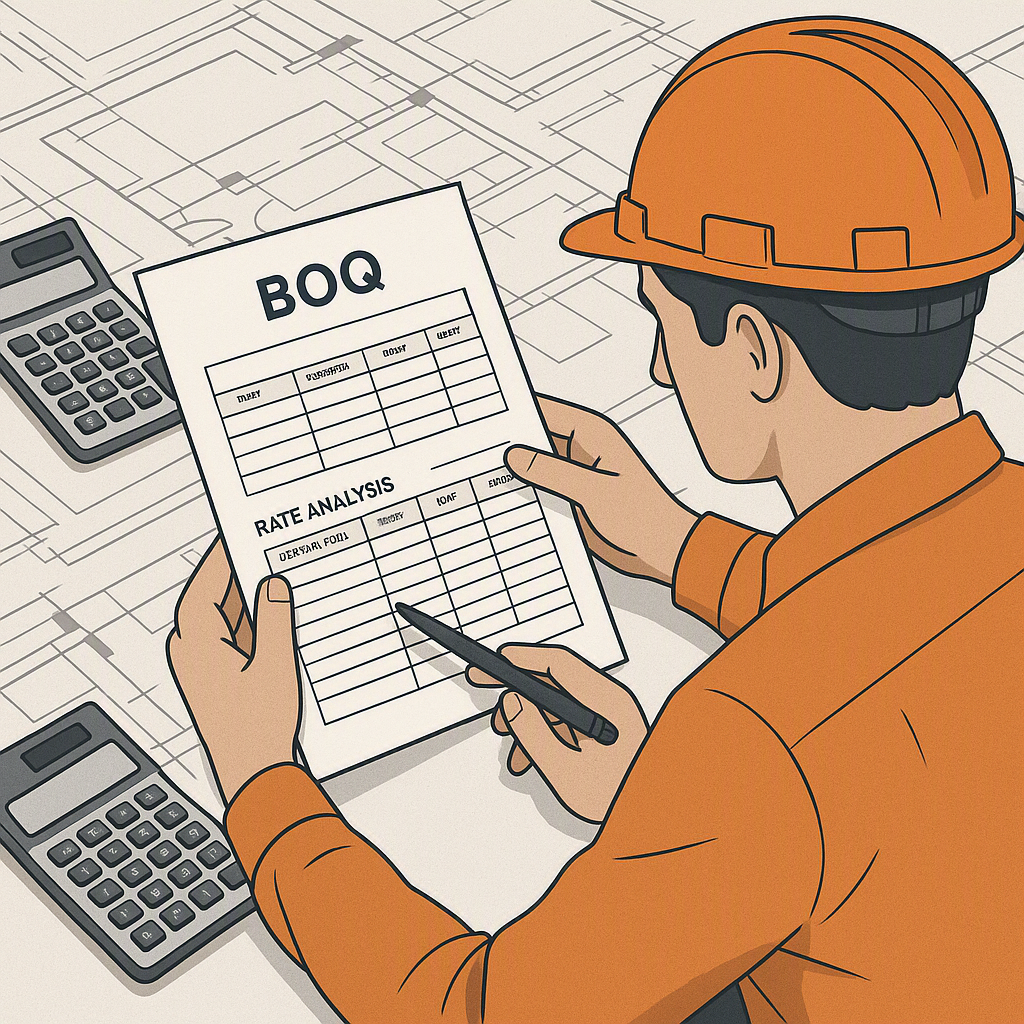
If you’re working on a BOQ-driven project, rate analysis is your lifeline. It’s the process of breaking down rates into material, labor, plant, subcontract costs, and overheads. But here’s the kicker: inaccurate BOQ rates can destroy profitability.
Common Pitfalls:
- Outdated Scheduled Rates: Rates set months ago often don’t reflect current market prices. If steel prices rise and your scheduled rate doesn’t account for it, you’re already losing money.
- Scope Gaps: BOQs sometimes miss minor activities like site preparation or material handling. These aren’t free—they eat into your margins if you don’t price them.
- Resource Validation Errors: Many contractors assume their estimates are correct. Then they discover resource validation mistakes during execution.
The fix? A robust rate analysis method that ensures every BOQ line item is priced accurately.
Illustrative Example:
Let’s say you’re pricing a civil project with 500 cubic meters of concrete. Your BOQ rate for concrete includes material, labor, and plant costs. But labor rates haven’t been updated since last year, and the actual labor cost per cubic meter is now higher. That’s a significant loss on this single activity.
Tools like JobNext automate rate analysis, breaking each rate into material, labor, and plant components. Their BOQ Rate Analysis feature highlights variances between scheduled and actual rates, enabling early corrective action.
Quoting Methods: Picking the Right Approach
Bid cost engineering isn’t just about pricing—it’s about presentation. How you build and present quotes can make or break your bid.
Four Methods Contractors Use:
- Easy Quote: Quick sell-rate entry for small jobs. Best for simple projects like residential renovations.
- Standard Quote: Uses centrally managed scheduled rates with detailed cost build-ups. Ideal for ensuring consistent pricing across jobs.
- Estimate-Based Quote: Bottom-up costing with full resource breakdowns. Perfect for complex, high-value projects.
- Combined Quote: Merges quotes from multiple enquiries into one customer proposal while preserving internal cost separation.
Practical Scenario:
Imagine you’re bidding on an EPC project with multiple service lines—civil works, electrical, and mechanical. Instead of creating separate quotes for each service, a Combined Quote lets you merge them into a single document for the client while tracking costs internally.
JobNext’s Combined Quote functionality simplifies this process, auto-populating BOQ data and maintaining cost separation per service line. Their guide on creating BOQ templates explains how to optimize these workflows.
Tracking Profitability Post-Bid
Winning the bid is only half the battle. Tracking profitability during execution is where many contractors lose control.
Key Metrics to Monitor:
- Budget vs. Actual Costs: Compare original estimates with real costs during execution.
- Resource Reconciliation: Track labor, material, plant, and subcontractor costs against budgeted amounts.
- BOQ Rate Variances: Check if your billing rates align with actual execution costs.
Illustrative Example:
During execution, you may find that the actual cost rate for a specific BOQ item exceeds the quoted rate. Identifying this early allows you to take corrective actions, such as renegotiating contracts or adjusting execution strategies.
JobNext’s analytics module provides detailed variance reports across BOQ items, helping contractors correct course before profitability erodes.
FAQ
1. What’s the best way to update scheduled rates?
Review market prices quarterly and adjust rates in your WBS (Work Breakdown Structure). Tools like JobNext simplify this by centralizing rate schedules.
2. How can I avoid scope gaps in BOQs?
Use predefined scope libraries during BOQ creation. If the client provides BOQs, cross-check against your internal scope templates.
3. What’s the risk of underpricing?
Underpricing leads to margin erosion during execution. It’s better to lose a bid than win one you can’t profit from.
4. Can automation really improve bid accuracy?
Yes. Systems like JobNext auto-validate BOQ rates, flagging inconsistencies before submission.
Common Mistakes Contractors Make
- Ignoring Resource Validation Errors: These often result in unbalanced quotes.
- Underestimating Minor Activities: Site setup, material handling, and other overlooked costs add up.
- Using Outdated BOQ Rates: Regular updates to rate schedules are critical.
- Over-relying on Manual Processes: Automated systems reduce human error.
Conclusion
Bid cost engineering isn’t rocket science—it’s about structure, precision, and avoiding common errors. Whether you’re pricing a residential project or a large-scale EPC contract, the principles remain the same.
If you're struggling with BOQ rate analysis or bid accuracy, tools like JobNext can help. Their Preconstruction Estimation Guide is a great starting point.
Learn more at EstimateNext