What’s the Real Problem in Construction Estimating?
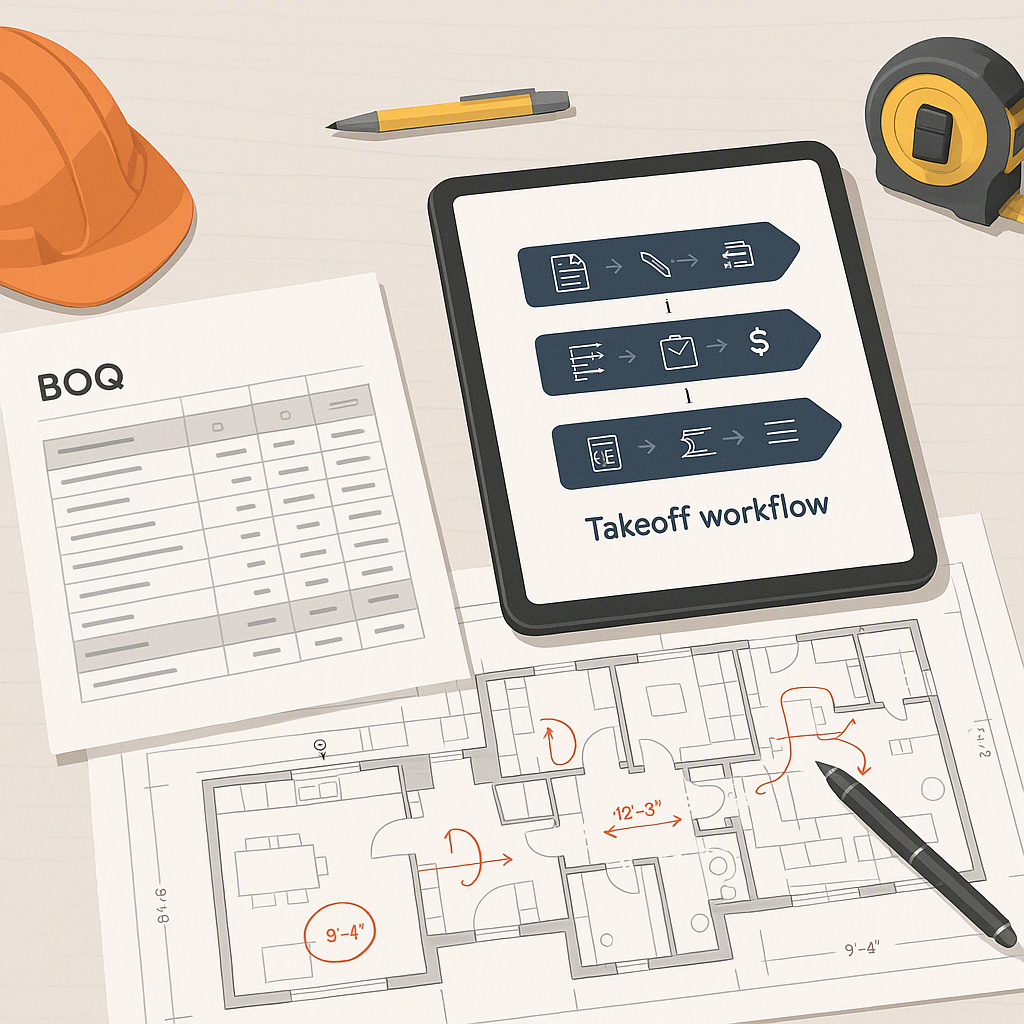
Estimating isn’t just math; it’s a battle against time, incomplete data, and industry-specific complexities. Contractors face a storm of fluctuating material prices, labor shortages, scope creep, and tight deadlines. One mistake — a miscalculated BOQ (Bill of Quantities) line item, an outdated rate, or a missed quantity — can erode already razor-thin margins.
Adding to the challenge is the pressure to remain competitive. Bid too high, and you lose the job. Bid too low, and you risk losing money. The stakes are enormous, and this is why accurate estimating is the lifeblood of any successful construction project.
Free AI tools promise to help. They advertise faster takeoffs, automated calculations, and even predictive analytics. But let’s be honest — most of what’s out there either overcomplicates the process or fails to handle the nuances of real construction projects. The real challenge isn’t finding an AI tool; it’s finding one that’s practical, reliable, and doesn’t require hours of setup or a PhD to operate.
In this guide, we’ll break down the best free AI tools for construction estimating and, more importantly, show you how they can actually make a difference.
What to Look for in a Free AI Estimating Tool
Before diving into the tools, let’s get clear on what “good” looks like. Not all AI tools are created equal, and the right one can save you time, money, and countless headaches. Here’s what to prioritize:
-
Handle BOQs Intuitively
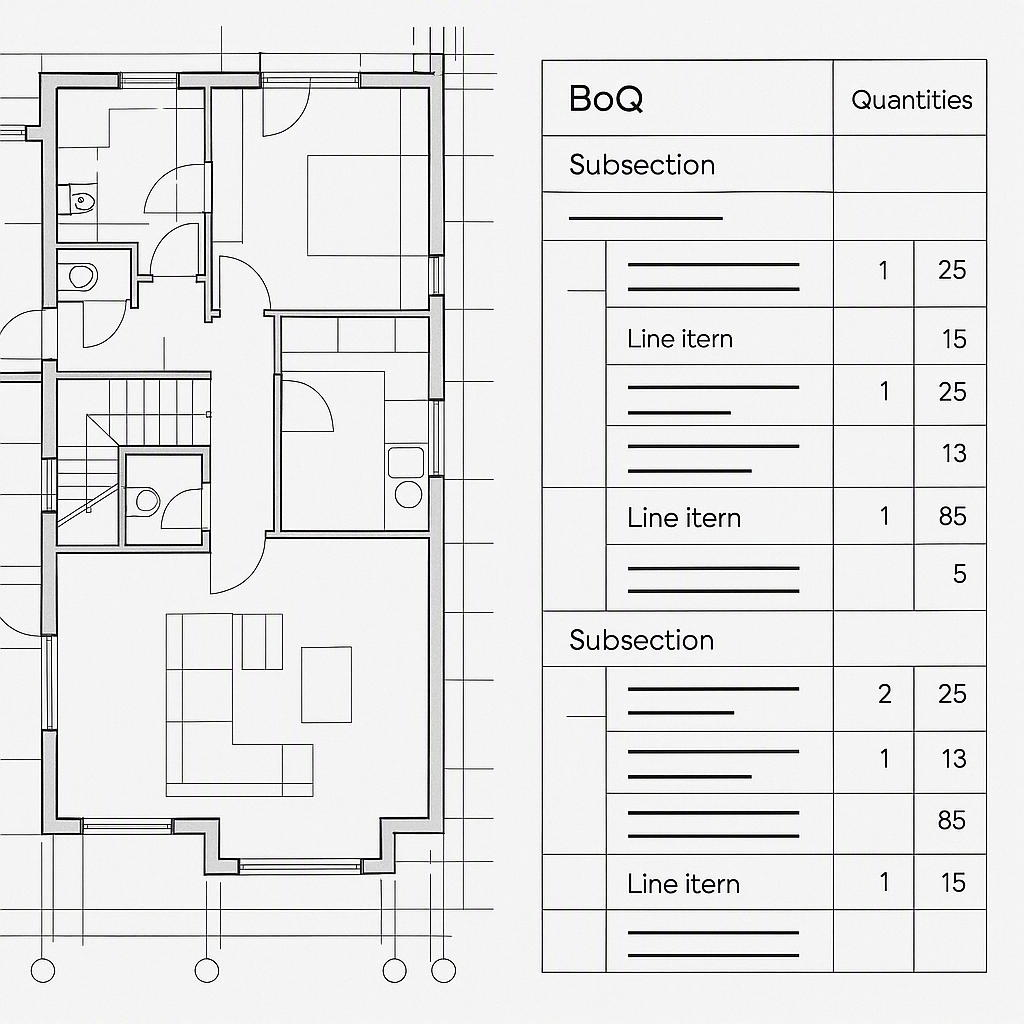
- Whether it’s a simple residential project or a complex EPC (Engineering, Procurement, and Construction) job, the tool needs to align with your BOQ structure. This means supporting detailed line items and specific categorizations like labor, material, and equipment.
-
Support Rate Breakdowns
- A good tool should let you break down costs by labor, materials, equipment, and overheads. It should also allow you to adjust these rates based on local conditions, vendor quotes, or project-specific factors.
-
Save Time, Not Add Complexity
- If you’re spending hours setting up templates, fixing errors, or wrestling with a clunky interface, the tool isn’t helping. The best AI tools reduce manual effort and speed up repetitive tasks like takeoffs and rate calculations.
-
Integrate Seamlessly
- No contractor wants to juggle five isolated tools for estimating, procurement, and billing. Look for a solution that either integrates with your existing systems (like Excel or ERP software) or offers an all-in-one platform.
-
Account for Regional Variations
- Material and labor costs vary drastically between regions. A capable AI tool should allow you to input or adjust for these regional differences.
1. OpenCost AI
Why It Works
OpenCost AI is a free, open-source tool designed for contractors who value transparency and control. It uses historical cost data and industry benchmarks to suggest rates for materials and labor, making it especially useful for teams that want to build and refine their own estimating databases.
How to Use It
- Step 1: Upload your project’s BOQ (in Excel or CSV format).
- Step 2: Let the AI match line items with historical cost data or benchmarks.
- Step 3: Adjust the suggested rates based on your project’s location, vendor quotes, or other specific factors.
Pros
- Completely free and open-source, so you’re not locked into a specific vendor.
- Learns and improves its suggestions over time as you feed it more data.
- Allows extensive customization for contractors who want full control.
Cons
- You’ll need to feed it your own historical cost data to get accurate results.
- Doesn’t come with out-of-the-box integrations for procurement or billing.
2. JobNext’s Estimate-Based Quoting
Why It Stands Out
If you’re already using JobNext for project management or procurement, its AI-powered estimate-based quoting feature is worth exploring. Unlike generic AI tools, JobNext focuses on bottom-up costing. This means breaking down every BOQ line into labor, materials, plant, and subcontract costs. The tool enforces budget discipline by syncing estimates directly with procurement workflows.
How to Use It
Let’s break it down with an example:
- Resource Breakdown: Input quantities for specific BOQ items (e.g., ducting, insulation, or concrete). The AI uses your historical rate schedules or supplier inputs to suggest costs.
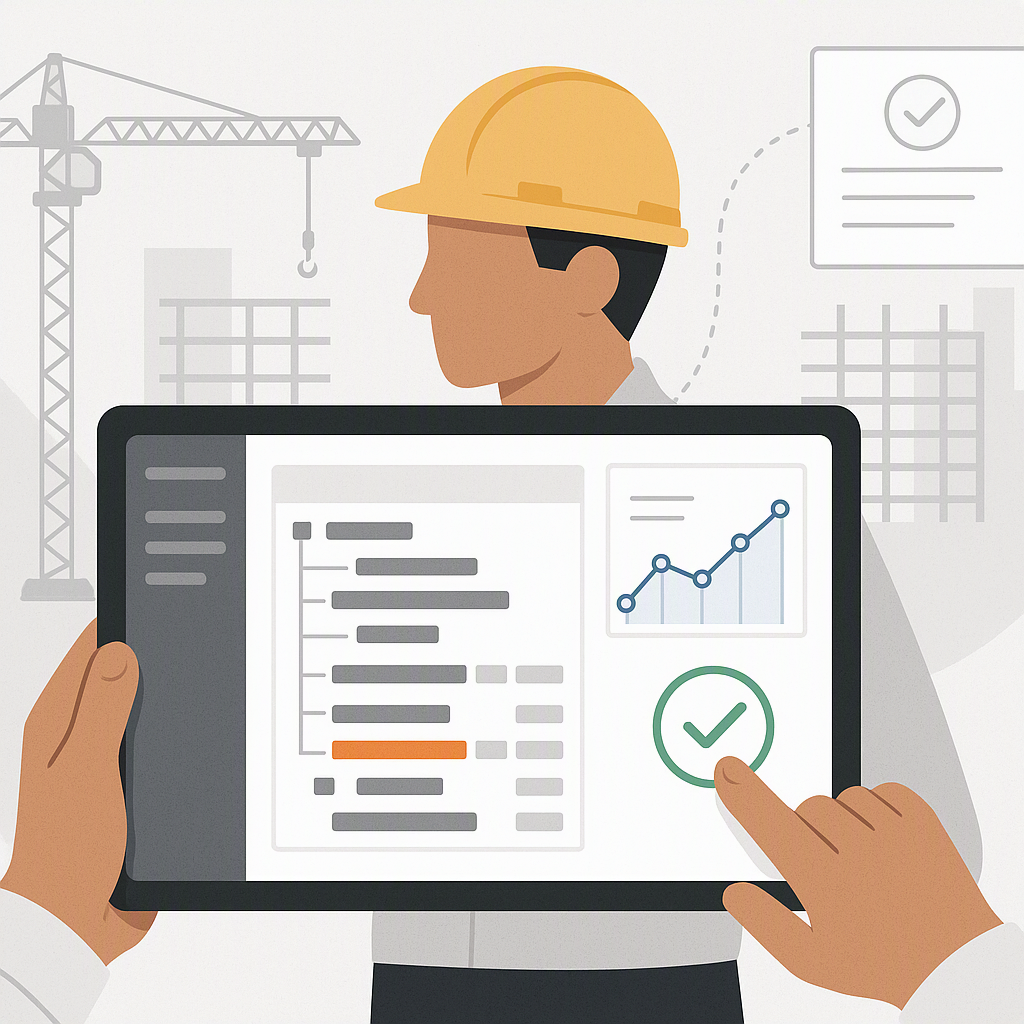
- Approval Workflow: Once the estimate is ready, it’s flagged for approval before being locked in as the project budget.
- Real-Time Adjustments: If steel prices spike mid-project, you can tweak the rates, and JobNext automatically recalculates the impact on your budget.
Why This Matters
According to a McKinsey report, construction margins often hover around 5-8%. Every rupee saved in the estimation phase is a rupee added to your bottom line. Tools like JobNext enable this by providing transparency and accuracy.
Pros
- Synchronizes estimates with procurement and project workflows.
- Free trial available; an excellent way to test its full capabilities.
- Helps enforce budget discipline with approval workflows.
Cons
- The full version is paid after the free trial.
- Designed more for contractors already using JobNext’s ecosystem.
3. PlanSwift Free Trial
Why It Works
PlanSwift is a specialized tool for takeoffs — one of the most tedious and error-prone parts of estimating. The software uses AI to help you quickly measure areas, lengths, and volumes from project drawings. While it’s a paid tool, the free trial is worth exploring for short-term projects or to evaluate its capabilities.
How to Use It
- Step 1: Import your project drawings (PDF format works best).
- Step 2: Use the AI-assisted tools to trace walls, slabs, or piping runs.
- Step 3: Export the measurements into your BOQ for pricing.
Pros
- Simple drawing upload process with surprisingly accurate AI tracing.
- Integrates with Excel or popular ERPs for seamless workflows.
- Saves significant time on takeoffs.
Cons
- Free trial is limited to 14 days.
- After the trial, it becomes a paid tool.
4. Microsoft Excel + ChatGPT API
Why It Works
For teams on a tight budget, combining Excel’s flexibility with ChatGPT’s natural language processing can be a cost-effective solution. While it’s not a purpose-built estimating tool, it’s surprisingly effective for automating repetitive tasks.
How to Use It
- Step 1: Create a BOQ template in Excel with predefined columns for quantities, rates, and totals.
- Step 2: Use the ChatGPT API to automate rate lookups or suggest quantities based on project descriptions. For example: "What’s the typical cement quantity for a 100 sq. ft. concrete slab?"
- Step 3: Fine-tune the AI’s suggestions based on your project’s specifics.
Pros
- Free if you already use Excel and ChatGPT’s free tier.
- Highly customizable to fit your specific needs.
Cons
- Requires technical knowledge to set up the ChatGPT API.
- Not purpose-built for construction estimating, so it’s less intuitive.
Common Mistakes When Using AI Estimating Tools
- Trusting AI Blindly: AI tools rely on the data you feed them. Always double-check the suggestions against your own expertise.
- Ignoring Regional Variations: Construction costs (especially labor and materials) vary widely based on location. Ensure your tool accounts for this.
- Not Syncing With Execution: An accurate estimate is useless if it doesn’t align with your procurement and billing processes.
- Overcomplicating the Process: Simplicity is key. Avoid tools that require extensive setup or introduce unnecessary complexity.
FAQ
1. Are free AI tools really worth it?
Yes, but only if they align with your workflows. Tools like JobNext’s estimate-based quoting offer free trials that can save you time and money during preconstruction. Open-source options like OpenCost AI are ideal for contractors who value customization.
2. Can AI replace estimators?
No. While AI can automate repetitive tasks and improve accuracy, estimators bring critical judgment and experience that no AI can replicate. Think of AI as a tool to assist, not replace, human expertise.
3. What’s the biggest benefit of AI in estimating?
Speed and accuracy. By automating repetitive tasks like takeoffs and rate calculations, AI allows estimators to focus on high-value decisions and strategic planning.
4. How do I ensure my AI tool gives accurate results?
The accuracy of AI tools depends on the data they’re trained on. Always feed the tool high-quality, up-to-date data, and double-check its outputs for errors or inconsistencies.
5. What’s the best free AI estimating tool for small contractors?
For small contractors, Microsoft Excel combined with ChatGPT or OpenCost AI are excellent starting points. They’re both low-cost options that can be tailored to fit your needs.
Comparison Table: AI Estimating Tools
| Feature | OpenCost AI | JobNext Estimate-Based Quoting | PlanSwift Free Trial | Excel + ChatGPT API |
|---|---|---|---|---|
| Cost | Free | Free trial, paid version | Free trial, paid | Free (with tools) |
| Ease of Use | Moderate | High | High | Moderate |
| Customizability | High | Low | Low | High |
| Integration | Limited | Seamless | Moderate | Moderate |
| Best For | Contractors with data | Existing JobNext users | Takeoffs | Budget-conscious teams |
Final Thoughts
Construction estimating doesn’t have to be a headache. The right AI tools can save you time, improve accuracy, and protect your margins. Whether you’re exploring open-source options like OpenCost AI, leveraging platforms like JobNext, or getting creative with Excel and ChatGPT, there’s a solution out there for your needs.
If you’re tired of losing margins due to poor estimates, tools like JobNext can help. Its estimate-based quoting feature ensures your budgets are precise and enforceable. Learn more and get started free →
Learn more at EstimateNext