AI Takeoff vs Manual Takeoff Time: The Brutal Truth
Estimating construction costs manually is like running a marathon with your shoelaces tied together. It’s slow, painful, and riddled with errors. The average contractor spends 40+ hours per project on manual quantity takeoffs. That’s an entire workweek lost — just on counting quantities.
AI-powered tools change the game. Automated quantity takeoffs from drawings cut that time to 2 hours or less. Think about it: that’s a 95% reduction in time spent on estimation. And it’s not just faster — it’s more accurate. No missed dimensions or forgotten annotations.
Why Manual Takeoffs Are Killing Your Margins
If you're still relying on manual takeoffs, you're bleeding money. Here’s why:
Time Sink
Every 40 hours wasted on takeoffs doesn’t just cost you labor. It delays your bids, which means lost opportunities to win projects. For example, imagine a contractor bidding on 15 projects per month. Spending 40 hours per project means 600 hours lost to manual estimation. That’s nearly 4 full-time employees working solely on takeoffs.
Human Errors
Mistakes in manual takeoffs lead to underpricing or overpricing — both of which hurt your profits. A contractor who underestimates quantities risks losing money during execution. On the flip side, overpricing makes your bid less competitive, reducing your chances of winning.
Concrete example: ABC Construction lost ₹12 lakh on a mid-size residential project due to miscounted steel quantities during manual estimation. These errors can snowball, especially in larger or multi-trade projects.
Scaling Nightmare
As your projects grow in size and complexity, manual takeoffs become exponentially harder to manage. A ₹50 crore commercial project might require hundreds of hours of manual estimation. Multiply that across multiple projects in a portfolio, and the labor cost skyrockets.
Let’s do the math. If your estimator earns ₹1,000/hour, a single manual takeoff costs you ₹40,000 in labor alone. Now multiply that across 10 projects a month. That’s ₹4,00,000 gone — just on estimation.
The AI Advantage: Speed + Accuracy
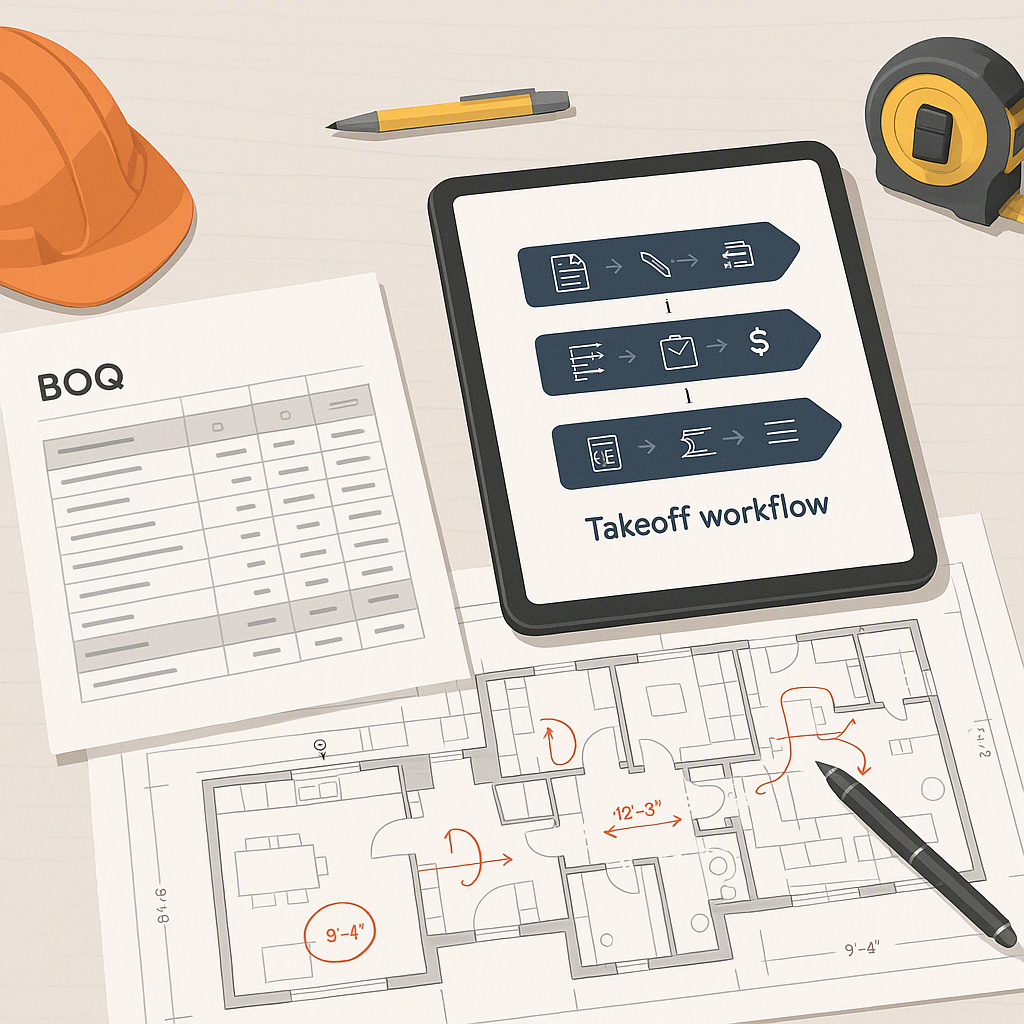
AI takeoff tools like JobNext automate quantity extraction directly from PDF drawings. Here’s how it works:
Step-by-Step Process
- Upload Drawings: Drag-and-drop your PDFs or CAD files into the software.
- Automated Detection: The AI scans for dimensions, annotations, and layers. It identifies quantities in seconds.
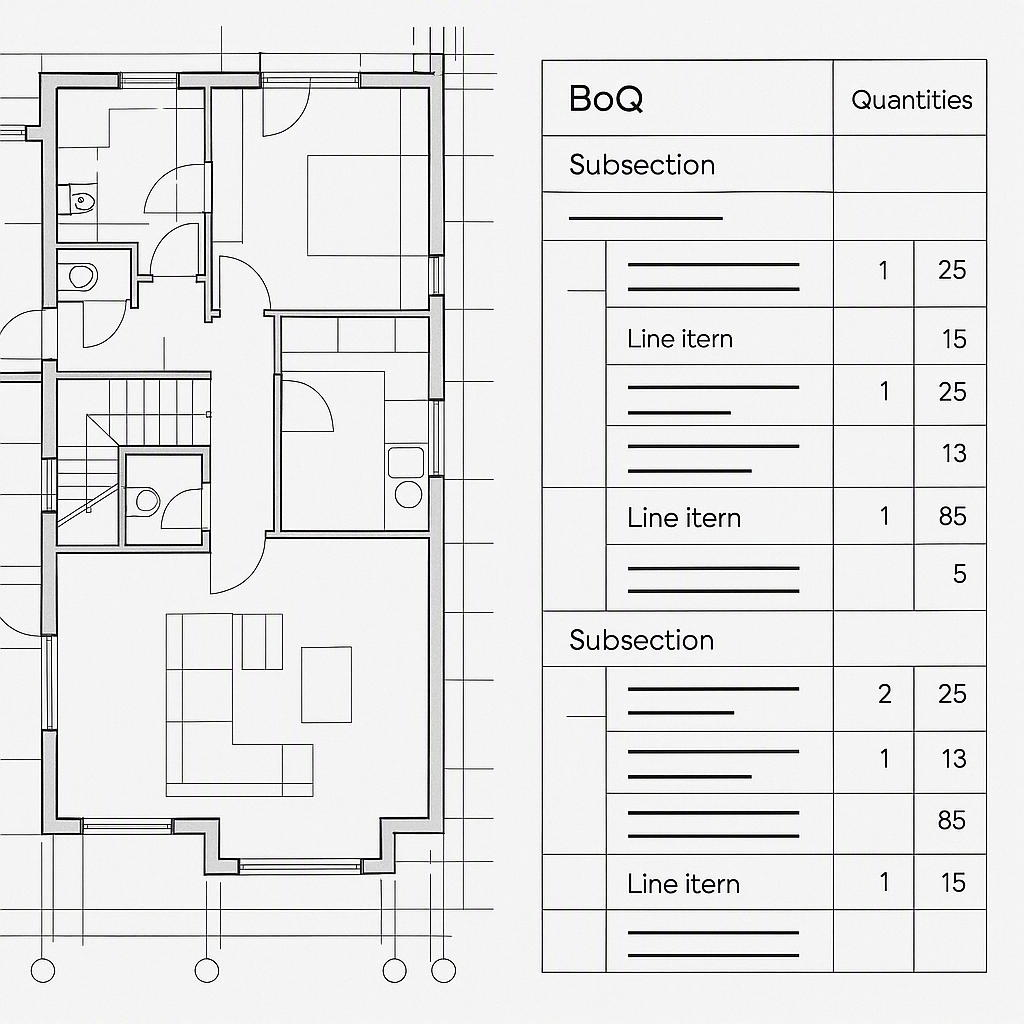
- Export BOQs: Generate a bill of quantities (BOQ) instantly, with zero manual effort.
This process takes 10–15 minutes per drawing, compared to the 8–10 hours it would take manually. That’s why contractors are saving 95% of their estimation time.
Comparison of Time Spent
| Method | Time per Drawing | Time for 10 Drawings |
|---|---|---|
| Manual Takeoff | 8–10 hours | 80–100 hours |
| AI Takeoff | 10–15 minutes | 1.5–2.5 hours |
Real-World Example: ₹2 Crore Saved Annually
One mid-size MEP contractor in Mumbai switched to AI-powered takeoff tools last year. They handle around 15 projects a month, each requiring 40 hours of manual estimation. After adopting AI takeoff, they cut their monthly estimation time from 600 hours to just 30 hours.
Breakdown of Savings
- Labor Costs: ₹1,000/hour × 570 hours saved = ₹5,70,000/month
- Eliminated Errors: Reduced material wastage and improved pricing saved ₹1,00,000/month
- Faster Bid Submissions: Winning 2 additional projects/month added ₹30,00,000/year to revenue
Total savings? ₹2.1 crore annually — labor costs, eliminated errors, and faster bid submissions combined. EstimateNext.ai outlines similar case studies that show how firms slash takeoff time by 90%.
Why JobNext Fits Perfectly Into This Workflow
JobNext doesn’t stop at takeoffs. Once you generate your BOQ, you can:
- Link it directly to your procurement module: Seamlessly convert material requirements (MR) into RFQs and purchase orders (POs).
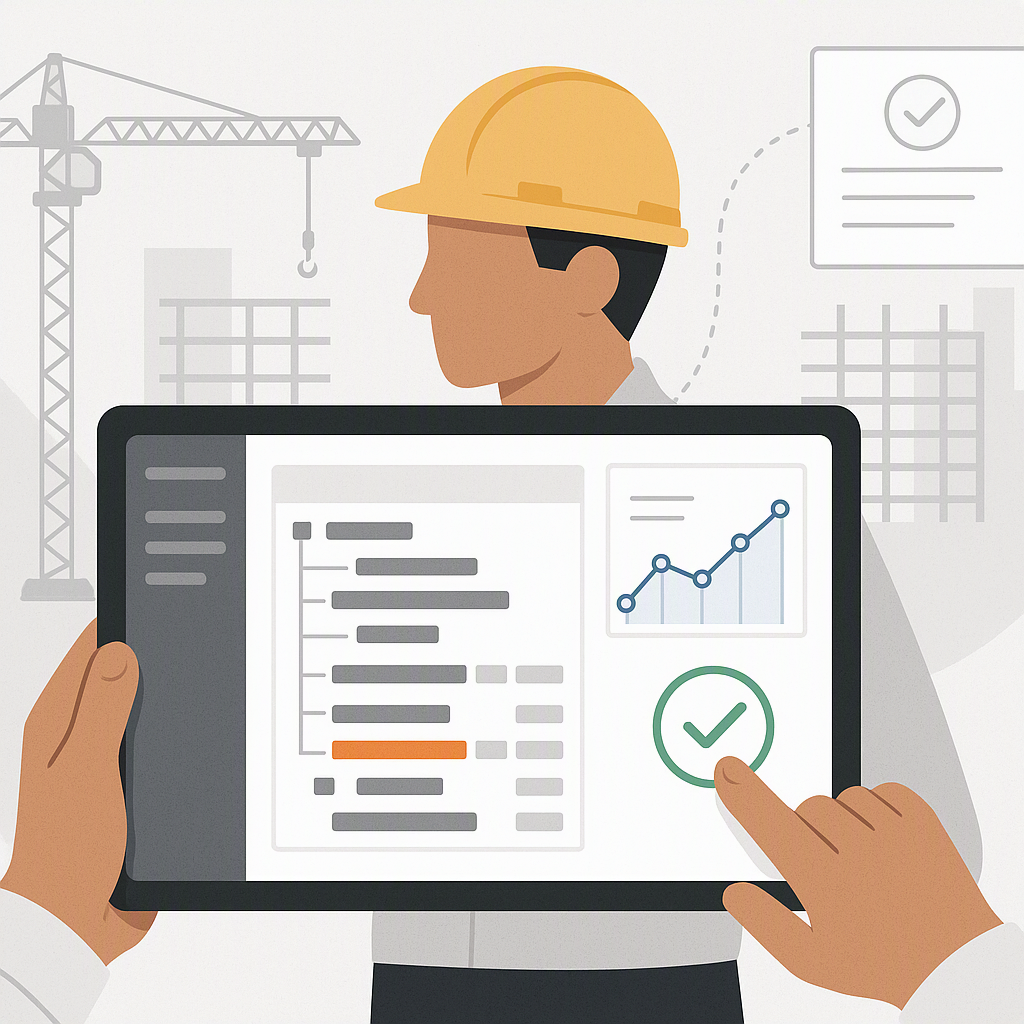
- Track project profitability in real-time: Monitor how quantities convert into costs throughout execution.
- Use pre-built SSRS dashboards: Analyze estimation accuracy across projects, identify trends, and refine your workflows.
Unlike standalone AI takeoff tools, JobNext integrates with your entire ERP workflow. This ensures no data gets lost between estimation, procurement, and execution.
Feature Comparison
| Feature | JobNext | Standalone AI Tool |
|---|---|---|
| Takeoff Automation | ✅ | ✅ |
| ERP Integration | ✅ | ❌ |
| Procurement Module | ✅ | ❌ |
| Profitability Tracking | ✅ | ❌ |
What’s the Catch?
You might be thinking: “What about setup time?” Fair question. AI tools require initial calibration — setting up templates, training the software to read your specific drawing formats, etc. But once that’s done, you’re saving hours on every single project. The upfront investment is worth it.
Actionable Steps to Transition
- Evaluate Your Current Workflow: Track how much time and money your team spends on manual takeoffs each month.
- Test AI Tools: Start with a free trial of JobNext or similar software. Use it on one project to compare results.
- Train Your Team: Invest in training sessions to ensure your estimators can fully leverage the AI tool.
- Integrate with Existing Systems: Use an ERP-integrated tool like JobNext to streamline workflows beyond takeoffs.
- Monitor Results: Track savings in labor costs, estimation accuracy, and bid-win rates over 3–6 months.
FAQ
Q: How accurate are AI takeoffs compared to manual ones? A: AI tools typically achieve 95%+ accuracy. However, they’re only as good as the drawings you input. Poorly annotated PDFs can still create issues.
Q: What about cost? Are AI tools expensive? A: Many tools offer affordable pricing plans. For example, JobNext’s takeoff module is included in its ERP suite, which covers multiple workflows. You save more by bundling.
Q: Can AI handle complex projects like EPC or HVAC? A: Yes. AI tools are designed for multi-trade projects. They recognize layers, annotations, and dimensions across complex drawings.
Q: What happens if the AI misses something? A: Most tools allow manual overrides. You can easily adjust quantities or annotations that the software might miss.
Q: Is AI suitable for small contractors? A: Absolutely. Even small contractors can benefit from faster estimations and fewer errors, saving both time and money.
Call to Action
If manual takeoffs are draining your margins, it’s time to switch. JobNext combines AI-powered estimation with full ERP integration, saving contractors time and money across workflows. Get started free →
Learn more at EstimateNext