78% of Contractors Miss This BOQ Error — Computer Vision Fixes It
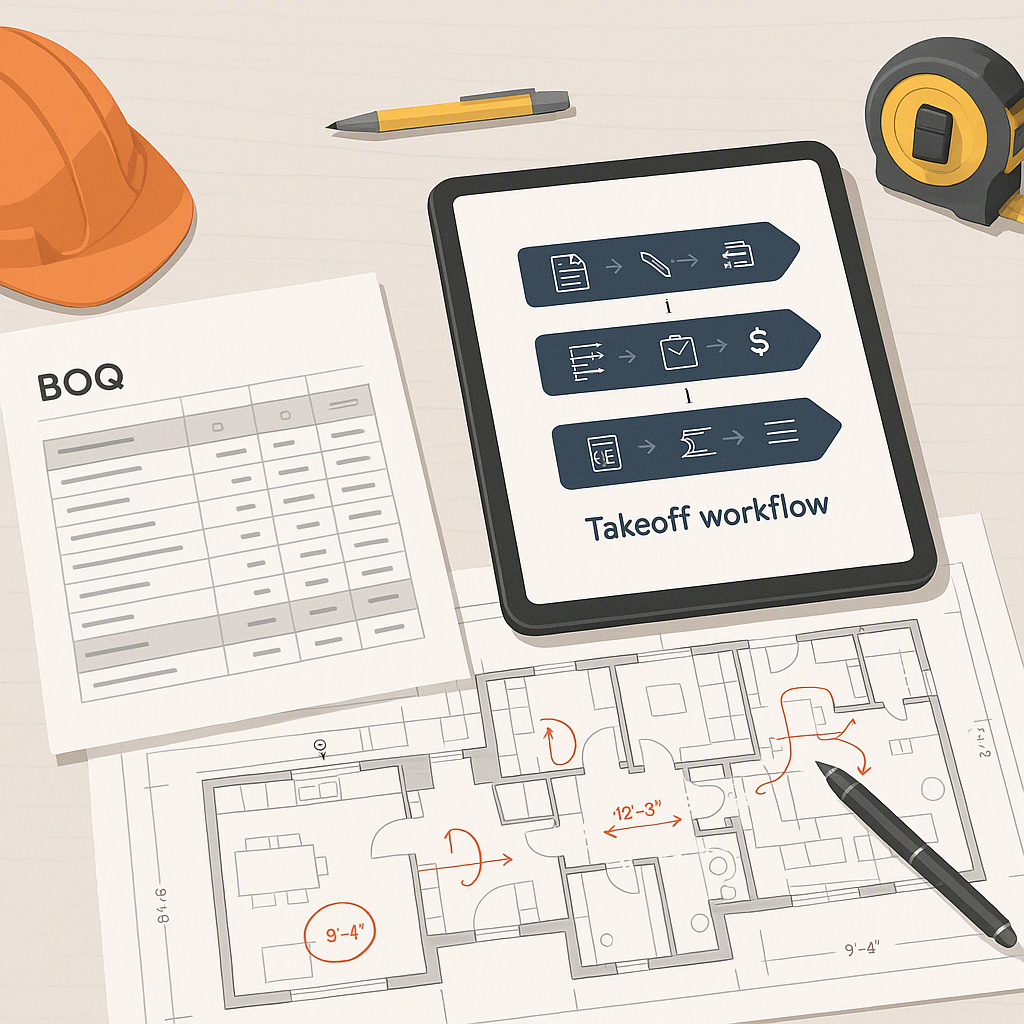
BOQ errors are silent margin killers. If you’ve ever had a project where the final cost wildly exceeded the estimate, chances are the problem started with the BOQ. More specifically, with missing or incorrect quantities during takeoff. These errors are more common than you might think, but new technology is making it easier than ever to catch and prevent them.
The Hidden Cost of BOQ Errors
Incorrect quantities on your BOQ aren’t just annoying—they’re expensive. Let’s say you undercount rebar quantities on a large structural project. When the error is discovered, you’ll need to revise estimates, renegotiate supplier terms, and explain to your client why the costs ballooned. Worse, if you don’t catch the mistake early, you’ll eat the cost.
Anecdotally, we’ve seen BOQ errors drive up project budgets by 15-20%. This isn’t an isolated issue either. A report by Navigant Consulting found that construction projects overrun their budgets by an average of 16% due to inaccuracies in project planning, largely stemming from errors in BOQs and takeoffs. It’s not just about material costs either:
- Overestimated quantities lead to over-procurement, tying up working capital in unused stock or forcing contractors to store excess materials, sometimes for months.
- Underestimated quantities cause schedule delays, last-minute rush orders, and premium pricing from suppliers. These errors also increase the risk of disputes with clients, subcontractors, and suppliers.
Real-World Example: Miscounting Materials on a Commercial Complex
Imagine a contractor bidding on a $10M commercial complex. During the manual takeoff process, they undercount the steel beams by 5%. This oversight isn’t caught until midway through construction. By then, steel prices have risen by 12%, and the project faces a two-week delay while waiting for the additional material. The result? $150,000 in unplanned costs, a frustrated client, and profit margins slashed by half.
The math is brutal, but the root causes of BOQ errors are often preventable.
Common Causes of BOQ Errors
1. Manual Takeoff Mistakes
Flipping through drawings and measuring quantities by hand introduces human error. Missed annotations, misread scales, or simply fatigue are common culprits. In fast-paced environments, takeoff errors become almost inevitable. For example, a survey by PlanGrid found that 35% of construction professionals spend over 14 hours a week correcting errors caused by manual processes.
2. Excel Woes
Even if your quantities are correct, one formula error in Excel can throw off your entire BOQ. A misplaced cell reference or a copy-paste mistake can cascade through your spreadsheet, causing large discrepancies. Studies show that 88% of spreadsheets contain errors, and in the construction industry, these mistakes can easily cost tens of thousands of dollars.
3. Complex Blueprints
Large projects with hundreds of line items (think civil works or MEP installations) are prone to miscounts. The more complex the blueprint, the higher the risk of error. For example, a multi-level hospital project with intricate HVAC systems might involve thousands of individual components, making manual takeoffs a logistical nightmare.
How Computer Vision Blueprint Takeoff Fixes This
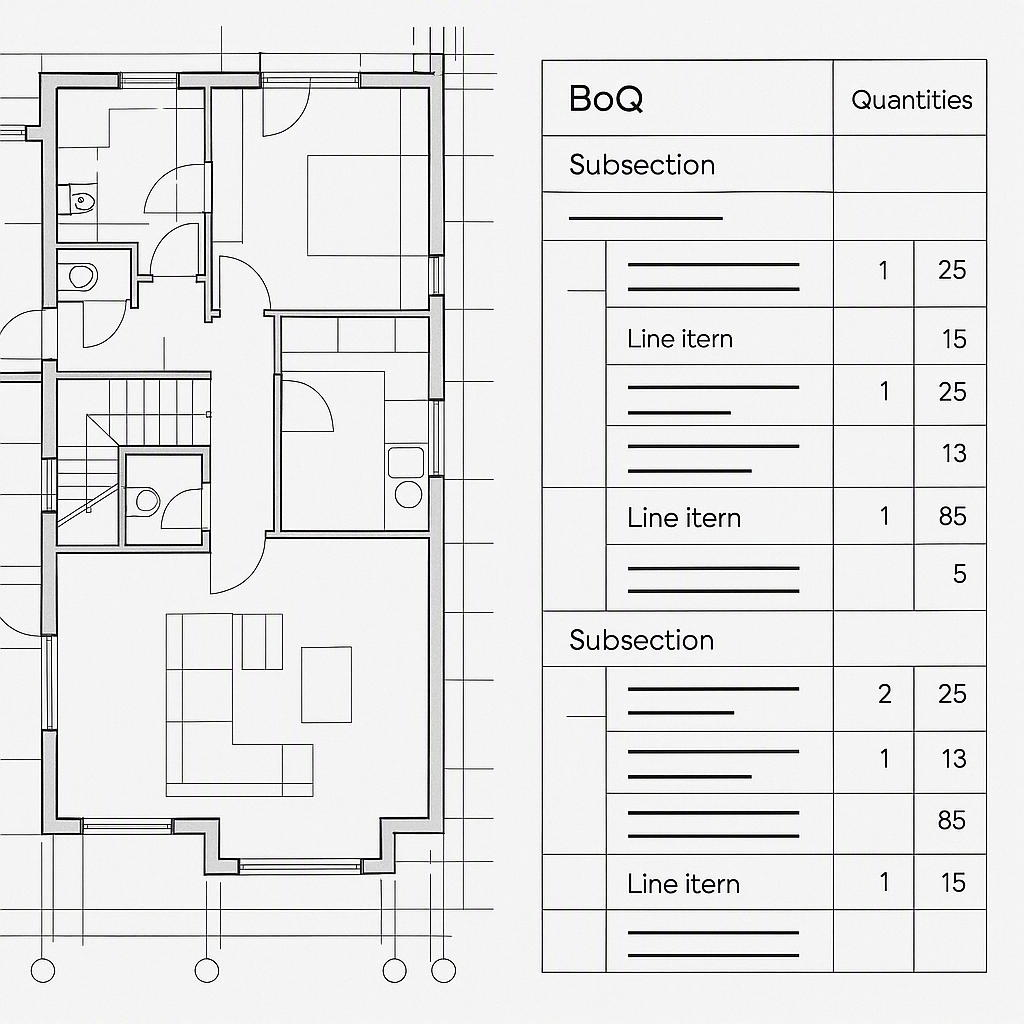
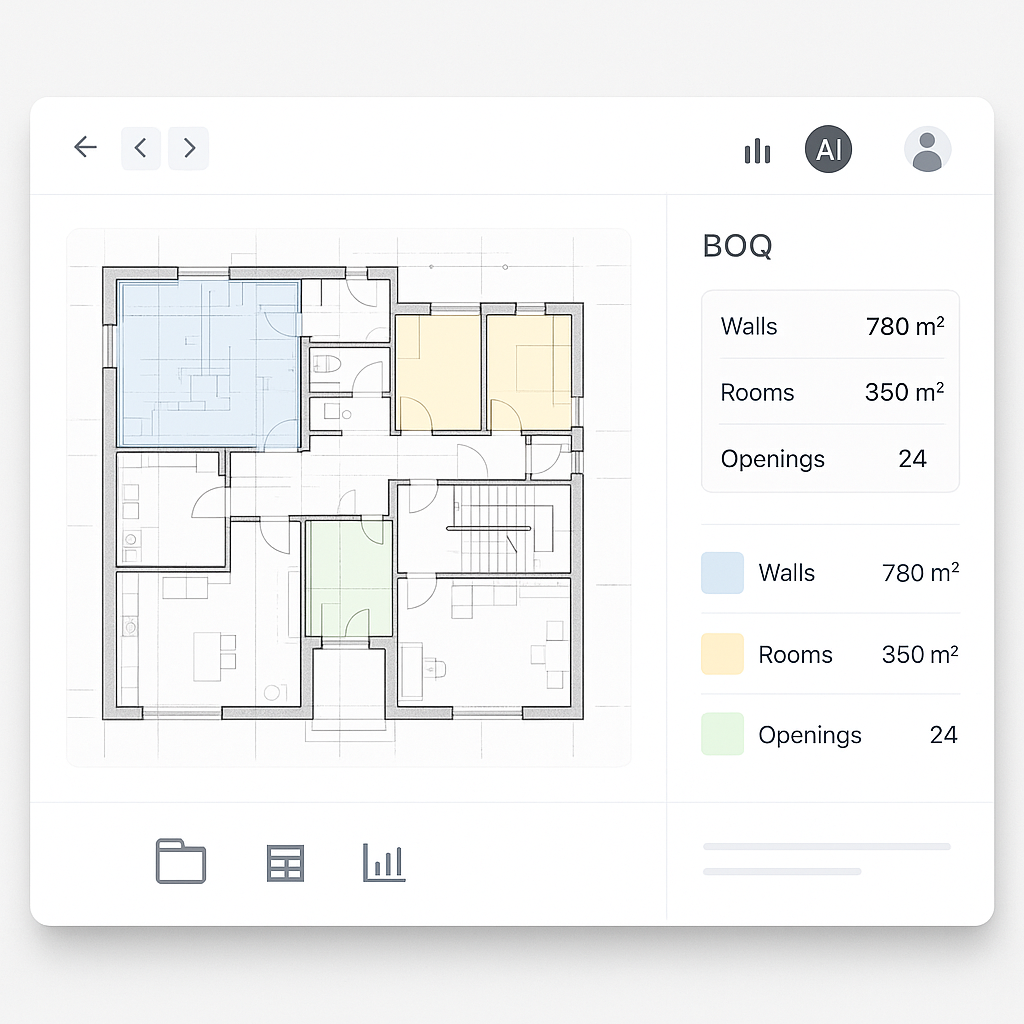
Computer vision, powered by artificial intelligence (AI), is changing the game for construction takeoffs. Instead of manually measuring areas, lengths, or counts, AI scans the blueprint and extracts data automatically. You get quantities validated against the drawing itself, ensuring nothing is missed.
What Makes AI Takeoff Better
1. Accuracy
AI doesn’t get tired or distracted. It reads every line, annotation, and measurement with precision. This eliminates human error entirely. For example, an AI system can detect a mislabeled dimension on a CAD drawing that a human might overlook.
2. Speed
Manual takeoffs for large projects can take 40+ hours. AI tools like EstimateNext cut that to 10 minutes. This isn’t just faster—it’s smarter. Freed-up time can be reinvested in more strategic activities like value engineering or client engagement.
3. Built-in Validation
Beyond extracting quantities, AI cross-checks them against your BOQ setup. Any mismatches trigger alerts, so you can fix errors before they balloon into budget overruns. For example, if the AI identifies that the specified concrete grade doesn’t match the BOQ, it flags the discrepancy immediately.
A Practical Example
Let’s say you’re working on a high-rise residential project. The concrete scope has 127 BOQ line items—slabs, beams, columns, etc. With manual takeoff, you measure quantities from CAD drawings, enter them into Excel, and hope that everything matches your rate schedule.
Using AI-powered tools like JobNext, here’s how the process changes:
- Step 1: Upload the blueprint directly into the AI platform.
- Step 2: The system scans each structural element, calculates quantities, and populates the BOQ automatically.
- Step 3: The AI flags discrepancies—like a slab area that doesn’t match your estimation parameters.
The result? No missing items. No wrong quantities. No costly surprises.
Case Study: Infrastructure Project in Dubai
A mid-size contractor in Dubai adopted AI-driven takeoff tools for a $50M infrastructure project. Before implementing AI, their average takeoff accuracy was 91%. After integration, it jumped to 99.8%. The time required to complete takeoffs dropped from 50 hours per bid to just 4 hours. Over the course of the project, they saved an estimated $250,000 by avoiding BOQ errors and preventing material wastage.
Why Contractors Need This Now
Margins are tightening across the industry. A 2023 McKinsey report noted that construction companies typically operate on razor-thin margins of 5% or less. Hidden BOQ errors eat into that margin fast. With AI takeoff tools, you can automate validation and lock in accurate quantities from day one.
The Obvious Objection
“But I’ve been doing takeoffs manually for years—it works fine.” Does it really? If you’re spending 40 hours on takeoffs per bid, you’re burning time that could go into optimizing rates or chasing new projects. Plus, manual processes miss errors that AI catches. The risk-reward doesn’t stack up.
Integrating AI Takeoffs with JobNext
Here’s where JobNext shines. The platform’s BOQ module connects directly to AI takeoff tools, ensuring that extracted quantities flow seamlessly into your project setup. You don’t just get accurate data—you get actionable insights. For example:
- BOQ Margin Reports: Highlight items where costs exceed estimates.
- Progress Tracking: Link quantities to scopes and measure against client billing milestones.
- Variation Orders: Automatically adjust BOQs for scope changes.
This isn’t just tech for tech’s sake—it’s a smarter way to protect your margins.
FAQ
1. How does computer vision handle complex blueprints?
AI-powered tools scan every layer of the drawing, including annotations, dimensions, and CAD details. The system processes these elements into structured data for BOQ generation. For example, it can differentiate between architectural, structural, and MEP layers.
2. Can AI takeoffs handle stage-wise BOQs?
Yes. Tools like JobNext allow you to split BOQ items across delivery phases. AI takeoffs align extracted quantities with the correct stage percentages, ensuring accurate billing and progress tracking.
3. What’s the ROI on AI takeoff tools?
A typical contractor saves 30+ hours per bid and eliminates costly BOQ errors. Over a year, that translates to significant margin protection across multiple projects. For example, a contractor completing 20 bids annually could save over 600 hours and $200,000 in error-related costs.
4. Is the setup complicated?
Most AI tools integrate with existing systems like JobNext. For example, you can bulk upload blueprints and BOQ templates directly. Onboarding typically takes less than a day.
5. How do AI tools handle regulatory compliance?
Many AI platforms are built with compliance in mind. They ensure that extracted quantities align with local building codes and standards, reducing the risk of non-compliance penalties.
Comparison Table: Manual vs. AI Takeoffs
| Feature | Manual Takeoff | AI-Powered Takeoff |
|---|---|---|
| Accuracy | Prone to human error | 99.8%+ precision |
| Speed | 40+ hours per project | 10 minutes per project |
| Error Detection | Reactive (post-errors) | Proactive (real-time) |
| Scalability | Limited by manpower | Scales effortlessly |
| Cost Efficiency | High labor cost | Low operational cost |
The Bottom Line
If you’re still doing takeoffs manually, you’re leaving money on the table. AI-powered computer vision tools validate quantities, eliminate errors, and save time. Platforms like JobNext integrate this functionality into the full project lifecycle, ensuring your BOQ drives profitability—not margin erosion.
If you're ready to stop guessing and start winning, JobNext can help. Get started free →
Learn more at EstimateNext