Why AI Takeoffs Matter
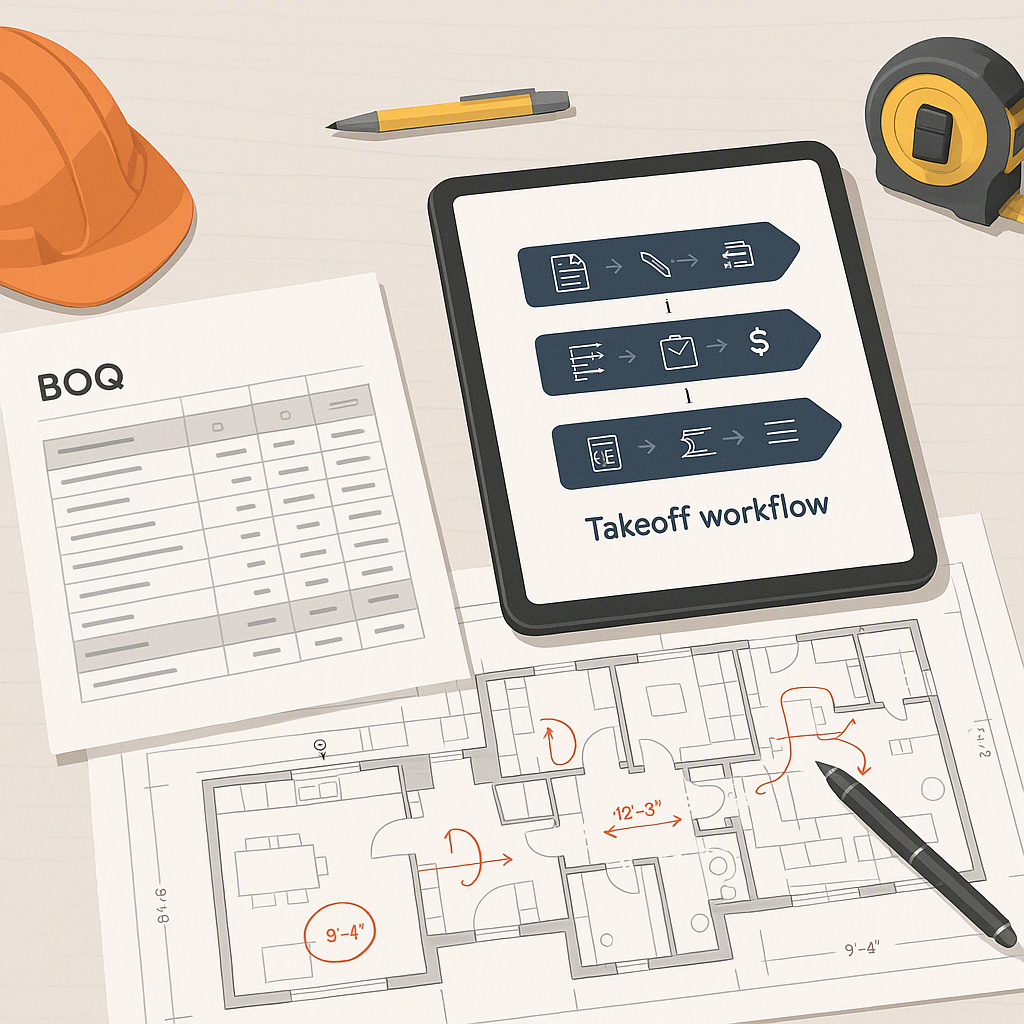
Margins in construction are razor-thin. One small misstep in your quantity takeoff, and suddenly your profits are dripping away—whether it’s over-ordering materials or underestimating labor costs. Manual takeoffs are notoriously slow and error-prone, eating up 30–40 hours per project and leaving room for costly mistakes.
AI takeoff tools flip the script. They process PDF drawings, automate measurements, and deliver accurate BOQs (Bills of Quantities) in minutes. But simply slapping AI onto your workflow won’t solve everything—you need a strategy. Here are actionable practices to make AI takeoffs work for you and how they can transform your business.
1. Standardize BOQ Formats Before Upload
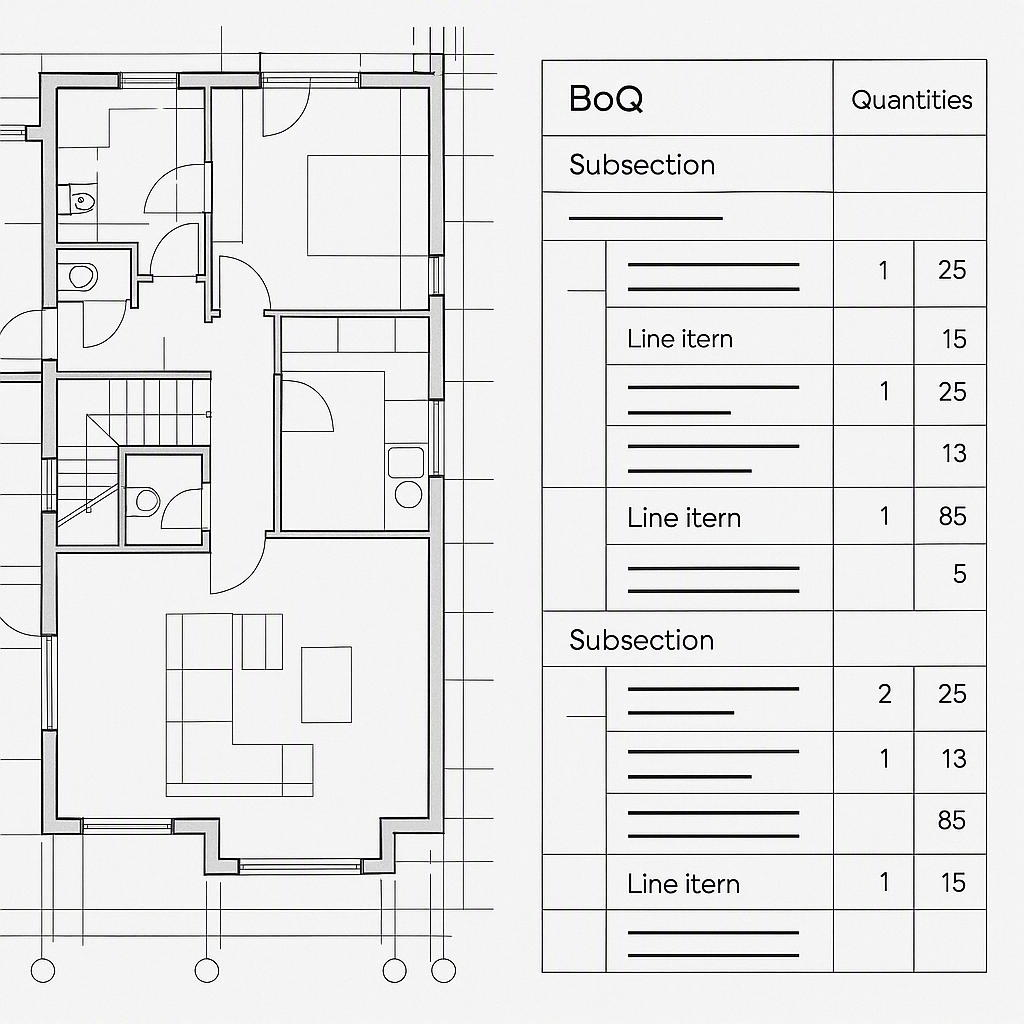
AI tools aren’t magic. If your BOQ templates are inconsistent, garbled data will derail every estimate. Use a single, clean format like BOQFormat.xlsx to ensure seamless uploads. This step eliminates manual rework later, saving hours and reducing errors.
Why It Matters
When your BOQ templates are inconsistent, AI tools struggle to process the data effectively. Imagine uploading a BOQ where unit measurements are mixed between "meters" and "feet"—the AI tool might misinterpret the data, resulting in inaccurate estimates.
Example
JobNext’s preconstruction module validates templates before processing. For instance, if your BOQ includes mixed units or missing fields, the tool flags errors upfront. Contractors who skip this step often spend extra hours correcting bad data—a completely avoidable headache.
Actionable Steps
- Use a standardized BOQ template for all projects.
- Validate the template with smaller test uploads before processing large project files.
- Assign a team member to review BOQs for consistency before uploading.
Case Study
A mid-sized contractor in Bangalore implemented template standardization across their team. Before using AI tools, they faced errors in 30% of their estimates due to inconsistent BOQ formatting. After standardizing templates, their error rates dropped to under 5%, and they saved 10–15 hours per project in manual corrections.
2. Combine Quotes for Complex Proposals
Not every project has a straightforward scope. AI-assisted quoting methods, like JobNext’s Combined Quote feature, let you merge multiple BOQs into a single proposal. This saves time while keeping internal cost separation across service lines.
Why It Works
For multi-trade contractors handling MEP (Mechanical, Electrical, and Plumbing), HVAC, or firefighting systems, juggling separate quotes can lead to miscommunication and overlooked details. By combining quotes, you maintain clarity while respecting the unique cost structures of each trade.
Example
Take a commercial construction project involving HVAC, electrical, and plumbing installations. Instead of managing three separate quotes, JobNext lets you consolidate them into one comprehensive proposal, ensuring no scope overlaps or omissions.
Actionable Steps
- Use the Combined Quote feature for multi-trade projects.
- Review the consolidated proposal for scope gaps or duplication.
- Share the unified quote with your client for streamlined communication.
Data Point
According to a study by FMI Corp, contractors who streamlined quoting workflows reduced project delays by 15% on average.
3. Use AI to Catch Negative Margins Early
AI-powered dashboards don’t just speed up takeoffs—they flag margin erosion before it spirals out of control. Tools like JobNext include BOQ margin reports that highlight items with negative profitability.
Why It’s Critical
In construction, small pricing errors can snowball into significant losses. Catching negative margins early allows you to adjust pricing or renegotiate terms before it’s too late.
Action Step
Review margin reports weekly. Use them to:
- Identify underpriced line items.
- Adjust rates based on updated material costs.
Anecdote
A contractor in Pune lost ₹2–3 lakh on a high-rise project because they didn’t catch negative-margin BOQ items until halfway through execution. After implementing AI-powered margin tracking, they identified and corrected potential losses on future projects within days of uploading estimates.
4. Leverage WBS Templates for Repeatable Jobs
If your team tackles similar projects often, don’t reinvent the wheel. AI tools let you create reusable WBS (Work Breakdown Structure) templates for faster setup.
Example
Interior design firms often handle repetitive residential projects. By standardizing BOQs and layouts for common designs, they reduce setup time by 50%. JobNext’s WBS templates make it easy to replicate successful projects.
Actionable Steps
- Identify repeatable project types (e.g., residential interiors, commercial fit-outs).
- Create WBS templates for these projects, including standard labor and material costs.
- Update templates quarterly to reflect changes in market rates.
5. Automate Measurement Verification
Subcontractor bills often bleed money due to unchecked measurements. AI tools automate measurement reconciliation, ensuring quantities match work orders.
Tip
Always attach sketches and photos to measurement sheets. This evidence reduces disputes and strengthens records.
Reality Check
In my experience, manual measurement disputes can drag on for weeks. Automation prevents this by providing instant validation against project drawings.
Data Point
Contractors who automated measurement verification reduced billing disputes by 70%, according to a report by Construction Dive.
6. Integrate Cost Estimation with Procurement
AI takeoff isn’t just about BOQs—it’s part of a bigger picture. Tools like JobNext integrate takeoffs with procurement workflows, ensuring material requisitions match approved budgets.
Why It Matters
Over-ordering or under-budgeting materials is one of the fastest ways to kill margins. Integration keeps everything aligned, reducing waste and avoiding project delays.
Actionable Steps
- Sync your AI takeoff tool with your procurement software.
- Set automated alerts for budget overruns.
- Conduct monthly reviews to ensure alignment between BOQs and purchase orders.
7. Train Teams on AI Tools
The best software fails without user buy-in. Contractors often overlook training, assuming AI tools are plug-and-play—but they’re not.
Action Step
Run training sessions for project managers and estimators. Familiarize them with error-checking, template uploads, and dashboard navigation.
Data Point
A 2023 McKinsey report found that companies investing in digital training saw 3x ROI on software adoption.
Example
A construction firm in Delhi saw a 40% improvement in takeoff accuracy after conducting a two-day workshop on JobNext for their estimators.
FAQ
Q: How accurate are AI takeoffs compared to manual methods?
A: AI tools like JobNext deliver 95–98% accuracy by automating measurements and reducing human error. Manual takeoffs average around 90% accuracy, depending on operator skill.
Q: Can AI takeoff software handle complex multi-trade projects?
A: Yes. Features like Combined Quotes in JobNext let you merge BOQs across trades into unified proposals while preserving internal cost separation.
Q: How long does it take to implement AI takeoff tools?
A: Most contractors can onboard tools like JobNext within 4–6 weeks, depending on team size and IT readiness.
Q: What industries benefit most from AI takeoff tools?
A: Industries like construction, interior design, and MEP contracting gain the most due to their reliance on accurate BOQs and labor estimates.
Q: Are AI tools worth the cost for small contractors?
A: Yes. While the upfront cost may seem high, the time saved on manual processes and the reduction in costly errors often result in a positive ROI within months.
Decision Framework: Should You Adopt AI Takeoffs?
| Factor | Manual Takeoffs | AI Takeoffs |
|---|---|---|
| Time per project | 30–40 hours | 2–4 hours |
| Accuracy | ~90% | 95–98% |
| Error correction effort | High | Low |
| Initial cost | Low | Moderate |
| Long-term ROI | Moderate | High |
If time savings and accuracy matter more to you than the upfront cost, AI takeoffs are a no-brainer.
The Bottom Line
AI takeoff tools don’t just save time—they protect margins. But the tool itself isn’t enough. You need clean data, integrated workflows, and a trained team to make it work.
If your takeoff process is slow or error-prone, JobNext can help. Get started free →
Learn more at EstimateNext