Why Contractor Markups Aren't Just About Profit
Ask most people, "How much markup do contractors charge?" and you'll hear numbers like 10%, 15%, maybe 20%. Seems reasonable, right? But here's the problem: that markup isn't pure profit. Far from it. Markup has to cover indirect costs — and that's where things get messy.
The Real Costs Behind the Markup
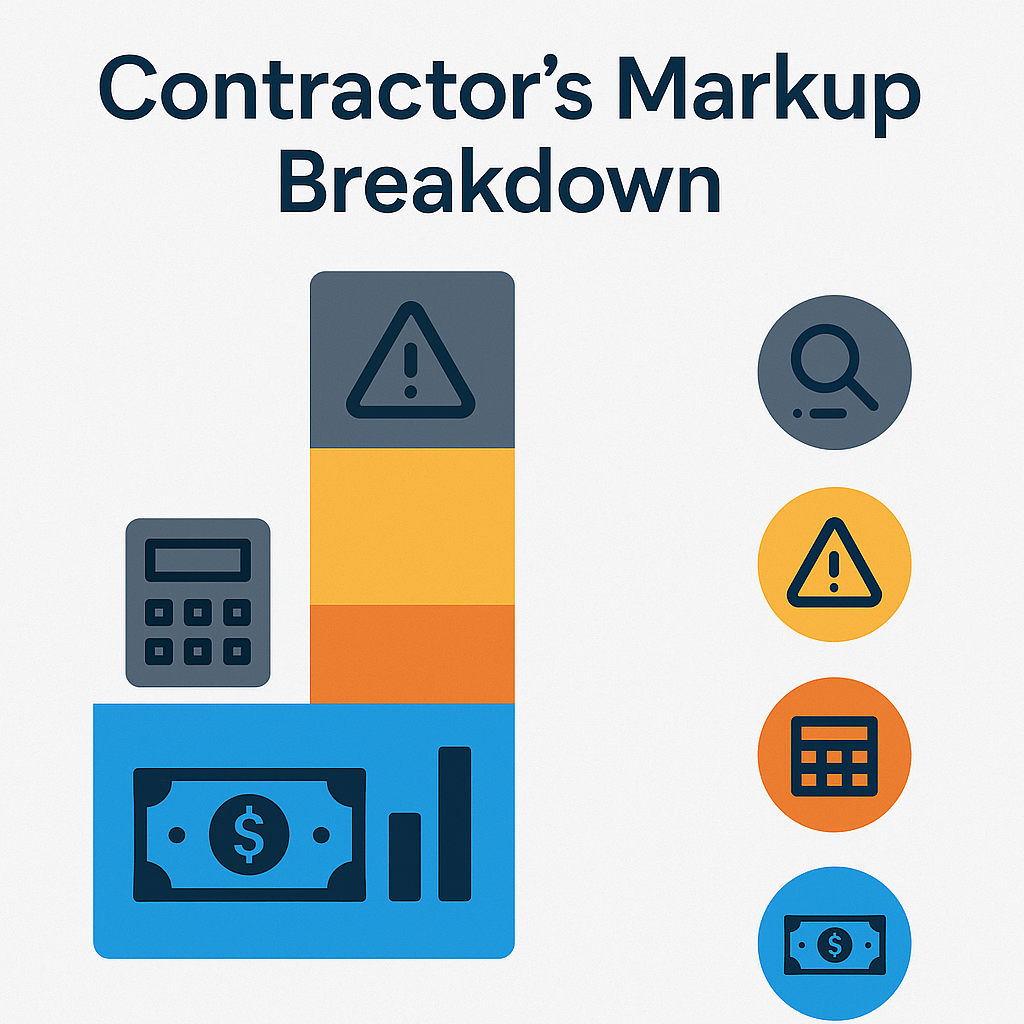
When a contractor quotes a 15% markup, they’re not pocketing that entire amount. A big chunk goes toward indirect costs like:
- Project management overhead: Salaries for supervisors, engineers, and admin staff.
- Site expenses: Temporary power, water, security, and even porta-potties.
- Equipment costs: Rentals, fuel, maintenance, and depreciation.
- Compliance costs: GST, TDS, insurance, and statutory deductions.
The truth? Poor tracking of these costs can blow your markup out of the water. You think you’re making 15%, but your actual margin might be closer to 5% — or worse, negative.
Example: The ₹10 Lakh Project That Loses ₹2 Lakh
Imagine you quote ₹10 lakh for a project, with a planned markup of 15%. Based on this, you expect to make ₹1.5 lakh in profit. However, indirect costs like project management overhead and compliance end up eating ₹1 lakh. Not to mention, procurement overruns cost another ₹50,000 due to price drift. Your "profit" now stands at ₹0 — or worse, you’re in the red. This scenario is far too common.
Hidden Cost #1: Subcontractor Overruns
One of the biggest culprits behind disappearing margins is subcontractor costs. Let’s say you hire a subcontractor for ₹10 lakh worth of work. If their actual progress isn’t measured properly, you could end up overpaying without realizing it.
Common Scenario:
- The subcontractor submits a bill for 80% completion.
- Your team approves it without verifying the actual work done.
- The true progress? Maybe 60%.
That 20% overpayment? It’s coming straight out of your margins. Multiply this mistake across five subcontractors, and you’re hemorrhaging money.
Actionable Step: Implement systems that tie payments to verified progress. Tools like JobNext’s subcontractor management module enforce this by requiring approved measurement sheets before payments are issued.
Case Study: A ₹50 Lakh Project Saved ₹5 Lakh
A mid-sized contractor in Delhi adopted JobNext to link subcontractor payments to verified progress. On a ₹50 lakh residential project, they discovered discrepancies that would have led to overpayments of ₹5 lakh. By catching and avoiding these errors, the project stayed profitable.
Hidden Cost #2: Procurement Chaos
Ever heard of "procurement drift"? It’s when your material costs start creeping up compared to your original estimates. Maybe you budgeted ₹1,200 per ton for steel, but by the time you place the order, it’s ₹1,300. Or worse, you’re forced to pay even higher because the site ran out and had to buy locally.
Example: Steel Price Fluctuations
Steel prices in India are notoriously volatile. Between January and May 2023, prices ranged from ₹55,000 to ₹65,000 per ton. If you’re not locking in rates early, these fluctuations can destroy your budget.
Actionable Step: Adopt structured procurement workflows. For example, JobNext’s MR → RFQ → PO chain ensures that:
- Material requests are tracked from the site.
- Vendor quotes are compared systematically.
- POs are issued only after approval.
This workflow saved one contractor ₹75,000 on a ₹30 lakh project simply by catching inflated vendor quotes and negotiating better rates.
Hidden Cost #3: BOQ Margin Erosion
Here’s a stat that might shock you: most contractors lose 10-15% of their project margins to BOQ (Bill of Quantities) errors. These errors usually show up as:
- Underquoted rates because the estimator missed a critical cost.
- Scope changes that weren’t captured in updated BOQs.
- Procurement costs exceeding the original estimates.
Real-Life Example: Underquoting Disaster
One contractor quoted ₹5,000 per cubic meter for concrete but failed to factor in transportation costs. By the end of the project, they had lost ₹3 lakh on this single BOQ line item.
Actionable Step: Use weekly BOQ Margin reports. JobNext offers these as part of its project monitoring tools. They flag negative-margin items early, so you can fix problems before they spiral out of control.
How to Price Markups Without Killing Margins
A good contractor markup formula should include:
- Direct Costs: Labor, material, equipment, and subcontractor costs.
- Overheads: Site expenses, compliance costs, and indirect salaries.
- Risk Margin: A buffer for unexpected costs (5-10% is common).
Decision Framework: Calculating Markup
| Cost Type | Example | Markup Applied |
|---|---|---|
| Direct Labor Costs | ₹12 lakh | +10% |
| Materials | ₹8 lakh | +15% |
| Equipment Rentals | ₹2 lakh | +10% |
| Subcontractors | ₹10 lakh | +10% |
| Overheads | ₹5 lakh | +5% risk margin |
| Total | ₹37 lakh | 15% markup |
But here’s the kicker: if you’re not tracking indirect costs properly, you can’t price your markup accurately. This is where systems like JobNext shine. Its Estimate-based Quote method allows you to break down costs into labor, material, plant, subcontractor, and overhead. You can then apply a transparent markup percentage.
How AI Estimation Can Help
Manual estimation is another common weak spot. Flipping through rate books or relying on outdated spreadsheets can leave you with incorrect costs. AI tools like EstimateNext cut this process down to minutes. These tools ensure your rates are accurate and up-to-date, giving you confidence in your bids.
Case Study: 78,000 Rates Matched in Seconds
A contractor bidding for a ₹100 crore government project used EstimateNext to verify rates. The tool flagged outdated prices for steel and cement, saving them ₹15 lakh in potential losses during procurement.
FAQs
Q: How much markup do general contractors typically charge? A: Most GCs charge 10-20%. However, the actual profit margin after covering indirect costs is usually much lower.
Q: How can I justify my markup to clients? A: Break down your costs transparently. Include direct costs, overheads, and a reasonable risk margin. Clients are more likely to accept a detailed explanation than a vague percentage.
Q: What’s the best way to track project margins? A: Use tools like JobNext to monitor BOQ margins and subcontractor progress in real time. Weekly reports can highlight issues before they spiral.
Q: Can AI tools really improve estimation accuracy? A: Yes. Tools like EstimateNext cut down manual errors and ensure rates are accurate, saving contractors time and money.
Q: What’s the most common hidden cost contractors overlook? A: Subcontractor overruns due to poor measurement tracking. It’s a silent killer of margins.
Key Takeaways
- Most contractors charge 10-20% markup, but hidden costs like subcontractor overruns and procurement drift can destroy your margins.
- Tools like JobNext help track costs in real time, preventing margin erosion.
- AI-powered estimation tools like EstimateNext can save hours and improve pricing accuracy.
Call to Action: Stop losing margins to hidden costs. Discover JobNext today →
Learn more at EstimateNext