The Real Reason Contractors Bleed Margins Before the First Brick
Every contractor has been there. You submit a bid, confident in your numbers. Then the project starts, and suddenly you're scrambling to cover costs that weren't in the estimate. What happened? Nine times out of ten, it comes back to takeoff errors.
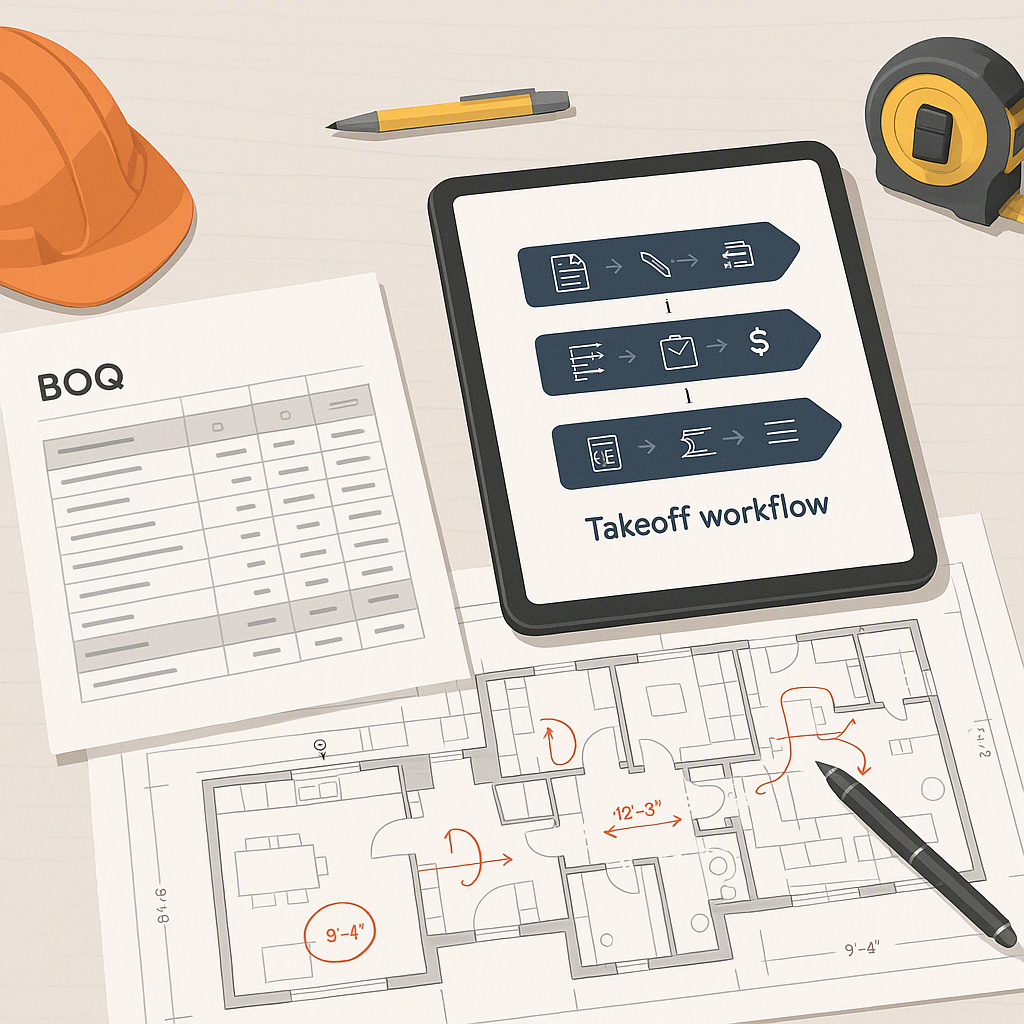
Takeoffs are where most contractors lose margins before a project even begins. Missed quantities, wrong units, or outdated rate assumptions—these errors silently bleed profits. And manual processes aren't helping. I've seen estimators spend 40 hours flipping through rate books and marking up PDFs, only to miss critical items. Sound familiar?
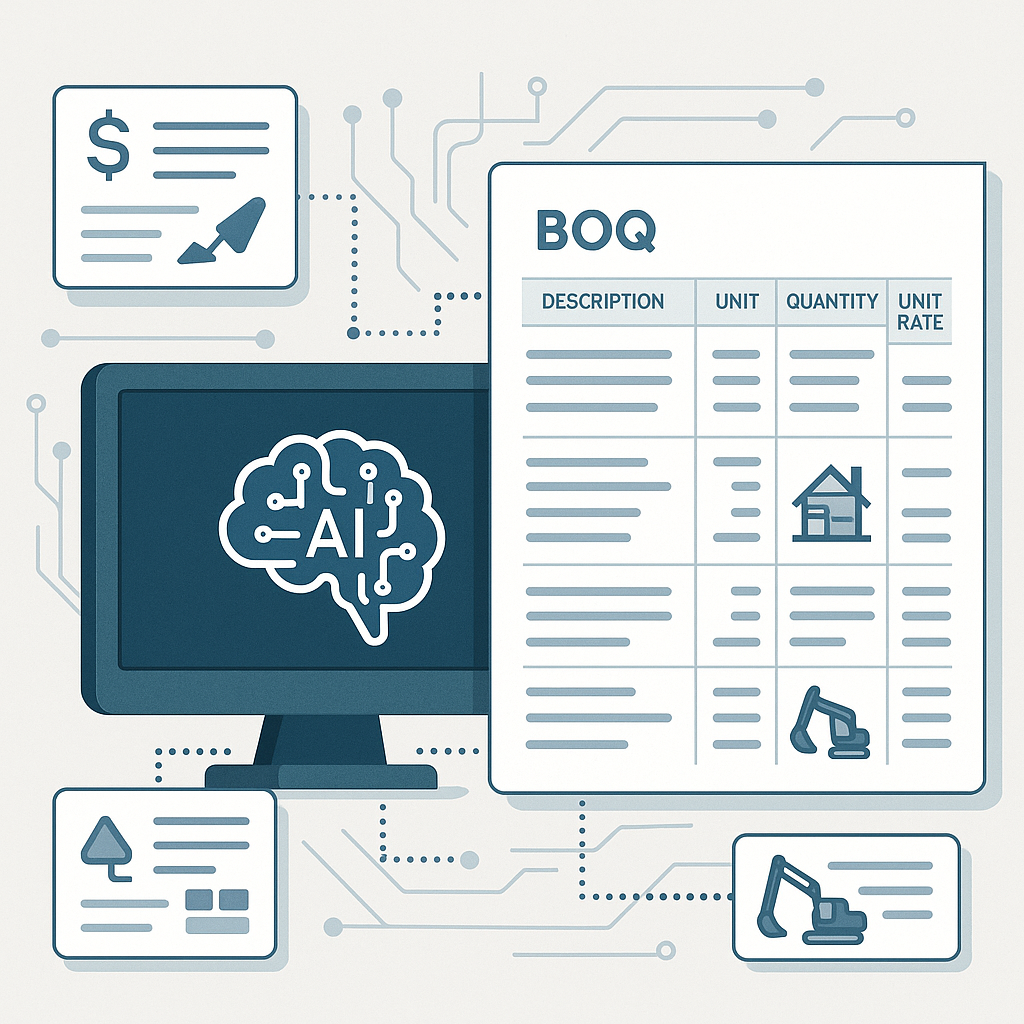
This is where AI-powered takeoff tools come in. They promise faster, more accurate results. But here's the catch: AI is only as good as its training data.
Why Training Data Matters More Than You Think
AI isn't magic. It learns from examples. If the examples are bad—outdated BOQs, inconsistent unit rates, or incomplete drawings—the AI won't perform well. Garbage in, garbage out.
For contractors, this means your AI tool needs to be trained on clean, comprehensive datasets. It should understand:
- Regional Differences in Rates: Costs vary widely across regions. For example, the cost per square foot in Maharashtra, India, is vastly different from that in GCC countries.
- Trade-Specific Nuances: MEP (mechanical, electrical, plumbing) takeoffs differ significantly from civil works. A good AI tool should account for these differences.
- Historical Project Patterns: AI should understand typical wastage percentages for materials like concrete or steel based on past projects.
Without this, even the best AI won't match the accuracy of a sharp estimator. But when done right? AI can process 78,000+ rates in seconds, flagging discrepancies you'd never catch manually.
Example: The Importance of Regional Data
Imagine you're working on a residential project in Dubai. The cost of concrete is heavily influenced by local supply and demand, logistical challenges, and even climate factors. A tool trained on U.S. data might assume a wildly inaccurate rate, leading to significant under- or overestimation.
In contrast, a well-trained AI tool like JobNext understands these regional nuances and adjusts calculations accordingly. This ensures you’re working with numbers that reflect real-world conditions, not generic assumptions.
Practical Example: Estimating with JobNext
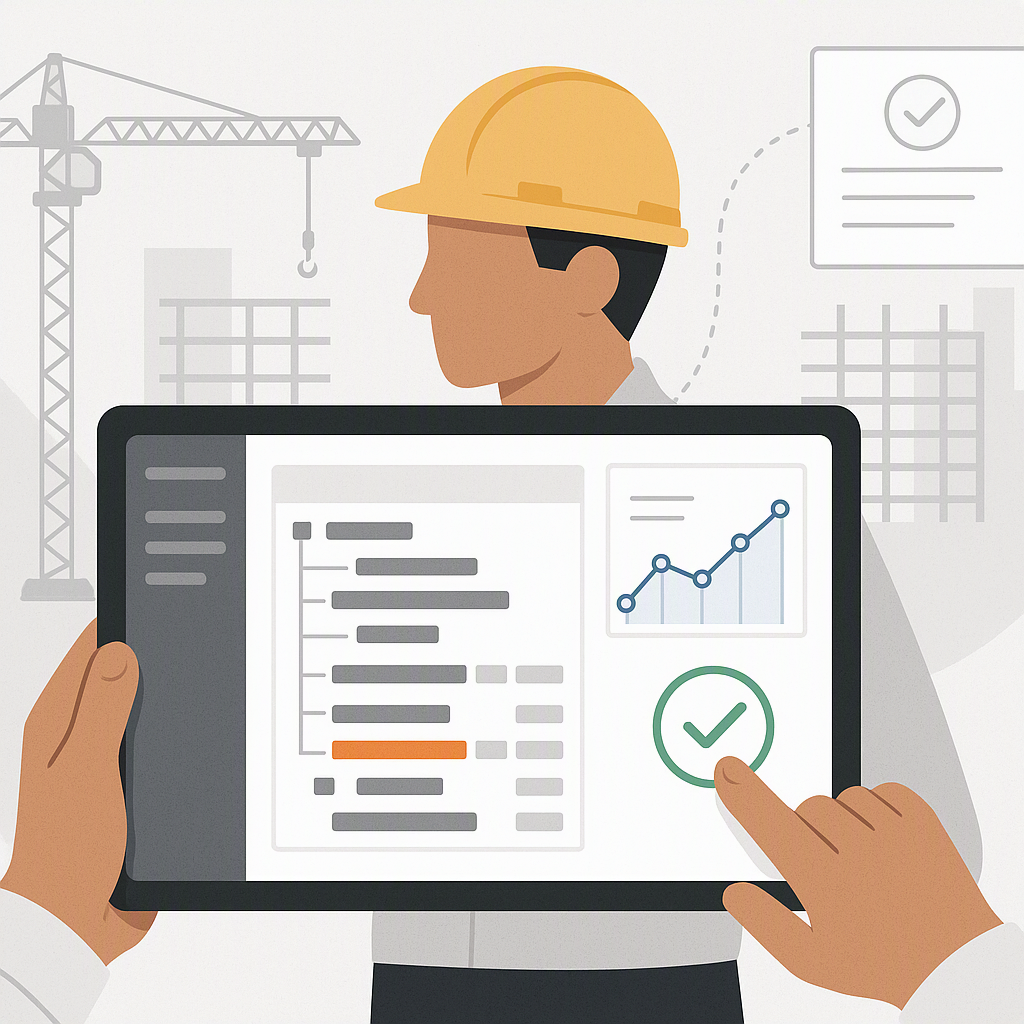
Let’s make this concrete. JobNext, a contractor ERP, integrates AI-powered analytics directly into its estimation workflows. Here’s how it works:
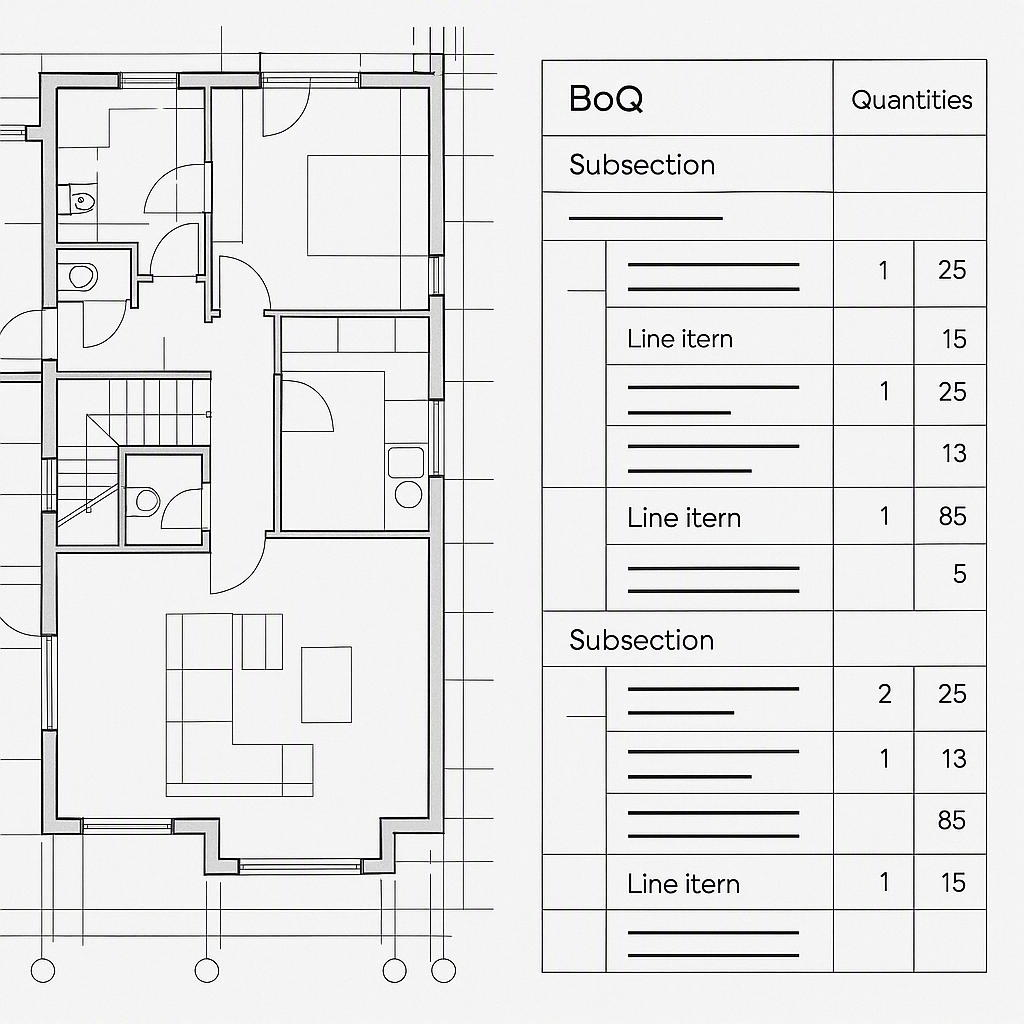
- Data-Driven Estimates: When you upload a BOQ, the system cross-references it against historical data, approved budgets, and regional rates.
- Error Detection: If a unit rate looks off (e.g., ₹1,200/m3 instead of ₹12,000/m3 for concrete), the AI flags it immediately.
- Training Feedback Loops: Every estimate you finalize improves the AI’s accuracy for future takeoffs.
A Real-World Case Study
One contractor I worked with used JobNext to standardize their takeoff process across five projects. Before adopting AI, their estimators manually reviewed BOQs and cross-checked rates, a process that took 40-50 hours per project.
After implementing JobNext, they reduced takeoff errors by 15% in the first month. On a single mid-size project, this translated to ₹3 lakh saved in corrected quantities. Over a year, the savings across their portfolio amounted to over ₹40 lakh.
The Hidden Costs of Ignoring AI Training Data
You might be thinking, "My team has been doing takeoffs manually for years. Why switch?" Here’s why:
1. Time Wasted
Manual takeoffs take 40 hours per bid. AI can do it in 10 minutes. Multiply that over 10 projects, and you’re saving 390 hours—or nearly 10 full workweeks.
2. Missed Margins
A single missed item in the BOQ can cost ₹5 lakh or more on mid-size projects. If you’re running multiple projects simultaneously, these errors compound quickly.
3. Scaling Problems
As your project count grows, manual processes simply won’t keep up. AI scales effortlessly, processing thousands of rates and line items across multiple projects simultaneously.
Example: The Cost of a Missed BOQ Item
Let’s say you're building a multi-story commercial complex. You forget to account for the cost of fire-rated ductwork in your BOQ. On a 10-story building, this oversight could cost ₹10-15 lakh—or more.
An AI-powered tool trained on comprehensive datasets would catch this oversight during the takeoff process, saving you from a costly mistake.
How to Vet an AI Takeoff Tool’s Training Data
Not all AI tools are created equal. Here’s what to ask when evaluating your options:
1. Source of Training Data
Ask if the AI is trained on real-world construction data or generic datasets. Tools like EstimateNext use actual BOQs and rate libraries from contractors, ensuring their models are grounded in the realities of construction.
2. Regional Customization
Does the tool cover your market? A product trained on U.S. data won’t understand GCC-specific rate structures or the nuances of Indian construction.
3. Feedback Mechanisms
Can you improve the AI by correcting errors? Tools like JobNext allow users to provide feedback, which trains the AI to become more accurate over time.
4. Accuracy Benchmarks
Ask for numbers. What’s the tool’s accuracy on past projects? Vendors should back their claims with case studies and measurable results.
Comparison Table: Manual vs. AI Takeoffs
| Aspect | Manual Takeoffs | AI-Powered Takeoffs |
|---|---|---|
| Time Required | 40 hours per project | 10 minutes per project |
| Error Rate | 10-20% | <5% (with good training) |
| Scalability | Limited | Unlimited |
| Cost Savings | Minimal | Significant |
| Consistency | Varies by estimator | High |
Wrapping Up: Don’t Ignore the Data Behind the AI
AI takeoff tools can transform your estimation process—if they’re trained well. The best tools aren’t just fast; they’re accurate, reliable, and adaptable to your specific needs. But remember: the quality of the AI comes down to the quality of its training data.
If you’re dealing with takeoff errors that kill your margins, platforms like JobNext and EstimateNext can help. See how AI takeoffs save time and money →
FAQ
1. How accurate are AI takeoffs compared to manual methods? AI tools like EstimateNext claim up to 95% accuracy, depending on the quality of training data. That’s a significant improvement over manual processes, which often have error rates of 10-20%.
2. Can AI handle complex BOQs with multiple trades? Yes, but only if the tool is trained on multi-trade datasets. JobNext, for example, categorizes resources by trade and cost factor (labour, material, machine, etc.).
3. What’s the ROI of switching to AI-powered takeoffs? Most contractors see payback within the first few projects. One MEP contractor reported saving ₹10 lakh+ on just three projects after adopting AI.
4. Do AI takeoff tools replace estimators? No. AI tools are designed to assist estimators, not replace them. They handle repetitive tasks and error-checking, allowing estimators to focus on strategic decisions.
5. Are AI takeoff tools difficult to implement? Most modern tools are user-friendly and integrate easily with existing workflows. Vendors often provide training and support during the onboarding process.
If you’re tired of losing margins to takeoff errors, JobNext can help. Start fixing the problem today.
Learn more at EstimateNext