The Problem: Manual Estimation Is Bleeding Your Margins
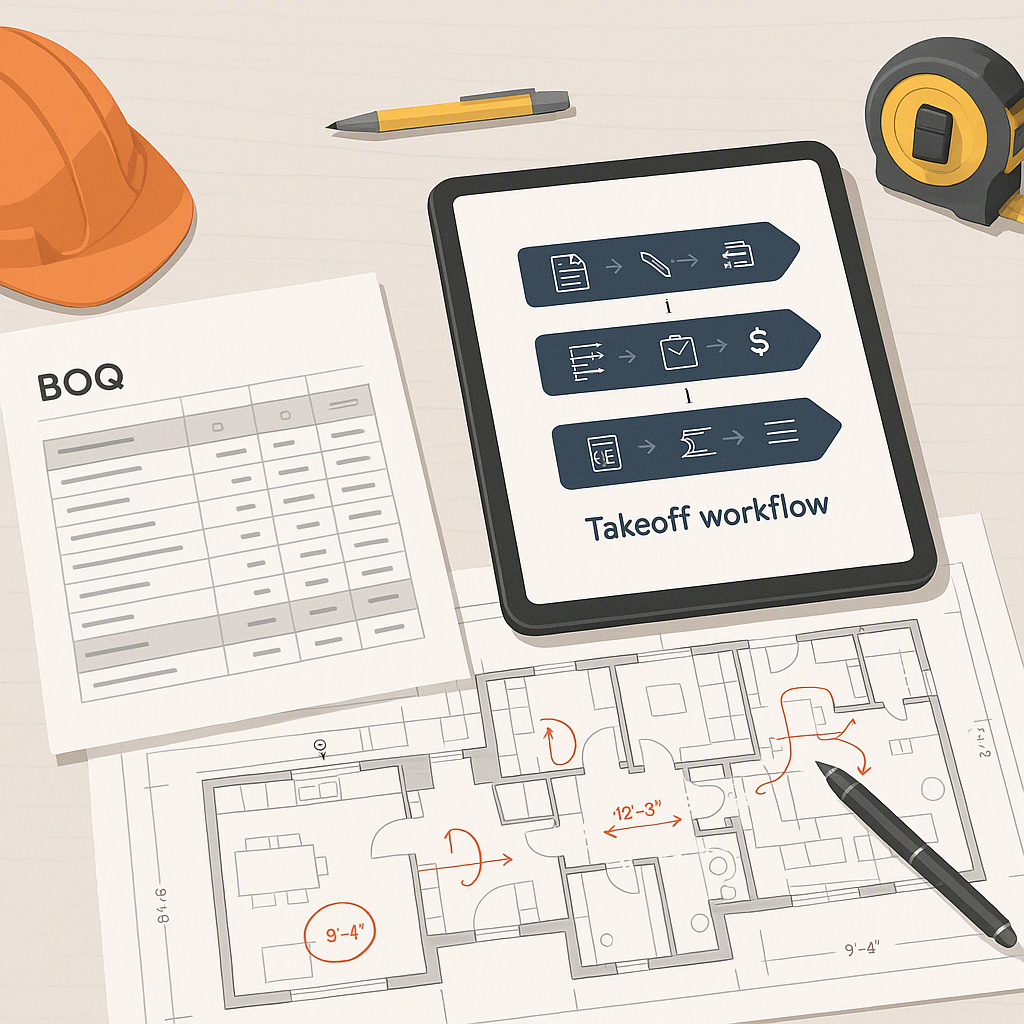
Let’s be honest. Traditional construction estimation is a grind. Flipping through rate books, manually calculating BOQs (Bill of Quantities), and cross-checking material costs—it’s all slow, prone to errors, and a massive time sink. Worse, each mistake costs you money.
In my experience, one missed line item can turn a winning bid into a nightmare project. I've seen it happen—a contractor underestimating excavation costs by 15% because they relied on outdated rates. The result? A quarter of their profit margin wiped out before they even broke ground. If you’re running multiple concurrent projects, these errors compound fast.
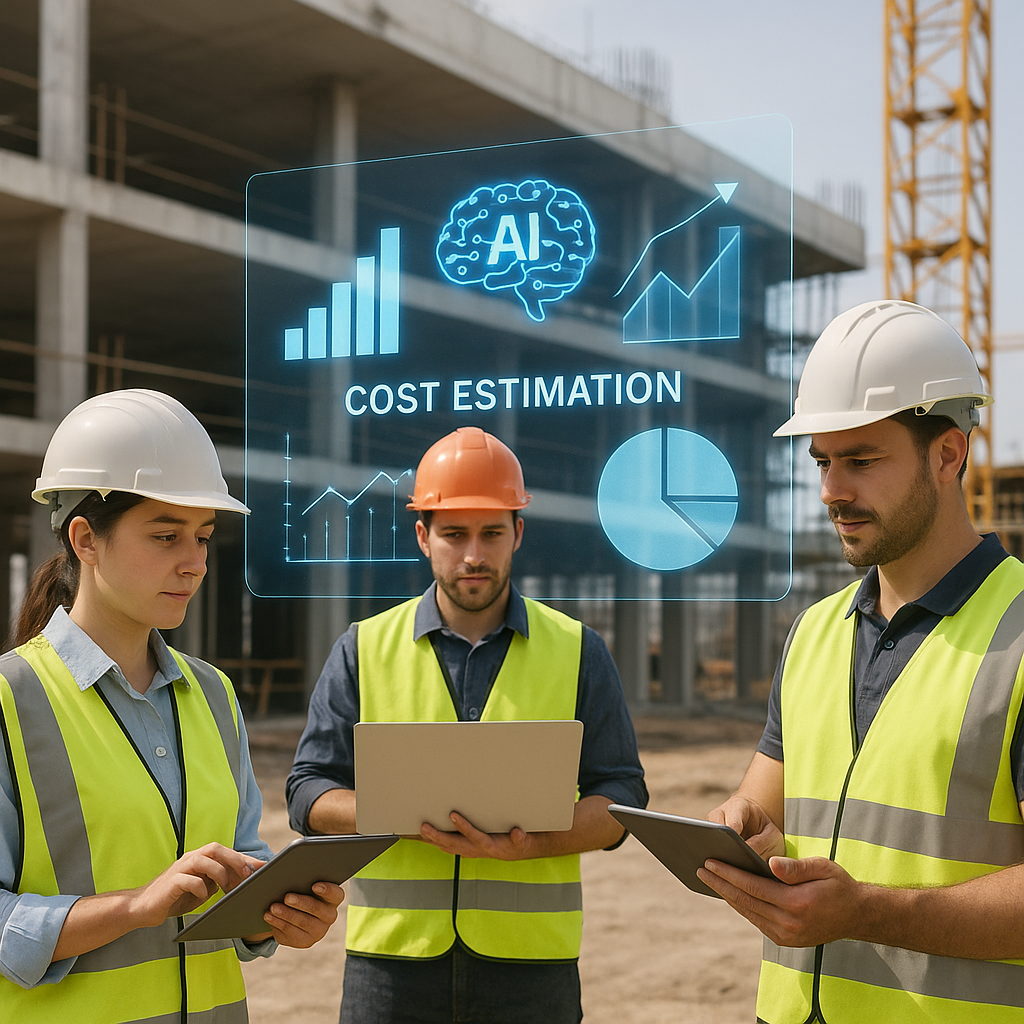
But here’s the thing: You don’t have to keep doing things the hard way. AI estimation tools are changing the game, letting contractors automate the most time-consuming parts of preconstruction. The result? Faster bids, fewer errors, and better margins.
Why Manual Estimations Are Costing You More Than You Think
Before diving into how AI can help, let’s take a closer look at why manual estimation is such a problem.
-
Human Errors Are Inevitable: No matter how experienced your team is, manual processes are prone to mistakes. A single missed line item in a BOQ or an incorrect material cost can snowball into significant financial losses. For example, a 2019 study by PlanGrid and FMI found that rework caused by poor data and miscommunication costs the construction industry over $31 billion annually in the U.S. alone.
-
Time Is Money: On average, estimating a mid-sized project manually takes 20-40 hours. That’s a full workweek spent on tedious calculations, cross-referencing rates, and proofreading BOQs. Multiply that by 10-20 bids per month, and you’re looking at hundreds of hours that could be spent on higher-value tasks like business development or project planning.
-
Outdated Rate Libraries: Many businesses rely on static rate sheets that aren’t updated frequently enough to reflect current market conditions. For instance, during the pandemic, material prices like steel and lumber fluctuated wildly—contractors relying on outdated rates often faced significant cost overruns.
-
Lost Opportunities: Slow bidding processes mean you’re limited to fewer tenders. The construction industry is competitive, and missed deadlines can mean losing contracts to faster competitors.
These issues aren’t just minor inconveniences—they’re bleeding your margins dry. That’s where AI comes in.
How Does AI Estimate Construction Costs?
AI-based construction estimating tools work by analyzing historical data, rate libraries, material cost trends, and project-specific variables. They use machine learning algorithms to predict costs with greater accuracy than manual methods. This is a massive leap forward from relying on gut instincts or static rate sheets.
Here’s how it works:
-
Rate Matching: AI tools scan through thousands of rates in seconds to find the most relevant ones for your bid. Tools like EstimateNext can match up to 78,000 rates in no time, saving your estimators hours of manual effort.
Example: A contractor bidding for a 10-story residential project used an AI tool to identify region-specific rates for reinforced concrete. The tool not only found the lowest cost suppliers but also flagged potential shortages due to upcoming holidays, enabling them to plan ahead.
-
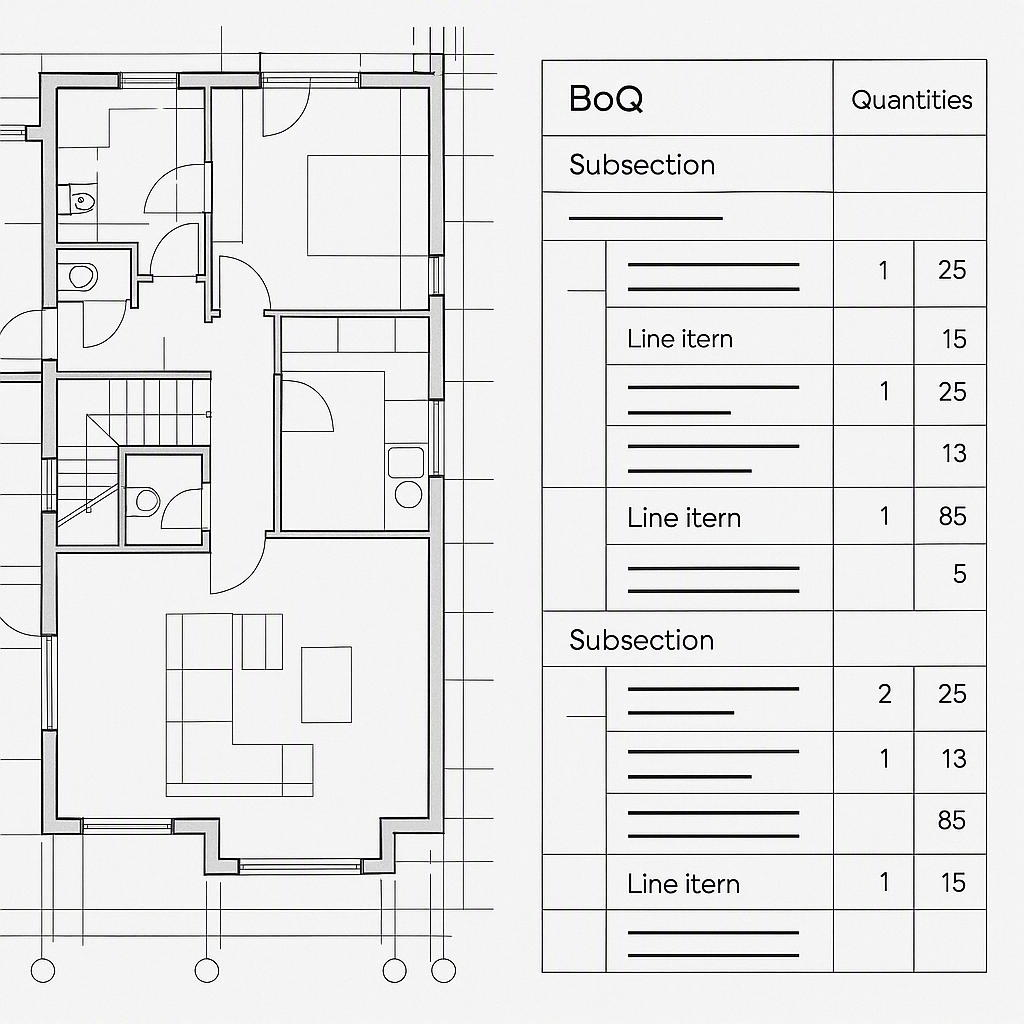
BOQ Analysis: AI can break down complex BOQs into labor, material, plant, and subcontractor cost components. For example, JobNext’s Estimate-based Quote method uses bottom-up costing for precise calculations.
Actionable Step: Ensure your BOQ templates are standardized. AI tools perform best with clean, structured data. If your BOQs are inconsistent, spend time standardizing them first.
-
Real-Time Adjustments: AI tools factor in dynamic elements like regional cost variations, labor shortages, or material price fluctuations. This is particularly useful for contractors working in multiple locations, such as across India and GCC.
Comparison:
Feature Manual Estimation AI Estimation Rate Updates Annual updates at best Real-time updates Speed 20-40 hours per bid 1-2 hours per bid Error Rate Moderate to high Low (algorithm-based checks) Scalability Limited by team size Scales with minimal effort
A Practical Example: Bottom-Up Costing with JobNext
Let’s say you’re estimating a complex MEP (Mechanical, Electrical, and Plumbing) project. You need precision—every BOQ line item must account for labor, material, and equipment costs without leaving room for error.
With JobNext’s Estimate-based Quote feature, you start by creating a non-budget estimate. Why non-budget? Because it lets you separate your project budget from the initial bid, avoiding any impact on your overall financial planning. You input quantities, rates, and resources against BOQ lines, and the system calculates totals automatically.
Key Benefits:
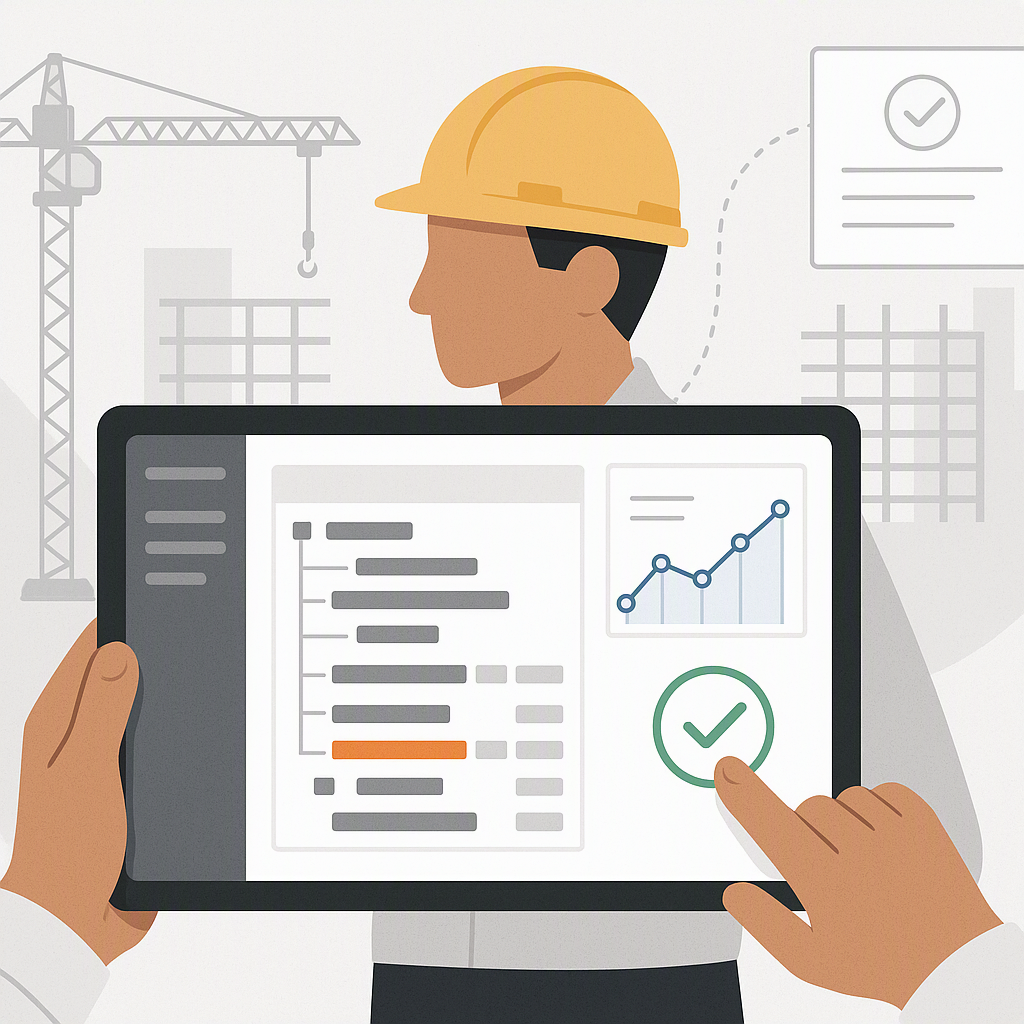
- Approval Workflows: JobNext’s workflow ensures every estimate goes through proper review before finalization. No more second-guessing if you’ve missed something—every line item is locked in and validated.
- Reduced Rework: Contractors report up to a 25% reduction in rework by using automated estimation tools that catch errors early.
The Real Numbers: What AI Saves You
Let’s break it down. Manual estimating can take 20-40 hours per bid, depending on project complexity. That’s a full workweek wasted on one task. AI estimation tools, on the other hand, cut this process down to mere minutes.
Imagine the impact. If your team handles 10 bids per month:
| Process | Time Per Bid | Total Time (Monthly) | Total Cost (₹)** |
|---|---|---|---|
| Manual Estimation | 30 hours | 300 hours | ₹1,20,000 |
| AI Estimation | 1 hour | 10 hours | ₹4,000 |
**Assuming ₹400/hour labor cost.
That’s a savings of ₹1,16,000 per month—or ₹13,92,000 per year—on labor alone. And that doesn’t even account for the additional savings from reduced errors and optimized material procurement.
Common Concerns About AI Estimation
-
“What if AI gets it wrong?” AI isn’t infallible, but modern tools like JobNext enforce budget discipline by validating every material purchase, subcontractor payment, and equipment hire against approved budgets. If the AI flags a mismatch, you know there’s an issue before it spirals out of control.
-
“Does this replace human estimators?” Not at all. AI is a tool—not a replacement. It handles the heavy lifting, freeing up your team to focus on strategy, client relationships, and fine-tuning the bid.
-
“Is this worth the investment?” The short answer: yes. AI tools help you win more bids, reduce costs, and improve profitability. If your margins are already tight, can you afford not to know when costs are slipping?
-
“How long does it take to implement?” Most AI tools are cloud-based and require minimal setup. You can typically start generating estimates within a week after uploading your data and rate libraries.
-
“What if my rate libraries are outdated?” AI tools often integrate directly with standardized rate schedules and allow for quick updates. Spend time cleaning up your rate library to maximize accuracy.
The Future of AI in Construction Estimation
AI isn’t just about saving time—it’s about staying competitive. Clients today expect faster bids and detailed breakdowns. And they’re willing to pay a premium for accuracy. The contractors that embrace AI now will be the ones dominating tenders in the next decade.
But it’s not all smooth sailing. AI tools require clean data to function effectively. If your rate libraries are messy or outdated, the algorithm won’t deliver accurate results. That’s why tools like JobNext integrate directly with standardized rate schedules and allow for easy updates.
Decision Framework: Is AI Right for You?
| Question | Yes (Go for AI) | No (Stick to Manual) |
|---|---|---|
| Do you handle more than 5 bids per month? | Saves significant time and resources | Manual may still be manageable |
| Are you struggling with outdated rate libraries? | AI updates rates in real time | Ensure your team updates rates |
| Do you operate across multiple regions? | AI adjusts for regional variations automatically | Manual methods might suffice |
| Have you lost tenders due to slow bids? | AI speeds up the process | Speed may not be your bottleneck |
Call-to-Action
If you’re tired of losing margins to slow, error-prone estimation, it’s time to make the switch. Try JobNext → for real-time cost control and AI-powered estimating that works.
Learn more at EstimateNext