The Markup Problem Nobody Talks About
Most contractors think markup is straightforward. Add 10%, 15%, or 20% to your costs, and you’re golden, right? Wrong. That mindset is quietly eroding your margins. Why? Because markup and profit margin aren’t the same—and if you don’t calculate markup correctly, you could either overprice yourself out of a bid or, worse, underprice and bleed cash.
Let’s break it down.
Markup ≠ Profit Margin
Here’s where most contractors get tripped up. Say your total project cost (labor, materials, equipment, and overhead) is ₹10,00,000. You want a 20% profit margin. How much should you charge? If you said ₹12,00,000 (₹10,00,000 + 20%), you’re already losing money.
Here’s why:
Your markup needs to account for the fact that your profit is a percentage of the final selling price, not the cost. The correct formula to achieve a 20% margin is:
Selling Price = Cost ÷ (1 - Desired Margin)
In this case:
₹10,00,000 ÷ (1 - 0.20) = ₹12,50,000
That extra ₹50,000 is the difference between breaking even and actually hitting your profit target. Small mistake, huge impact.
Actionable Step: Use the Correct Formula Every Time
A lot of contractors use outdated or oversimplified methods to calculate markup. Instead, memorize or bookmark the formula above. If math isn’t your strong suit, tools like JobNext can automate this calculation for you.
Real-World Example: The ₹50,000 Mistake
A contractor in New Delhi recently shared how they lost ₹2,00,000 on a ₹50,00,000 project. They had applied a flat 20% markup instead of calculating it based on the selling price. The result? A deal that looked profitable on paper but left them scrambling to cover costs when material prices increased mid-project.
Why Manual Markup Calculations Fail
Contractors juggling multiple projects often rely on spreadsheets or mental math to calculate markup. That’s risky. A misplaced decimal or forgotten overhead cost can completely skew your bid. Plus, manual methods don’t account for hidden costs like idle equipment or scope creep.
Actionable Step: Audit Your Current Process
If you’re still using a spreadsheet to estimate costs, ask yourself these questions:
- Are you consistently factoring in overhead and indirect costs?
- Do you have a process to validate the rates you’re using?
- How often do you review your bids after project completion to identify errors?
Case Study: The Spreadsheet That Cost ₹1,00,000
A mid-sized contractor in Bengaluru relied on a spreadsheet they’d been using for years. One day, a cell formula broke, and they underpriced a project by ₹1,00,000. The error went unnoticed until it was too late. Switching to an automated tool like JobNext could have flagged the discrepancy immediately.
A Real-World Example
Let’s say you’re bidding on an HVAC installation project with the following costs:
| Cost Component | Amount (₹) |
|---|---|
| Labor | 3,00,000 |
| Materials | 4,00,000 |
| Equipment | 1,50,000 |
| Subcontractors | 75,000 |
| Overhead | 75,000 |
| Total Cost | ₹10,00,000 |
You want a 25% profit margin. Using the formula:
₹10,00,000 ÷ (1 - 0.25) = ₹13,33,333
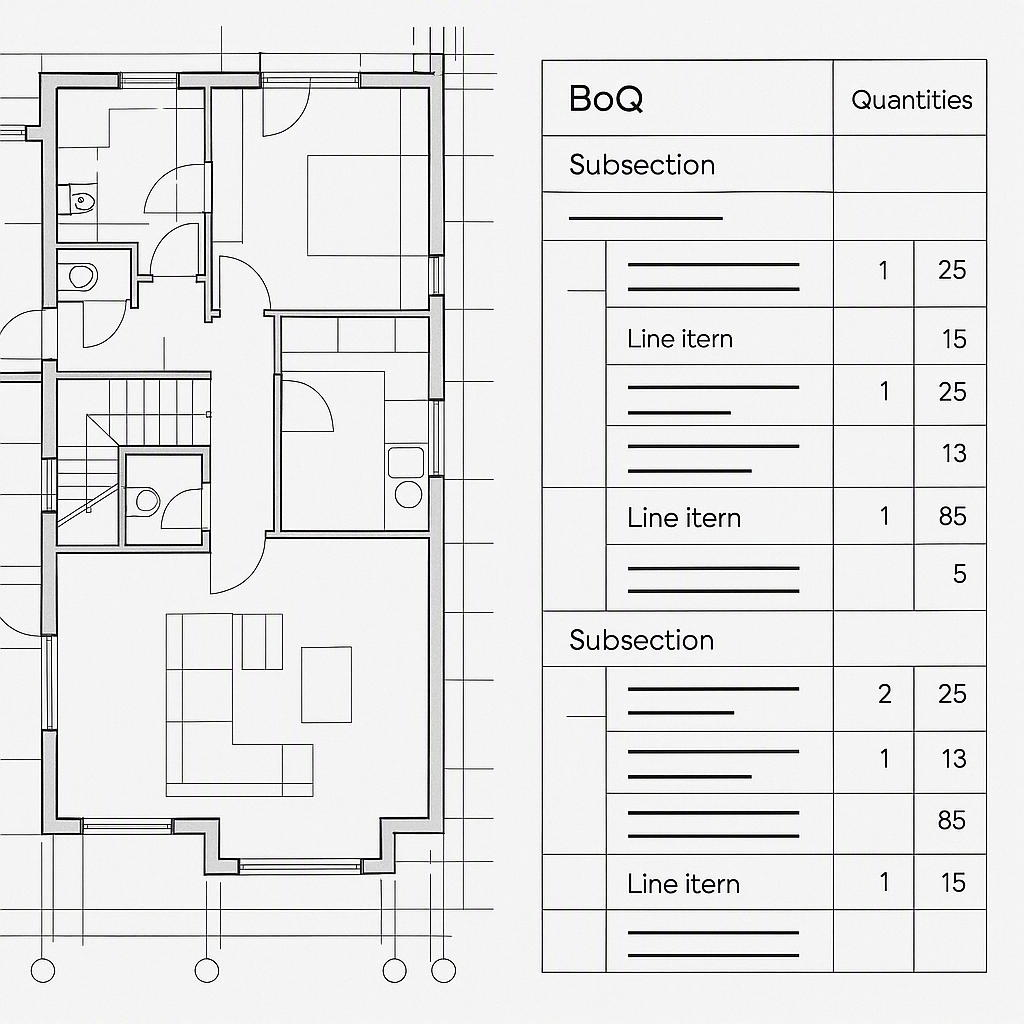
With JobNext, you’d enter these costs into the Estimate module. It divides them by BOQ items, checks for resource validation errors, and calculates the markup automatically. When a client requests a discount or scope changes mid-project, you can adjust the markup in seconds.
Comparison Table: Manual vs. Automated Markup Calculations
| Feature | Manual Calculation | Automated Tools (e.g., JobNext) |
|---|---|---|
| Accuracy | Prone to errors | Highly accurate |
| Time Consumption | Time-intensive | Quick and efficient |
| Hidden Cost Tracking | Often overlooked | Flagged automatically |
| Mid-Project Adjustments | Difficult to recalculate | Easy to update |
The Hidden Costs Killing Margins
Even with perfect markup, some costs can sneak in and destroy your profitability:
Idle Equipment
Machines sitting unused still depreciate. For example, a ₹50,00,000 excavator losing 10% of its value annually costs you ₹5,00,000 even if it’s idle. JobNext’s equipment lifecycle management tracks utilization and flags underperforming assets, helping you allocate resources better.
Scope Creep
Additional work often goes unbilled. For instance, a contractor in Mumbai lost ₹75,000 on a residential project because they didn’t document extra hours spent on unforeseen plumbing issues. The BOQ Margin Report in JobNext highlights items with negative margins weekly, so you can fix issues before they spiral.
Unbilled Items
RA Bills or milestone-based billing often miss small items. For example, screws, adhesives, or fuel costs may seem minor but can add up. JobNext’s six billing methods ensure every cost is accounted for.
AI-Powered Rate Accuracy
Another margin killer? Using outdated rates. A 2023 report by Estimatenext.ai found that manual rate lookups waste hours and often result in errors. AI-powered rate matching tools slash lookup time from hours to seconds, ensuring you’re always working with accurate data.
Actionable Step: Update Rates Quarterly
If you’re not ready to invest in AI tools, at least set a calendar reminder to review and update your rates every quarter. This ensures you’re not relying on outdated costs.
FAQ
1. What’s the difference between markup and margin? Markup is the percentage you add to your cost to determine your selling price. Margin is the percentage of your selling price that’s profit. They’re related but not interchangeable. For example, a 25% markup on ₹10,00,000 results in a 20% margin.
2. How do I calculate markup for multiple BOQ items? Use a system like JobNext, which organizes costs by BOQ and applies markup at the item level. This ensures consistency and accuracy.
3. What’s the biggest risk of underpricing? Underpricing can lead to cash flow issues, especially in long-term projects. It also sets a precedent for clients to expect lower rates in the future.
4. Can AI really improve bid accuracy? Yes. AI tools like those from Estimatenext.ai reduce human error and speed up processes like rate matching and BOQ preparation.
5. Why should I care about idle equipment costs? Idle equipment still incurs costs like depreciation and maintenance. Tracking utilization ensures you’re not paying for machines that aren’t delivering value.
Takeaway: Precision Is Profitable
If you’re still using gut instinct or spreadsheets to calculate markup, it’s time to rethink your process. A small error in your bid can snowball into massive losses. Tools like JobNext don’t just automate calculations—they also guard against the hidden costs that bleed profits.
Ready to stop losing margins? Get started with JobNext today →
Learn more at EstimateNext