The Real Problem with Contractor Markups
Let’s cut straight to it: most contractors lose margins because they don’t calculate bid markups correctly. They either overestimate, pricing themselves out of the job, or underestimate, bleeding profits once the project starts. In both scenarios, it comes down to one thing—confusion between markup and margin.
Markup isn’t margin. For example, if your project costs ₹10,00,000 and you apply a 10% markup, the selling price is ₹11,00,000. However, your margin isn’t 10%; it’s only 9.1% (₹1,00,000/₹11,00,000). That gap might look trivial, but scale it across dozens of projects, and you’re looking at lakhs in lost revenue.
Fixing this starts with precise, bottom-up costing and an understanding of how to calculate markup the right way.
Bottom-Up Costing: The Foundation of Accurate Markups
Accurate bid markups depend entirely on accurate estimates. If your costs are off, your markup—even when calculated correctly—will still lead to surprises. That’s why bottom-up costing is critical. It involves breaking down project costs into five components:
- Labour - Calculate person-hours or person-days required for each task.
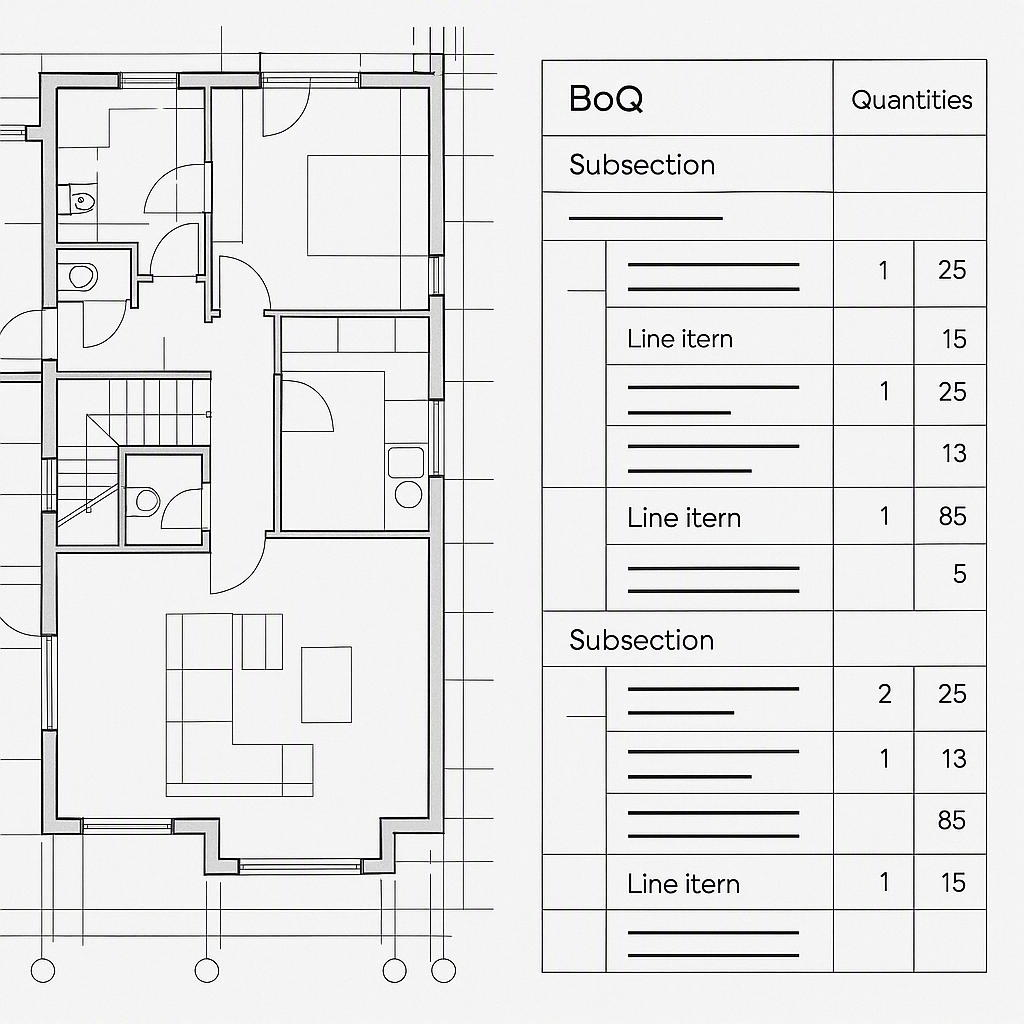
- Materials - Determine quantities required per BOQ (Bill of Quantities) line.
- Machines/Equipment - Calculate time-based usage costs for equipment.
- Subcontractors - Include costs per work package or deliverable.
- Overheads - Account for site expenses, permits, and indirect costs.
Example: A Real-World Breakdown
Imagine you're bidding for a ₹25,00,000 residential construction project. Here's how your costs might break down:
| Cost Component | Estimated Cost (₹) |
|---|---|
| Labour | ₹7,00,000 |
| Materials | ₹12,00,000 |
| Machines/Equipment | ₹3,00,000 |
| Subcontractors | ₹2,00,000 |
| Overheads | ₹1,00,000 |
| Total Costs | ₹25,00,000 |
Now imagine you miss a line item, such as a ₹50,000 expense for scaffolding and safety gear. That small oversight eats directly into your profit, especially if your markup is tight. Multiply this by 10 or 20 ongoing projects, and the risk of margin erosion skyrockets.
Tools That Simplify Bottom-Up Costing
Doing this manually is a nightmare. Small errors during estimation snowball into massive discrepancies during execution. Tools like JobNext simplify this process. Using their Estimate-based Quote method, you can build estimates by adding resources (labour, material, machines, etc.) directly against BOQ lines. This ensures every cost is accounted for before you even think about markup.
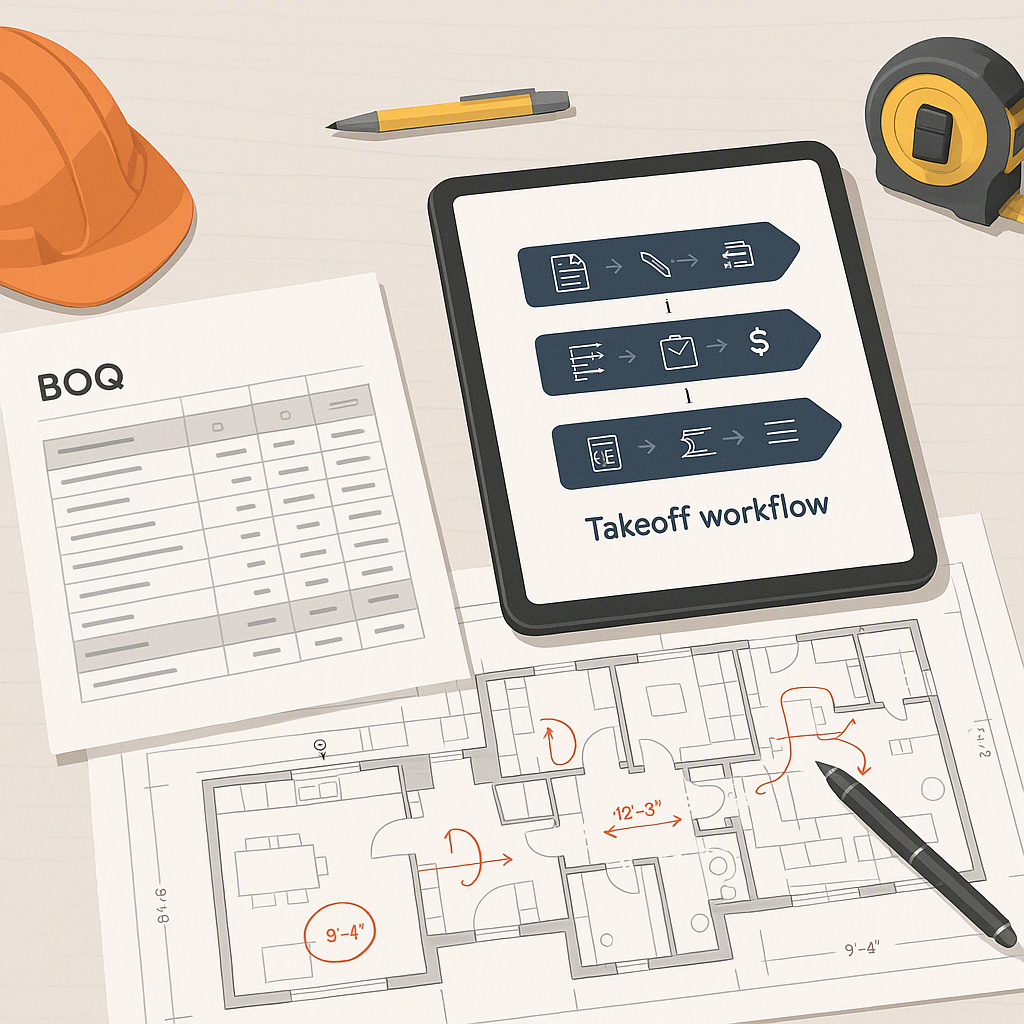
Their documentation explains the workflow step-by-step: estimate → approve → mark ready for quote → apply markup (source). By automating these steps, you reduce the likelihood of human error and save hours of manual work.
How to Calculate Bid Markup the Right Way
Once you’ve nailed down costs, calculating markup is straightforward. Here’s the formula:
Selling Price = Total Cost ÷ (1 - Desired Margin)
Example Calculation
Let’s say your project cost is ₹10,00,000 and you’re targeting a 20% margin. Using the formula:
Selling Price = ₹10,00,000 ÷ (1 - 0.20) = ₹12,50,000
Notice how this differs from simply adding a 20% markup? If you had applied a 20% markup, the selling price would’ve been ₹12,00,000, giving you only a 16.67% margin. That’s a ₹50,000 difference—real money left on the table.
Actionable Steps To Avoid Errors:
- Define Your Desired Margin: Decide your profit goals before bidding.
- Double-Check Cost Inputs: Ensure your bottom-up costing is accurate.
- Use a Calculator or Tool: Avoid mental math and use purpose-built software like JobNext or even Excel (with error-proof formulas).
- Review Historic Data: Look at past projects to benchmark realistic margins.
Catching Margin Erosion Before It Happens
Even the best-calculated markups won’t save you if costs spiral during execution. That’s why monitoring margins in real-time is non-negotiable.
A Case Study: Material Price Volatility
Imagine you’ve priced a project at ₹12,50,000 with a 20% margin. Midway through, you notice material costs have risen by 10% due to price volatility. Without intervention, your final margin could drop to 10-12%.
Tools to Mitigate Risk
Tools like JobNext’s BOQ Margin Report can help you catch these issues early. It compares contracted values against real-time costs (labour, material, plant, subcontractor, overhead) for each BOQ item. Negative-margin items are flagged immediately, allowing you to investigate and course-correct before the damage spreads (source).
Why Manual Processes Are Killing Margins
Still using spreadsheets for bid markups? You’re not alone. According to a 2023 McKinsey report, 78% of contractors rely on Excel for estimation. But manual processes carry major risks:
- Human Error - A single typo or formula mistake can skew your entire bid.
- Lack of Standardization - Different team members might use inconsistent methodologies.
- Time Drain - Hours spent cross-checking rates and recalculating margins.
Better Alternatives
AI-powered tools like EstimateNext automate rate lookups and takeoffs. Instead of flipping through rate books or PDFs, contractors can match 78,000 rates in seconds. This ensures faster, more accurate estimates and eliminates guesswork.
FAQs
1. Can I just use a flat 10% markup across all projects?
You can, but it’s risky. Different projects have different cost structures. A flat 10% might work for one project but leave you underpriced—or overpriced—on another. Always calculate markup based on precise costs and desired margins.
2. What’s the difference between markup and profit margin?
Markup is the percentage added to costs to determine the selling price. Profit margin is the percentage of the selling price that’s profit. They’re related but not interchangeable. For example:
- Markup Example: Add 20% to ₹10,00,000 costs → Selling price = ₹12,00,000.
- Margin Example: ₹2,00,000 profit ÷ ₹12,00,000 selling price = 16.67% margin.
3. How can I track margins during project execution?
Use tools like JobNext’s BOQ Margin Report to monitor profitability in real-time. It flags negative-margin items early so you can take corrective action.
4. Should I include contingencies in my markup?
Yes, but contingencies should be a separate line item during costing. This ensures transparency while protecting your margins from unforeseen risks.
5. What’s the biggest mistake contractors make when calculating markup?
The biggest mistake is confusing markup with margin. Many contractors assume applying a percentage markup directly translates to the same margin, which leads to underpricing.
Comparison Table: Markup vs. Margin
| Aspect | Markup | Margin |
|---|---|---|
| Definition | Percentage added to costs | Percentage of selling price as profit |
| Formula | Cost × (1 + Markup%) | Profit ÷ Selling Price |
| Effect on Price | Increases selling price | Determines profit level |
| Common Misstep | Assuming markup = margin | Not factoring in actual selling price |
The Bottom Line
Getting bid markups right isn’t just about math; it’s about discipline. Start with accurate bottom-up costing, apply the correct markup formula, and track margins throughout the project lifecycle. Tools like JobNext and EstimateNext can make this process faster and more reliable.
If you’re tired of losing margins due to manual errors or poor visibility, it’s time to modernize your process. Get started free →
Learn more at EstimateNext