The Hidden Margin Killer: Estimate vs Actual Variance
How often do you hear, "We underestimated this job" or "The actual costs were higher than expected"? Probably too often. Estimate vs actual variance is one of the most common reasons contractors bleed margins. And it’s not just a minor issue — in my experience, it can eat up 10-15% of your profit on a single project. Multiply this across multiple projects, and you could be looking at a devastating hit to your bottom line.
Let’s dig deeper: What causes these variances? Poor scope definition, underestimating material wastage, and ignoring real labor productivity rates are the usual suspects. But there’s another, bigger issue most contractors don’t talk about — they don’t track these variances in real-time. By the time you realize your costs are spiraling out of control, it’s too late.
The Brutal Math of Variance
Let’s break down a simple example to illustrate how these variances can add up:
- Initial Estimate: ₹80,00,000
- Labor: ₹30,00,000
- Materials: ₹40,00,000
- Equipment: ₹10,00,000
- Actual Costs: ₹90,00,000
- Labor: ₹35,00,000
- Materials: ₹42,00,000
- Equipment: ₹13,00,000
That’s a ₹10,00,000 overrun — a 12.5% margin hit on just one job. Now imagine running 10 concurrent projects with similar overruns. You’re suddenly facing ₹1 crore in unplanned costs. Can your margins survive that?
Case Study: A ₹2 Cr Disaster
A construction company in Bangalore accepted a large-scale residential project with an estimated margin of 20%. Midway through the project, they discovered that labor costs had exceeded the estimate by ₹50,00,000 due to poor productivity tracking. On top of that, material wastage was 8% higher than planned, adding ₹30,00,000 to the bill. By the end of the project, they had lost ₹2 crore in margin. The company had no system to flag these issues early, leaving them with no room to course-correct.
Why Traditional Tracking Fails
Most contractors still rely on spreadsheets or outdated tools to track costs. While these might seem sufficient for small jobs, they fall apart when managing mid-to-large-scale projects. Here’s why:
1. Disconnected Estimates and Actuals
Traditional systems don’t connect project estimates to actual costs in real-time. This creates blind spots. For example, you might approve a material requisition without realizing it puts you over budget for that specific BOQ item.
2. Limited Granularity
Spreadsheets often lack the detail you need to pinpoint the source of variances. Was the overrun caused by labor inefficiencies? Material wastage? Equipment downtime? Without granular reporting, you’re left guessing.
3. Reactive Decision-Making
By the time you notice a cost overrun in traditional systems, the damage is already done. You’re reacting instead of proactively preventing problems.
The Fix: Real-Time Variance Reporting
This is where tools like JobNext come in. Real-time variance reporting ensures you catch issues before they spiral out of control. Let’s explore how this works:
Budget vs Actuals Report
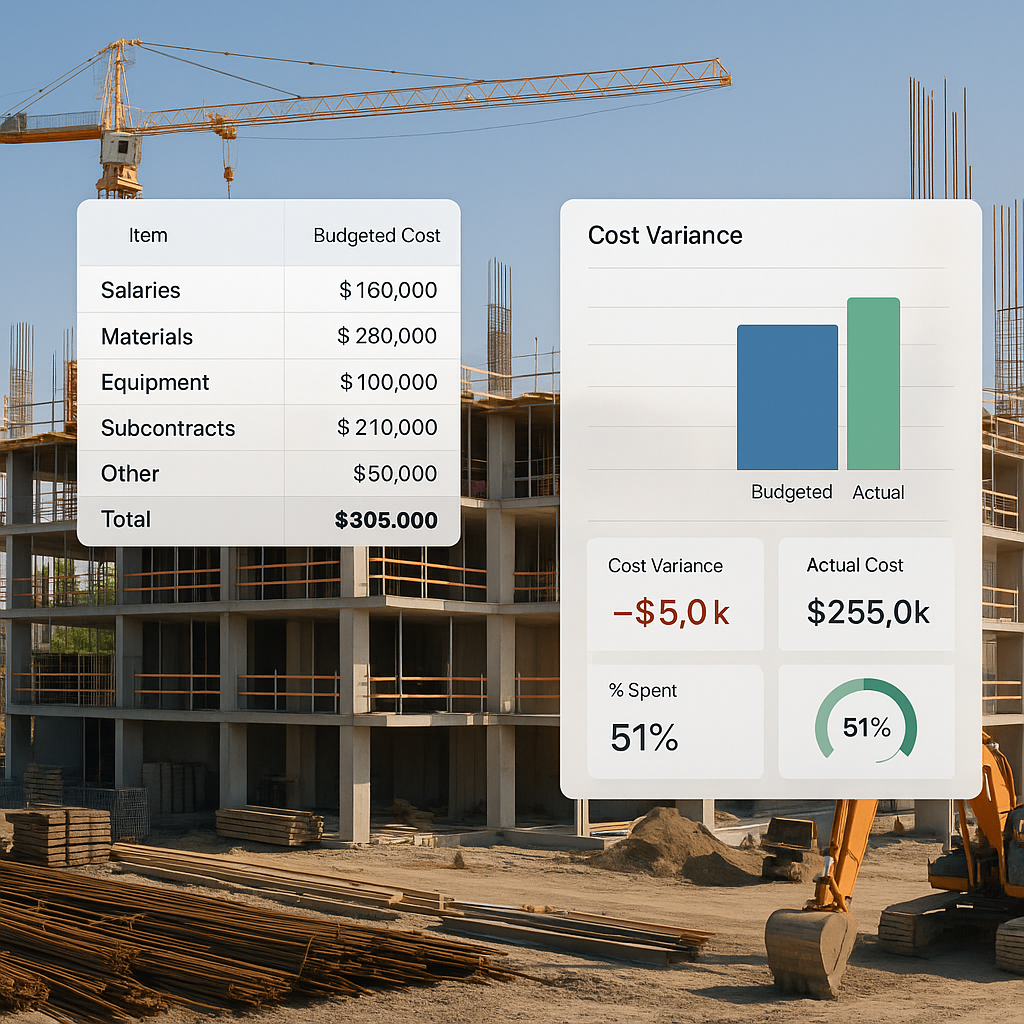
JobNext’s Budget vs Actuals report doesn’t just show you how much you’ve spent — it breaks it down by resource type (labor, material, equipment, subcontractor, overhead) and compares it to your original budget. This detailed view lets you see exactly which line items are bleeding margins.
Resource Reconciliation Report
Another game-changer is the Resource Reconciliation Report, which provides a per-resource breakdown of budgeted vs actual costs. For example, if labor costs are 10% above budget, the report will flag this variance, allowing you to investigate productivity rates or overtime issues.
Real-World Example: A ₹1 Cr Overrun Avoided
One of our clients, a mid-size MEP contractor, was struggling with consistent 10-12% budget overruns. After implementing JobNext, they started using the Budget vs Actuals report weekly. In one instance, they caught a ₹25 lakh variance in material costs halfway through a project. The team discovered that a vendor was overbilling for steel. By switching vendors mid-project, they saved ₹20 lakh. Multiply that across their annual projects, and the tool paid for itself in under six months.
Practical Steps to Reduce Estimate vs Actual Variance
Here’s how you can start tackling estimate vs actual variance today:
1. Set Accurate Budgets
- Use realistic productivity rates based on historical data.
- Include waste percentages for materials (e.g., 3-10%).
- Factor in contingencies for unforeseen issues like weather delays.
2. Review Estimates Before Approval
- Double-check quantities and rates.
- Validate assumptions about labor productivity and material usage.
- Once approved, treat the estimate as your baseline budget.
3. Track Variances Weekly
- Use a tool like JobNext to monitor spending in real-time.
- Review weekly reports to catch small variances before they snowball.
4. Drill Down into Details
- When a variance is flagged, use the Resource Reconciliation Report to identify root causes (e.g., labor inefficiencies or vendor overbilling).
- Compare actual productivity rates to estimated rates for labor and equipment.
5. Take Corrective Action Early
- If a BOQ item is over budget, adjust procurement strategies or subcontractor scopes immediately.
- Renegotiate vendor contracts for better pricing if needed.
Decision Framework: Choosing the Right Variance Tracking System
| Feature | Manual Spreadsheets | Generic ERP Tools | JobNext |
|---|---|---|---|
| Real-Time Reporting | No | Limited | Yes |
| Granular Resource Tracking | No | Partial | Yes |
| Alerts for Budget Overruns | No | No | Yes |
| Ease of Use | High | Medium | High |
| Cost Efficiency | Low | Medium | High |
FAQ: Estimate vs Actual Variance
Q1: How can I predict material wastage more accurately?
Use historical data from past projects to calculate average wastage rates for each material. For example, steel may typically have a 5-8% wastage rate, while concrete may be closer to 3%. Incorporate these percentages into your estimates and adjust them based on project-specific factors like design complexity.
Q2: What’s the best way to track labor productivity?
Start by setting benchmarks for labor productivity based on previous projects. For example, if laying 100 square meters of tiles typically takes 40 labor hours, use this as your baseline. Monitor actual productivity rates daily or weekly and flag deviations immediately.
Q3: How often should I review estimates and actuals?
Weekly reviews are ideal for most projects. This frequency ensures you catch variances early while still allowing time for corrective actions. For larger projects, you may need to review daily.
Q4: Can variance tracking help me win bids?
Absolutely. By understanding your actual costs better, you can set more competitive bids without risking your margins. Tools like JobNext also help streamline your estimation process, which can be a differentiator in competitive markets.
Q5: What’s the ROI on investing in a tool like JobNext?
Most contractors see ROI within 6-12 months. For example, catching a ₹20 lakh variance on a single project pays for the tool’s subscription multiple times over.
The Bigger Picture
Fixing estimate vs actual variance isn’t just about saving margins — it’s about staying competitive. As EstimateNext.ai explains, modern estimation tools can cut down manual takeoffs from 40 hours to 10 minutes. That kind of efficiency frees up your team to focus on higher-value tasks like variance analysis.
If your competitors are using these tools and you’re not, guess who’s going to win the next bid?
If you’re dealing with budget variances, JobNext can help. Get started free →
Learn more at EstimateNext