The Biggest Mistake in Construction Pricing: Markup vs. Margin
Let’s talk about one of the most common—and costly—mistakes in construction pricing: confusing markup with margin. It’s not just a rookie error; even seasoned contractors fall into this trap, and the financial consequences can be devastating. If you think a 20% markup equals a 20% margin, you’re in for a rude awakening. Let’s break this down thoroughly so you can avoid hemorrhaging profits and set yourself up for success.
Markup vs. Margin: Know the Difference
The confusion between markup and margin stems from how deceptively similar they sound. But they’re fundamentally different concepts, and understanding the distinction is key to accurate pricing and healthy profits.
Definitions
-
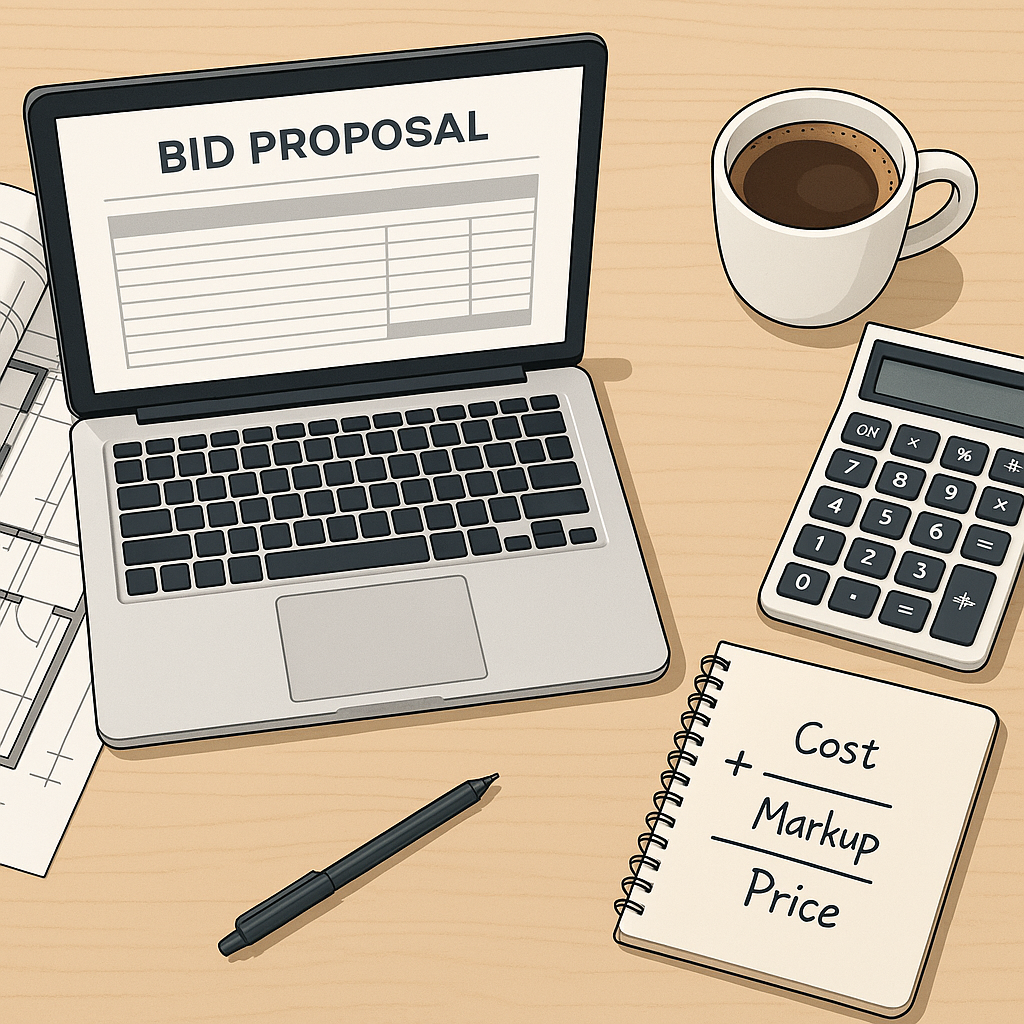
Markup: This is the percentage you add to your costs to determine the selling price. It’s calculated as:
Selling Price = Cost + (Cost * Markup%) -
Margin: This is the percentage of the selling price that represents your profit. It’s calculated as:
Margin% = (Profit / Selling Price) * 100
The Critical Misstep
Here’s the problem: If you apply a 20% markup to a ₹10,00,000 project cost, your selling price becomes ₹12,00,000. But your profit margin isn’t 20%; it’s only 16.67%. Why? Because the ₹2,00,000 profit is a smaller percentage of the ₹12,00,000 revenue—not the original ₹10,00,000 cost.
This is where contractors lose big. Misunderstanding this relationship can lead to underpricing bids, eroding margins, and ultimately running unprofitable jobs.
Concrete Example
To make this crystal clear, let’s compare markup and margin side by side for a ₹10,00,000 project:
| Markup (%) | Selling Price | Profit (₹) | Margin (%) |
|---|---|---|---|
| 10% | ₹11,00,000 | ₹1,00,000 | 9.09% |
| 20% | ₹12,00,000 | ₹2,00,000 | 16.67% |
| 30% | ₹13,00,000 | ₹3,00,000 | 23.08% |
Notice how the margin is consistently lower than the markup? This is why blindly applying markup percentages without understanding the math can cost you dearly.
Why This Matters
Mispricing projects by confusing markup and margin isn’t just a small oversight—it’s a silent killer of your business’s profitability. Let’s explore why this distinction is so critical.
1. Underpricing Bids
When you aim for a 20% profit margin but mistakenly apply a 20% markup, you’re already setting yourself up for failure. If your project overruns, you’ll have even less buffer to absorb unforeseen costs.
2. Clients Don’t Care About Your Margins
Clients will always try to squeeze your prices down, regardless of your margins. If your pricing doesn’t already account for a healthy profit margin, you’ll be bleeding cash before you realize it.
3. Risk Amplification
Construction projects are inherently risky: material price fluctuations, weather delays, and scope creep are just the tip of the iceberg. Without a proper markup strategy, your thin margins leave no room for error.
Case in Point: A Real-World Scenario
A mid-sized contractor bidding on a ₹50,00,000 residential project applied a 15% markup, thinking they’d earn a 15% margin. However, after factoring in unexpected material price hikes and labor inefficiencies, their actual margin plummeted to just 5%. Had they calculated their markup correctly (around 17.65% for a 15% margin), they could have avoided this loss.
How to Calculate Bid Markup (The Right Way)
To avoid these pitfalls, you need a systematic approach to calculate markup that ensures your desired profit margins are met. Here’s a step-by-step guide:
1. Start With Accurate Costs
Your markup calculation is only as good as your cost estimates. This means you need to account for:
- Material Costs: Include wastage percentages and potential price escalations.
- Labor Rates: Factor in overtime, inefficiencies, and regional wage variances.
- Equipment Usage: Don’t forget idle time costs.
- Overheads: Include site office expenses, utilities, insurance, and permits.
Actionable Tip: Use tools like EstimateNext’s AI rate matching to verify material and labor rates across thousands of items in seconds. This eliminates guesswork and ensures accuracy.
2. Add Overheads and Contingencies
Overheads often go underestimated. They’re not just admin salaries but also costs like scaffolding rentals, site security, and even financing costs for delayed payments. Similarly, contingencies (typically 5-15%) cover risks like material price hikes or unforeseen delays.
3. Factor in Desired Profit
Set a realistic profit margin goal. A healthy construction business should aim for at least 10-15% net margins. To achieve this, your markup needs to account for both direct costs and overheads.
4. Use the Correct Markup Formula
Here’s the formula to calculate markup:
Markup (%) = (Desired Margin / (1 - Desired Margin)) * 100
Example: For a 20% margin, the markup is:
Markup = (0.20 / (1 - 0.20)) * 100 = 25%
If your project costs ₹10,00,000, you’ll calculate the selling price as:
Selling Price = ₹10,00,000 + (₹10,00,000 * 25%) = ₹12,50,000
5. Adjust for Project-Specific Risks
Not all projects are created equal. High-risk projects (e.g., tight timelines, complex scopes) require higher markups to mitigate potential losses.
Real-World Example: Subcontractor Bid Markup
Let’s run through a detailed example. Imagine you’re bidding on an HVAC subcontract with the following specs:
- Direct Costs: ₹50,00,000
- Desired Margin: 15%
Step 1: Calculate Markup
Markup = (0.15 / (1 - 0.15)) * 100 = 17.65%
Step 2: Determine Selling Price
Selling Price = ₹50,00,000 + (₹50,00,000 * 17.65%) = ₹58,82,500
If you mistakenly applied a 15% markup, your selling price would’ve been ₹57,50,000, leaving you with only a 13% margin. That 2% difference may not sound like much, but on large projects, it’s the difference between profit and loss.
Automate to Avoid Errors
Manually calculating markup and margin is prone to errors, especially for complex projects. That’s where tools like JobNext can save the day. Its Estimate-based Quote feature calculates selling prices with transparent markup percentages, ensuring every cost component is accounted for. Plus, once approved, these estimates flow directly into project execution, eliminating rework and missed items.
Key Benefits of Automation
- Break down costs into detailed components (labor, material, plant, subcontractors).
- Automate contingency and overhead calculations.
- Integrate estimates directly into project management workflows.
The Hidden Costs Contractors Ignore
Even with the correct markup, many contractors lose margins due to avoidable mistakes. Here are three common pitfalls:
1. Untracked Scope Creep
Clients sneaking in extra work without pay is a major margin killer. Always document scope changes and issue variation orders promptly.
2. Vendor Price Fluctuations
Materials like cement and steel can spike 10% or more overnight. Build escalation clauses into your contracts to protect against this.
3. Unbilled Work
Missing BOQ (Bill of Quantities) items during billing is another common issue. Tools like JobNext’s six billing methods ensure you capture every rupee, whether through RA bills, stage-wise billing, or supply-only contracts.
FAQ
1. What’s the difference between markup and margin?
Markup is the percentage added to costs to determine the selling price, while margin is the percentage of the selling price that represents profit.
2. How much markup should contractors apply?
It depends on your desired margin. For example, a 20% margin requires a 25% markup. Use the formula provided to calculate accurately.
3. How do I ensure my markup covers all costs?
Track all direct and indirect costs, including contingencies. Tools like JobNext can break down costs into detailed components for more accurate pricing.
4. Can I use the same markup for all projects?
No. Each project has unique risks, complexities, and requirements. Adjust your markup accordingly to account for these factors.
5. What’s the easiest way to calculate markup?
Automate it. Tools like JobNext’s Estimate-based Quote feature remove guesswork and ensure consistent, accurate pricing.
Final Thoughts
Markup isn’t just a percentage—it’s your business’s lifeline. Get it wrong, and you risk losing money on every project. Get it right, and you’ll build a resilient, profitable business that can weather any storm. Whether you’re a small contractor or managing large-scale projects, automation tools like JobNext can streamline your bidding process and safeguard your margins.
Don’t leave money on the table. Understand the math, use the right tools, and price your projects with confidence.
Learn more at EstimateNext