Why Markup Miscalculations Destroy Margins
Contractors often confuse markup with margin. It’s a common mistake, but it’s killing project profitability. Here’s the brutal truth: if you’re applying a flat markup percentage without understanding how it translates to your actual costs, you’re leaving money on the table—or worse, pricing yourself out of work.
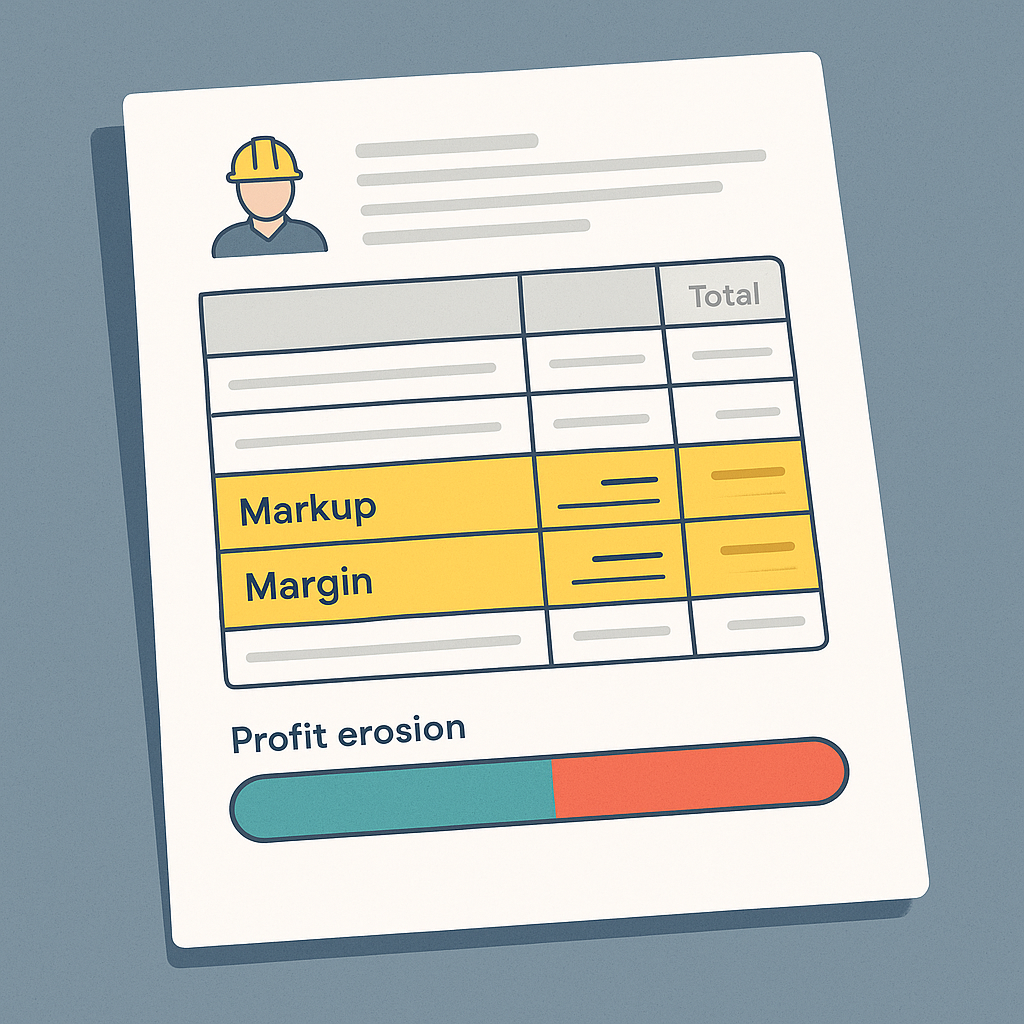
The Difference Between Markup and Margin
Markup and margin are not the same, and confusing the two can lead to serious financial miscalculations. Let’s break it down:
- Markup: This is the percentage you add to your costs to set your selling price. It’s calculated based on your costs.
- Margin: This is the percentage of the selling price that represents your profit. It’s calculated based on revenue.
Here’s a quick example to illustrate the difference:
- Costs: ₹10,00,000
- Markup (20%): ₹2,00,000
- Selling Price: ₹12,00,000
- Margin: ₹2,00,000 ÷ ₹12,00,000 = 16.7%
You might think you’re making a 20% profit, but your margin is only 16.7%. That difference matters when you’re operating on tight budgets. Confusing the two can result in underpricing bids (losing money) or overpricing bids (losing contracts).
Actionable Steps to Avoid Confusion
- Understand the Formulas:
- Markup Percentage = (Selling Price - Total Costs) ÷ Total Costs × 100
- Margin Percentage = (Selling Price - Total Costs) ÷ Selling Price × 100
- Check Your Bid Template: Verify whether your estimating software or spreadsheet is calculating markup or margin. Many generic templates use margin but label it as markup.
- Use Tools for Clarity: Platforms like JobNext explicitly differentiate between markup and margin, ensuring clarity in your bids.
The Real Cost Drivers Contractors Ignore
Most contractors are good at tracking direct costs like materials, labor, and equipment. But indirect costs and hidden expenses often fly under the radar, eroding margins without you even realizing it. These are some of the most overlooked cost drivers:
1. Overhead Costs
Overhead includes:
- Office rent
- Administrative salaries
- Insurance (general liability, workers’ compensation, etc.)
- Utilities
For example, if your annual overhead is ₹24,00,000 and you complete 12 projects a year, each project needs to absorb ₹2,00,000 in overhead just to break even. Failing to account for this means you’re eating into your profit.
2. Contingencies
Unexpected costs can arise from:
- Adverse site conditions
- Delays due to weather or subcontractors
- Material price fluctuations
A 2023 McKinsey report found that construction projects lose an average of 10% in profit due to poor cost tracking and unforeseen expenses.
3. Risk Premiums
High-risk projects (e.g., complex designs, tight deadlines, or remote locations) require higher contingencies built into the markup. Ignoring this can lead to financial disaster.
Actionable Steps to Address Hidden Costs
- Categorize Expenses: Break your costs into direct and indirect categories. Use accounting software to track overhead accurately.
- Add Contingencies: Apply a contingency percentage (e.g., 5%-10%) to your total costs, depending on the project’s risk level.
- Review Past Projects: Look for patterns of cost overruns to identify areas where you consistently under-budget.
A Smarter Way to Calculate Bid Markup
Here’s a formula that helps ensure profitability:
Selling Price = Total Costs × (1 + Markup Percentage)
But the key is knowing what “Total Costs” really includes. Total Costs should account for:
- Direct costs (labor, materials, equipment, etc.)
- Indirect costs (overhead, contingencies, etc.)
Example: Using JobNext for Accurate Markup
Let’s say you’re bidding on an MEP (Mechanical, Electrical, and Plumbing) project. Here’s a detailed breakdown:
| Cost Category | Amount (₹) |
|---|---|
| Labor | 5,00,000 |
| Material | 4,00,000 |
| Plant | 50,000 |
| Subcontractors | 1,00,000 |
| Overhead | 1,50,000 |
| Total Costs | 12,00,000 |
You set a markup of 20%. Here’s how JobNext calculates the selling price:
Selling Price = ₹12,00,000 × (1 + 0.20) = ₹14,40,000
JobNext also flags any missing cost categories, ensuring you don’t forget overhead or contingencies. This avoids common errors like underestimating costs or overestimating margins.
Common Pitfalls in Bid Markup
1. Flat Markup Across All Projects
Not every project has the same risk profile. For instance:
- A residential renovation might have fewer risks compared to a commercial high-rise.
- A project in a remote location might require higher logistics costs.
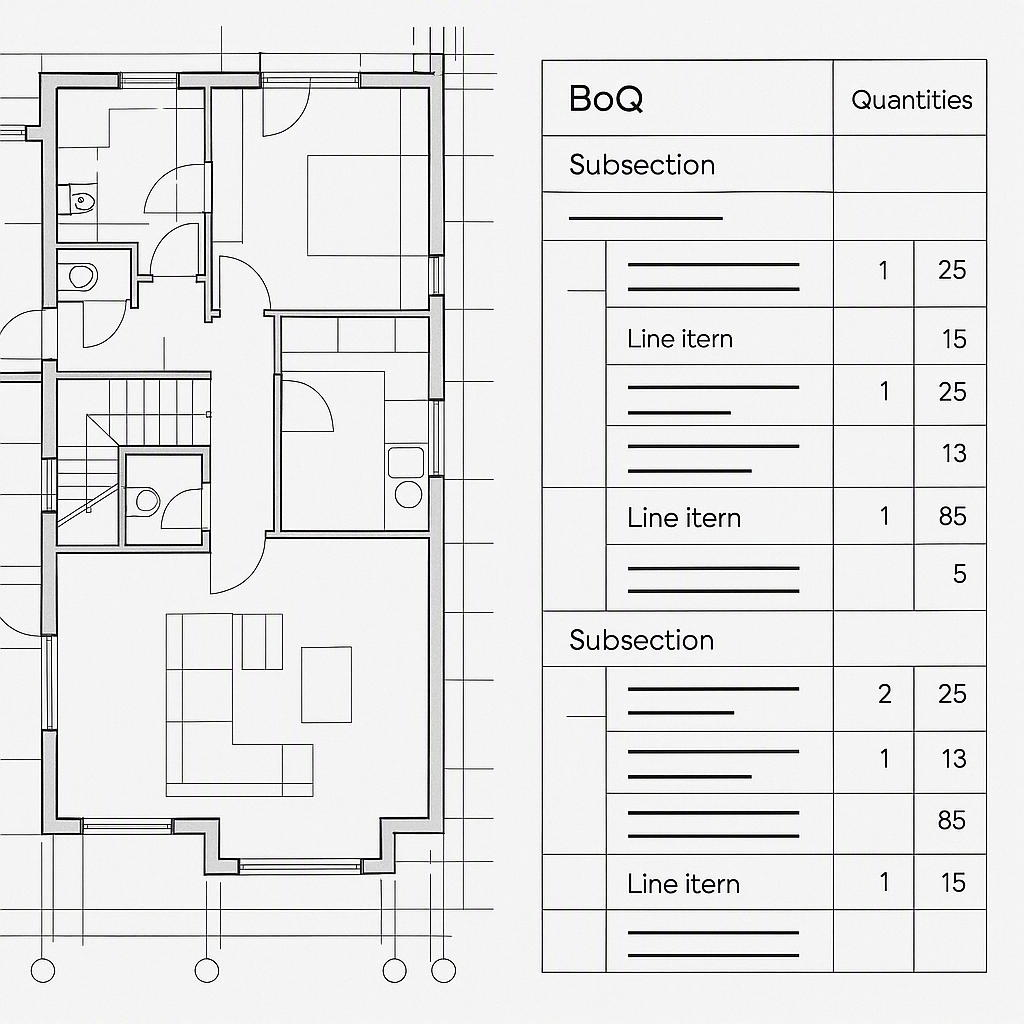
Solution: Adjust markup percentages based on the project’s unique risks and complexities. JobNext’s Estimate-based Quote lets you apply different markup percentages to each BOQ (Bill of Quantities) item.
2. Ignoring Market Rates
If your markup makes you the highest bidder in a competitive market, you’ll lose work. Conversely, if your bid is too low, you risk operating at a loss.
Solution: Use AI-powered tools like EstimateNext to compare your rates against market benchmarks. This ensures your bids are both competitive and profitable.
3. Missing Indirect Costs
Overhead isn’t optional—it’s real money you spend to keep your business running. Ignoring these costs is a surefire way to destroy margins.
Solution: Categorize every expense and ensure your markup covers both direct and indirect costs. Tools like JobNext help track overhead automatically.
Practical Tips for Contractors
1. Use Historical Data
Review past projects to identify patterns of margin erosion. For example:
- Did material costs spike unexpectedly?
- Were labor overruns common?
Tools like JobNext’s BOQ Margin Report help you analyze these trends on a weekly basis, enabling proactive adjustments.
2. Leverage AI for Rate Analysis
Manual rate lookups waste hours and often lead to errors. AI tools like EstimateNext cut this process by 90%, ensuring accurate and competitive pricing.
3. Adjust for Risk
Every project has unique risks—site conditions, subcontractor reliability, weather delays. Build contingencies into your markup to account for these uncertainties.
4. Validate Your Estimates
Before submitting a bid, double-check your cost breakdown. JobNext flags errors automatically, saving you from costly mistakes.
5. Educate Your Team
Ensure everyone involved in estimating and bidding understands the difference between markup and margin. Regular training can prevent costly errors.
Comparison Table: Markup vs. Margin
| Aspect | Markup | Margin |
|---|---|---|
| Definition | Percentage added to costs to set selling price | Percentage of selling price representing profit |
| Formula | (Selling Price - Total Costs) ÷ Total Costs × 100 | (Selling Price - Total Costs) ÷ Selling Price × 100 |
| Focus | Based on costs | Based on revenue |
| Common Mistake | Overestimating profitability | Mislabeling as markup |
FAQ
Q1: How do I calculate markup percentage?
Answer: Markup Percentage = (Selling Price - Total Costs) ÷ Total Costs × 100
Q2: What’s the best tool for estimating construction costs?
Answer: JobNext’s Estimate-based Quote method provides detailed breakdowns for labor, material, plant, subcontractors, and overhead. It also calculates accurate markup and selling prices.
Q3: Can AI improve bid pricing accuracy?
Answer: Yes. Tools like EstimateNext use historical data and market trends to suggest competitive rates, improving pricing accuracy.
Q4: How often should I review my BOQ margins?
Answer: Weekly. Regular reviews help identify margin erosion early and allow for corrective action.
Q5: What’s a common markup mistake contractors make?
Answer: Applying flat markup percentages without adjusting for indirect costs like overhead and contingencies. This leads to underpricing or overpricing.
Conclusion
Markup isn’t just a percentage—it’s the foundation of your profitability. Miscalculations lead to lost margins or missed contracts. Tools like JobNext and platforms like EstimateNext simplify the process, ensuring your bids are both profitable and competitive.
If you’re tired of losing margins to bad markup math, JobNext can help. Get started free →
Learn more at EstimateNext