Why Bid Markup Matters
Margins in construction are notoriously tight—usually hovering around 5-10% for most contractors. This leaves little room for error, and unfortunately, many companies still confuse markup with margin, sabotaging profitability before projects even begin. Miscalculating markup can lead to two disastrous outcomes: bidding too low and winning projects that ultimately lose money, or bidding too high and losing out on contracts altogether. The math is unforgiving, and the stakes couldn’t be higher.
In this expanded guide, we’ll dive deeper into why bid markup matters, how to calculate it correctly, and how to avoid the pitfalls that can ruin your bottom line. We’ll also explore real-world examples, actionable steps, and tools to streamline the process, so you can confidently bid on projects without jeopardizing profits.
What’s the Difference Between Markup and Margin?
Markup and margin are two sides of the same coin, but they’re distinct in how they’re calculated and used. Confusing these terms is a common mistake that can lead to severe financial miscalculations.
Key Definitions:
- Markup: The percentage added to your direct costs to determine the selling price.
- Margin: The percentage of the final selling price that represents your profit.
Key Formulas:
- Markup = (Selling Price - Cost) / Cost × 100
- Margin = (Selling Price - Cost) / Selling Price × 100
Example:
Let’s say your costs for a project total ₹1,00,000, and you want to sell it at ₹1,30,000.
- Markup = (₹1,30,000 - ₹1,00,000) / ₹1,00,000 × 100 = 30%
- Margin = (₹1,30,000 - ₹1,00,000) / ₹1,30,000 × 100 = 23%
Now, here’s a critical insight: a margin of 30% requires a markup of over 42%, not 30%. If you mistakenly apply a 30% markup thinking it will yield a 30% margin, you’ll fall short of your profit goals. This small error can compound over multiple projects, creating disastrous financial consequences.
Real-World Impact of Misunderstanding Markup vs. Margin
Case Study: The $1 Million Mistake
A mid-sized U.S. contractor bid on a government project using a 20% markup, believing this would give them a 20% margin. The project’s total cost was $5 million, and they set their bid at $6 million. However, their actual margin turned out to be only 16.7%, not 20%. This miscalculation cost them nearly $200,000 in lost profit over the course of the project. Worse, they later discovered that a competitor had won a similar project with a proper markup strategy, earning a 25% margin.
The Silent Killer: Ignoring Indirect Costs
While direct costs like labor, materials, and equipment are relatively straightforward to calculate, indirect costs often go unnoticed. These hidden costs can quietly erode your profits if they’re not factored into your markup.
Examples of Indirect Costs:
- Overhead: Office rent, utilities, and administrative salaries.
- Idle Equipment: Machinery that sits unused but still incurs depreciation.
- Compliance Costs: Penalties for failing to meet regulatory standards.
- Insurance: General liability, workers’ compensation, and project-specific insurance.
- Software Subscriptions: Tools like project management software, estimating tools, or CRM platforms.
Actionable Steps to Incorporate Indirect Costs:
- Create a Detailed Overhead Budget: List all recurring expenses that aren’t tied to specific projects.
- Allocate Overhead Proportionally: Divide your total overhead by the number of active projects to assign a fair share to each bid.
- Regularly Review Costs: Overhead costs can fluctuate, so revisit your calculations quarterly.
Real-World Example:
A contractor in Bangalore failed to account for a ₹5,00,000 annual software subscription cost in their bids. Over a year, this oversight resulted in an ₹8,00,000 net loss across 10 projects. Simply allocating ₹50,000 to each project could have prevented this.
A Practical Solution: Estimate-Based Quotes
Accurate estimates are the backbone of profitable bidding. JobNext’s Estimate-Based Quote system provides a structured approach to breaking down costs, ensuring no detail is overlooked. Here’s how it works:
How to Use Estimate-Based Quotes Effectively:
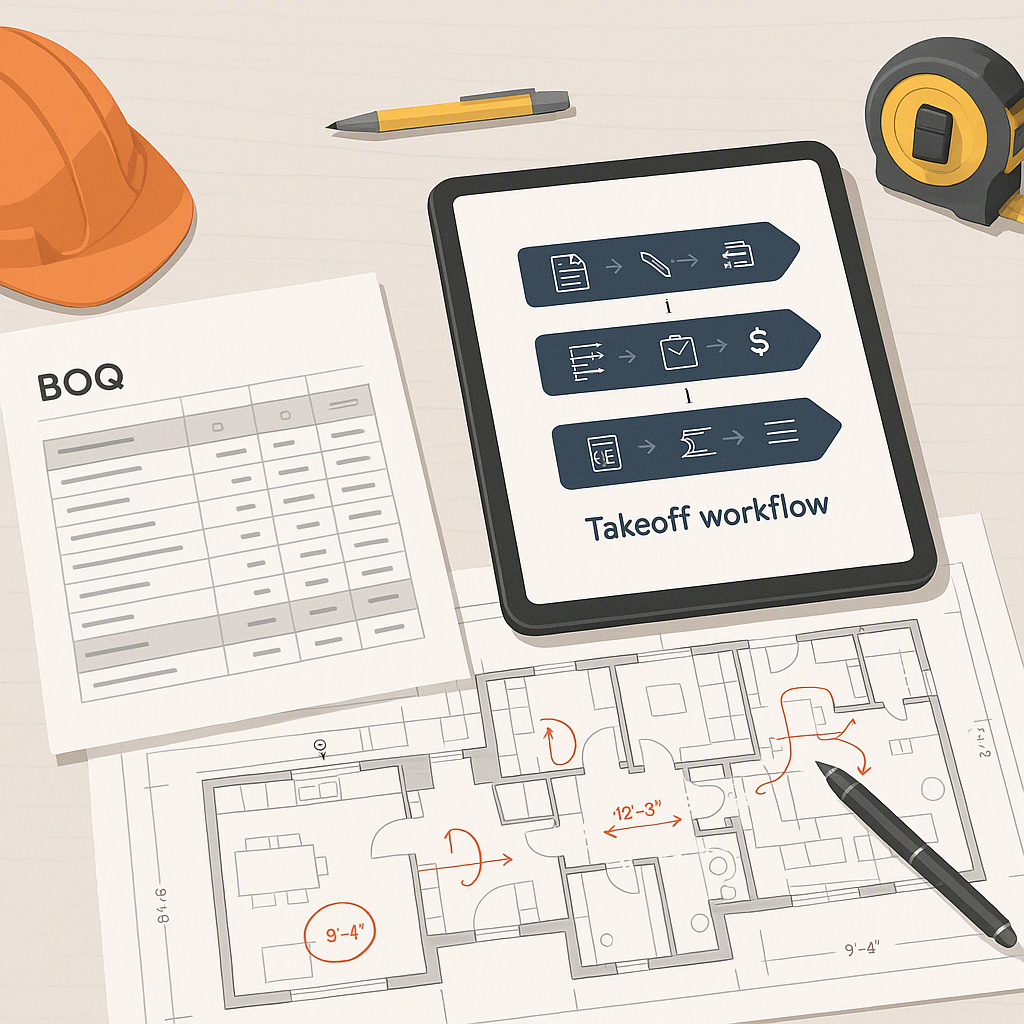
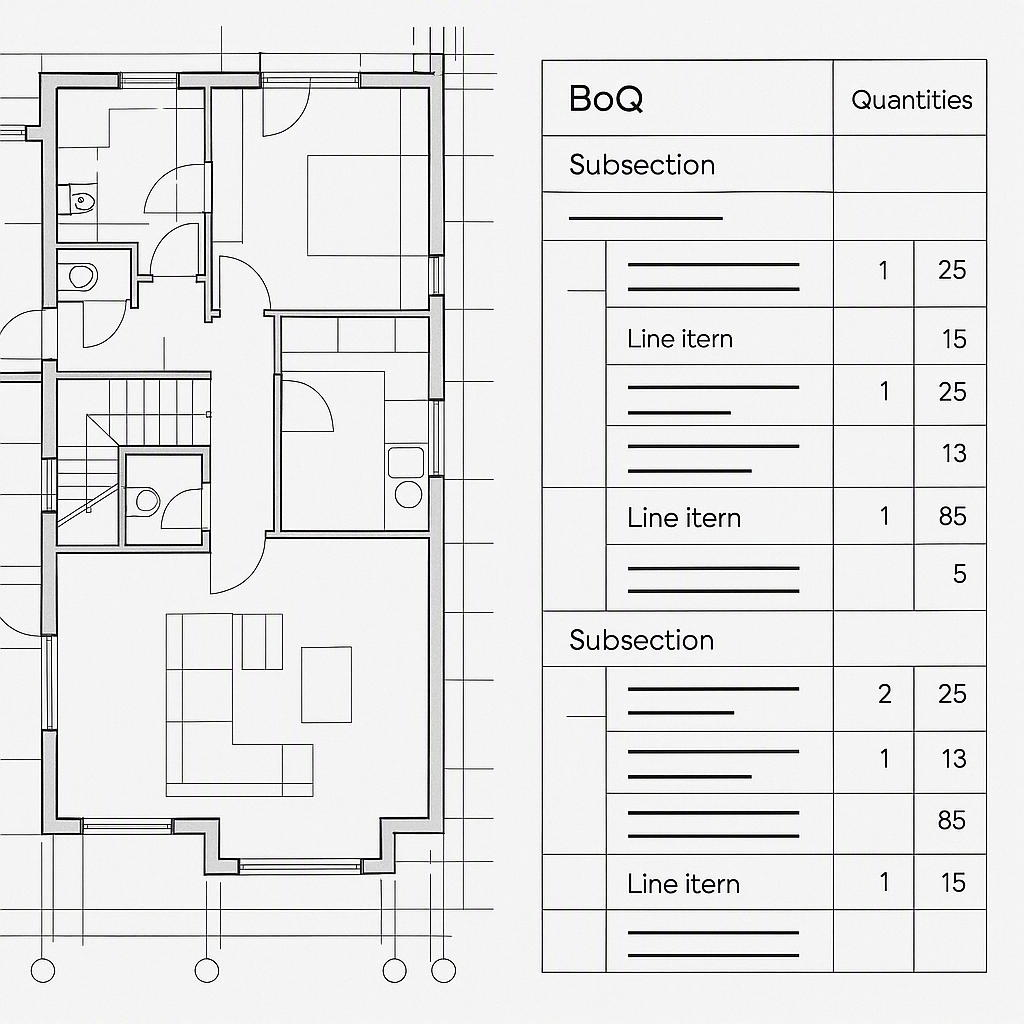
- Break Down Costs Line-by-Line: List all direct costs, such as labor, materials, and equipment, in a detailed BOQ (Bill of Quantities).
- Explicitly Add Overhead Costs: Avoid lumping overhead into vague categories like “miscellaneous.” Transparency is key.
- Apply Markup Strategically: Base your markup percentage on the desired profit margin and project risk level.
- Validate Your Bid: Use tools like JobNext to ensure your calculations are accurate and competitive.
Benefits of JobNext’s System:
- Transparency: Clients appreciate detailed cost breakdowns.
- Time Savings: AI-powered tools like those offered by EstimateNext reduce manual errors and save hours.
- Mitigated Risks: Comprehensive estimates minimize the chances of overlooking critical costs.
Subcontractor Markup: The Hidden Risk
Subcontractors add another layer of complexity to bidding. While it’s tempting to go with the lowest-cost subcontractor, doing so can introduce significant risks.
Common Risks:
- Missed Deadlines: Delays can lead to penalties or a loss of client trust.
- Quality Issues: Low-cost subcontractors may cut corners.
- Hidden Costs: Cheap bids often exclude critical items, leading to change orders.
Actionable Steps to Manage Subcontractor Risks:
- Use Comparative Statements: Evaluate subcontractor bids not just on price but also on experience, timeline feasibility, and past performance.
- Include Contingency Costs: Add a buffer for potential delays or quality issues.
- Leverage Technology: JobNext’s Subcontractor Management module links subcontractor bids to your project estimates, ensuring alignment.
Real-World Example:
A contractor in Oman lost ₹12L on a project due to a 5% late delivery penalty caused by a subcontractor’s delay. Using JobNext’s tools could have flagged timeline risks earlier, allowing them to choose a more reliable subcontractor.
Avoiding Common Mistakes
1. Using Flat Markup Rates
Applying a flat 20% markup across all projects is a recipe for disaster. High-risk projects require higher markups to account for potential overruns, while simpler projects can afford lower percentages.
2. Skipping Overhead Costs
Failing to account for indirect costs like office rent or software subscriptions guarantees you’ll lose money on every project.
3. Ignoring Market Factors
Your markup should reflect not only your internal costs but also external factors like competition, client budgets, and market demand.
Actionable Steps to Avoid These Mistakes:
- Segment Projects by Risk Level: Assign different markup rates based on complexity.
- Regularly Update Cost Databases: Use tools like EstimateNext to stay current.
- Monitor Competitor Pricing: Conduct market research to ensure your bids are competitive.
How to Calculate Bid Markup (Step-by-Step)
- Estimate Direct Costs: Include labor, materials, and equipment.
- Add Indirect Costs: Factor in overhead, compliance, and idle time.
- Apply Markup: Base this on your desired margin and project-specific risks.
- Validate Against Market Rates: Compare your bid to industry benchmarks.
- Account for Subcontractor Variability: Include contingencies for delays or quality issues.
FAQ
Q: What’s a good markup percentage?
A: It depends on the project’s complexity and risk level. High-risk jobs may need 30-50% markup, while simpler ones might only require 10-20%.
Q: How do I factor in indirect costs?
A: Break these down explicitly—office expenses, software costs, insurance—and add them to your estimates line-by-line.
Q: Can AI tools help with bid markup?
A: Absolutely. Tools like EstimateNext streamline rate analysis and improve accuracy, saving time and reducing errors.
Q: How do I handle subcontractor bids?
A: Use comparative statements to evaluate subcontractors based on price, experience, and timeline feasibility. Always include contingency costs in your estimates.
Q: What’s the biggest mistake contractors make with markup?
A: The most common mistake is confusing markup with margin, leading to underpricing and lost profits.
Comparison Table: Markup vs. Margin
| Aspect | Markup | Margin |
|---|---|---|
| Definition | Percentage added to costs to set the selling price | Percentage of selling price that represents profit |
| Formula | (Selling Price - Cost) / Cost × 100 | (Selling Price - Cost) / Selling Price × 100 |
| Key Use Case | Setting the price for a bid | Evaluating project profitability |
| Common Error | Assuming a 30% markup equals a 30% margin | Misinterpreting as the same as markup |
Call to Action
If you’re struggling with markup calculations or losing bids due to errors, tools like JobNext can simplify the process and improve your profitability. Get started free →
Learn more at EstimateNext