Why Most Contractors Get BOQs Wrong
If you’re a contractor, you’ve probably been burned by a bad Bill of Quantities (BOQ) at least once. Maybe the quantities were off. Maybe the rates didn’t reflect market realities. Or maybe the BOQ was so generic it ignored the unique needs of your trade. The result? Margins evaporate long before work begins.
Let’s be real: BOQs are more than just spreadsheets. They’re the foundation of your project’s financial health. And yet, too many contractors treat them like a formality. That’s a mistake.
The Problem with “One-Size-Fits-All” BOQs
A generic BOQ template might look convenient, but it’s a silent killer. Here’s why:
1. Inaccurate Cost Estimation
Lump-sum BOQs often fail to account for trade-specific nuances, like specialized materials or labor-intensive processes. For instance:
- Case Study: Imagine a roofing contractor tasked with installing a standing seam metal roof. A generic BOQ might price it based on square footage alone, ignoring factors like the additional labor for seam alignment or the cost of special fasteners. The result? The contractor eats the extra costs.
2. Scope Ambiguity
Vague descriptions lead to disputes with clients and subcontractors. For example:
- Example: A civil contractor might include "foundation excavation" as a line item. But does it include soil removal, transportation, or backfilling? Without clarity, subcontractors may make assumptions, leading to costly disputes and delays.
3. Missed Variation Tracking
Without a structured BOQ, tracking changes becomes a nightmare. This can result in unbilled work or disputes over scope creep.
- Data Point: According to the Construction Industry Institute (CII), 57% of contractors report losing revenue due to untracked variations in scope.
A Trade-Specific Approach to BOQs
What if your BOQ template was built around your trade’s unique needs? Imagine this:
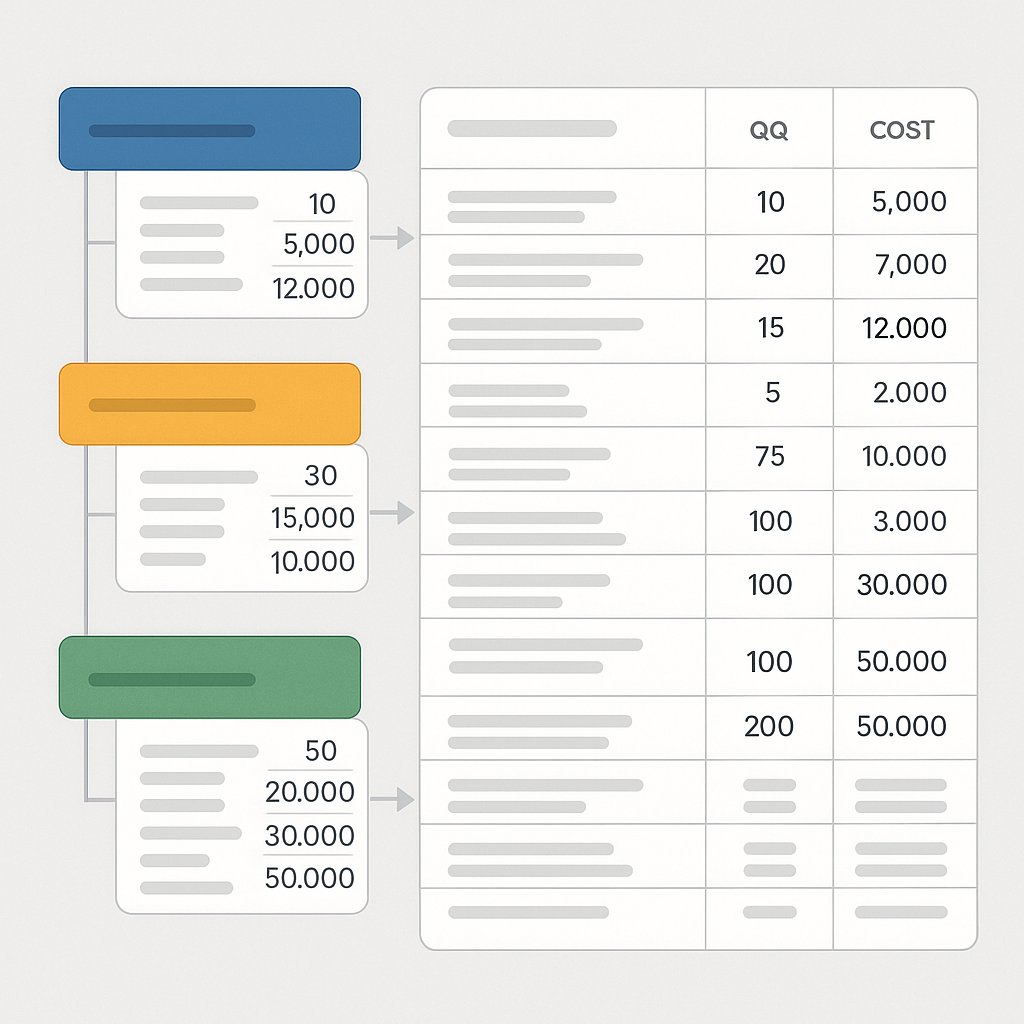
Hierarchical Structure
Group items into relevant categories like “Ductwork,” “Chillers,” and “Controls.”
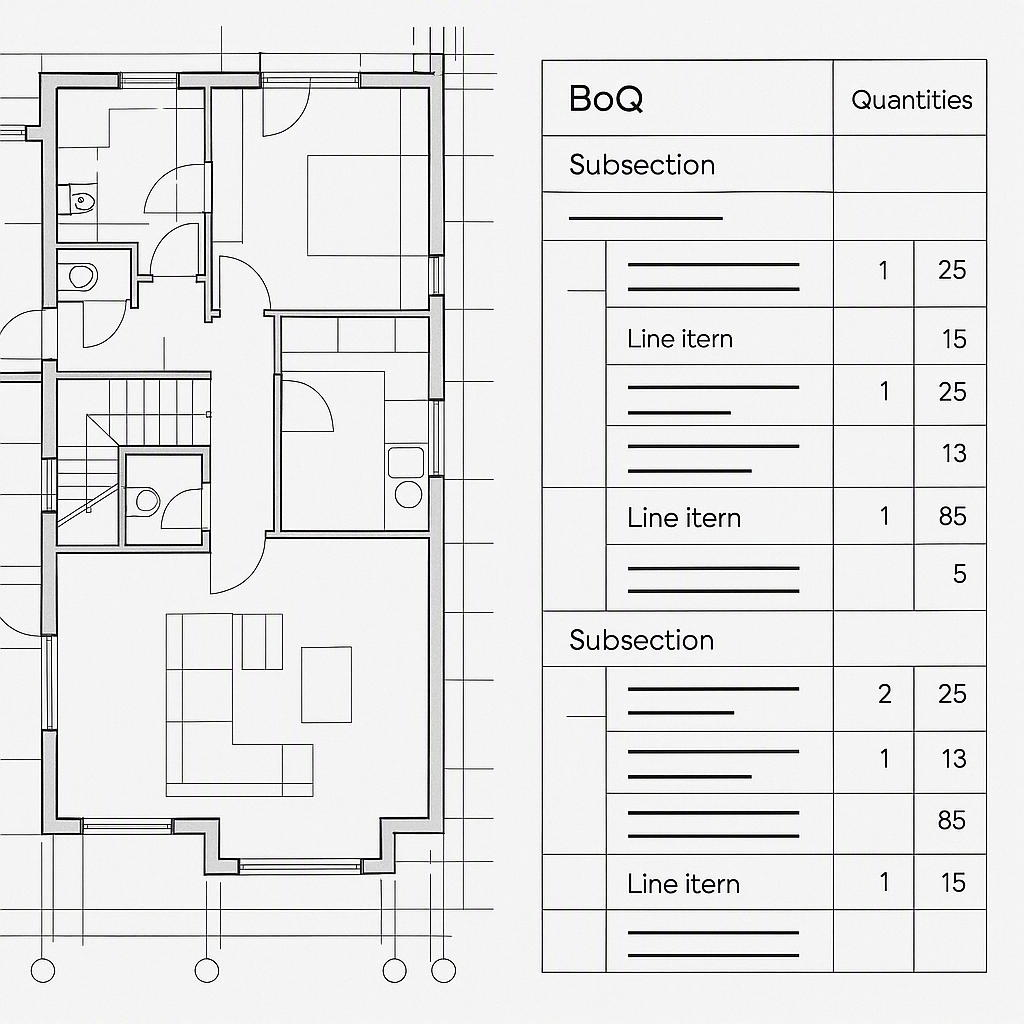
- Example: An HVAC contractor might organize their BOQ into sections such as “Equipment,” “Piping,” “Ductwork,” and “Electrical.” Each section would have subcategories like material type, installation method, and labor hours.
Detailed Line Items
Include specifics like material grade, installation method, and testing requirements.
- Example: A flooring contractor’s BOQ could break down each room by:
- Tile type (porcelain, ceramic, marble)
- Adhesive quantity
- Labor hours for installation
- Waste factor (e.g., 5–10% for cutting losses)
Real-Time Cost Data
Link BOQ rates to up-to-date market prices.
- Tool Spotlight: Platforms like JobNext and Procore allow you to dynamically update material costs based on supplier price fluctuations, ensuring your BOQ reflects current market realities.
Real Example: Stage-Wise Billing for Civil Works
Let’s say you’re a civil contractor handling a ₹10 crore project. Your BOQ includes major milestones like:
- Foundation: 30%
- Superstructure: 40%
- Finishing: 30%
The Challenge
Without a structured BOQ, how do you track progress and bill accurately?
The Solution
JobNext’s stage-wise BOQ feature breaks each milestone into measurable stages. It even validates that stage percentages add up to 100%, preventing billing errors. For example:
| Milestone | Stage | Percentage |
|---|---|---|
| Foundation | Excavation | 10% |
| Concrete Pour | 20% | |
| Superstructure | Steel Frame | 25% |
| Brickwork | 15% | |
| Finishing | Paint | 10% |
| Fixtures | 20% |
By breaking down milestones into smaller chunks, you can:
- Generate accurate invoices.
- Track subcontractor progress.
- Reduce disputes over scope.
Why Preconstruction Matters
Here’s something most contractors overlook: a good BOQ starts in preconstruction.
The Role of Preconstruction Tools
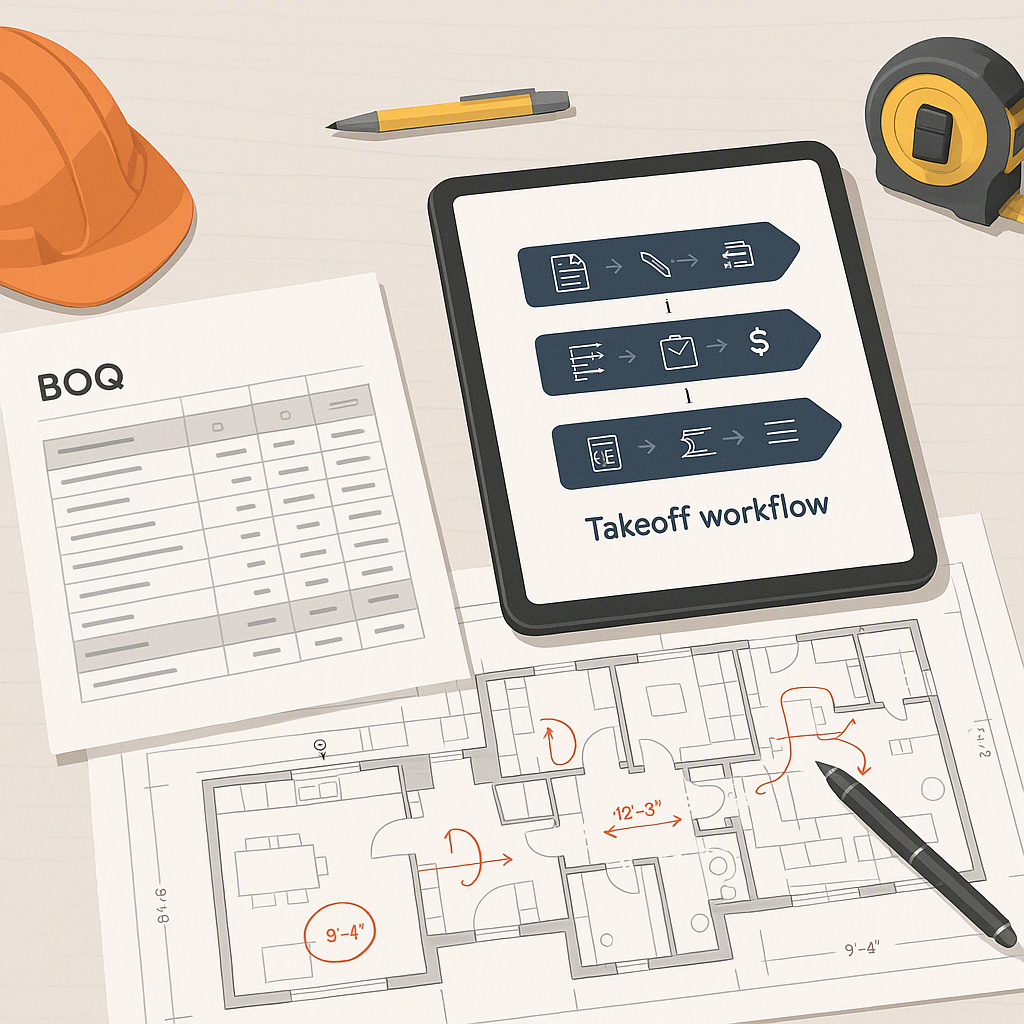
- Example: Tools like EstimateNext are revolutionizing preconstruction. Their AI-powered takeoff tools slash the time it takes to build a BOQ, giving you accurate quantities in minutes instead of hours.
The Benefit
Pair an AI-powered takeoff tool with a trade-specific template, and you’ve got a winning combination:
- Accurate initial estimates.
- Faster client approval.
- Reduced risk of scope creep later.
BOQ Best Practices
Avoid the common BOQ pitfalls by implementing these actionable steps:
1. Use a Template Library
Predefined Work Breakdown Structures (WBS) save time and ensure consistency.
- Example: JobNext lets you select from a WBS library tailored to your trade. An electrical contractor could choose a template that includes predefined sections like "Lighting," "Switchgear," and "Cabling."
2. Keep It Client-Centric
Always structure your BOQ to match the client’s language and deliverables.
- Actionable Tip: During client meetings, ask for their preferred reporting format. This reduces back-and-forth corrections later.
3. Validate Before Submission
Double-check quantities, rates, and totals. Tools like JobNext’s upload feature ensure your data matches the required format, saving you from manual corrections.
- Case Study: A contractor using JobNext reduced BOQ validation time by 40% on a ₹50 lakh project after automating quantity checks.
FAQ Section
1. How do I handle variations in a BOQ?
Use a tool that links BOQ items to scopes and progress tracking. This ensures every variation is documented and billed appropriately.
2. What’s the best way to price BOQ items?
For detailed projects, use bottom-up costing. Break each item into material, labor, and plant costs. JobNext’s Estimate-based Quote feature makes this easy.
3. Can I use the same BOQ template for all trades?
No. A trade-specific template ensures accuracy and reduces disputes. For example, MEP contractors need BOQs that account for equipment specs and installation techniques.
4. How do I update rates in my BOQ?
Link your BOQ to supplier databases or price indices for real-time updates. Tools like JobNext automate this process.
5. Can AI tools really help with BOQs?
Yes. AI tools like EstimateNext can cut BOQ preparation time by up to 80%, while improving accuracy.
Comparison Table: Generic vs Trade-Specific BOQs
| Feature | Generic BOQ | Trade-Specific BOQ |
|---|---|---|
| Detail Level | Basic line items | Detailed descriptions |
| Accuracy | Prone to errors | High precision |
| Scope Tracking | Limited | Comprehensive |
| Variation Management | Manual | Automated tools available |
| Market Pricing | Static | Linked to real-time data |
The Bottom Line
A one-size-fits-all BOQ is a recipe for disaster. But with the right tools and approach, you can turn your BOQ into a competitive advantage. If you’re tired of losing margins to bad estimates, it’s time to upgrade your process.
JobNext simplifies BOQ creation and management, giving you the clarity and control you need to protect your margins. Get started free →
Learn more at EstimateNext