The Silent Killer: Bid Cost Engineering Errors in Construction
Every contractor knows that winning bids is tough. But keeping margins after the win? Even tougher. The biggest problem isn’t the competition—it’s the math. If your bid estimates are off by even 5%, your profit margin could evaporate before the project starts.
Let’s talk about a practical framework for fixing this: Bid Cost Engineering.
What Is Bid Cost Engineering?
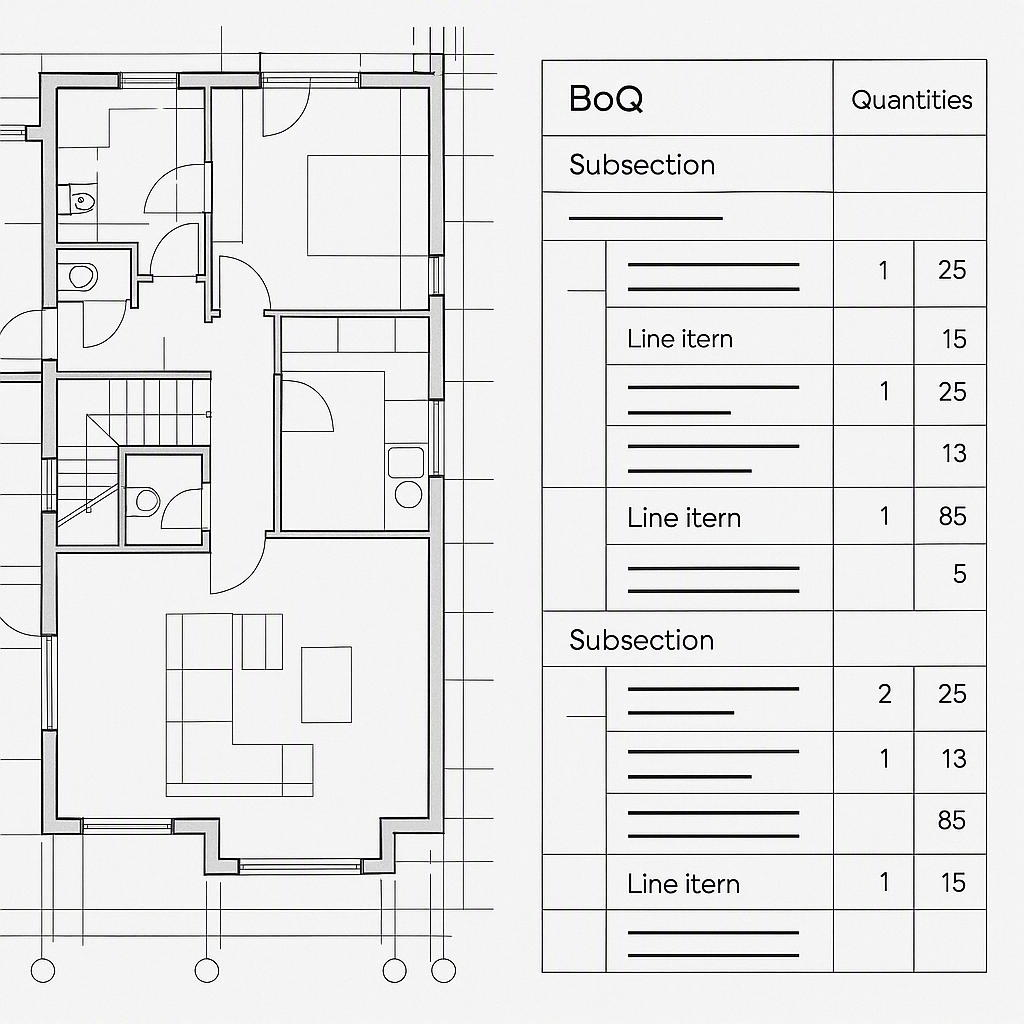
Bid cost engineering is the process of breaking down costs—labor, materials, equipment, subcontracting, and overhead—into precise estimates for BOQ (Bill of Quantities) items. Done right, it ensures your bid prices reflect actual costs while protecting against overruns.
But too many contractors rely on guesswork: outdated rate schedules, manual calculations, or Excel sheets riddled with errors. That’s how margins disappear.
To understand the scale of the problem, consider this:
- In a 2022 survey by KPMG, 78% of construction companies reported cost overruns on projects due to inaccurate bidding.
- The average overrun was 11%—enough to completely wipe out profit margins for most contractors.
Common Mistakes Contractors Make
1. Outdated Rate Schedules
Rates change. Cement, steel, labor—everything fluctuates. If your rate schedules haven’t been updated in six months, your estimates are already wrong. For example, the price of steel rose by 42% in 2021 alone, according to the World Steel Association. Using outdated rates in that period could have led to massive underbidding.
Actionable Step:
- Schedule monthly updates to your rate schedules. Use real-time data from suppliers or platforms like JobNext to stay current.
2. Ignoring Waste Percentages
Every resource has waste. Materials get damaged. Labor hours overshoot. If you’re not factoring this into your estimates, you’re underpricing.
For instance, concrete waste can range from 3-7%, depending on the project scale and conditions. On a project requiring 1,000 tons of concrete, failing to account for 5% waste means underestimating by 50 tons—leading to unplanned expenses.
Actionable Step:
- Standardize waste percentages for common materials (e.g., 5% for concrete, 3% for steel) and include them in your estimates.
3. Manual Quoting Chaos
Excel is great—but it’s not foolproof. Mistyped formulas, misplaced rows, and missing links between BOQs and execution scopes make manual quoting a recipe for disaster.
A real-world example: A contractor in India lost ₹2 Cr on a ₹20 Cr project because a formula error in their Excel sheet excluded overhead costs. The bid looked competitive but was financially unviable.
Actionable Step:
- Transition to automated quoting software that eliminates manual errors. Tools like EstimateNext can help.
4. Skipping Rate Analysis
Most contractors just slap a markup on direct costs. But real rate analysis breaks each BOQ rate into materials, labor, equipment, and subcontract breakdowns. Without this, your bid could be losing money before it’s even submitted.
For example, assuming labor costs will remain constant throughout a six-month project can be risky. Wage hikes, overtime, and productivity lags can all eat into margins.
Actionable Step:
- Perform detailed rate breakdowns for every BOQ item. Use software tools to automate this process and identify potential gaps.
A Proven Framework for Accurate Bid Cost Engineering
1. Start With Scheduled Rates
Use scheduled rates as the baseline for your BOQ items. Scheduled rates break down costs into precise components:
- Materials: Quantity × Unit Rate × (1 + Waste %)
- Labor: Hours × Wage Rate
- Equipment: Usage Time × Rental Rate
This ensures consistency across all projects. Tools like JobNext simplify this by centralizing rate schedules for quick updates and automated estimation.
2. Factor in Waste Percentages
Waste isn’t optional; it’s inevitable. For materials like cement and steel, waste typically ranges from 3-10%. JobNext allows you to add waste percentages directly to BOQ estimates, ensuring no hidden losses.
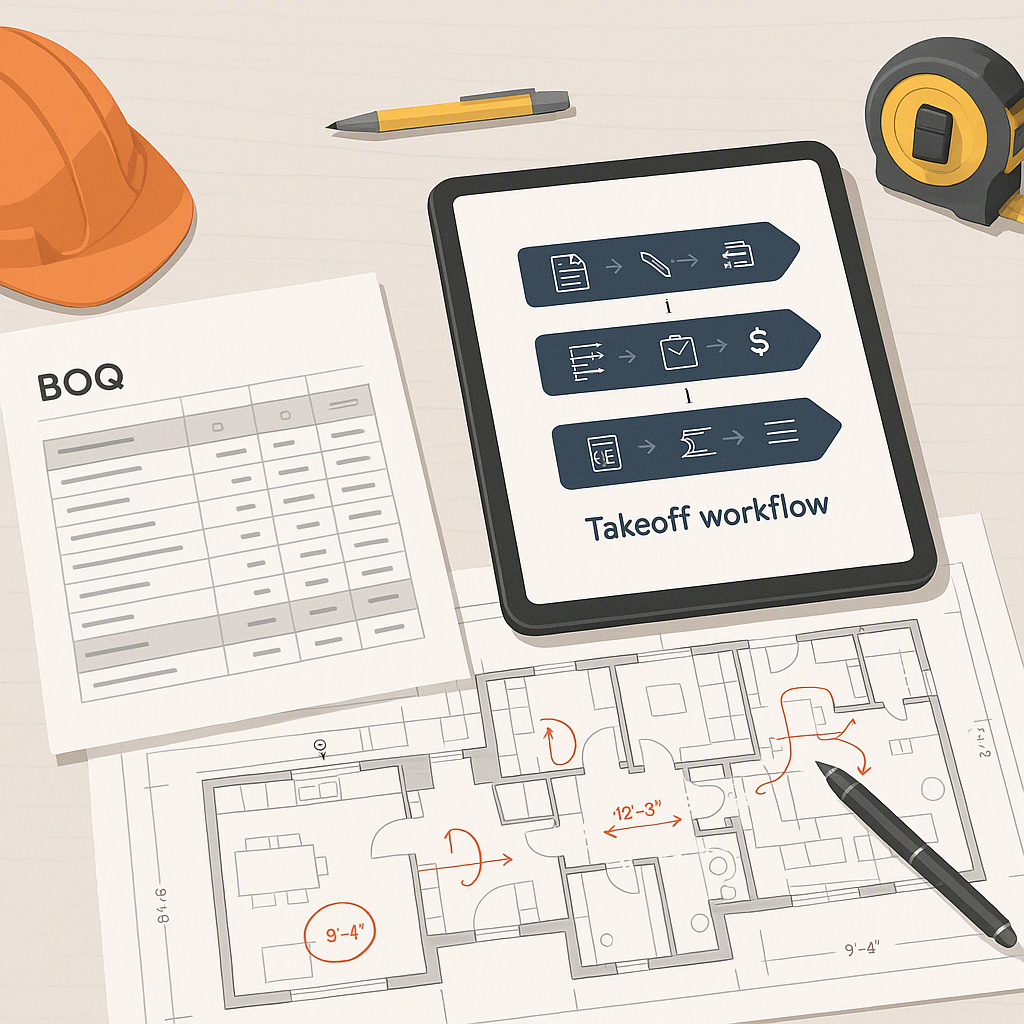
3. Use a Two-Phase Workflow
Most contractors mix execution budgets with bid estimates. Bad idea. Instead, use non-budget estimates for quoting and reserve budgets for execution.
Here’s how JobNext handles it:
- Phase A: Create a non-budget estimate for BOQ items.
- Phase B: Convert the BOQ into execution scopes once the contract is awarded.
This separation ensures accurate cost tracking while protecting margins. Source: JobNext Help Center
4. Automate Rate Analysis
Manual rate analysis is slow and error-prone. AI-powered tools like EstimateNext match 78,000+ rate items in seconds, cutting estimation time from 36 hours to minutes.
Real-World Example: Fixing BOQ Estimation Errors
A mid-size contractor in UAE recently overran their budget by 12% on a ₹40 Cr project. Why? The BOQ rates for structural steel didn’t account for updated market prices or 5% waste.
The fix was simple but powerful:
- Update rate schedules monthly.
- Use JobNext’s rate analysis tools to break down costs.
- Factor in waste percentages for every BOQ item.
The next project? 3% under budget. Margins saved.
Another example: A U.S.-based contractor improved their win rate by 15% after switching to automated estimation software. By eliminating manual errors and incorporating detailed rate analysis, they turned previously unprofitable bids into solid, margin-protecting wins.
Why Accurate Bid Cost Engineering Matters
Margins are thin—typically 5-10% for most contractors. A single BOQ error can kill your profits. That’s why tools like JobNext and EstimateNext are critical. They automate rate analysis, track waste percentages, and ensure nothing falls through the cracks.
In one study, contractors using automated estimation tools reported a 22% reduction in cost overruns versus those relying on manual methods.
Comparison Table: Manual vs. Automated Bid Cost Engineering
| Feature | Manual Methods | Automated Tools (e.g., JobNext) |
|---|---|---|
| Rate Schedule Updates | Manual, prone to delays | Real-time, automated |
| Waste Percentage Calculations | Often overlooked | Automatically included |
| Rate Analysis Speed | 36+ hours per estimate | Minutes |
| Error Probability | High (formulas, human error) | Low (AI-driven processes) |
| Consistency Across Projects | Inconsistent | Standardized |
FAQ
1. What’s the biggest challenge in bid cost engineering?
Keeping rate schedules updated. Market prices change constantly, and outdated rates lead to underpricing.
2. How does JobNext improve BOQ estimation?
JobNext centralizes rate schedules, automates waste percentage calculations, and separates non-budget estimates from execution budgets.
3. Can AI really save time on estimation?
Yes. Tools like EstimateNext cut manual rate analysis from 36 hours to seconds.
4. How often should rate schedules be updated?
At least monthly. Prices fluctuate quickly, especially for materials like steel and cement.
5. Is bid cost engineering only for large contractors?
No. Small and mid-size contractors benefit just as much—if not more—because they have less margin for error.
Call to Action
If you’re struggling with bid estimation errors or margin erosion, tools like JobNext can help. Explore JobNext →
Learn more at EstimateNext