The Silent Killer: Hidden Overhead Costs
Ever lose a bid because your pricing was off—or worse, win a bid and realize you've got zero margin left? We've seen it happen too often. Contractors focus on direct costs like labor and materials but forget to account for hidden overhead costs. These silent killers eat away at your project margins before the first brick is laid.
What Are Overhead Costs?
Overhead costs are all the expenses that aren’t directly tied to the physical construction of the project but are necessary to keep your business running and the project moving forward. These costs include everything from administrative salaries to equipment depreciation. The problem is, many contractors underestimate or completely overlook these costs when calculating their bids.
Common Overlooked Overhead Costs
Here’s a deeper dive into some of the most commonly overlooked overhead costs:
Idle Equipment Costs
- Example: Imagine you own a crane that costs ₹10,000 per day in rental fees. If it sits idle for 30 days during a delayed project phase, that’s ₹300,000 in costs you might not have accounted for.
- Actionable Tip: Track utilization rates for all equipment. If machinery will sit idle for extended periods, consider renting instead of owning.
Statutory Compliance Costs
- Example: In India, failing to comply with GST, PF, or ESI regulations can lead to penalties that eat into your profits. A mid-size contractor in Mumbai lost ₹2 lakh in fines because they underestimated compliance costs in their bid.
- Actionable Tip: Create a compliance checklist for every project location. Factor these costs into your overhead.
Subcontractor Overruns
- Example: A roofing subcontractor quotes ₹5 lakh but bills ₹6 lakh due to untracked progress and scope creep.
- Actionable Tip: Use subcontractor tracking software to validate progress against measurements before payments are issued.
Site Utilities
- Example: Temporary water and electricity setups for a construction site can cost ₹50,000 or more per month. For a six-month project, that’s ₹300,000 you might forget to include.
- Actionable Tip: Track utility costs per site and ensure they’re captured in your project estimate.
Why Most Markup Formulas Fail
The common markup formula—direct costs + a percentage—is too simplistic. It assumes overhead is constant across projects, which is far from true. Here are two critical reasons why this approach leads to failure:
Markup Does Not Equal Margin
A 20% markup doesn’t mean you’ll earn a 20% profit. For instance, if your overhead costs are 15%, a 20% markup nets you just a 5% margin. That’s barely worth the risk.
Flat Overhead Assumptions Don’t Work
Overhead costs vary widely depending on project type, location, and duration. A residential project in a rural area might have low compliance costs but high transportation expenses. Meanwhile, a commercial project in a metro city might have higher labor and regulatory costs but lower equipment charges.
The Fix: Estimate-Based Quotes
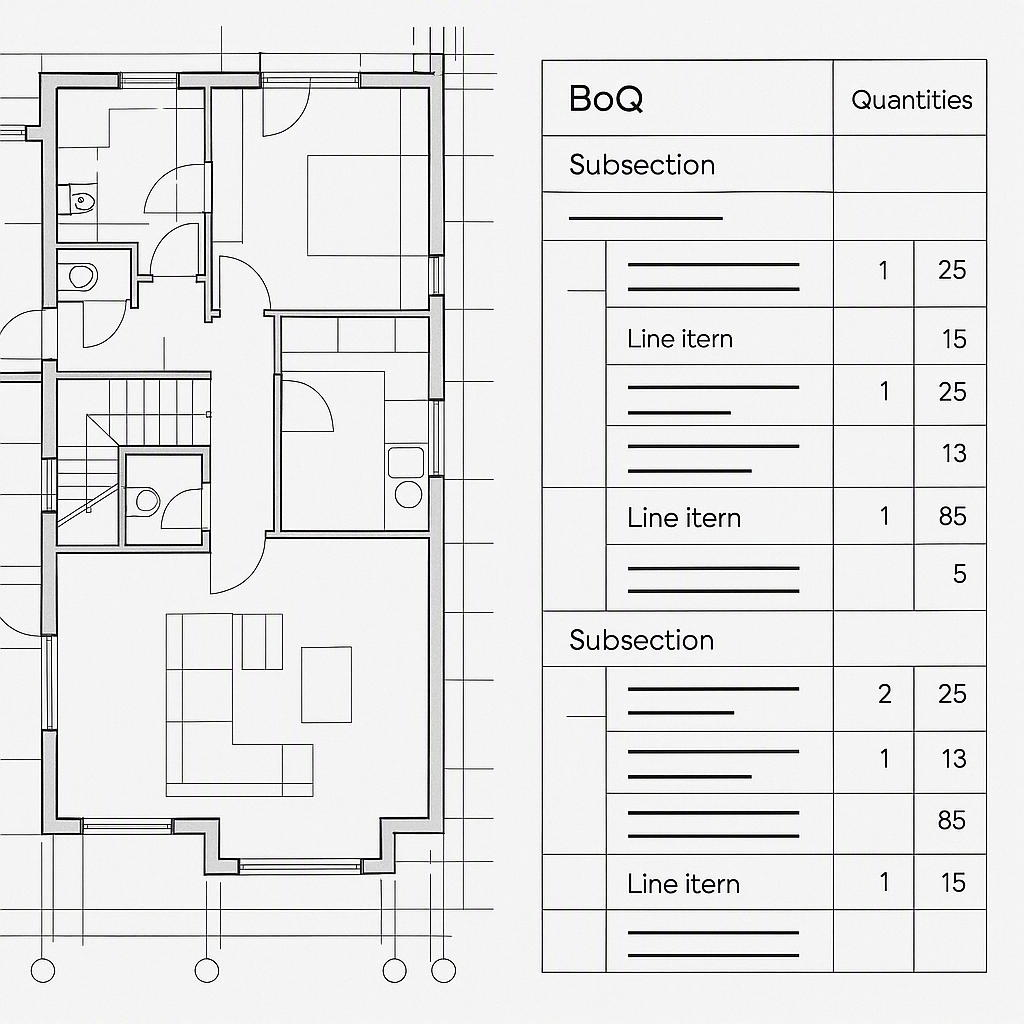
This is where tools like JobNext come in. By using an Estimate-Based Quote feature, you can break down labor, material, plant, subcontract, and overhead costs per bill of quantities (BOQ) line. This granular approach eliminates guesswork and ensures accuracy.
Step-by-Step Guide to Accurate Estimation:
-
Create a Detailed Non-Budget Estimate
- Add resource types (labor, material, equipment) and quantities for each BOQ line.
- Example: For a concrete pour, list quantities for cement, aggregate, water, and labor hours.
-
Include Overhead Categories
- Factor in costs like compliance, utilities, and idle equipment.
- Example: For a metro city project, add statutory compliance and high electricity costs.
-
Apply Transparent Markup Percentages
- Once your estimate is approved, set precise markup percentages to ensure profitability.
- Example: If your total costs are ₹10 lakh and you want a 15% margin, your markup should be ₹1.5 lakh.
Real Example: Subcontractor Overruns
A mid-size HVAC contractor in the UAE lost ₹8 lakh due to subcontractor overruns. They billed based on progress but had no visibility into actual work completed. With JobNext’s subcontractor tracking, they now validate progress against measurements before payments, cutting overruns by 20%. This lesson highlights the importance of real-time tracking and validation.
Why AI Estimation Matters
Manual estimation is error-prone and time-intensive. AI-powered tools like EstimateNext automate rate matching and takeoffs, improving accuracy and saving time.
Key Benefits of AI Estimation:
- Speed: Match up to 78,000 rates in seconds.
- Precision: Eliminate human error in resource pricing.
- Scalability: Handle complex bids with ease.
Case Study: Precision in Large-Scale Projects
A contractor bidding for a ₹100 crore infrastructure project used EstimateNext to automate resource pricing. The tool matched rates for 25,000 items in under 5 minutes, enabling them to submit a competitive and accurate bid. This saved them 120 hours of manual work and reduced estimation errors by 95%.
Comparison: Traditional Estimation vs. AI Tools
| Feature | Traditional Estimation | AI Tools |
|---|---|---|
| Speed | Manual, slow process | Instant rate matching |
| Accuracy | Prone to human error | Highly precise |
| Scalability | Limited | Handles complex bids |
| Cost Tracking | Incomplete visibility | Real-time insights |
FAQ
Q: How do I calculate markup if my overhead varies by project? A: Use a tool like JobNext to create detailed estimates per BOQ line, factoring in variable overhead costs like site utilities and compliance. This ensures your markup is tied to real costs.
Q: What markup percentage should I use? A: Markup should be project-specific. Start by calculating detailed cost breakdowns (labor, material, equipment, overhead) and set a markup percentage based on your desired profit margin.
Q: Can AI tools really improve my bids? A: Yes. Tools like EstimateNext dramatically cut estimation errors and speed up takeoffs, saving time and boosting accuracy. For example, they can match tens of thousands of rates in seconds.
Q: How do I avoid subcontractor overruns? A: Implement real-time tracking and validation tools like JobNext to monitor subcontractor progress against measurements. This ensures payments are tied to actual work completed.
Q: Is it worth investing in estimation software? A: Absolutely. Estimation software not only pays for itself through improved accuracy, but it also saves time, reduces errors, and helps you win more profitable bids.
The Brutal Truth: You Can’t Afford to Guess
Guessing your markup is a shortcut to losing money. Your competitors are using smarter tools and AI-driven methods to refine their bids. If you’re still using Excel formulas from 2010, you’re already behind.
Call to Action
If hidden overhead costs are killing your margins, tools like JobNext can help you build accurate estimates and apply precise markup calculations. Get started free →
Learn more at EstimateNext