Manual vs Digital Takeoff: Why It’s More Than a Time Problem
Takeoff is a foundational step in construction. Get the quantities wrong, and your bid is toast. But doing it manually? That’s a recipe for wasted time and shrinking margins. This article dives deep into the pros and cons of manual and digital takeoffs, explores real-world examples, provides actionable steps, and answers common questions to help you make an informed decision.
The Manual Takeoff Grind
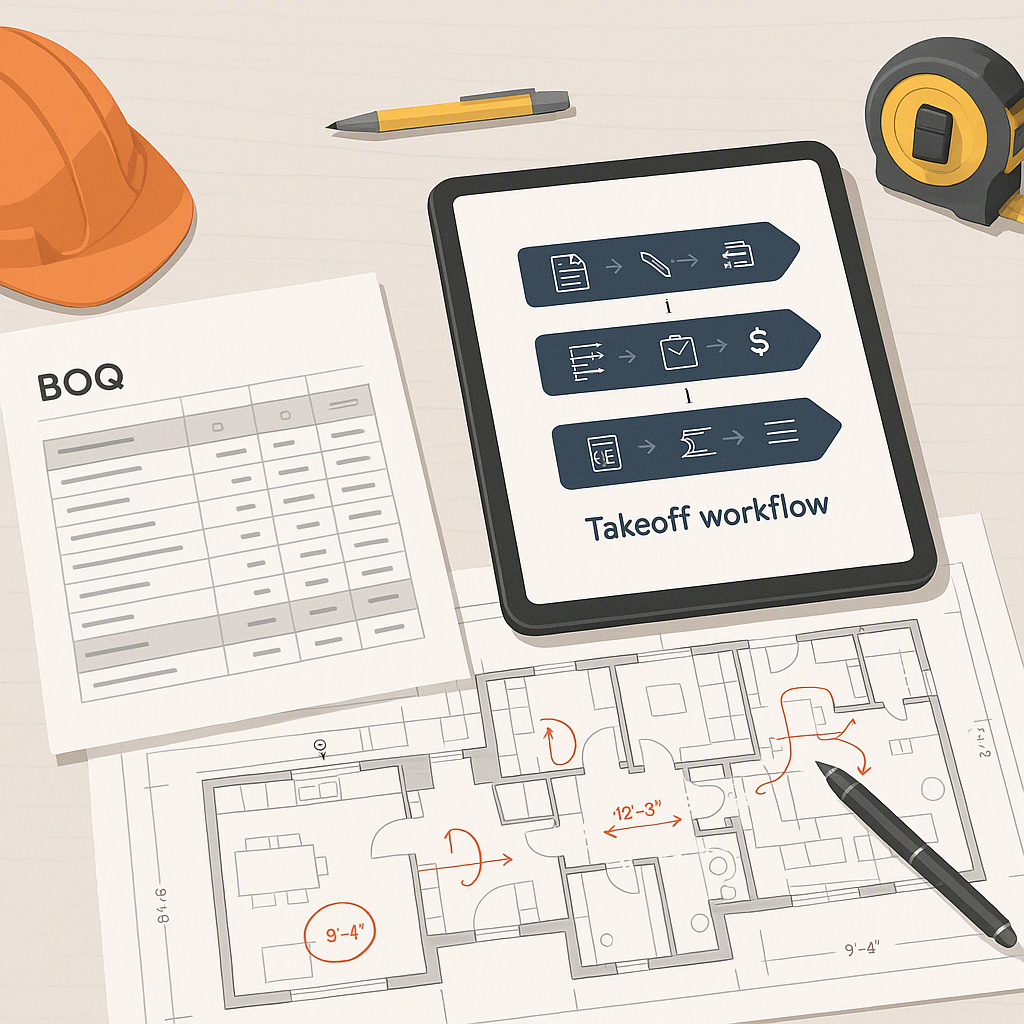
Manual takeoffs involve measuring dimensions on paper drawings or PDFs using rulers, scales, and calculators. It’s tedious, prone to human error, and takes forever. A typical bid can require 40 hours of manual takeoff if the drawings are complex. Worse, mistakes—like missing a dimension or miscalculating an area—can cascade into underpricing or overcommitting resources.
Concrete Example: A Plumbing Contractor’s Misstep
Imagine a plumbing contractor preparing a bid for a large residential building with over 150 units. Due to manual takeoff errors, they underestimated the required pipe length by 12%. Once construction began, they realized they were short on materials, leading to delays in procurement and additional labor costs. The mistake wiped out their profit margin for the project.
Actionable Steps to Mitigate Manual Takeoff Errors
- Double-check measurements: Have a second estimator review the calculations to catch errors.
- Break projects into smaller sections: Segment drawings by floors, units, or systems to reduce complexity.
- Use manual to digital hybrid tools: Some software allows you to manually mark dimensions while automating calculations.
Digital Takeoff: The 10-Minute Fix
Digital tools like AI-powered takeoff software automate this process. They scan blueprints, extract dimensions, and calculate areas in minutes. For example, tools like EstimateNext have shown they can reduce the time spent on takeoff from 40 hours to just 10 minutes per bid. That’s not just faster—it’s a lifeline for contractors trying to protect margins in competitive markets.
Case Study: How Digital Tools Saved ₹22 Lakh
A mid-sized MEP contractor in Oman transitioned from manual takeoffs to digital software. Before the switch, their estimators spent 12-hour days during tender season, yet missed deadlines on 8% of bids. After adopting digital tools, they cut tender preparation time by 65%, saving ₹22 lakh annually on labor costs and winning more bids due to faster turnaround times.
Actionable Steps to Make the Switch
- Evaluate your current process: Track how much time your team spends on manual takeoffs.
- Pilot digital tools on a small project: Start with a single bid to see how much time is saved.
- Train your team: Invest in training for your estimators and project managers so they fully leverage the software.
- Compare software options: Tools like EstimateNext, Bluebeam Revu, and PlanSwift offer varying features and pricing. Choose one that fits your business size and needs.
The Real Cost of Manual Takeoffs
Let’s talk numbers. If your estimator spends 40 hours per bid and your team handles 50 bids a year, that’s 2,000 hours gone. At ₹1,500/hour, you’re burning ₹30 lakh annually just on takeoffs. And that’s assuming there are no errors. Errors multiply costs:
Breaking Down the Costs of Errors
- Rework: Fixing miscalculations after the bid submission can cost ₹50,000 to ₹5 lakh per project.
- Margin erosion: A missed dimension might lead to underpricing, cutting profits by 10-20%.
- Lost bids: Being slower than competitors could mean losing out on high-value projects entirely.
Comparison Table: Manual vs Digital Takeoff Costs
| Metric | Manual Takeoff | Digital Takeoff |
|---|---|---|
| Time per bid | 40 hours | 10 minutes |
| Cost per bid | ₹60,000 | ₹1,500 |
| Annual cost (50 bids) | ₹30 lakh | ₹75,000 |
| Error rate | High | Low |
| Impact on margins | Negative | Protective |
| ROI | Low | High |
Connecting Takeoffs to Margin Protection
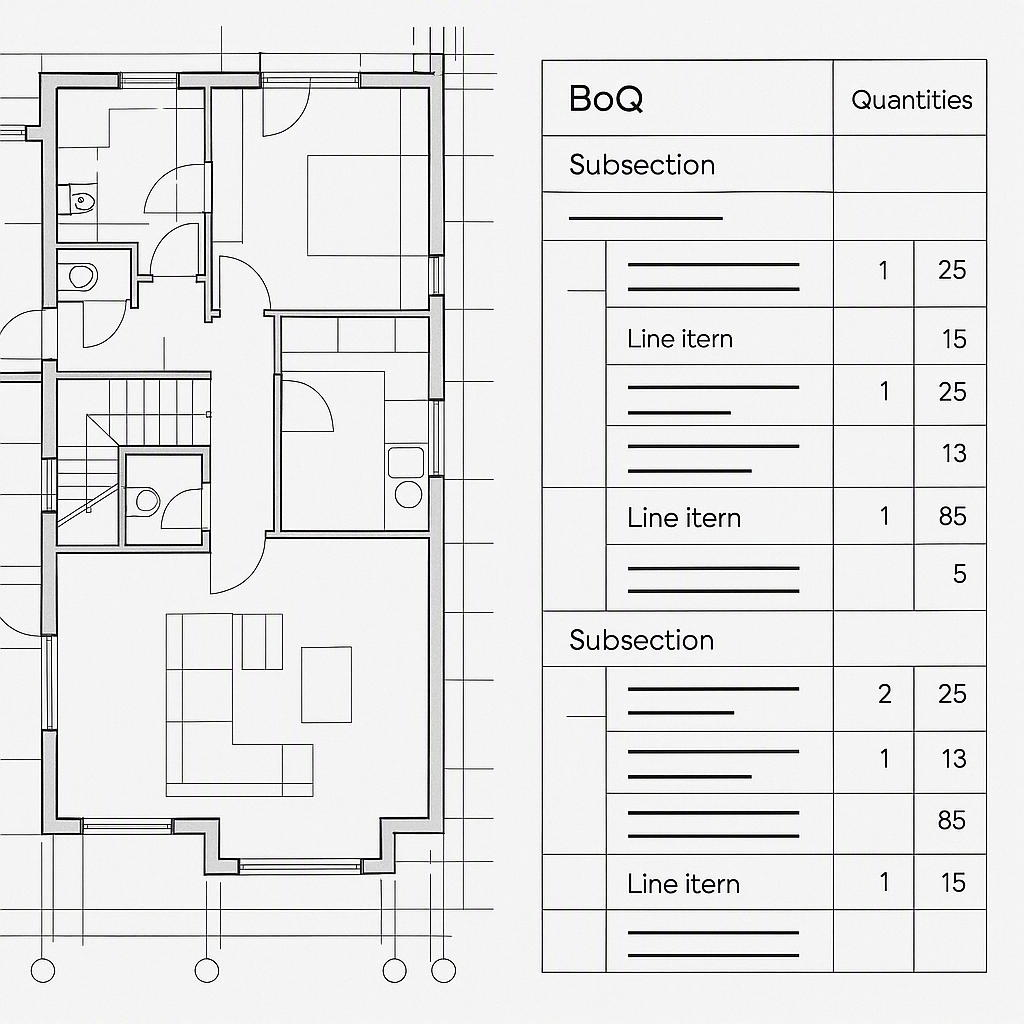
It’s not just about speed. Accurate takeoffs directly impact your BOQ margins. If your quantities are off, your material procurement, labor allocation, and subcontractor budgets will spiral out of control. That’s where tools like JobNext come in.
How JobNext Helps
JobNext integrates digital takeoff data directly into BOQs, scopes, and estimates. Here’s what that means:
- Auto-populated BOQs: When a digital takeoff is completed, quantities feed directly into your project setup. No manual entry, no errors.
- Real-time margin monitoring: JobNext tracks your project profitability across BOQs and estimates, flagging items with negative margins early.
- Subcontractor controls: Measurement sheets generated from takeoff data ensure accurate subcontractor billing and prevent overpayment.
Why Some Contractors Still Resist
You might be thinking, “Manual takeoffs have worked for decades. Why change now?” Here’s the problem: the industry isn’t waiting. Competitors using digital tools are faster, more accurate, and more profitable. If you’re still relying on manual methods, you’re losing ground—fast.
Addressing the Cost Objection
Good takeoff software isn’t free. But neither is wasting 40 hours per bid. The ROI is clear. For example, if you save 30 hours per bid, that’s ₹45,000 per bid back in your pocket. Multiply that by 50 bids a year, and you’re saving ₹22.5 lakh annually.
Actionable Steps for Overcoming Resistance
- Calculate your ROI: Use the comparison table above to estimate savings.
- Start small: Begin with affordable or trial versions of digital tools.
- Educate stakeholders: Show your team how digital takeoffs improve accuracy, save time, and protect margins.
FAQ
1. What is a takeoff in construction?
It’s the process of quantifying materials, labor, and equipment based on project drawings. Accurate takeoffs are essential for creating BOQs and estimates.
2. How does digital takeoff software work?
It scans digital drawings, extracts dimensions, and calculates quantities automatically. Tools like EstimateNext can complete a takeoff in minutes.
3. Is digital takeoff software expensive?
While there’s an upfront cost, the ROI is significant. Contractors save time, reduce errors, and protect margins.
4. Can manual takeoffs still be useful?
They’re fine for small, simple jobs. But for larger, more complex projects, digital tools are essential.
5. Does JobNext work with digital takeoffs?
Yes, JobNext integrates takeoff data into BOQs, scopes, and estimates for real-time cost tracking and margin protection.
If you’re still relying on manual takeoffs, you’re leaving money on the table. The construction industry is moving fast, and digital tools are no longer optional—they’re essential. Try JobNext → and start saving time and margins today.
Learn more at EstimateNext