Why Quantity Takeoff Errors Are Killing Your Margins
Every contractor knows this pain. You submit a bid, win the job, and then realize halfway through construction that you’ve under-ordered materials or underpriced labor. Suddenly, your profit margin is gone—or worse, you’re in the red. What happened? Nine times out of ten, it started with a bad quantity takeoff.
Takeoffs aren’t just about counting bricks or bags of cement. They’re about accuracy and alignment with the scope of work. Miss a few key steps, and you’re either inflating your costs or underestimating them. Neither ends well.
In this expanded guide, we’ll explore why takeoff errors are so damaging, how to fix them, and what steps you can take to avoid them entirely.
Why Takeoff Errors Hurt Your Margins
Takeoff-related mistakes have a ripple effect on construction projects. Here’s a breakdown of how they damage your bottom line:
1. Over-Ordering Materials
Ordering even 10% more material than you need can result in thousands of dollars in waste. For example, if steel reinforcement bars cost $700 per ton and your project requires 100 tons but you mistakenly order 110 tons, that’s an extra $7,000 wasted. Multiply this across multiple projects, and the financial impact can be staggering.
2. Under-Ordering Materials
Underestimating materials creates delays and logistical headaches. Imagine being short on concrete during a critical pour. Not only will you need to halt work, but you’ll also face penalties for missed deadlines. A 2019 study by the Association of General Contractors (AGC) found that 61% of project delays were due to material shortages.
3. Labor Cost Overruns
Incorrect takeoffs also mess with your labor estimates. If you underestimate the volume of work, you’ll under-budget for labor, leading to overtime costs. For example, if a masonry job requires 1,000 bricks but you estimate 800, you’ll end up paying masons extra to complete the job when costs could have been forecasted more accurately.
4. Damaged Client Relationships
Clients expect their contractors to stick to budgets and timelines. Quantity takeoff errors erode trust, leading to disputes, lost referrals, and even legal claims.
The Right Way to Do Quantity Takeoffs
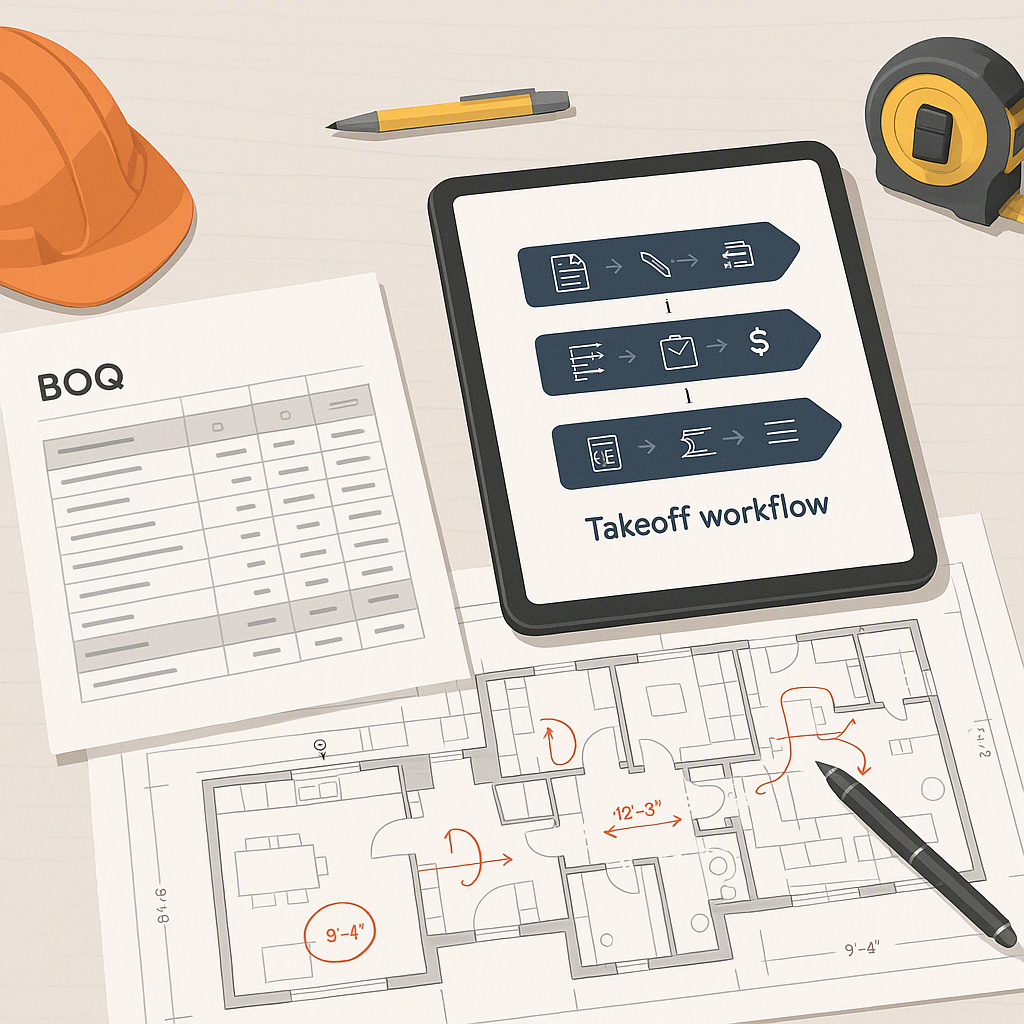
Getting your takeoffs right isn’t rocket science, but it does require structure, discipline, and the right tools. Below is a detailed step-by-step guide to perfecting your process.
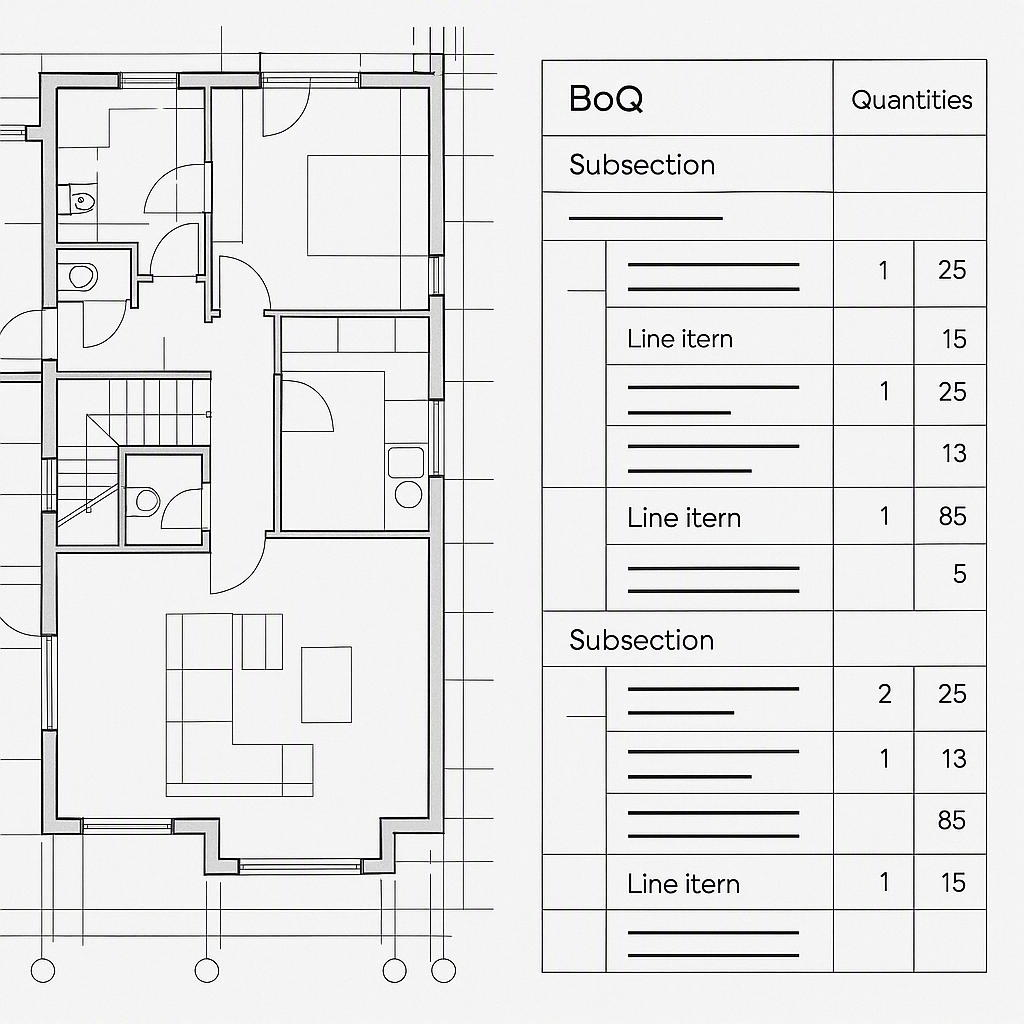
1. Start with a Clean BOQ (Bill of Quantities)
A clean BOQ is the foundation of any accurate takeoff. Without it, errors are almost guaranteed.
Actionable Steps:
- Cross-check the BOQ against project drawings and specifications.
- If the client provides the BOQ, ensure it’s in a standardized format like Excel for easier import into tools like JobNext.
- Highlight inconsistencies or unclear items and seek clarification before proceeding.
Example: On a high-rise project, a contractor found that the BOQ listed “plastering” without specifying the thickness or area. By clarifying the scope upfront, they avoided underestimating the material and labor costs.
2. Break Down the Scope
Instead of tackling the entire project at once, divide it into manageable components—earthwork, masonry, plumbing, electrical, etc. This ensures that you account for every detail.
Actionable Steps:
- Create a checklist of tasks for each component.
- Link each task to a specific BOQ line item to avoid overlap.
- Use software like JobNext to automate this breakdown and minimize human error.
3. Verify Units of Measurement and Conversion Factors
Errors often occur because units are inconsistent. For example, converting square meters to cubic meters without proper attention can skew your estimates.
Actionable Steps:
- Standardize units across all documents.
- Use software that flags mismatched units, like JobNext’s BOQ import feature.
- Double-check conversion factors, especially for imported materials with foreign measurements.
Example: A contractor working on an international airport project avoided a $15,000 error by catching a discrepancy between metric and imperial measurements during the takeoff process.
4. Use Measurement Sheets for Subcontractor Work
When working with subcontractors, unclear measurements lead to disputes and cost overruns.
Actionable Steps:
- Require subcontractors to submit detailed measurement sheets.
- Break these sheets down into headers (e.g., floor tiles), details (e.g., room sizes), and dimensions (e.g., 5m x 4m).
- Approve measurements before billing using a tool like JobNext’s 3-tier measurement system.
5. Leverage Technology for Material Takeoffs
Manual takeoffs are outdated and error-prone. Modern software uses AI to speed up the process without sacrificing accuracy.
Actionable Steps:
- Implement AI-powered tools like EstimateNext to reduce takeoff time by up to 75%.
- Train your team to use these tools effectively.
- Always review the AI-generated takeoff for anomalies.
Case Study: A mid-sized contractor reduced their takeoff time from 40 hours to 10 minutes using EstimateNext, freeing up their estimator to handle more bids.
6. Cross-Check Quantities Against Budget
Even the best takeoff is useless if it doesn’t align with your budget. Requisitions should match both project quantities and financial constraints.
Actionable Steps:
- Use automated workflows to validate requisitions against budgets.
- Flag and resolve discrepancies before procurement.
- Conduct regular audits of your budget vs. actual quantities.
Common Pitfalls (and How to Avoid Them)
1. Duplicate Requests
Duplicate material requisitions waste money and storage space.
Solution: Use software like JobNext to automatically flag duplicate requests before orders are placed.
2. Scope Creep
Uncontrolled scope changes lead to budget overruns.
Solution: Require all additional work to be approved in writing and tied to the original BOQ.
3. Unrealistic Timelines
Rushed takeoffs lead to mistakes.
Solution: Allocate sufficient time for takeoff preparation or use AI-powered tools to speed up the process while maintaining accuracy.
A Real-World Example
Let’s say you’re managing a commercial building project. The BOQ calls for 500 cubic meters of concrete, but your takeoff shows 530. Why the difference? Was it a rounding error, a change in scope, or a misinterpretation of the drawing?
With JobNext, you can trace these discrepancies back to their source. The platform’s BOQ-to-scoping workflow ensures every quantity is justified and matches the approved scope.
Without this, you might order 30 extra cubic meters of concrete, tying up capital and storage space unnecessarily—or worse, under-order and delay the project.
The Case for Digital Tools
Manual vs. Digital Takeoffs
The construction industry is shifting away from manual methods to digital tools, and for good reason:
| Factor | Manual Takeoffs | Digital Tools |
|---|---|---|
| Time Required | 30–40 hours per project | 10–15 minutes |
| Error Rate | High | Low |
| Scalability | Limited | High |
| Cost Efficiency | Poor | Excellent |
Example: A contractor using EstimateNext and JobNext combined saved $12,000 in wasted material costs on a single project.
FAQ
1. What is a quantity takeoff?
A quantity takeoff is the process of calculating the quantities of materials and labor required for a construction project. It’s the first step in preparing an accurate project estimate.
2. What’s the most common mistake in takeoffs?
The most common mistake is inconsistent units of measurement, such as confusing square meters with cubic meters or linear meters. This can lead to massive over- or underestimates.
3. How can I speed up the takeoff process?
Leverage AI-powered tools like EstimateNext, which can reduce takeoff time by 75%. Pair this with a platform like JobNext for automated workflows.
4. How do I handle scope changes during a project?
Tie all new work items to the original BOQ and ensure changes are documented and approved in writing to avoid budget overruns.
5. Are digital tools worth the investment?
Yes. Digital tools not only save time but also reduce errors, improve accuracy, and ultimately protect your profit margins. Case studies show contractors saving thousands in costs and dozens of hours in labor by switching to digital solutions.
Final Thoughts
Quantity takeoffs are the foundation of your construction project’s success. Without accurate, consistent, and thorough takeoffs, you’re jeopardizing your margins, timelines, and client trust.
The good news? Technology has made it easier than ever to get takeoffs right. With platforms like JobNext and EstimateNext, you can eliminate errors, save time, and protect your profits. Don’t let outdated methods hold you back—invest in the right tools and processes to stay competitive in today’s fast-paced construction industry.
Learn more at EstimateNext