Why BOQs Destroy Margins Before Work Even Starts
Let’s be blunt: most contractors think the BOQ (Bill of Quantities) is just an admin task. Copy-paste some numbers, add a markup, and send it off. But here’s the reality — your BOQ can silently kill your margins before you even win the project.
How? Errors in quantities, mismatched unit rates, and poor cost visibility turn your BOQ into a ticking time bomb. A McKinsey report found that 80% of large construction projects run over budget — and the root cause is often lousy preconstruction planning Source: McKinsey, 2023.
But here’s the good news: a well-prepared BOQ isn’t just a cost breakdown; it’s your first line of defense against margin erosion.
Common BOQ Pitfalls That Cost You Money
1. Guesswork in Quantities
Here’s a scenario I see all the time: the estimator eyeballs quantities instead of verifying them against drawings or site conditions. The result? Underestimated materials that spike procurement costs halfway through the project.
Take the example of a mid-sized contractor working on a ₹5 crore residential project. The estimator underestimated the concrete volume by 15% because they didn’t verify the BOQ against the structural drawings. This oversight cost the contractor ₹4 lakhs in unplanned procurement, hammering their already thin profit margins.
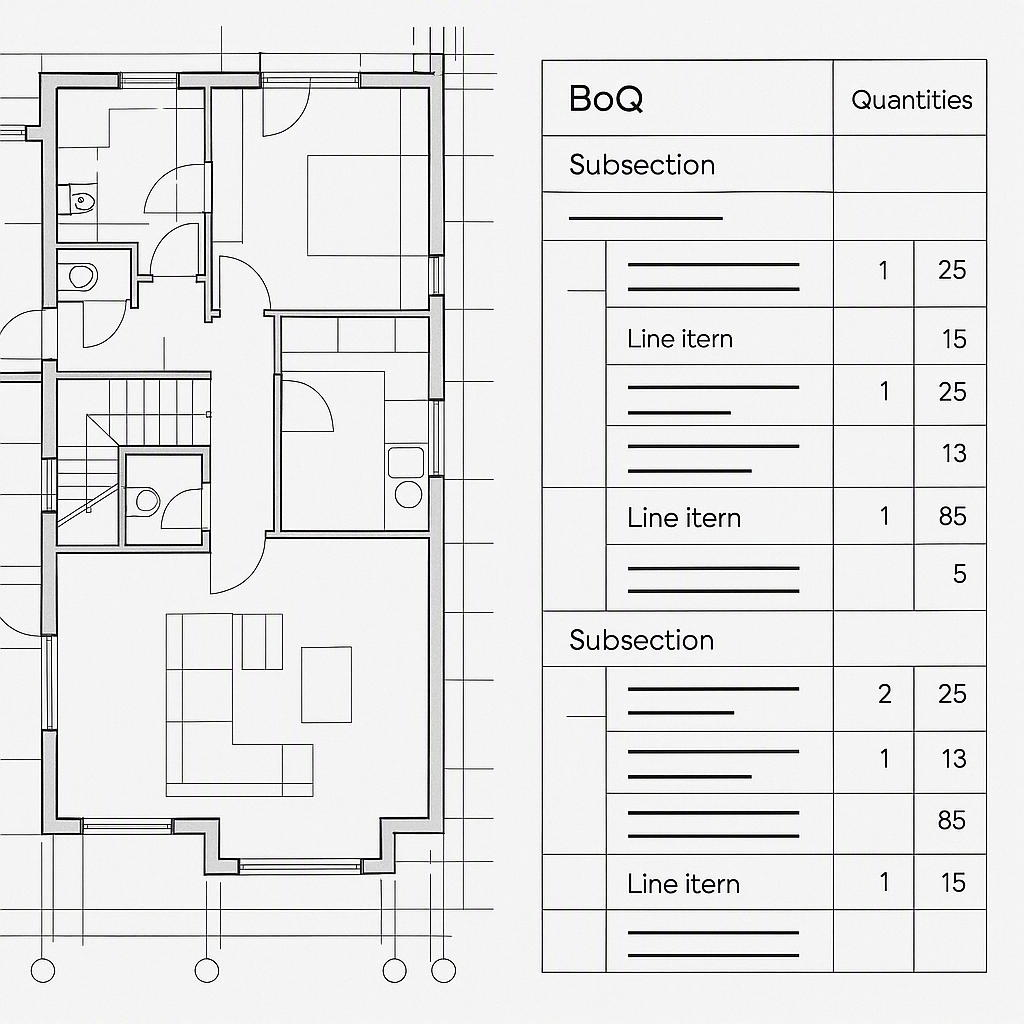
Fix: Use a structured WBS (Work Breakdown Structure) to map BOQ items to actual project scopes. Tools like JobNext let you import client-provided BOQs directly or build them from pre-defined WBS templates for standard scopes. This ensures accuracy from the get-go and eliminates reliance on guesswork.
- Actionable Tip: Cross-check your BOQ quantities with 3D BIM models or CAD drawings to ensure alignment with the actual design. Software like EstimateNext automates this process, reducing manual errors and saving time.
2. Inconsistent Rate Schedules
If you’re manually juggling rate books or PDFs, you’re already behind. One missed line item or wrong UOM (unit of measure) can destroy your bid. For instance, I worked with a contractor who lost a ₹12 crore road project because they applied outdated labor rates from their 2020 rate book. Their bid was 5% higher than the competition, and they lost the job.
Fix: Centralize your rate schedule. JobNext’s Standard Quote feature auto-populates rates from a master schedule and applies them to BOQ items. It even lets you adjust profit margins at the line-item or header level. No more manual errors.
- Actionable Comparison: Compare your current approach to rate management with automated systems:
| Manual Rate Management | Automated with JobNext |
|---|---|
| Error-prone and time-intensive | Centralized, error-free, and fast |
| Rates often outdated | Real-time updates to reflect market |
| Requires constant manual oversight | Automated rate application across BOQ |
3. Blind Markups
Just slapping a 10% markup across the board is lazy — and dangerous. Some BOQ items might need a higher margin to cover risks, while others need to stay competitive. For example, excavation in rocky soil could require a 20% margin due to unforeseen risks, while standard plastering might need only 5% to stay competitive.
Fix: Use itemized profit controls. With JobNext, you can apply different profit percentages per BOQ line item. This granular approach ensures you’re competitive where it matters, without underpricing risky items.
- Pro Tip: Create a risk assessment matrix for your BOQ. Identify risky scopes (e.g., unpredictable site conditions, specialized labor requirements) and assign higher margins to them. For lower-risk items, keep margins lean to stay price-competitive.
Step-by-Step: Preparing a BOQ That Protects Margins
Step 1: Start with Accurate Quantities
Always verify quantities against drawings or site conditions. If the client provides a BOQ, cross-check it for errors or omissions. In one case, a contractor I consulted found that the client’s BOQ missed 10% of the plumbing scope, which would’ve cost ₹7 lakhs in rework if left uncorrected.
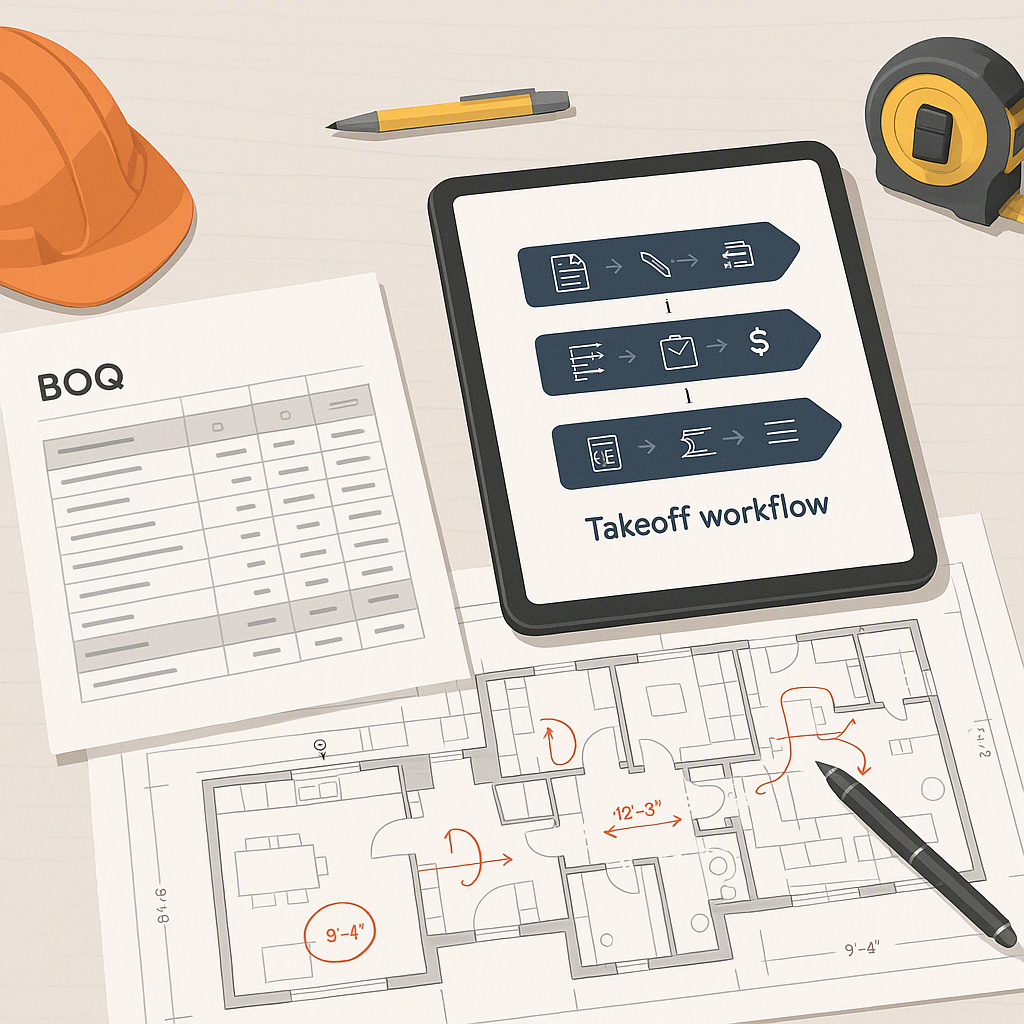
- Pro Tip: Use software like EstimateNext to automate quantity takeoffs from CAD drawings. It’s 10x faster than manual methods and reduces errors. According to a 2023 survey, contractors using automated takeoff tools reported a 30% reduction in quantity errors Source: EstimateNext Blog.
Step 2: Standardize Rates
Maintain a central rate library that everyone in your team can access. Ensure rates reflect current market conditions and include overheads. For instance, a contractor I worked with saved ₹12 lakhs annually by switching from manual rate books to an automated rate library.
- Actionable Tip: Review and update your rate library quarterly to account for inflation, material price fluctuations, and labor market changes.
Step 3: Apply Risk-Based Markups
Identify high-risk BOQ items (e.g., excavation in unpredictable soil) and apply higher margins. For low-risk items like standard concrete, keep margins slim to stay competitive.
- Example: A contractor bidding for a ₹20 crore industrial project applied a 25% markup to specialized machinery installation due to the complexity of the task. This protected their margin when unexpected delays occurred.
Step 4: Audit Before Submission
Run your BOQ through a second pair of eyes. Check for:
-
Quantity mismatches
-
Wrong UOMs
-
Unrealistic rates
-
Quick Tip: JobNext’s BOQ validation flags inconsistencies like rates mismatched with scopes or missing quantities. This step alone can prevent costly errors.
Why This Matters
In my experience, the BOQ isn’t just a document — it’s a strategy. A clean, accurate BOQ doesn’t just improve your chances of winning a tender; it ensures you actually make money if you win. And in construction, that’s the difference between growth and bankruptcy.
If you’re still relying on spreadsheets or manual processes, you’re leaving money on the table. Tools like JobNext and EstimateNext aren’t just nice-to-haves; they’re becoming industry standards for a reason.
FAQ Section
1. What’s the difference between a BOQ and an estimate?
A BOQ is a client-facing document listing quantities and rates. An estimate includes the internal costs (materials, labor, overheads) to execute those quantities. Think of the BOQ as the “what” and the estimate as the “how much.”
2. What’s the best BOQ format for tendering?
The best format aligns with the project’s WBS. Use sections like materials, labor, and equipment to match execution scopes. This ensures clarity and minimizes confusion during execution.
3. Can software really improve BOQ accuracy?
Yes. Tools like JobNext and EstimateNext automate rate applications and quantity takeoffs, reducing human error. According to a 2023 industry report, contractors using such tools saw a 25% reduction in tender preparation times and a 15% increase in bid accuracy.
4. How do I handle client-provided BOQs that seem inaccurate?
Always cross-check client BOQs with drawings and site conditions. Highlight discrepancies during pre-bid meetings. A proactive approach not only builds trust but also prevents margin erosion later.
5. What’s the ROI of investing in BOQ software?
Contractors report saving 5-10% on project costs due to improved accuracy and time savings. On a ₹10 crore project, that’s ₹50 lakhs to ₹1 crore saved — well worth the investment.
Call to Action
If BOQ preparation feels like a headache, JobNext can simplify the process. From automated rate schedules to profit margin controls, it’s built to protect your margins. Learn more →
Learn more at EstimateNext