Why CESMM3 Matters for Contractors
Margins in construction are brutally tight. A single estimation error or billing oversight can wipe out your profit on an entire project. That's why the CESMM3 BOQ format is critical. It's not just a standard—it's a way to ensure your project stays on track financially.
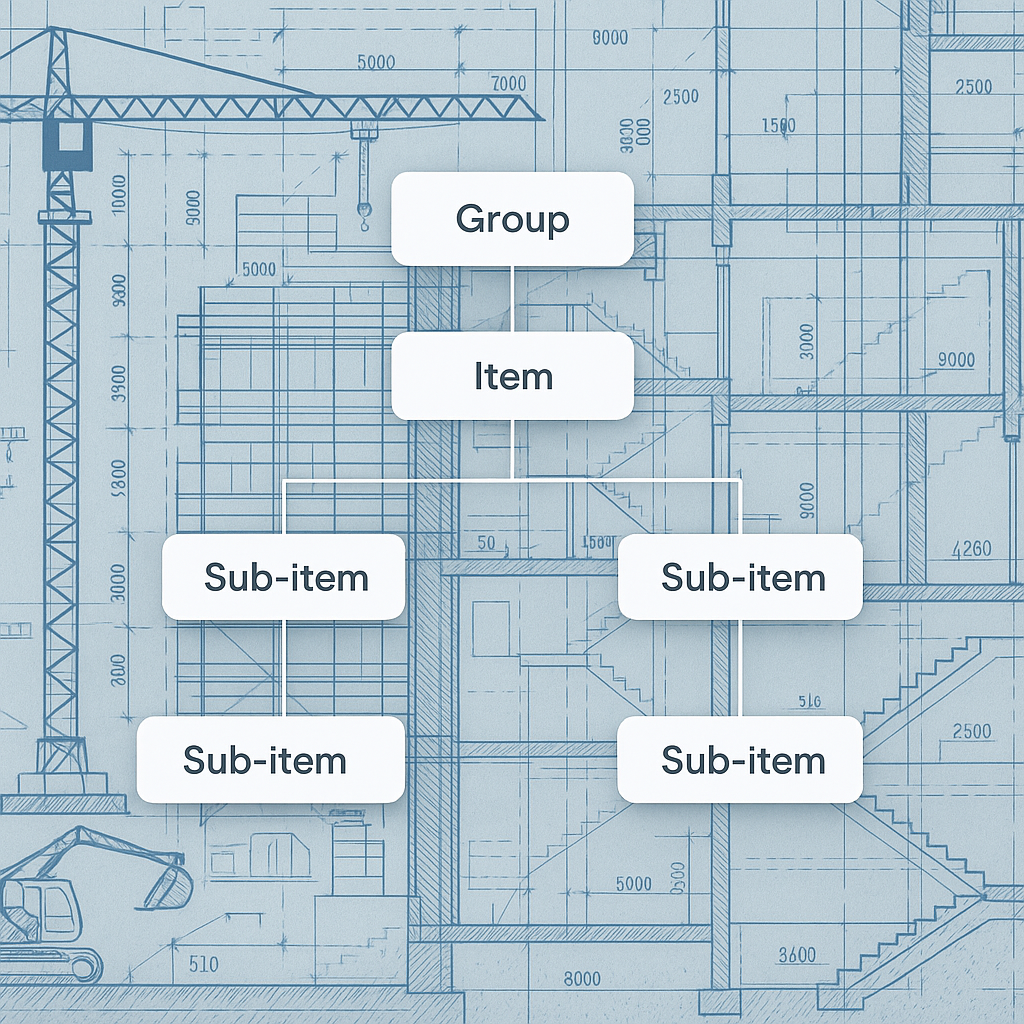
The CESMM3 (Civil Engineering Standard Method of Measurement) provides a clear, hierarchical structure for your Bill of Quantities (BOQ). It makes complex projects manageable by categorizing work into groups and items, each with clear descriptions, units, and rates. For example, instead of a generic line item like "concrete works," CESMM3 breaks it down into specific tasks like "excavation for foundation, 200 CUM" or "reinforced concrete in beams, 350 CUM." This precision minimizes misunderstandings and disputes down the line.
But here's the issue: many contractors fail to adopt the CESMM3 format properly. Either they stick to outdated templates, or they don't link BOQs to other project management processes like procurement and billing. Sound familiar? It’s not just a missed opportunity—it’s a margin killer.
Common BOQ Mistakes That Kill Margins
1. Inconsistent Units of Measure
Many contractors use mixed units (e.g., square meters for flooring, cubic meters for concrete) without standardizing them. This creates confusion and leads to errors during progress billing. CESMM3 solves this by enforcing uniform units across similar work items.
Example: Imagine a project involves concrete works for both beams and slabs. If one line item specifies cubic meters while another uses tons, your procurement and billing teams will face challenges reconciling the quantities. CESMM3 eliminates this by mandating consistent units (e.g., cubic meters throughout).
Actionable Tip: Audit your current BOQs to identify mixed units. Standardize them immediately using CESMM3 guidelines before bidding on new projects.
2. Poor Scope Definition
Ever faced a client dispute because the BOQ didn't capture the exact scope of work? It happens more than you'd think. CESMM3 defines each item with enough detail to avoid ambiguity. For instance, instead of "plumbing works," you'd specify "supply and install 50 mm diameter PVC pipe, 100m."
Case Study: A mid-size contractor in India lost ₹20 lakhs on a water pipeline project because their BOQ item for "pipe installation" didn’t specify the pipe diameter or material. CESMM3-compliant BOQs could have prevented this by detailing each pipe’s specifications.
Actionable Tip: Use CESMM3 templates to break down every major construction activity into detailed sub-items. Share these templates across your team to ensure consistency.
3. Unlinked BOQs and Progress Tracking
If your BOQ isn't integrated with your project tracking system, you're flying blind. JobNext addresses this by linking BOQ items directly to execution activities, progress tracking, and billing. This ensures that every BOQ item is measurable and billable without manual intervention.
Concrete Example: Suppose your BOQ includes "foundation excavation, 500 CUM." Without integration, you’d rely on manual updates to track progress. With tools like JobNext, excavation progress is automatically updated based on site reports, allowing you to issue accurate bills.
Actionable Tip: Deploy a digital project management tool that integrates BOQ tracking with progress and billing. Train your team on its features to maximize utility.
The Practical Steps to CESMM3 Compliance
1. Start with a Structured BOQ Template
A good CESMM3-compliant BOQ starts with a group-item hierarchy. For example:
| Level | Purpose | Example |
|---|---|---|
| Group | Category of related work | Civil Works |
| Item | Specific deliverable | Excavation — 500 CUM @ 120/CUM |
This structure isn’t just for show. It ensures that every task is accounted for, measured, and priced correctly.
Actionable Tip: Download CESMM3 templates (many are freely available online) and adapt them to your specific project types. Ensure all team members use the same format.
2. Use Rate Analysis for Consistent Pricing
Rate inconsistencies are a top cause of margin erosion. CESMM3 works best when paired with rigorous rate analysis. JobNext’s Standard Quote feature simplifies this by pulling accurate costs for materials, labor, and equipment from your rate library. It even lets you adjust profit margins at the line-item level, so you can stay competitive without undercutting yourself.
Example: Let’s say your rate for excavation is ₹120/CUM. With JobNext, you can break it down into ₹80 for labor, ₹30 for machinery, and ₹10 for overheads. This transparency helps you justify your pricing to clients and ensures you’re not leaving money on the table.
Actionable Tip: Create a rate library that includes labor, material, and machinery costs for all major activities. Update these rates quarterly to reflect market changes.
3. Integrate BOQs with Billing and Progress
Here’s where most contractors drop the ball: they treat the BOQ as a standalone document. Big mistake. The CESMM3 format is designed to be a living document that integrates into your entire project lifecycle.
With JobNext, you can convert your BOQ directly into a project scope upon contract award. Each BOQ item is linked to scopes, resource estimates, and billing methods. This means you can:
- Track progress in real time.
- Automate stage-wise or RA billing based on BOQ items.
- Catch margin erosion early with BOQ margin reports.
Case Study: A contractor reduced billing disputes by 90% after switching to JobNext’s integrated BOQ system. They linked each BOQ item to execution milestones, ensuring accurate billing and progress tracking.
4. Monitor BOQ Margins Weekly
Even the best BOQs won’t save you if you’re not monitoring margins. Use tools like the BOQ Margin Report to review profitability weekly. Items with negative margins need immediate attention—either you misestimated the cost, or your procurement costs are too high.
Actionable Tip: Assign a team member to conduct weekly margin reviews. Use software reports to flag items with negative margins and investigate the causes.
Tools and Resources
If you’re still using spreadsheets to manage CESMM3 BOQs, you’re making life harder than it needs to be. Tools like JobNext automate the entire BOQ lifecycle—from creation and approval to execution and billing.
For example, JobNext’s BOQ module lets you:
- Upload or manually create BOQs in CESMM3 format.
- Link BOQ items to scopes, procurement workflows, and billing.
- Generate instant progress reports for client updates.
And if you’re looking to improve your rate analysis, check out this post on AI-powered rate matching. It explains how to save hours by automating rate selection for BOQs.
FAQ
1. What is CESMM3?
CESMM3 stands for Civil Engineering Standard Method of Measurement (Third Edition). It’s a standardized format for structuring and describing construction work in a Bill of Quantities (BOQ). It ensures clarity, consistency, and transparency in project costing.
2. How does CESMM3 improve project profitability?
CESMM3 enhances profitability by reducing misunderstandings, minimizing disputes, and ensuring accurate billing. It also helps contractors standardize units and rates, making project management more efficient.
3. Can CESMM3 be used for small projects?
Yes, CESMM3 is scalable. Whether you’re working on a small residential project or a large-scale infrastructure development, the methodology provides clear guidelines for structuring your BOQs.
4. What tools are available to manage CESMM3 BOQs?
Digital tools like JobNext streamline CESMM3 BOQ management. They offer features like automatic progress tracking, rate analysis, and billing integration, saving time and reducing errors.
5. How do I train my team on CESMM3?
Start with online resources and templates to familiarize your team with CESMM3 standards. Consider investing in software like JobNext, which offers training modules and customer support for seamless adoption.
Final Thoughts
Mastering the CESMM3 BOQ format isn’t optional if you want to protect your margins. But it’s not just about following a standard—it’s about using tools that integrate BOQs into your project’s DNA. JobNext does this seamlessly, so you can focus on execution, not admin.
| Problem | Solution | Example/Tool |
|---|---|---|
| Inconsistent units | Standardize units with CESMM3 rules | CESMM3 templates |
| Poor scope definition | Break down items into detailed tasks | JobNext BOQ module |
| Unlinked BOQs and billing | Integrate BOQs with project tracking | JobNext billing integration |
| Margin erosion | Weekly margin monitoring | BOQ Margin Report in JobNext |
Start mastering your BOQs today →
Learn more at EstimateNext