Why BOQ Margin Reports Matter for Construction Profits
Most contractors focus on direct project costs—materials, labor, subcontractors—and assume their markup will cover overhead and profit. But what happens when hidden costs creep in? Estimation errors, scope changes, or procurement overruns can silently eat away at your margins, leaving you scrambling to figure out where the money went.
The Hard Truth About Margins
Profit erosion is often a result of underpricing or tough competition, but it can also stem from poor tracking of BOQ profitability. Items with negative margins often go unnoticed until the project nears completion, when it’s too late to fix. One BOQ misstep can cascade into subcontractor disputes, unplanned procurement costs, and budget overruns.
How BOQ Margin Reports Work
Let’s break it down. The BOQ Margin report compares contracted values against actual costs across five categories:
| Category | Examples |
|---|---|
| Material | Cement, steel, aggregates |
| Labor | Skilled/unskilled wages |
| Machines | Equipment rentals |
| Subcontractor | Work orders, progress payments |
| Overhead | Admin, utilities, compliance |
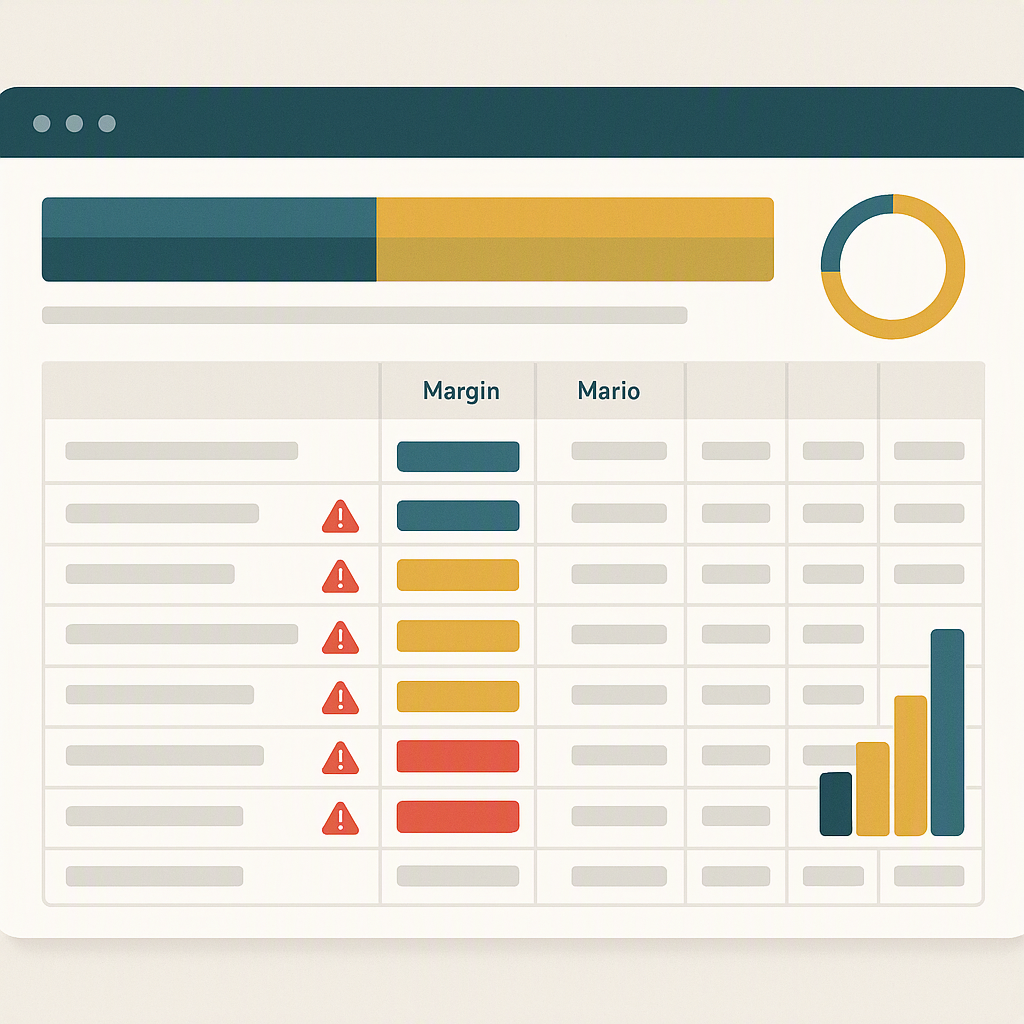
The report flags items where actual costs exceed estimates, showing negative margins. For example:
- Illustrative Example — Material Overrun
- Contracted BOQ Rate: ₹450/ton
- Actual Cost: ₹500/ton
- Margin: -₹50/ton
Weekly reviews are critical. Negative-margin BOQ items require immediate investigation. This is especially true for subcontractor work orders tied to uncertified measurement sheets—a common issue in build-vs-buy decisions.
The Role of Structured Quoting
BOQ margin erosion often starts with poor estimation during preconstruction. Structured quoting methods break costs down into labor, material, plant, and subcontractor categories, ensuring transparent markup percentages. This level of detail helps contractors avoid underquoting.
AI tools can further streamline estimation, reducing manual errors and improving accuracy. For contractors managing multiple projects, adopting structured quoting methods isn’t optional—it’s essential.
Common Mistakes Contractors Make
- Skipping Weekly Reviews: BOQ Margin reports should be reviewed at least weekly. Negative margins compound quickly if ignored.
- Misaligned Procurement Costs: Procurement teams often miss the connection between BOQ rates and actual purchase costs. Run Budget Burn reports monthly to catch overspending.
- Ignoring Subcontractor Reconciliation: Before processing subcontractor payments, reconcile materials and costs against the BOQ.
- Underusing Lookahead Planning: Use the Job Lookahead Report to anticipate potential margin risks before weekly planning meetings.
- Relying on Gut Estimates: Structured quoting methods eliminate guesswork, ensuring consistent pricing across projects.
What We Learned
Ignoring BOQ margin reports can lead to significant profit erosion. Weekly reviews, combined with structured estimation and procurement workflows, can prevent these losses. Tools designed for margin tracking and estimation can help, but the key is consistent usage and proactive monitoring.
Call to Action
If you're struggling with margin erosion or cost tracking, structured tools and workflows can help. Start implementing BOQ Margin reports and structured quoting methods today to catch profit killers early.
Learn more at EstimateNext