The Costly Mistake Contractors Make With BOQs
If you’d asked me two years ago, I’d have said, “We know our BOQs inside out. They’re just line items—quantities, rates, totals. Simple stuff.” And most contractors thought the same. BOQs were treated like a glorified checklist, not as the margin-critical tool they truly are.
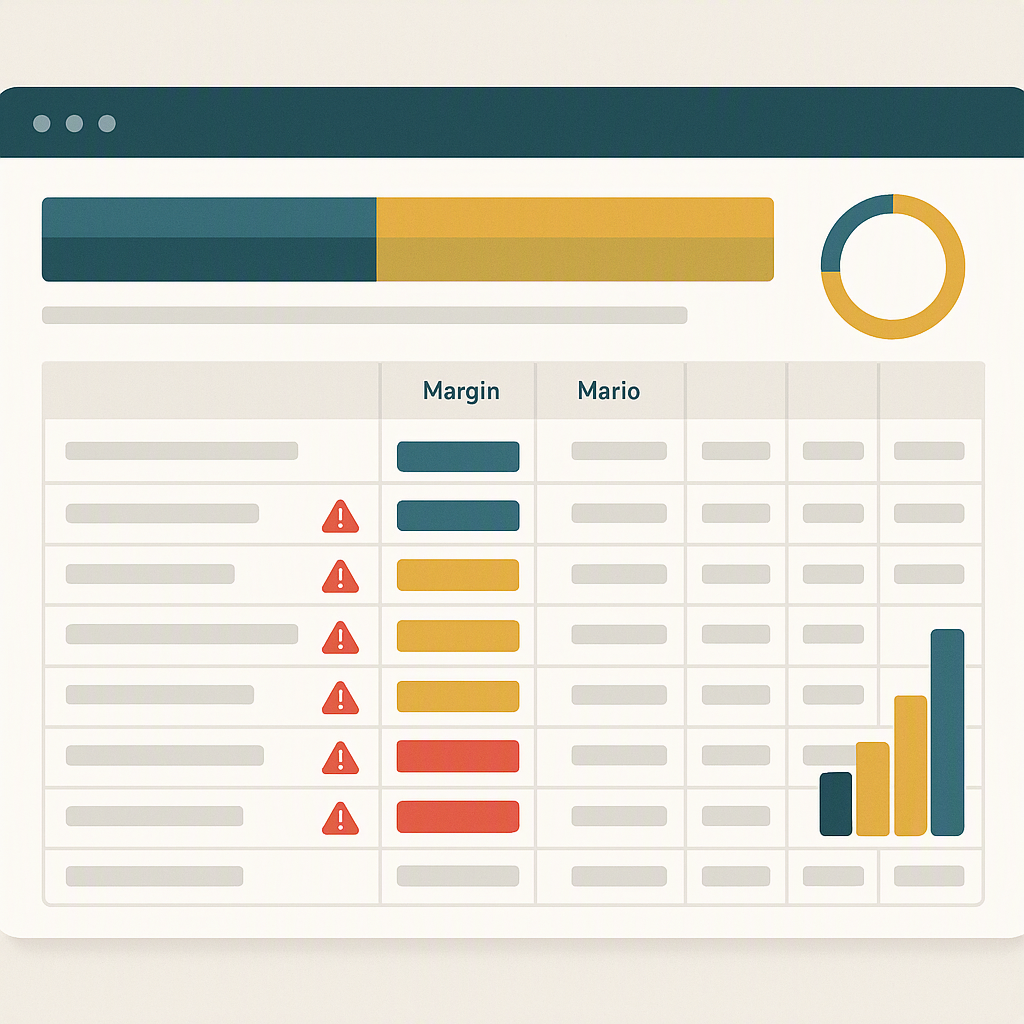
But something changed. In late 2023, I was reviewing a residential fit-out project where the estimator had two separate BOQs open. Same job, different versions. One was the original tender submission; the other had been updated mid-project after a scope change. The margin column on the second BOQ was bleeding red—negative margins on several items. Nobody caught it until invoicing.
Why? Because the contractor wasn’t tracking the actual cost rate against the tendered rate. That oversight led to profit erosion. And it wasn’t an isolated case. Missed BOQ margin tracking often causes financial challenges.
What BOQs Actually Do (When Used Right)
A Bill of Quantities isn’t just a list of stuff your client expects. It’s the financial blueprint for your project. In software like JobNext, BOQs are structured hierarchically—grouped into sections and sub-sections that mirror your contract scope. This isn’t just tidy bookkeeping; it’s how you track profitability at the granular level.
Take margin tracking. JobNext’s BOQ module compares multiple rate dimensions: quoted rate, billing rate, scheduled rate, budgeted rate, and actual cost rate. If your actual costs exceed the original estimate, the system flags it immediately. That’s your early warning to investigate procurement overruns or scope changes.
Illustrative example — Let’s say your BOQ includes excavation at ₹500 per cubic meter for 1,000 cubic meters. But your actual cost rate jumps to ₹650 per cubic meter because of unexpected soil conditions. Without BOQ margin tracking, you’d only see the problem after invoicing—or worse, during project reconciliation months later. With it, you catch the spike before it eats into your profit.
Why Contractors Resist BOQ Software
Many contractors still rely on Excel for BOQs. It’s familiar. It feels cheaper. And honestly, BOQ software seems overkill when you only run a few small jobs a year. But here’s the rub: Excel can’t handle dynamic margin tracking or rate analysis. It’s static. You’re blind to cost creep until it’s too late.
For small, simple jobs, manual tools might suffice. But for anything remotely complex—especially jobs with subcontractors—you need structured BOQ software.
How BOQ Software Like JobNext Protects Margins
Here’s where BOQ software shines. It doesn’t just track quantities and rates; it turns BOQs into an active margin-protection tool. Here’s how:
1. Rate Analysis Across Multiple Dimensions
Quoted rate, billing rate, scheduled rate, budgeted rate, and actual cost rate—BOQ software compares them all. Any variance triggers an alert, so you can act before costs spiral.
2. Stage-Wise BOQ Billing
For milestone-based contracts, BOQs can be split into stages with percentage allocations. For example:
| Stage | % Allocation | Amount |
|---|---|---|
| Foundation | 30% | ₹6,00,000 |
| Structure | 40% | ₹8,00,000 |
| Finishing | 30% | ₹6,00,000 |
This approach ensures you don’t miss billing milestones—and reduces revenue leakage.
3. Variation Order Tracking
Scope changes are inevitable. BOQ software locks contracted BOQs and requires formal variation orders for any edits. This prevents unauthorized scope creep and protects your margins.
4. Progress Billing
BOQs drive progress billing by linking deliverables to payment milestones. This ensures your cash flow stays aligned with your project progress.
5. Dashboard KPIs
Every BOQ item feeds into real-time dashboards, showing margin erosion, cost overruns, and billing progress. It’s like having a P&L proxy for each job.
What I Do Differently Now
Since those audits, I’ve stopped treating BOQs as static documents. Every BOQ I build now includes real-time margin tracking, stage-wise billing, and variation order workflows. And I review the BOQ margin report weekly—no exceptions.
But I’m still not sure we’re catching everything. For example, what about indirect costs? BOQs focus on direct costs—materials, labour, equipment—but indirect costs like site overheads often slip through the cracks. That’s the next problem I’m tackling.
The Bottom Line
If you’re still managing BOQs manually, you’re leaving money on the table. Structured BOQ software doesn’t just save time; it actively protects your margins.
Learn more at EstimateNext