ERP Isn’t Just Digitized Paperwork — And That’s Where Most Contractors Fail
For years, many Indian contractors believed ERP systems were glorified filing cabinets. Digitize the paper trail, automate invoicing, and call it a day. That’s what many used to think. But here’s the problem: this view treats ERP as a passive tool, not an active safeguard for your margins.
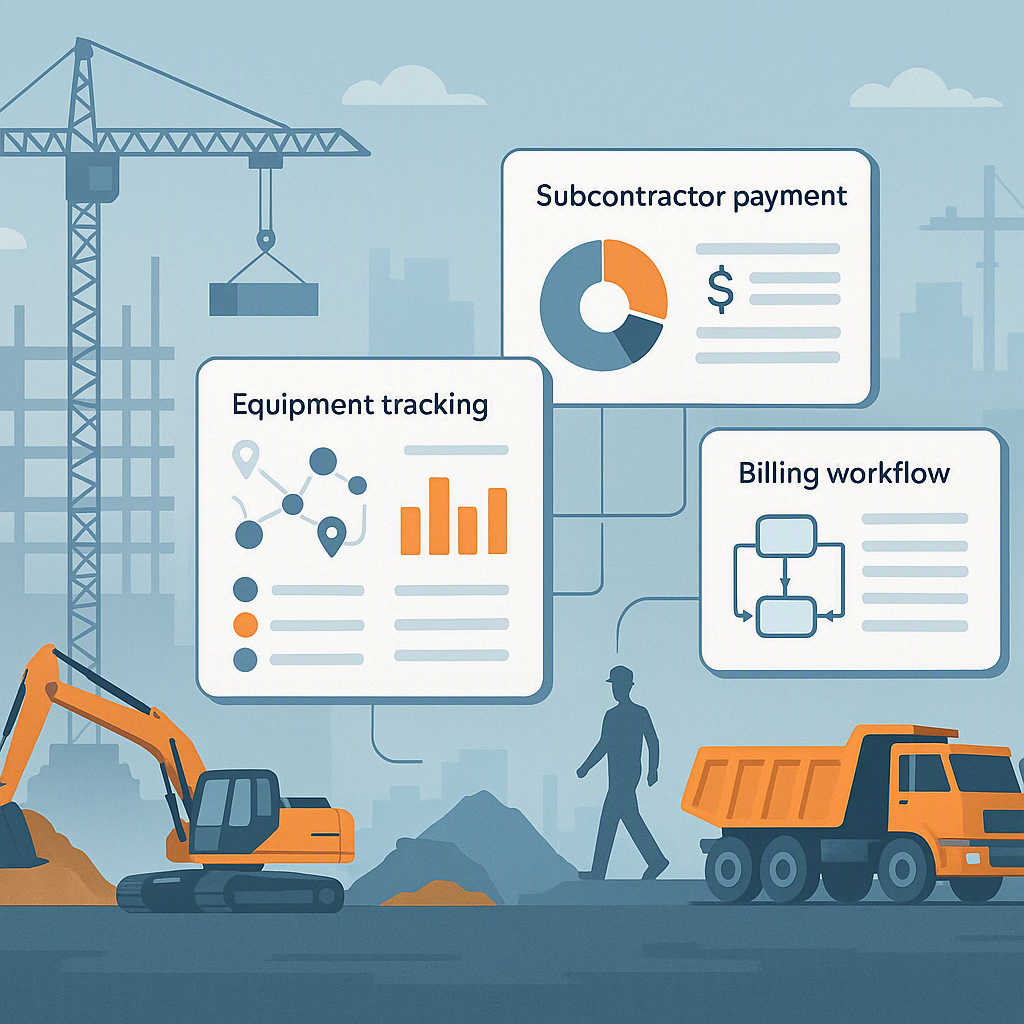
Without an integrated ERP, contractors often struggle to track costs, manage equipment, and ensure accurate billing. These challenges can lead to significant margin erosion. Here’s how integrated ERP systems address these issues for contracting firms in India and beyond.
Problem #1: Subcontractor Cost Overruns
You know the drill. You award a subcontractor, approve their work order, and pay them based on progress measurements. But what happens when those measurements aren’t tracked properly? Or when the subcontractor invoices you for completed work that wasn’t certified? This is where costs spiral out of control.
Integrated ERP systems solve this with measurement-based progress tracking. Every subcontractor’s work gets verified against the scope of work approved in the BOQ (Bill of Quantities). Payments are locked behind certification workflows — no certification, no payment. And because the system maintains a full audit trail of vendor selections, work orders, and measurement approvals, you can trace every rupee spent back to its source.
Illustrative example — say you’re running an MEP project in Bangalore. You’ve subcontracted the electrical first-fix to a local vendor with a work order. Without a good ERP system, you might miss the fact that their progress measurements are lagging behind the amount they’ve invoiced you. With an integrated ERP, the discrepancy gets flagged immediately. You can pause payments before they eat into your margins.
Problem #2: Idle Equipment Costs
Idle equipment is a major source of hidden costs. A boom lift sitting unused at a job site isn’t just wasting space — it’s burning through your budget. Errors in equipment allocation or lack of tracking can lead to such inefficiencies.
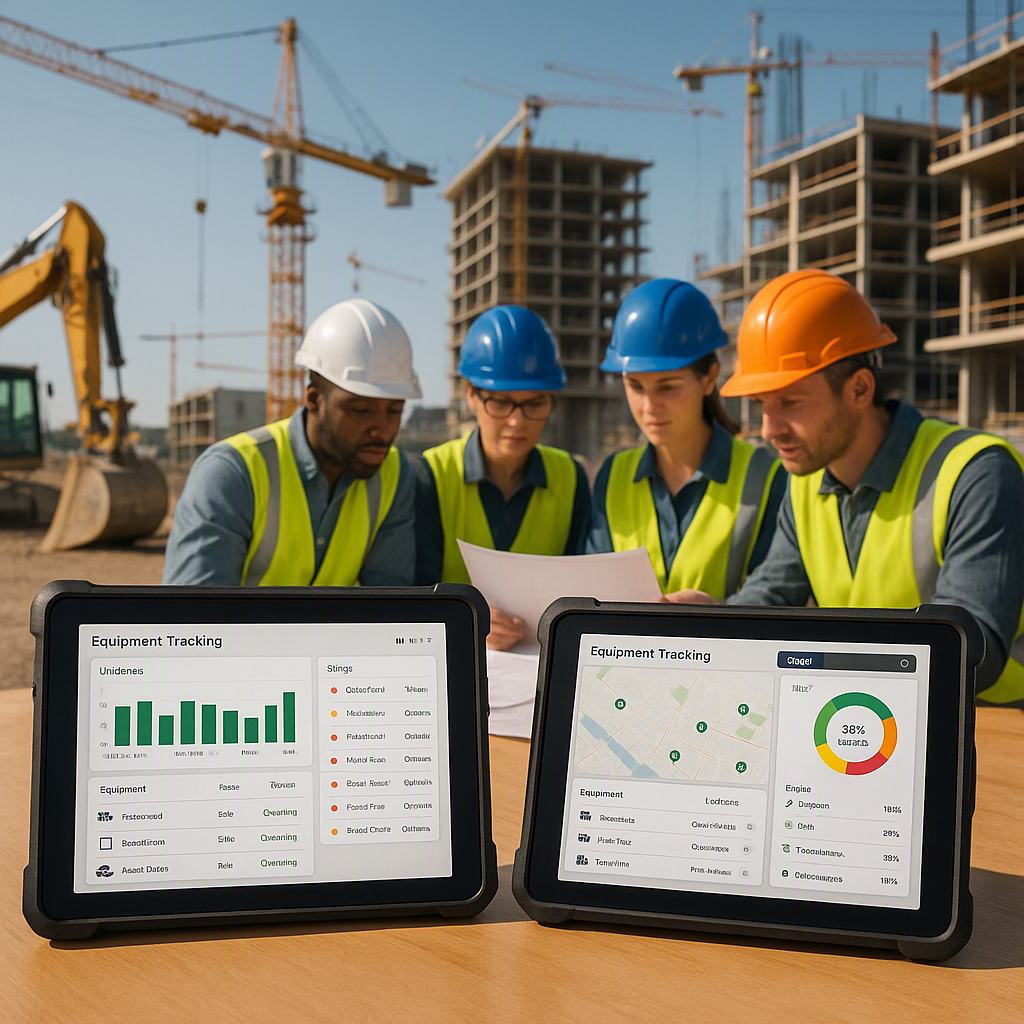
Integrated ERP systems track equipment utilization across its entire lifecycle. From procurement to depreciation to disposal, every piece of equipment is tied to a job and monitored for usage. If something sits idle for too long, you get an alert. This ensures that misallocations or underutilization are identified and addressed promptly, saving costs and improving efficiency.
Problem #3: Revenue Leakage in Billing
Billing errors are another major source of margin erosion. Contractors often believe they’re billing for everything, only to realize later that they missed invoicing work because their system didn’t support all the billing methods they needed.
Integrated ERP systems offer multiple billing methods to cover every scenario: RA bills, stage-wise billing, monthly billing, supply BOQ, combined billing, and one-time invoices. This flexibility ensures that nothing falls through the cracks. For example, on a villa fit-out project, you might need monthly billing for interior work and one-time billing for landscaping. An ERP system lets you manage both under one contract, with automatic accounting voucher generation for certified invoices.
Why Contractors Resist Integrated ERP
So why do so many contractors still stick with disconnected systems? Switching to an integrated ERP feels risky and expensive. Concerns about downtime during implementation, reliance on existing tools (Excel, Tally, standalone procurement software), and skepticism about whether one system can handle everything are common.
However, disconnected systems often lead to hidden costs that contractors don’t realize until they start losing money. Integrated ERP systems provide visibility and control, helping contractors avoid overpaying subcontractors or letting idle equipment drain resources.
What We Do Differently Now
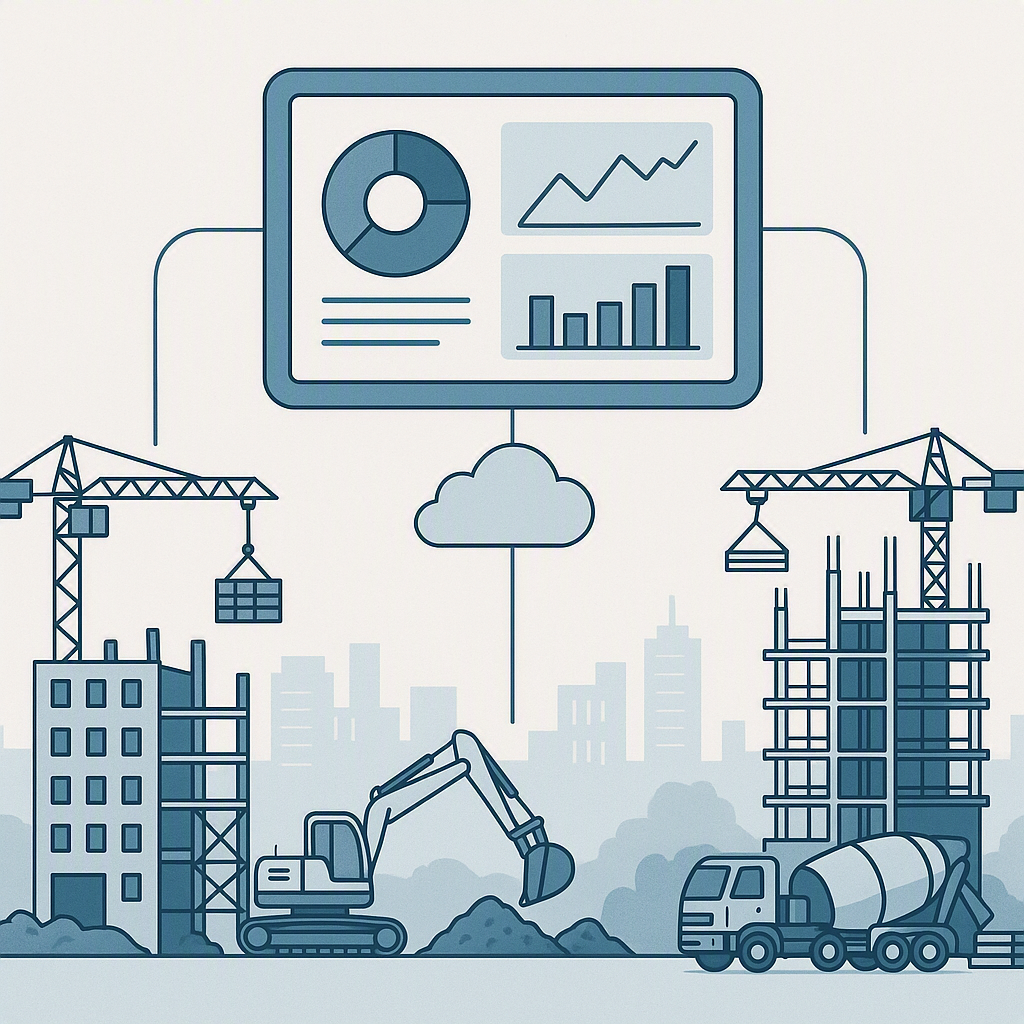
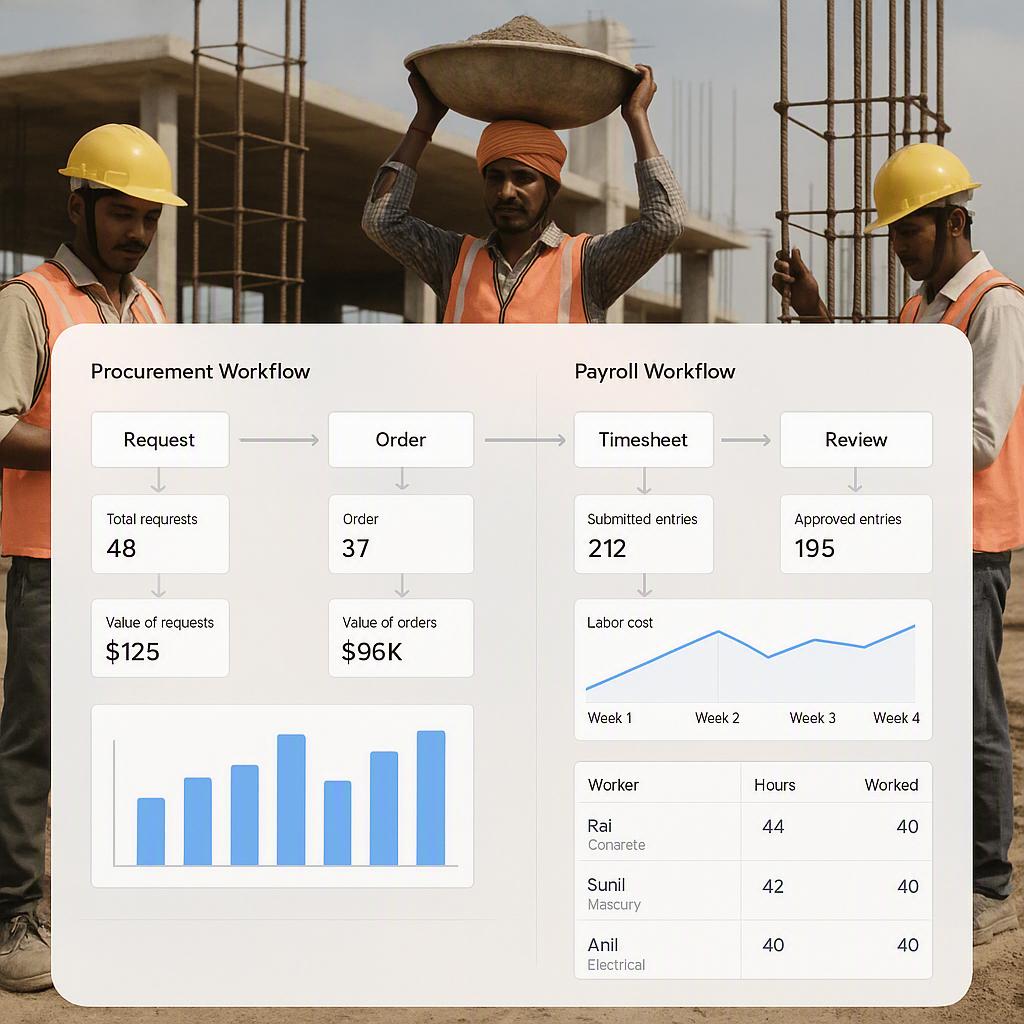
In our own operations, we’ve shifted to integrated ERP systems. Every module talks to the others — procurement feeds into project execution, which feeds into billing and finance. Real-time dashboards flag issues before they become disasters. And the multi-level approval workflows protect us from human error.
We also recommend tools like EstimateNext for preconstruction estimation. Their AI-powered rate matching helps contractors set realistic budgets from the start, reducing the risk of margin erosion.
What We’re Still Figuring Out
Switching to an integrated ERP isn’t a magic bullet. It won’t fix bad project planning or unrealistic bids. And it requires a cultural shift — teams have to trust the system and follow the workflows. But in my view, the biggest challenge is adoption. Convincing teams to let go of their spreadsheets and fragmented tools is hard. It takes time and training.
FAQ
1. How long does it take to implement an ERP like JobNext?
It depends on the size of your company and the number of projects you’re running. Implementation timelines vary, but the key is to plan for phased rollouts.
2. Can ERP handle GST and TDS compliance for Indian contractors?
Yes, many ERP systems auto-compute GST and TDS, integrate with Tally for statutory reporting, and track bank guarantees. They are built for Indian compliance.
3. What’s the biggest mistake contractors make when choosing ERP?
Underestimating the importance of integration. A system that doesn’t connect procurement, billing, and finance won’t solve margin erosion.
Call to Action
If you’re tired of hidden costs eating your margins, it’s time to rethink your systems. Get started with JobNext today →
Learn more at EstimateNext