The Silent Killer of Margins: Bad BOQs
Margins in construction are razor-thin. A single oversight in your Bill of Quantities (BOQ) can turn a profitable project into a financial disaster. Miss a critical quantity? You’ll eat the cost. Overestimate one? You might lose the bid entirely.
What’s worse, many contractors rely on messy Excel sheets or incomplete PDFs to manage BOQs. These documents often lack the structure and detail needed to ensure cost accuracy across the project lifecycle.
But here’s the thing: BOQs don’t have to be a liability. When done correctly, they’re a precision tool for tracking costs, managing scope, and protecting your bottom line. Let’s break down how to use a BOQ PDF effectively—starting with why its structure matters.
What Makes a Good BOQ PDF?
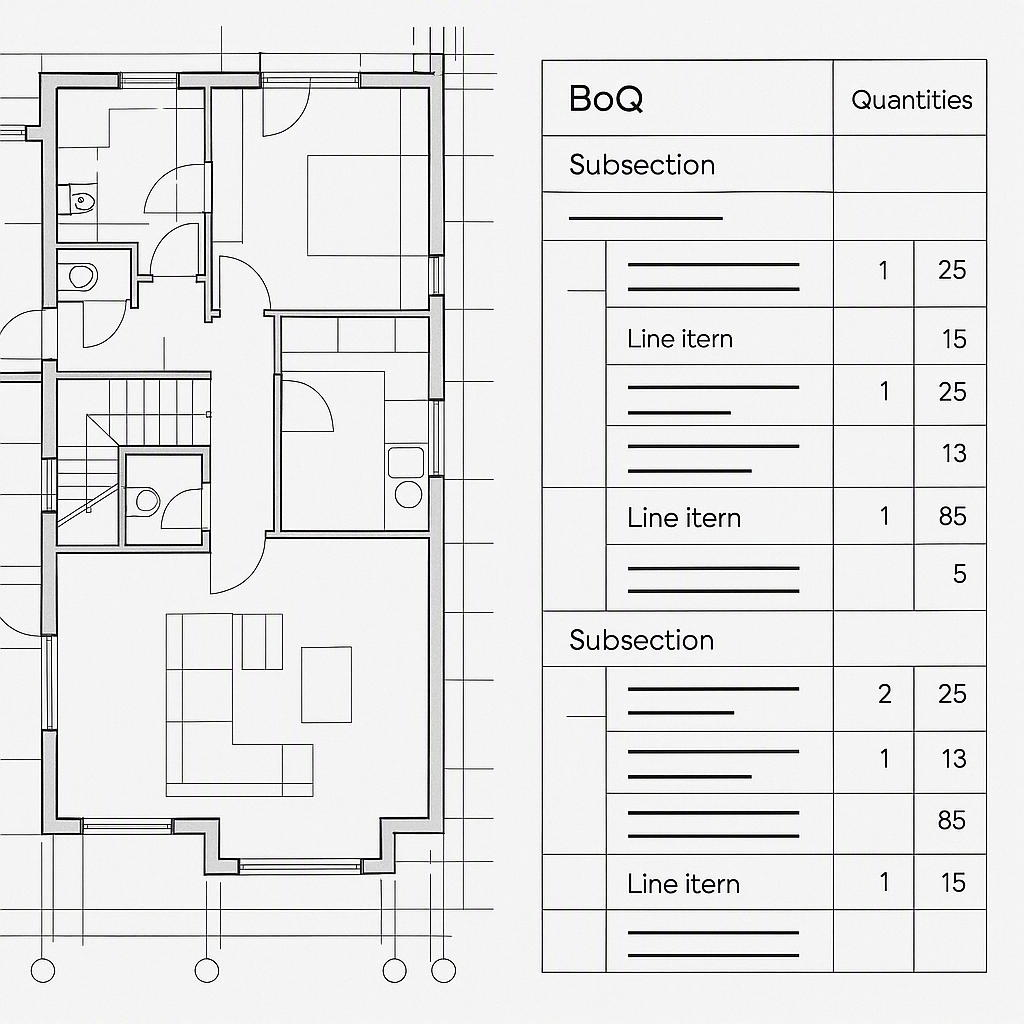
A solid BOQ isn’t just a shopping list of materials and tasks. It’s a hierarchical, organized document that ties every deliverable to quantities, units, and rates. Here’s what yours should include:
| Field | Purpose |
|---|---|
| Code | Unique identifier for each line item. Avoids duplication. |
| Description | Clear, detailed scope of work for each item. |
| Unit of Measure (UOM) | Standardized units (e.g., m³, kg, hours). |
| Quantity | Exact amount required per unit. |
| Rate | Agreed-upon price per unit. |
| Total Value | Automatically calculated (Rate × Quantity). |
Without these fields, tracking progress and costs becomes guesswork. Worse, you’ll struggle with variation orders or client disputes later on.
Why Each Field Matters
- Code: A unique identifier ensures there’s no duplication of items, making it easier to reference specific tasks or materials during discussions, approvals, or audits.
- Description: Ambiguity in the description can lead to disputes later. For example, “Plastering” is vague; specify it as “Plastering of walls, thickness 15mm, cement-sand ratio 1:4.”
- Unit of Measure (UOM): Standardized units prevent confusion. For instance, do you measure excavation in cubic meters (m³) or truckloads? Inconsistent UOMs lead to billing discrepancies.
- Quantity: This is the foundation of your cost calculation. An error here ripples across your entire project.
- Rate: Rates should align with your contract or tender submission. Miscommunication here often results in disputes or underpayment.
- Total Value: Automating this calculation minimizes manual errors and ensures the financial accuracy of your BOQ.
Common BOQ Mistakes (and How to Avoid Them)
1. Unstructured PDFs
Unstructured BOQs are a nightmare to work with. Imagine a 50-item BOQ where quantities and rates are buried in freeform text. You can’t filter, sort, or analyze this data without hours of manual cleanup.
Why it’s a problem:
- Difficult to audit or analyze line items.
- Time-consuming to extract information for progress tracking or billing.
Fix:
- Use a BOQ hierarchy. Group items into logical sections like “Civil Works,” “Electrical,” and “Finishing.”
- Use software tools like JobNext, which allow you to import and structure BOQs in a clean, organized format. This saves hours of rework and reduces errors.
2. Mismatch Between BOQ and Actual Scope
I’ve seen BOQs that list quantities without aligning to real-world execution. For example, a BOQ might estimate 500 m³ of concrete, but the actual site conditions require 550 m³.
Why it’s a problem:
- Leads to cost overruns that eat into your margins.
- Creates disputes with clients over additional costs.
Fix:
- Use measurement-based tracking tools. Platforms like JobNext let you record work completed against BOQ items in real time, ensuring you always know where you stand.
- Conduct a site survey before finalizing your BOQ to ensure it reflects the actual conditions.
3. Ignoring Stage-wise Billing
For phased projects, failing to split BOQ items into stages can lead to delayed payments and disputes. Clients want transparency on what’s delivered at each milestone.
Why it’s a problem:
- Delayed cash flow due to unclear billing.
- Disputes over which parts of the work are complete.
Fix:
- Enable stage-wise BOQs. For example, split “Foundation RCC” into stages like excavation, formwork, and pouring.
- Allocate percentages to each stage so billing aligns with progress. Tools like JobNext allow you to set these milestones and track completion.
Step-by-Step: Using BOQ PDFs for Cost Accuracy
Here’s how to make your BOQ work for you:
Step 1: Start with a Clean Template
Download or create a structured BOQ template that fits your project’s needs. Ensure it includes all critical fields (Code, Description, UOM, Quantity, Rate) and matches your client’s format.
Pro tip: Tools like JobNext offer pre-defined templates that meet industry standards. Their bulk upload feature ensures your BOQ data is clean and ready for analysis.
Step 2: Tie BOQs to Project Data
Once your BOQ is ready, integrate it into your project management system. This creates a single source of truth, linking the BOQ to procurement, billing, and progress tracking.
How to do it:
- Import your BOQ into a digital platform.
- Map each BOQ line item to relevant project tasks and resources.
Step 3: Record and Approve Measurements
During execution, record actual work completed against BOQ items. For example, if your BOQ lists 100 m² of plastering, update the system as each section is completed. Internal approvals ensure the data is accurate before billing.
Why this matters:
- Prevents overbilling or underbilling.
- Provides real-time data for decision-making.
Step 4: Monitor Real-Time Variance
Use dashboards to compare BOQ data against actuals. Look for red flags like overconsumption of materials or underutilized resources.
Example: JobNext provides real-time KPIs to track budget utilization and cost overruns, giving you an early warning system for financial risks.
Why Structured BOQs Matter for Billing
Billing errors are one of the biggest sources of revenue leakage in construction. A structured BOQ ensures:
- Accurate Invoices: Billing aligns with approved quantities and rates.
- Faster Payments: Clear documentation reduces disputes with clients.
- Variation Tracking: Changes to scope are documented and billed correctly.
For example, JobNext supports six billing methods, including RA bills and stage-wise billing. This flexibility ensures that no revenue falls through the cracks.
Comparison Table: Excel vs Specialized BOQ Tools
| Feature | Excel | Specialized Tools (e.g., JobNext) |
|---|---|---|
| Version Control | Manual, prone to errors | Automated, with change tracking |
| Integration | None | Links to procurement, billing |
| Error Prevention | Limited | Automated validations |
| Real-Time Updates | No | Yes |
| Time Savings | Minimal | Significant |
FAQ
1. What if my client provides an incomplete BOQ?
Start by structuring what you have. Fill gaps with your standard WBS (Work Breakdown Structure) library or request clarifications. Never proceed with execution until the BOQ is clear and complete.
2. How do I track changes to the BOQ?
Use a system that supports variation orders. JobNext locks contracted BOQs and tracks all changes for auditability, ensuring you have a clear record of what changed, why, and when.
3. Can I use Excel instead of specialized tools?
You can, but it’s risky. Excel lacks version control, real-time updates, and integration with other project data. Specialized tools reduce errors, save time, and provide analytics that Excel simply can’t match.
4. How do I handle disputes over BOQ quantities?
The best approach is proactive. Use measurement-based tracking and ensure all parties sign off on recorded quantities at regular intervals. A structured BOQ with clear descriptions and UOMs minimizes misunderstandings.
5. What’s the best way to structure a BOQ for a phased project?
Divide the BOQ into stages or milestones. Each stage should have its own set of quantities and rates, tied to deliverables. This ensures billing and progress tracking align with project phases.
Conclusion
A well-structured BOQ PDF isn’t just a document—it’s a project’s financial backbone. By organizing, tracking, and analyzing BOQ data, you can avoid cost overruns and protect your margins.
If you’re ready to take control of your BOQs, JobNext offers the tools to make it happen. Get started today.
Learn more at EstimateNext